
Author name: Owen Drury

construction technology startup lessons
Founders & Operators

Lessons Learned from Building a Contech Startup from the Ground Up

  Sometimes the most transformative companies start from the most unexpected places. Altaf Ganihar, founder of Snaptrude, didn’t come from construction or architecture – he was a geometry researcher working in computer vision before neural networks dominated the field. His journey from academic researcher to construction technology founder offers valuable insights for entrepreneurs looking to innovate in traditional industries. From Academic Project to Company Vision “I was working on this very interesting project with architects. We were trying to reconstruct a UNESCO World Heritage Site in 3D from ground up,” Altaf recalls. This project led to his first close engagement with architects, where he discovered that most of their software tools were built in the late 90s or early 2000s, with minimal innovation since then. This observation sparked a hobby project – a plugin for SketchUp. To his surprise, people started buying it even though it was very crude. This success led to a pivotal moment in his career path. When he didn’t get into Stanford for his PhD, he decided to spend a year developing the plugin further to strengthen his resume. That one year changed everything, leading him to recognize a massive opportunity to transform the industry. The Challenge of Trust in Construction Tech One of the most illuminating anecdotes Altaf shares involves a mid-size architectural firm. At the design development stage, they realized they had miscalculated their Floor Area Ratio (FAR). They had to reduce the building footprint and essentially redraw the entire project – work that no one would pay for. This story exemplifies why architects are often hesitant to adopt new technology: the cost of mistakes is simply too high. “More than FOMO (fear of missing out), the most important thing is fear of messing up,” Altaf explains. “The profit margins in architecture and construction are very low. And if you bring in new technology, and if it messes up, you risk losing it… They actually have to give up on that project and make it somewhere else or sometimes even go bankrupt.”   In this episode, we dive into the remarkable journey of Altaf, founder of ⁠SnapTrude⁠, who’s reshaping the architecture and construction industry. Building Trust Through Incremental Progress Rather than trying to revolutionise everything at once, Snaptrude focused on solving specific problems while integrating with existing workflows. The company stayed in stealth mode for three years until late 2020, working closely with certification bodies to ensure their technology met industry standards. Altaf emphasises the importance of finding your “corner of the room” – your initial wedge into the market. For Snaptrude, this meant focusing on early-stage design and ensuring seamless interoperability with existing tools like Revit. “You’re not disrupting their workflow, but purely adding value,” he explains. The Culture Factor Perhaps surprisingly for a technical founder, Altaf places enormous emphasis on company culture. Snaptrude’s first company value is “give a shit” – about the mission, the vision, and the impact they’re trying to create. This authentic commitment to transformation has helped them maintain a remarkably stable team, with some members even returning after pursuing higher education elsewhere. Key Lessons for Construction Tech Founders: Understand the Industry’s Risk Profile. Construction and architecture firms operate on thin margins where mistakes can be catastrophic. Any new technology must prove its reliability beyond doubt. Focus on Clear Value Addition. Snaptrude focused on reducing non-billable hours and preventing costly mistakes – tangible benefits that firms could easily understand and measure. Build for the Long Term. As Altaf notes, “It always takes way longer than you anticipate with everything. Take whatever you have, double it and double it again, and then you’ll still be half the way that you need to be.” Looking to the Future For entrepreneurs entering the construction technology space, Altaf’s journey demonstrates that success requires more than just technical innovation. It demands patience, persistence, and a deep commitment to understanding industry needs.  As Altaf puts it, success in construction technology is like “batting on a very hard wicket in a test match.” It’s not about quick wins or disruption for disruption’s sake – it’s about meaningful transformation that respects the complexity and consequences of the built environment.      

construction technology IPO opportunities
Videos, Venture

Construction Technology IPOs: A Global Market Perspective

  We’re witnessing an intriguing evolution in the public markets landscape, with several promising candidates emerging across global markets. In Western markets, Equipment Share stands out as a notable potential IPO candidate, demonstrating the quality metrics typically associated with successful public offerings in the construction technology space. The Indian market presents a particularly dynamic scenario, with four major players positioning themselves for public debuts within the next 12-18 months. These companies – Infra.Market, Off Business, Zetor, and MCK – have already achieved unicorn status and demonstrated strong profitability metrics, highlighting the maturity of India’s construction technology ecosystem. What makes these potential IPOs especially noteworthy is their ability to achieve significant scale while maintaining profitability – a crucial factor in today’s market environment where investors increasingly prioritize sustainable business models over pure growth. Three out of these four Indian companies have reported profitable operations, setting them apart in a sector traditionally known for high capital requirements and extended paths to profitability. This emerging trend of construction technology IPOs reflects the sector’s growing maturity and its increasing appeal to public market investors seeking exposure to the digital transformation of the construction industry. Check out the full episode HERE.       

Newsletter

The Global Construction Tech Race: Lessons from Australia’s Success

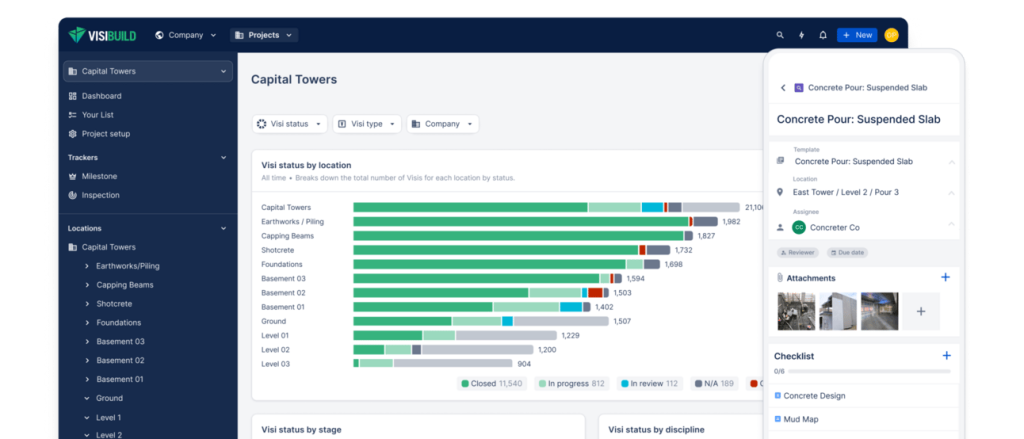
Want to go deeper? Join our Patreon community for exclusive, not publicly available content and support the future of architecture, engineering, and construction. Welcome back to the real world. 2025 has begun! And this week, we’re going down under. Just before Christmas, we spoke with Shubhankar Bhattacharya of Foundamental, tune into the episode here. In this episode, we discussed: How Autodesk masterfully dominated the construction software market through universities – and what we can learn from their distribution genius The surprising story behind Austrailia’s unicorn success VisiBuild’s recent $6.6M raise – a masterclass in sustainable growth The truth about SaaS metrics in construction tech: Why traditional benchmarks might be misleading us And, having spoken to a few incredible Aussie founders in December, we decided to go a little deeper into our discussion on Australia. Good day mate! INDUSTRY INSIGHTSThe Global Construction Tech Race: Lessons from Australia’s Success Australia has emerged as an unexpected powerhouse in construction technology. With just 26 million people, it ranks third globally in construction tech unicorns, behind only the United States and India.  This surprising success story reveals important insights about innovation and sustainable growth in construction technology, challenging conventional wisdom about what drives successful tech adoption in the building sector. The Rise of Australian Construction Tech Few realise that some of the industry’s most impactful companies originated in Australia.  Aconex, acquired by Oracle for $1.6 billion, revolutionised construction project management on a global scale. SafetyCulture transformed from a simple safety app into a comprehensive operations platform valued at over $1 billion. These successes aren’t accidents – they reflect a unique approach to building construction technology companies.  When Aconex was founded in 2000, the idea of cloud-based construction management seemed radical. Today, it’s the industry standard. Similarly, SafetyCulture’s iAuditor app became the gateway to a broader platform that now handles everything from safety inspections to team communication. Born Global: A Necessity, Not a Choice Australian companies think internationally from day one because they have to. A domestic market of 26 million people simply isn’t enough to build a significant technology company.  This constraint forces Australian startups to design solutions that work across different markets and construction environments from the beginning. The result is typically more adaptable, battle-tested solutions that have proven their worth in various contexts. This global mindset has helped Australian companies navigate different regulatory environments, work cultures, and construction methodologies. Many of these companies become so adept at operating internationally that they’re often mistaken for American or European firms. BEFORE WE CONTINUE… Bricks, Bucks & Bytes Live Join us for Bricks, Buck$ and Bytes live – your weekly deep dive into the AEC technology markets, funding, and industry trends. Date: Every Thursday Duration: 50 minutes Location: LinkedIn Live, YouTube, Riverside. Register now to join us live👇👇👇 More Details Here The Advantage of Capital Constraints Limited venture capital availability in Australia has created an unexpected edge. Unlike their Silicon Valley counterparts, Australian startups can’t rely on massive funding rounds to fuel growth. They must build sustainable business models early, focusing on genuine customer value and efficient operations. This approach has produced companies that prioritise solving real problems over chasing rapid growth. The scarcity of capital means these companies often achieve more with less, developing lean solutions that address core industry needs without unnecessary complexity.  This efficiency-first mindset has proven particularly valuable in construction, where practical, reliable solutions often outperform feature-rich alternatives. The Value of Sustainable Innovation The success of Australian construction tech companies follows a distinct pattern that challenges conventional wisdom about innovation. They typically validate their solution in the Australian market, then rapidly expand to larger markets like the US and UK.  This expansion isn’t driven by abundant capital but by careful market analysis and efficient execution. VisiBuild, a recent example, secured $6.6 million in funding – a modest sum by Silicon Valley standards – yet is making significant inroads in multiple markets by focusing on real customer needs rather than just growth metrics.  Quality management software giving the construction industry unrivalled insights into project progress These companies demonstrate that constraints can actually foster more focused, practical solutions.  Their approach prioritises sustainable growth over rapid scaling, and customer value over feature bloat. Rather than overwhelming the market with features, they focus on delivering solutions that integrate seamlessly into existing workflows, proving their concept in a sophisticated but manageable home market before taking on larger global opportunities. This sustainable innovation model has resulted in technologies that solve real problems without requiring endless rounds of funding. Looking Ahead The construction industry’s digital transformation continues to accelerate. Australian companies are demonstrating that innovation doesn’t require unlimited capital – it requires understanding customer needs and building sustainable solutions. This model of sustainable innovation, born from necessity in Australia, might well represent the future of construction technology. The next wave of construction tech innovations is likely to follow this pattern of efficient, focused development rather than the “growth at all costs” model common in other tech sectors. Success in construction technology (and just about any other sector) isn’t about having the most resources – it’s about using resources wisely to solve real problems. Australian companies have proven this repeatedly, and their approach offers valuable lessons for an industry in transformation.  WEEKLY MUSINGSCommunity & Collaboration, Growth, 10 Lessons Keys to construction success Last Week in ConTech on LinkedIn Recently, Bhragan Paramanantham sat down with Mayur Mistry on AEC Tech journey to explore some key strategies for tackling complex problems, fostering… A year of growth and achievement Maria Davidson on LinkedIn Reflecting on what an incredible year 2024 was. 40+ new product features launched, $3.5 billion of construction materials orders processed, 2 million labor… To the next 10 years of 20VC Harry Stebbings on LinkedIn | 87 comments Ten years ago today, I pressed publish on the first ever 20VC episode with Guy Kawasaki. I was 18, had $50 to my name and didn’t know a single VC. OUR SPONSORS BuildVision — streamlining the construction supply chain with a unified

construction tech for subcontractors
Go To Market

Targeting the Underserved: Shifting Focus from GCs to Trades and Subcontractors

  Solutions targeting large general contractors (GCs) have long dominated the construction technology landscape. However, a compelling argument is emerging for construction tech startups to shift their focus to an underserved but potentially more lucrative market: trade contractors and subcontractors. During our conversation with Victor Muchiri, Entrepreneur in Residence at Barton Malow, he made a fascinating observation about where the real opportunity lies in construction tech: “If you think about how the whole process works, those are the guys that actually end up giving, in my opinion, a lot of free money through labor to general contractors… if you’re trying to go capture some value, you may actually should start thinking about how to appeal to subcontractors and trades more, because I think too many people tend to focus on the general contractors, but the margins are actually slimmer on the general contractor side than they are in the subcontractor side.” This insight challenges the conventional wisdom of primarily targeting the ENR Top 100 contractors. While these large GCs might seem like attractive customers due to their size and prominence, they often have longer sales cycles, smaller margins, and more complex decision-making processes. The Case for Targeting Trades Consider the numbers: for every GC leading a project, there are numerous subcontractors and specialty trades working on site. This creates a much larger potential customer base for construction tech companies. Additionally, trade contractors often have higher margins and can be more nimble in their decision-making processes, potentially leading to faster sales cycles. This is particularly relevant for venture-backed startups. As Muchiri points out: “Are you spending your dollars trying to sell to a large GC with a really long sell cycle over a year? Or are you selling to an SMB trade partner that is smaller, it’s probably going to be a smaller contract, but you could sell to more of them because there are more of them?” Payment Innovation as a Key Opportunity One of the most pressing issues facing trade contractors is cash flow management. The current payment system in construction creates significant challenges for subcontractors who often have to float substantial costs for extended periods. As Muchiri explains: “They’re doing a lot of the work, they’re paying their contractors and their subs, they’re paying their own labor, they’re buying the material, and then they submit the pay application for payment at the end of the month and they don’t get paid until months later. Something’s fundamentally wrong with that.” This pain point represents a significant opportunity for construction tech companies to create innovative payment and financial solutions specifically designed for trade contractors.   In this episode, Victor Muchiri, Entrepreneur in Residence at Barton Malow, talks about the challenges of implementing new tech in construction, the importance of pricing models for startups, and why focusing on subcontractors might be smarter than targeting large GCs. Rethinking Go-to-Market Strategies For construction tech startups, especially those backed by venture capital, this shift in focus requires rethinking traditional go-to-market strategies. Instead of investing heavily in long enterprise sales cycles targeting GCs, companies might find more success with a broader market approach focused on smaller, but more numerous, trade contractors. This approach could potentially lead to: Faster customer acquisition More efficient use of sales and marketing resources Quicker feedback loops for product development Higher aggregate revenue from multiple smaller customers More stable revenue streams due to customer diversification The Future Outlook As the construction industry continues to evolve and adopt new technologies, the opportunity to serve trade contractors and subcontractors will likely grow. Their higher margins and greater numbers make them an attractive market segment, while their current underserved status means there’s significant room for innovation and improvement in their operations. The shift towards serving trade contractors could also lead to more specialised and effective solutions. Rather than trying to create one-size-fits-all platforms for general contractors, technology companies can focus on solving specific, high-value problems for particular trades or specialties. Conclusion Whilst the allure of landing large general contractors as customers will always exist, construction tech companies might find greater success by targeting the underserved market of trade contractors and subcontractors. This strategy not only opens up a larger potential customer base but also aligns better with the realities of the construction industry’s structure and economics. As the industry continues to evolve, those who recognize and act on this opportunity may find themselves better positioned for sustainable growth and success.      

startup success and failure
Venture

The Changing Tides of Venture Capital: Understanding the Factors Driving Startup Success and Failure

  The startup ecosystem is experiencing a notable shift, with U.S. startup failure rates reportedly seven times higher than in 2019. But what’s really driving this change, and what does it mean for the future of venture capital? Through a recent discussion with venture capitalist Patric Hellermann, some fascinating insights emerge about the current state of startup funding and success. The Bucket Theory “Imagine startups as a bucket,” Hellermann explains. “And most startups outside of AECS are a leaky bucket until at some point either they are not or the bucket is empty.” This metaphor perfectly encapsulates the challenge facing today’s startup ecosystem. During the zero interest rate policy environment since 2012-2013, the venture community poured unprecedented amounts of capital into the market. As Hellermann notes, “We put so much water into the ecosystem that we actually as a venture community created buckets to hold the water… And these buckets were leaky.” This excess capital led to the creation of startups that perhaps shouldn’t have existed in the first place, many of which are now failing as the funding environment tightens. The AI Investment Wave The situation becomes even more complex when considering the current AI boom. “It has been absolutely mind-blowing what has been funded these last 18 months in the AI department,” Hellermann observes. “One OpenAI wrapper after the other, complete clones of one another got funding from 10 million rounds to 150 million rounds without much scrutiny.” This rush to fund AI startups mirrors the previous cycle but in an accelerated timeframe. Rather than learning from past mistakes, the venture community appears to be creating new leaky buckets in the AI space, potentially setting up another wave of failures in the future. In this episode, we explored the surprising uptick in US startup failures and what it reveals about the current market. Understanding Success and Failure The factors influencing startup success are more complex than they might appear. According to Hellermann, “Out of 10 things that can happen to your startup, you control three or four… Three or four are outside of your control… And two are just unknown to you at the current point in time.” This breakdown helps explain why even well-run startups can fail – and why poorly conceived ones might temporarily succeed in a capital-rich environment. The factors within control typically include: Hiring decisions Product development Distribution strategy   While external factors include: Regulatory environment Market conditions Competition Macroeconomic factors The Geographic Factor An interesting aspect of the current situation is its geographic variation. The U.S. startup market, while three times larger than either the European or Asian Pacific markets, shows some distinct characteristics. U.S. investors, particularly in early stages, often invest by backing multiple horses rather than through deep conviction – a strategy that can lead to higher failure rates but also potentially bigger winners. Looking Forward For entrepreneurs and investors alike, several key lessons emerge from the current environment: Focus on Fundamentals. Rather than chasing trends or trying to capture excess capital, focus on building sustainable businesses with sound fundamentals Understand Your Control Points. Recognise which factors you can control and excel at those while building resilience against external factors. Choose Your Market Carefully. Different geographic markets offer different risk-reward profiles and funding environments. Understanding these differences can be crucial for success. Avoid the Hype Cycle. While areas like AI offer exciting opportunities, avoid getting caught up in funding frenzies that can lead to unsustainable business models. Industry-Specific Considerations Interestingly, some sectors appear more resistant to these trends than others. The Architecture, Engineering, Construction, and Sustainability (AECS) sector, for instance, shows more stability. As Hellermann notes, “Investors in AECS have been doing a good job at being relatively cool headed, level headed and doing actual diligence rather than falling prey to hype.” This suggests that sectors with clear real-world applications and tangible value propositions might be better positioned to weather funding cycles and market changes. Conclusion The current high failure rate of startups isn’t necessarily a sign of ecosystem failure – it’s a natural correction after a period of excess capital availability. However, it does highlight the importance of building sustainable businesses rather than just creating vessels for available capital. For entrepreneurs, the key is to focus on building businesses that can stand on their own merits, regardless of the funding environment. For investors, it means returning to fundamentals and ensuring that investment decisions are based on conviction and proper diligence rather than fear of missing out.      

AI-powered construction procurement
Videos, Technology

DPR Construction Pioneers AI-Powered Solution to Transform Construction Procurement

  Ensuring materials arrive at the right place at the right time has long been a universal challenge. DPR Construction is tackling this industry-wide pain point head-on through innovative AI technology and strategic investment in cutting-edge solutions. The traditional approach to construction procurement involves project engineers juggling multiple Excel spreadsheets and disconnected systems to track everything from material specifications to delivery schedules. This fragmented process creates inefficiencies across the entire supply chain, from initial specification to final installation. Through an internal innovation competition that generated 250 ideas, DPR identified integrated procurement as a critical focus area. The company has invested in Constructive IQ, an AI-powered solution that seamlessly connects schedules, submittal items, and procurement processes. This technology moves beyond simple process automation, offering intelligent linking of activities and what-if analysis capabilities. What sets this approach apart is its AI-first perspective, leveraging existing project data to streamline and enhance the procurement process. Rather than simply digitizing current workflows, DPR’s investment represents a leap toward next-generation procurement solutions that could transform how the construction industry manages material logistics. Check out the full episode with Atul Khanzode HERE.       

Newsletter

Reflecting on 2024: Our Journey So Far

Want to go deeper? Join our Patreon community for exclusive, not publicly available content and support the future of architecture, engineering, and construction. CELEBRATING MILESTONESReflecting on 2024: Our Journey So Far As 2025 arrives, we took some time to reflect on our progress over 2024. In January we sat down in a pub in Clapham (South London) in January, and set the vision for the year. We deliberately kept our plans fluid and open-ended. As it turned out, this light-touch approach set the stage for a year of achievements that we can look back on with a strong sense of pride. From launching multiple successful podcast series and growing our community to over 2,000 LinkedIn followers, expanding into new markets with our Super Series recordings in Berlin and Amsterdam, and reaching milestones like 1,000 newsletter subscribers and YouTube followers – 2024 has been a year of continual evolution and expansion. Our journey has seen us transform from a simple podcast into a comprehensive media network, with the introduction of Bricks, Bucks & Bytes, Groundbreakers, BitBuilders, and Corporate Innovation in AEC. We’ve deepened our impact through partnerships with industry leaders, while breaking new ground with our AI-focused research report on construction document management (more of those to come). As we close out this incredible year (complete with a wedding celebration in India!), we’re amazed at how our initial pub chat has evolved into something far beyond our original vision. Here’s how it all unfolded… January 2024 We met in a pub in London and decided what we wanted to do. The rest follows: February Started releasing 2x episodes per week on Bricks & Bytes’ main channel With Sebastiaan Visser and Salar al Khafaji March Released our number 1 listened to episode – How To Build A Unicorn In Construction Tech Released our first episode of BBBC – Bricks & Bytes BroadCast (later to become BBB – Bricks, Bucks & Bytes) May Visited Berlin to record a Super Series with Foundamental Visited Amsterdam to record a Super Series with Monumental Launched our dedicated newsletter Bricks & Bytes Bulletin When in Berlin… June Launch of our podcast network with Bricks, Bucks & Bytes July Hit 2,000 LinkedIn Followers August Launched Groundbreakers Launched BitBuilders A behind-the-scenes office tour by Lottie Liebling September Launched Corporate Innovation (in AEC) Launched Super Series 001 with Foundamental Hit 1,000 Newsletter subscribers October Launched Super Series 002 with Monumental Launched our Patreon Community Launched our AI In Report The Future Of Construction Document Management – How AI Is Disrupting That’s a wrap! Super Series 003 with Speckle. DONE. November Launched Super Series 003 with Speckle Recorded Super Series 004 with Ediphi (coming January!) Hit 1,000 YouTube subscribers Day 1 of Boston with the OG Dustin DeVan and Michael Navarro of Ediphi. December Martin jetted off to India to get married Our Plans for 2025 We’ll keep this part simple. BUILD! That means more reports, more travels, podcasts with the top founders AEC has ever witnessed, more products and more of the best AEC content available on the planet. Happy New Year and see you soon. Owen & Martin Powered by beehiiv

Robotics

Key Considerations for Construction Robotics Product Development

  Construction robotics is experiencing unprecedented growth, but successfully deploying robots on job sites requires more than just good technology. Through our conversation with Dr. Henning Roedel, former Robotics Lead at DPR Construction, several critical insights emerged about how to develop and deploy robotics solutions that truly work for construction. The Show-Me Industry “Construction is like a show-me industry,” Roedel explains. “You got to show them that you’re going to be reliable. You’re going to be there… people who are in the construction industry are very proud of the work they do. They can show it off to their kids, their friends, their family members.” This mindset shapes how robotics companies need to approach product development. It’s not enough to have impressive technology – you need to demonstrate reliability and value in real-world conditions. One particularly telling anecdote involves a robotics company that developed their computer vision models in perfect laboratory conditions, only to find their system failing on actual job sites due to changing shadows and sun angles throughout the day. These are the types of real-world challenges that can only be discovered through field testing.   In this episode of BitBuilders, Dr. Henning Rodel, former robotics lead at DPR Construction, shares insights on the future of construction robotics.   Tools, Not Replacements A crucial insight from Roedel’s experience is that construction robotics must be positioned as tools rather than replacements for workers. He shares a compelling example: “One of my favorite robots right now is Raise Robotics… normally people are doing this work to install facade brackets or drill into the concrete. And you are tied off to a column or a post behind you. You’ve got a full harness. You’re laying on your stomach. And you’re hanging off over the edge of the building… That’s insane. We shouldn’t be doing that in the 21st century.” The focus should be on eliminating dangerous or physically demanding tasks while empowering workers to be more productive and safer. This approach not only makes adoption easier but also addresses real industry needs. The Pilot Playbook For robotics startups, Roedel offers clear advice about piloting: “Don’t accept a pilot for an entire project. That’s like the worst thing you can do because now you’ve stuck yourself into an eight month, nine month, 10 month trial… My recommendation is do sorties. Limit your pilots. If it’s early stage tech, limit it to a week or two.” Key considerations for product development include: Focus on Core Construction Metrics Schedule improvements Cost efficiency Quality enhancements Safety benefits Sustainability impact Supply chain optimization User experience   Design for Field Conditions Account for variable lighting and weather Ensure durability in harsh environments Make operations simple and intuitive Plan for quick deployment and removal   Consider the Entire Workflow Understand how the robot fits into existing processes Minimize disruption to other trades Make maintenance and support straightforward Ensure clear communication channels with operators The Business Model Question An interesting tension exists between different business models in construction robotics. While Robotics-as-a-Service (RaaS) might seem attractive initially, Roedel suggests it may not be the best long-term approach. Instead, he sees a progression: starting with RaaS for early deployment and testing, then moving toward a hardware-plus-SaaS model as the technology matures. The key is to avoid the “race to the bottom” that can occur when technology becomes commoditised. Success requires finding ways to add value beyond just the basic functionality of the robot, whether through data insights, workflow optimization, or integration with other systems.   Practical Implementation Tips For robotics companies looking to deploy on construction sites, Roedel emphasises several practical considerations: Build relationships with field workers and understand their daily challenges Get comfortable with job site protocols and safety requirements Focus on quick wins that demonstrate clear value Have a clear plan for iteration and improvement Be prepared to adapt to site-specific conditions The Future of Construction Robotics The construction robotics field is still in its early stages, with plenty of “white space” for innovation. As Roedel notes, “You can pick a trade and you can basically write the ticket today.” However, this window of opportunity won’t last forever. In the next five years, we’re likely to see increased competition and more validated market needs. For founders entering the space today, the key is to focus on solving real problems while being mindful of the unique challenges and requirements of construction sites. Success requires more than just technical innovation – it demands a deep understanding of construction processes, workers’ needs, and the business realities of the industry.      

Newsletter

ICYMI: Pizza, Patagonia Vests & Product-Market Fit: Founder Tales

Want to go deeper? Join our Patreon community for exclusive, not publicly available content and support the future of architecture, engineering, and construction. This Week’s Quickfire BytesFuel your curiosity with this week’s contentW/C 16th December 2024 NEW EPISODESBuilding a $1.6B Construction Tech Company in Australia – Lessons on Distribution vs Product We discussed VisiBuild securing a $6.6M round from Skip Capital to improve construction quality checks – going beyond just turning paper into apps. Tune in to learn why the “build it and they will come” approach fails in construction, how Australian founders turn their small market size into a global advantage and what makes construction tech distribution different from regular SaaS. open.spotify.com/episode/7zLGm1pmw9dbPnUoQleFRu Kojo’s $275m Journey – How CEO Maria Davidson Built One Of AEC Tech’s Most Exciting Businesses Maria Davidson, CEO of Kojo, shares how she built a construction tech company now valued at $275M. Find out why being an industry outsider became her strength, how delivering pizzas led to their first customers and the metrics VCs actually care about at each funding stage.. open.spotify.com/episode/4wcHSPDQ4vmBNBujBCnDdJ 200,000 Users, 120 Countries : How Rayon is Changing Architectural Design Software Stan from Rayon talks about revolutionising 2D drafting for architects and interior designers. Find out why 90% of buildings are still designed in 2D, how cloud-based tools are disrupting traditional CAD software and why focusing on “fresh starters” is key to adoption. open.spotify.com/episode/2s8UDSRqXhjKzpKXNjbIyI View All Podcasts BRICKS & BYTES BULLETINThe Three Pillars of Construction Innovation: A 27-Year Journey from Fax Machines to AI When Atul Khanzode joined DPR Construction in the late 1990s, construction technology meant pagers, fax machines, and paper-based processes.  Today, as Chief Technology Officer, he oversees artificial intelligence initiatives and autonomous robots. This remarkable transformation offers valuable insights for construction companies navigating their own innovation journeys. During his 27-year tenure, Atul has learned that successful innovation isn’t just about adopting new technology – it requires a structured approach built on three fundamental pillars. This framework has helped DPR maintain its position as an industry leader while avoiding the pitfalls of chasing every new trend. Read Full Article 2 FAVORITE QUOTES: “I remember telling my friends I was starting a construction tech company and people thought we were crazy.” – Maria Davidson recalling early skepticism “If you start with this [ML/AI], you essentially don’t have a moat. For two years, three years down the line, you have no moat.” – Stan offering a frank assessment of technology choices LATEST STORIES From Acquisition to Integration: Lessons from a Contech Success Story Discover key lessons from a successful construction technology acquisition. Learn what makes mergers work, from cultural alignment to strategic timing and integration. Navigating Product-Market Fit: A Pre-Seed Success Story Learn how one pre-seed startup achieved cash-flow positive while iterating toward product market fit. Real insights on segmentation and lean team management. The Strategic Dance of Offshoring and Reshoring in Contech Discover how leading contech companies balance global operations, from R&D to production. Inside look at modern manufacturing strategies in construction tech. View More Articles BONUS CONTENTWhat Are Investors Betting On? OUR SPONSORS BuildVision — streamlining the construction supply chain with a unified platform for contractors, manufacturers, and stakeholders. Powered by beehiiv

The Strategic Dance of Offshoring and Reshoring in Contech
Startups

The Strategic Dance of Offshoring and Reshoring in Contech

  “We kept delivering outside of the Bay Area. The second unit was delivered in San Diego. Another one was in Oakland…” recounts Alexey Dubov, co-founder of Mighty Buildings, describing their early days. But fast forward a few years, and their production line sits in Monterrey, Mexico, their material science team operates from Istanbul, and their systems engineering remains in California.  To understand why this matters, consider the construction industry’s persistent challenges: chronic labor shortages, rising costs, and increasing pressure for sustainability and innovation. Traditional approaches of either keeping everything domestic or shipping all production overseas simply don’t cut it anymore. The new playbook, as exemplified by companies like Mighty Buildings, is far more nuanced and strategic. The Global R&D Chess Game One of the most striking aspects of Mighty Buildings’ journey is their sophisticated approach to global R&D. As Alexey shared, “Material science was done in Russia. Engineering was done here [in the US].” This wasn’t just about cost savings – it was about leveraging global talent pools strategically. The company later moved their material science operations to Istanbul, Turkey, while maintaining engineering in Oakland, California, and setting up production in Monterrey, Mexico. This distributed approach might seem complex, but it reflects a deeper truth about modern contech companies: innovation doesn’t need to be geographically centralised to be effective. In fact, the ability to tap into different talent pools and expertise around the world can be a significant competitive advantage.   In this episode of BitBuilders, Alexey shares his journey from robotics to construction tech, the challenges of building a hardware startup in the construction industry, and how Mighty Buildings is transforming home building with 3D printing technology..   The Mexico Opportunity A particularly interesting insight emerged when Alexey discussed their decision to open a factory in Monterrey, Mexico. The location wasn’t chosen simply for lower operating costs – it was selected for its strategic position in serving both U.S. coasts. As Alexey noted, “Monterrey, Mexico is exactly like two hours below Austin, Texas. And it’s very well connected. So from logistic perspective, we can deliver from East coast to West coast.” This strategic positioning highlights a broader trend in contech: the emergence of Mexico as a crucial manufacturing hub that combines proximity to U.S. markets with more competitive operating costs. It’s not just about labor costs anymore – it’s about creating resilient supply chains that can efficiently serve major markets while maintaining quality control. The Factory Deployment Strategy Perhaps the most innovative aspect of Mighty Buildings’ approach is their view on factory deployment. Rather than centralising all production in one location, they’ve developed a flexible model where new factories can be deployed based on demand density. As Alexey explained, “Our business model is not dependent on only one factory… In the moment we need hundreds of units, 500-plus units for two years and a half somewhere closer to New York or Illinois, it would make sense to deploy a factory closer.” This hybrid approach to manufacturing allows them to maintain the benefits of offshore production while being ready to reshore when market conditions warrant it. The key metrics they consider include: Projected volume of buildings/panels Capital investment requirements Operating costs (including labor and utilities) Expected margins in the target market The Future Balance Looking ahead, the construction technology sector appears to be moving toward a more nuanced approach to global operations. The binary choice between offshoring and reshoring is giving way to a more sophisticated strategy that Mighty Buildings exemplifies. This distributed approach allows companies to optimise for different factors in different locations: Innovation and R&D where talent is strongest Manufacturing where logistics and costs align Assembly and deployment close to end markets   The Human Factor One often-overlooked aspect of this global strategy is its impact on talent attraction and retention. As Alexey observed, “Since the industry will adapt more robotics and automation, people will prefer to go into this industry. I mean, no one wants to go after education to go ‘hey, there’s a hammer, let’s go,’ right? But once you are in a field where you have robotics, automation… people will be interested to go into construction.” This perspective suggests that the future of construction technology might not be about choosing between domestic and international operations, but rather about creating a global ecosystem that attracts talent and innovation from everywhere. Practical Implications For contech founders and executives, the key takeaway is that geography shouldn’t be viewed as a constraint but as a strategic variable. The goal isn’t to simply find the lowest-cost location for operations, but to create a distributed network that optimises for multiple factors: talent, costs, logistics, and market access. The success of this approach requires careful attention to: Building strong communication systems across global teams Maintaining consistent quality standards across locations Creating clear processes for knowledge transfer Developing local partnerships in each region   As the industry continues to evolve, this flexible approach to global operations may become not just an advantage, but a necessity for success in the construction technology space.      

product market fit for startups
Videos, Robotics

Navigating Product-Market Fit: A Pre-Seed Success Story

  With a lean team of eight employees and positive cash flow, Provision AI, a pre-seed startup, demonstrates how deliberate growth strategies can lead to early financial stability. The company maintains a balanced team split between software engineering, sales, and product roles, while staying intensely focused on customer needs. The founders, Luigi and Brendan, emphasise that product-market fit isn’t a binary achievement but rather a nuanced spectrum varying across market segments. Their experience in the Canadian market with specific supplemental conditions has proven successful, while the U.S. public sector presents different challenges. The company has also observed varying degrees of fit between large ENR top 100 GCs, SMEs, and smaller operations. Their lean structure has proven invaluable for rapid iteration. With engineering and sales teams working in close proximity, the company can quickly transform customer feedback into actionable solutions, often deploying new features within days – an agility that would be impossible with a larger team. Having raised just under $2 million in pre-seed funding, the company has maintained its runway through financial discipline. This approach allows them to focus on what truly matters: refining their product and positioning until customers genuinely love what they’re selling. The founders understand that success isn’t just about solving a problem – it’s about finding the right way to position and deliver that solution. Check out the full episode with Luigi and Brendan HERE.       

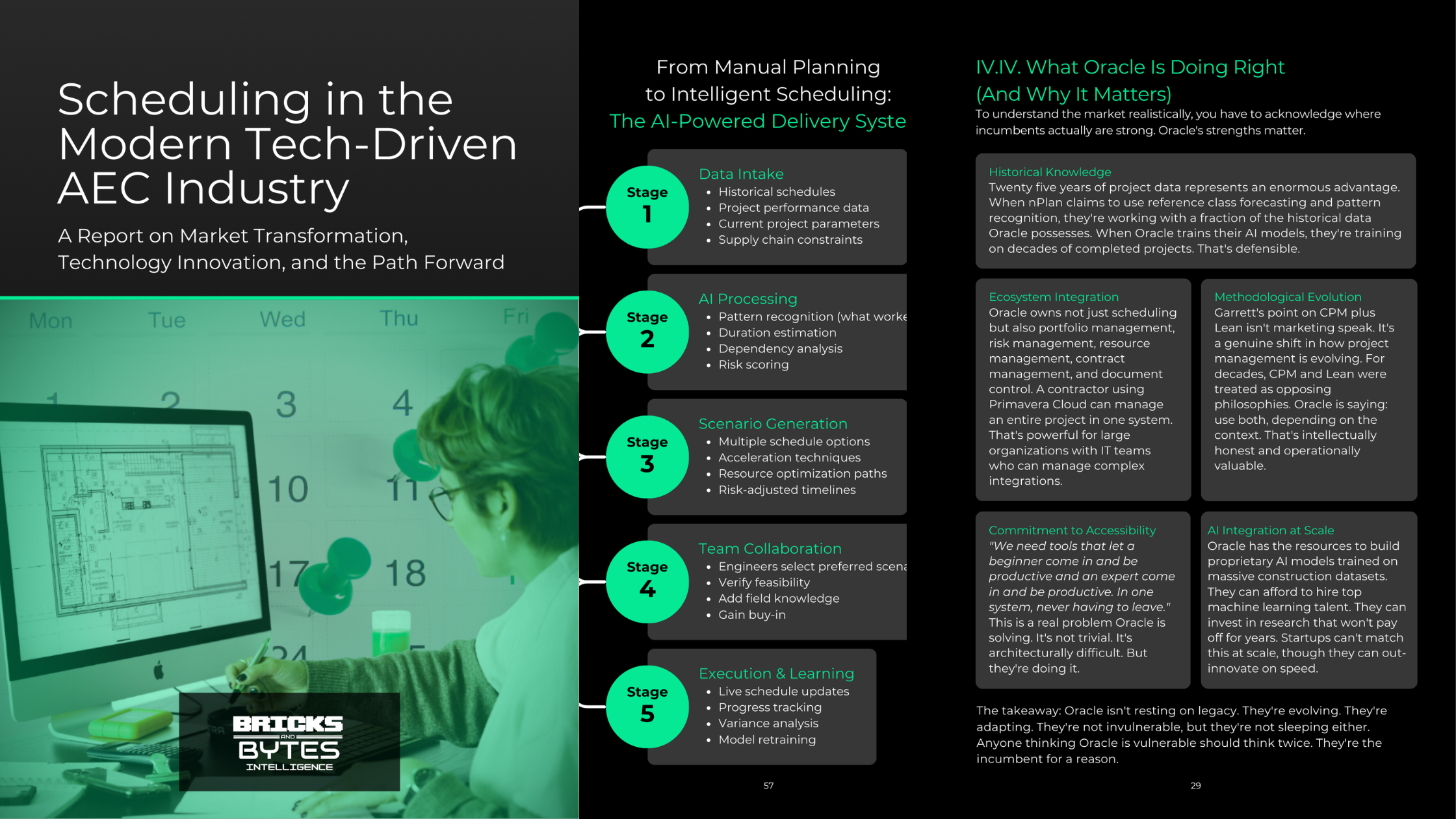
Get a FREE copy of our Scheduling in the Modern Tech-Driven AEC Industry: A Report on Market Transformation, Technology Innovation, and the Path Forward” (worth $150) and a FREE weekly email to stay up to date on construction tech. SIGN UP TODAY!

Scheduling in the Modern Tech-Driven AEC Industry

Sign up to the #1 Newsletter In AEC Tech. Join over 2,100 like-minded Founders, Investors and Techies disrupting the way we build. 

Scheduling in the Modern Tech-Driven AEC Industry