
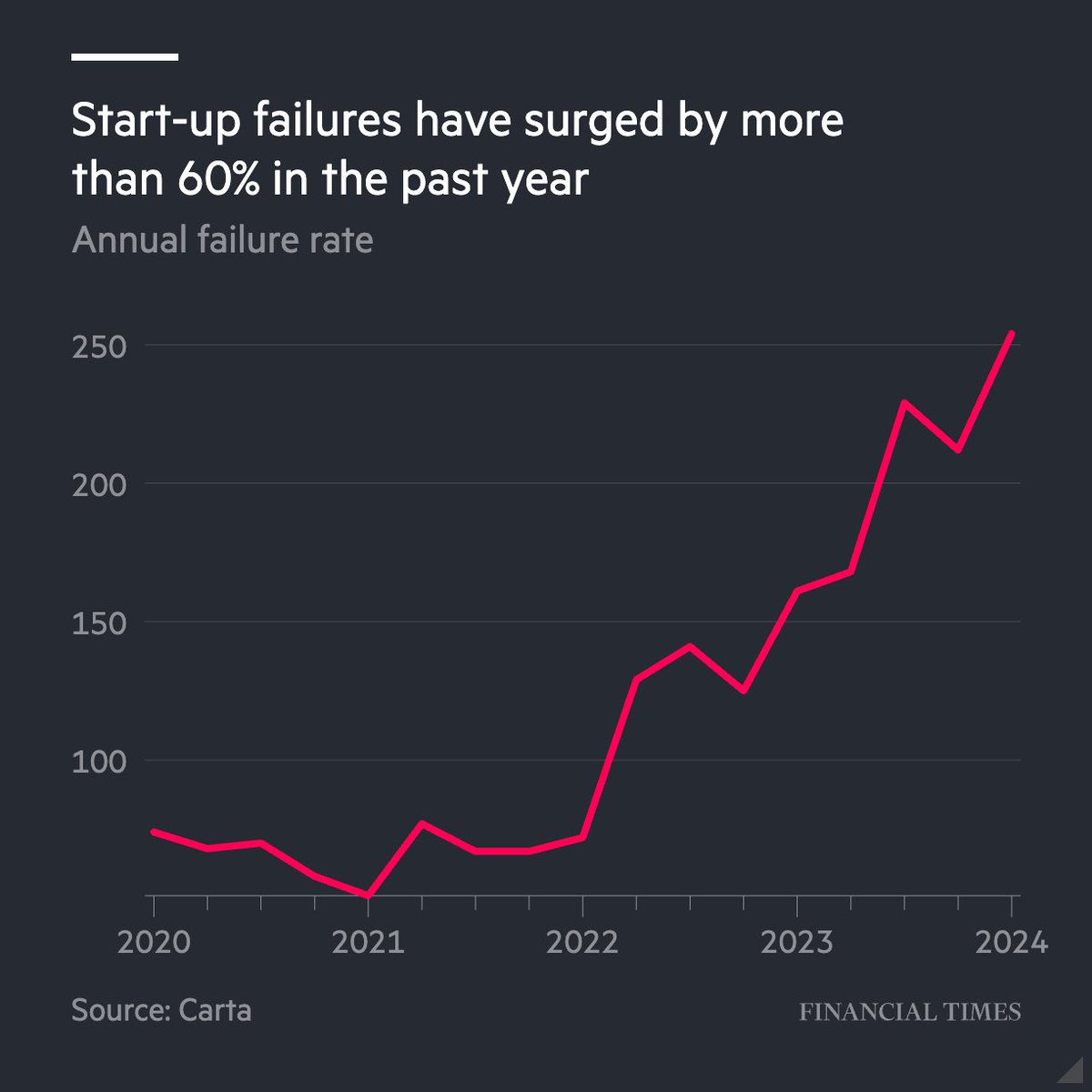
The startup ecosystem is experiencing a notable shift, with U.S. startup failure rates reportedly seven times higher than in 2019. But what’s really driving this change, and what does it mean for the future of venture capital? Through a recent discussion with venture capitalist Patric Hellermann, some fascinating insights emerge about the current state of startup funding and success.
The Bucket Theory
“Imagine startups as a bucket,” Hellermann explains. “And most startups outside of AECS are a leaky bucket until at some point either they are not or the bucket is empty.” This metaphor perfectly encapsulates the challenge facing today’s startup ecosystem. During the zero interest rate policy environment since 2012-2013, the venture community poured unprecedented amounts of capital into the market.
As Hellermann notes, “We put so much water into the ecosystem that we actually as a venture community created buckets to hold the water… And these buckets were leaky.” This excess capital led to the creation of startups that perhaps shouldn’t have existed in the first place, many of which are now failing as the funding environment tightens.
The AI Investment Wave
The situation becomes even more complex when considering the current AI boom. “It has been absolutely mind-blowing what has been funded these last 18 months in the AI department,” Hellermann observes. “One OpenAI wrapper after the other, complete clones of one another got funding from 10 million rounds to 150 million rounds without much scrutiny.”
This rush to fund AI startups mirrors the previous cycle but in an accelerated timeframe. Rather than learning from past mistakes, the venture community appears to be creating new leaky buckets in the AI space, potentially setting up another wave of failures in the future.
In this episode, we explored the surprising uptick in US startup failures and what it reveals about the current market.
Understanding Success and Failure
The factors influencing startup success are more complex than they might appear. According to Hellermann, “Out of 10 things that can happen to your startup, you control three or four… Three or four are outside of your control… And two are just unknown to you at the current point in time.”
This breakdown helps explain why even well-run startups can fail – and why poorly conceived ones might temporarily succeed in a capital-rich environment. The factors within control typically include:
- Hiring decisions
- Product development
- Distribution strategy
While external factors include:
- Regulatory environment
- Market conditions
- Competition
- Macroeconomic factors
The Geographic Factor
An interesting aspect of the current situation is its geographic variation. The U.S. startup market, while three times larger than either the European or Asian Pacific markets, shows some distinct characteristics. U.S. investors, particularly in early stages, often invest by backing multiple horses rather than through deep conviction – a strategy that can lead to higher failure rates but also potentially bigger winners.
Looking Forward
For entrepreneurs and investors alike, several key lessons emerge from the current environment:
- Focus on Fundamentals. Rather than chasing trends or trying to capture excess capital, focus on building sustainable businesses with sound fundamentals
- Understand Your Control Points. Recognise which factors you can control and excel at those while building resilience against external factors.
- Choose Your Market Carefully. Different geographic markets offer different risk-reward profiles and funding environments. Understanding these differences can be crucial for success.
- Avoid the Hype Cycle. While areas like AI offer exciting opportunities, avoid getting caught up in funding frenzies that can lead to unsustainable business models.
Industry-Specific Considerations
Interestingly, some sectors appear more resistant to these trends than others. The Architecture, Engineering, Construction, and Sustainability (AECS) sector, for instance, shows more stability. As Hellermann notes, “Investors in AECS have been doing a good job at being relatively cool headed, level headed and doing actual diligence rather than falling prey to hype.”
This suggests that sectors with clear real-world applications and tangible value propositions might be better positioned to weather funding cycles and market changes.
Conclusion
The current high failure rate of startups isn’t necessarily a sign of ecosystem failure – it’s a natural correction after a period of excess capital availability. However, it does highlight the importance of building sustainable businesses rather than just creating vessels for available capital.
For entrepreneurs, the key is to focus on building businesses that can stand on their own merits, regardless of the funding environment.
For investors, it means returning to fundamentals and ensuring that investment decisions are based on conviction and proper diligence rather than fear of missing out.