Author name: Owen Drury

Owen Drury Martin Piekarz
Venture

VC Billions to Startup Gold: Celebrating 2 Years

Think construction tech, think robots laying bricks, AI designing your dream home, and a whole industry turned on its head. We’re not just talking about this stuff – it’s happening. And we’re bringing you the inside scoop from the masterminds behind the Billions – and those Venture Capitalists who’re sniffing a fortune. This is the podcast that brings it all to you. And we’re celebrating 2 years by taking you behind the scenes. 

mohamel adel bird construction digital construction
Q&A

Transitioning to Digital Construction Fearlessly – Mohamed Adel – Q&A

This Q&A is taken from the full podcast episode we recorded with Mohamed. Q: What are the key factors for successfully implementing digital programs in construction? A: Successfully implementing digital programs in construction requires careful planning and execution. The software and tools must be easy to use, especially for workers on site, or adoption will suffer. They also need to be thoughtfully integrated into existing processes and workflows, rather than haphazardly added on top. Focusing on fundamental activities like model creation and short-term scheduling helps build a solid foundation. Shifting the cultural mindset from 2D drawings to 3D digital models is one of the most significant changes needed. Project teams need to embrace collaborating and working in a model-centric environment instead of relying on traditional 2D plans. While this transition can be challenging, it’s essential for achieving the full benefits of digitalization in the construction industry. Q: How can technology providers best sell their solutions to general contractors? A: To successfully sell to general contractors, technology providers should take a measured approach. Start with an intake meeting to honestly assess fit with current needs. If there is potential, arrange discussions with various stakeholders to get a complete picture of requirements. Propose a free pilot project to demonstrate confidence. Get the pricing model right, avoiding unreasonable fees based on project value. A hybrid of enterprise licensing and construction volume may work best. Don’t let investor pressure drive prohibitively high prices that limit adoption. Q: How can digital construction drive sustainability? A: Digital construction can drive sustainability in a few key ways. First, by tracking embodied carbon in 3D models submitted for permit approvals and centralizing this data with municipalities from the start, project teams can optimize designs to minimize emissions. Additionally, providing energy modeling services to clients allows them to preview efficiency gains from various design options and make informed decisions. Having this capability in-house, as Bird does, streamlines the process. Q: What advice do you have for traditional construction roles like project managers looking to shift into digital construction? A: For construction professionals looking to transition into digital construction, embracing change is key. Don’t be intimidated by technology; with the right attitude, it can be learned. Be open to new processes and tools, even if there is some initial resistance. Provide constructive feedback to improve digital solutions rather than dismissing them outright, as small tweaks can often make them workable. The combination of deep domain knowledge and a willingness to gain technological exposure is highly valuable. Companies at the forefront of digital transformation, like Bird, are actively seeking experienced project managers and superintendents to join them on this journey.

fraser patterson skillit construction labor shortage
Q&A

Construction Tech’s Unconventional Innovator – Fraser Patterson – Q&A

This Q&A is taken from the full podcast episode we recorded with Fraser. Q: Can you tell us about your journey from working as a carpenter to founding startups in the construction technology space? A: My journey has been quite unconventional. I started as a carpenter, but I’ve always had a love for math and an entrepreneurial drive. Being a carpenter taught me valuable lessons about risk mitigation and problem-solving. As a general contractor, I gained experience in managing complex projects and understanding the challenges facing the construction industry. This ultimately led me to found startups in the construction technology space, first in Mexico and then in the US with Skillit. Q: What are the main challenges you see in the construction industry, particularly regarding skilled labor? A: The construction industry is facing a critical shortage of skilled labor, with over 90% of companies struggling to hire craft workers. The hiring process for these workers is often antiquated and lacks digitization, making it difficult for employers to find and recruit the right talent. There’s also a lack of comprehensive data on workers’ skills, experience, and preferences, which hinders workforce development and retention efforts. Q: How does Skillit aim to address these challenges? A: Skillit is a data-driven recruitment platform that focuses on creating detailed profiles of skilled construction workers. By digitizing worker information, including their skills, certifications, work history, and job preferences, we make it easier for employers to find and hire the right people for their projects. Our platform also helps workers showcase their abilities and connect with job opportunities that align with their goals and experience. Q: You mentioned that many construction workers are now seeking full-time employment rather than gig work. Can you elaborate on this trend? A: Absolutely. According to our data, 92% of the tens of thousands of workers onboarded by Skillit are looking for full-time positions with employers who value their skills, offer fair compensation, and provide growth opportunities. This challenges the notion that most workers in the gig economy prefer independent contracting. We’ve found that stability is a top priority for many construction professionals, especially those in the early stages of their careers. Q: As a startup founder, what do you believe are the key skills necessary for success? A: I believe that storytelling is one of the most essential skills for a startup founder. Being able to craft and communicate a compelling narrative is crucial for attracting investors, recruiting top talent, and winning customers. A CEO must also be able to define the company’s strategy, set clear goals, and shape the organizational culture. Additionally, having a strong sales acumen and the courage to make decisions in the face of uncertainty are vital for navigating the challenges of building a successful startup. Q: Can you share your approach to fundraising and any advice you have for other founders? A: My approach to fundraising involves several key elements. First, it’s essential to conduct thorough research to identify investors who are the best fit for your company based on their investment thesis, stage focus, and expertise. I recommend developing an “ideal investor profile” and being highly targeted in your outreach. Second, crafting a compelling founder story is critical. Investors should resonate with your background, mission, and the problem you’re solving. Third, have a clear plan for how the raised capital will be used to achieve specific milestones, and be prepared to articulate this plan convincingly. Finally, run an organized fundraising process, engage with potential investors simultaneously, and be direct in seeking definitive answers. Remember that choosing the right long-term partner is just as important as securing the funds themselves.

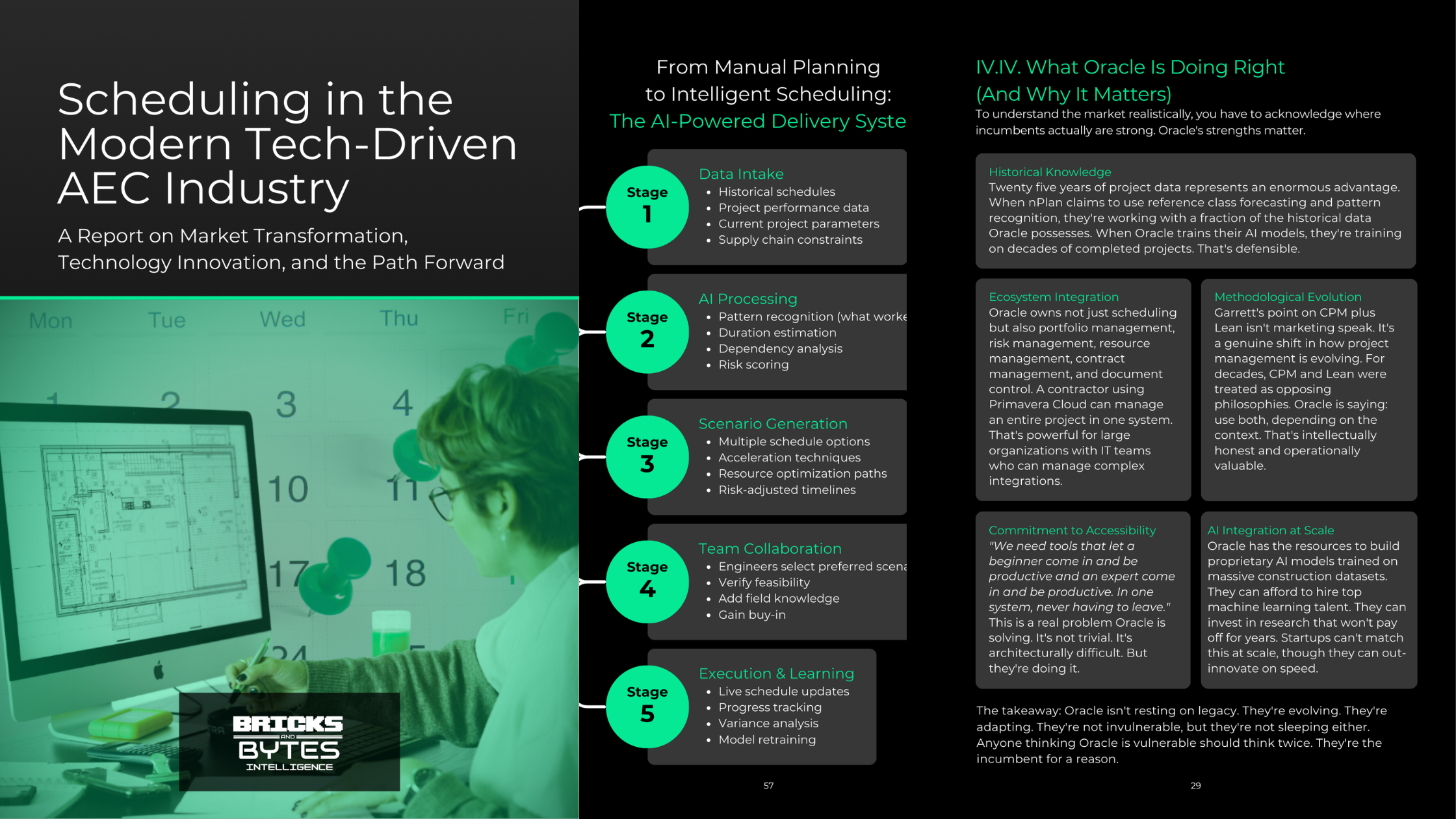
Get a FREE copy of our Scheduling in the Modern Tech-Driven AEC Industry: A Report on Market Transformation, Technology Innovation, and the Path Forward” (worth $150) and a FREE weekly email to stay up to date on construction tech. SIGN UP TODAY!

Scheduling in the Modern Tech-Driven AEC Industry

Sign up to the #1 Newsletter In AEC Tech. Join over 2,100 like-minded Founders, Investors and Techies disrupting the way we build. 

Scheduling in the Modern Tech-Driven AEC Industry