Author name: Owen Drury

Go To Market, Newsletter

The Powerful 3 P’s Of Go-To-Market in Construction Tech

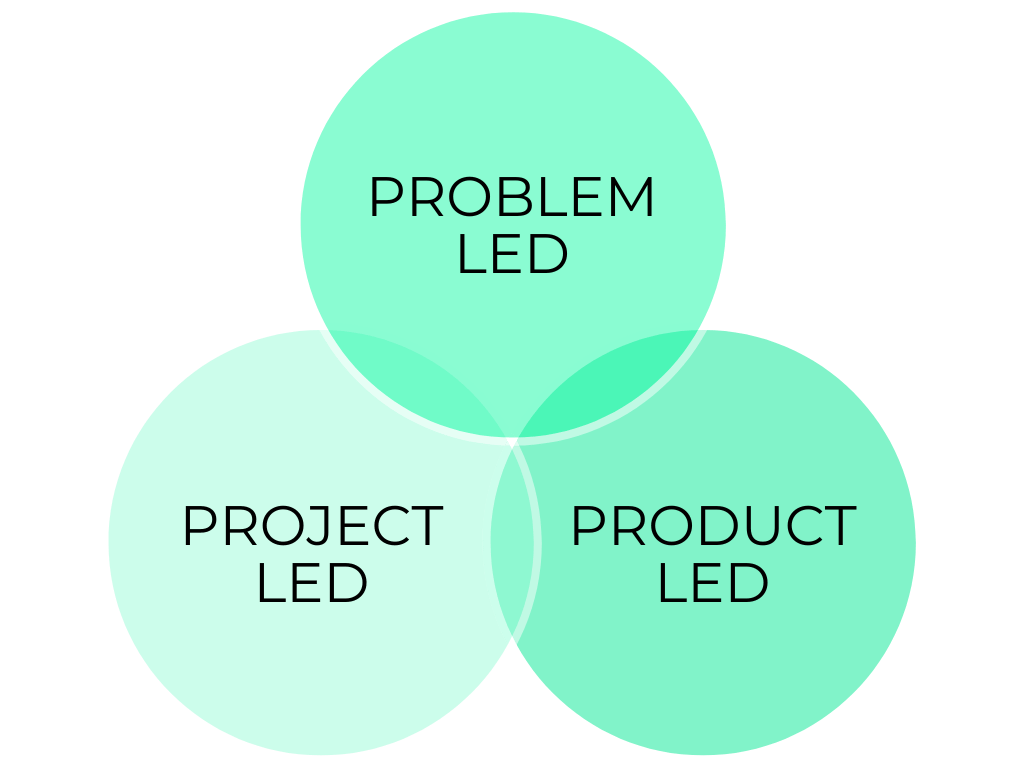
An Important Note – PLEASE READ Welcome to the newest edition of the Bricks & Bytes newsletter, your trusted source for in-depth insights into the world of construction technology. From emerging technologies, market shifts, funding news, startup growth, and groundbreaking research, our aim is to provide you with exclusive content that you won’t find elsewhere. If you find that this newsletter no longer aligns with your interests, you can easily unsubscribe by clicking the link in the footer. However, if you appreciate the value of our content, we invite you to grab a coffee and read on (you won’t be disappointed). As a token of our appreciation, we have included a small gift for our loyal readers at the bottom of this email. If you refer this newsletter to a colleague who you believe would benefit from our insights, you’ll receive a small reward as a thank you for your support. Without further ado, let’s dive into the latest developments shaping the future of construction technology.   INDUSTRY INSIGHTSThe Three Pillars of Construction Tech Growth: Product, Project, and Problem-Led Approaches Today, we explore “The Three PLGs” courtesy of our great friend, Scott Ellison, a seasoned Angel Investor, Mentor, CFO Consultant, and Advisor with a wealth of experience in helping construction tech startups thrive. Problem Led Growth Project Led Growth Product Led Growth These three strategies are crucial for growing construction tech companies. Unlike other industries, in construction, you cannot rely on just one. You need to consider all three. “I think it’s the most important thing that a startup can work on and figure out. I think if you get go to market right, you can mess up a bunch of other things and you’ll still be okay.”   1. Product-Led Growth Product-led growth is a strategy in which the product itself drives customer acquisition, expansion, and retention. This approach has been central to the success of many software companies over the past decade, such as Snowflake, Figma, and Slack. However, while aspects of product-led growth can be adapted to construction tech, they are insufficient due to the industry’s unique project-driven nature. Construction companies need more than just a product to drive growth.   2. Project-Led Growth (PLG) Project-led growth recognizes the construction industry’s project-driven nature, treating each project as a distinct entity with its own needs and dynamics. In construction, each project operates almost as a separate P&L centre, requiring a go-to-market approach that addresses the specific needs of individual projects. Success in construction tech often spreads through word of mouth within regions and across different projects, making localized success critical. An example is FieldWire, a company that successfully applied Project-Led Growth by integrating deeply into the workflow of individual construction projects and gaining traction through regional endorsements.   3. Problem-Led Growth (PLG) Problem-led growth starts by identifying specific customer problems and developing solutions to address these issues. This customer-centric approach focuses on understanding the construction industry’s particular challenges and solving them rather than promoting a preexisting technology. It requires a deep understanding of the construction sector’s intricacies, which can be achieved either by coming from within the industry or having a strong passion for learning and empathizing with its unique challenges.   Implementing The Three P’s To help visualize this, consider the three Ps as a Venn diagram rather than a hierarchical structure. Each strategy offers techniques and solutions that can be selected based on a company or project’s specific needs. This approach provides a comprehensive framework to address the multifaceted nature of the construction tech industry. Product-Led Growth: Start with a robust product that directly addresses the core needs of your customers. Focus on creating intuitive, indispensable tools that construction professionals can’t live without. Ensure that your product can stand on its own and attract users through its sheer value. Project-Led Growth: Recognize that construction is inherently project-driven. Tailor your solutions to the specific needs of individual projects, treating each one as a unique entity. Leverage localized success—word of mouth within a region can significantly boost your credibility. For example, if your tool significantly improves efficiency on one project, professionals will talk, and soon others in the region will take notice. Problem-Led Growth: Identify and solve specific problems faced by your customers. Rather than pushing a technology for its own sake, focus on the challenges that construction professionals encounter daily. Empathy and deep industry understanding are crucial. Your technology should make their work easier, safer, and more efficient. “Think of Product-Led, Project-Led, and Problem-Led Growth as three overlapping circles in a Venn diagram. It’s not about choosing one over the others but selecting techniques and solutions from each to create a tailored playbook that meets the unique needs of the construction industry.” A Unified Growth Framework Integrating the three P’s—Product-Led, Project-Led, and Problem-Led Growth—creates a powerful framework for success in the construction tech industry.  By addressing the unique dynamics of construction projects and focusing on solving real-world problems, your startup can achieve sustainable growth and a strong market presence. Embrace these strategies to build a comprehensive, adaptable playbook that propels your company forward. If you’re interested in hearing more about the above, listen to our episode with Scott. Interested in learning more? Check out the full episode with Scott Ellison 👇 Listen Now   WEEKLY MUSINGSCrossing The Chasm (Twice), Europe or Not, NASDAQ Newbies Project led-growth in action. Scale single success to multiple projects. Fast: Nate Fuller on LinkedIn: #construction #buildingconstruction #gotomarket #digitaltransformation… | 11 comments Early-stage construction tech companies often fall into the “death by pilot” trap—a significant barrier caused by the construction industry’s project-based… | 11 comments on LinkedIn www.linkedin.com/posts/nate-fuller_construction-buildingconstruction-gotomarket-activity-7191460727566573569-PWUb?utm_source=share&utm_medium=member_desktop Europe. Opportunity or problem? This is a trend I think we’ve all noticed in the industry. Contech seems to be thriving in Europe just as much in the US. Unfortunately for Europe, this is very rare. Construction is inherently fragmented so the fragmented market of Europe isn’t necessarily seen as a downside. — AEC Technology Dashboard (@AEC_Tech_Dash) May 21, 2024 $8.5bn Ferrovial to the

parker mundt, boost, suffolk technologies Construction tech accelerator program
Q&A

Navigating the Shark Tank: Insights from a Construction Tech Innovator – Parker Mundt – Q&A

This Q&A is taken from the full podcast episode we recorded with Parker. Q: Can you tell us about your journey from marine biology to construction technology? A: It was a little unorthodox. I went to Bowdoin College in Maine, which has deep ties with Suffolk Construction. I was playing football with a couple of guys who got jobs at Suffolk, and construction always piqued my interest. On the other hand, I was going to school to be a marine biologist and joined a white shark research team in South Africa for about six weeks. It’s not all that dissimilar to what we’re doing now. Sometimes you feel like the shark, but it was a wonderful experience. Q: What is the Boost program, and how does it support early-stage startups in the built world? A: Boost is our built world accelerator program, which we’ve been running since 2020. The idea is to marry smart, technologically savvy entrepreneurs with people who have longstanding operational experience within our industry. Startups apply to the program, articulating the business challenge they’re trying to accomplish. We select less than 10 companies and run an 8-week intensive program to help them solve their challenges. The program has grown from 85 applications in the first year to 212 applications from about 30 countries last year. Q: How has Suffolk Technologies evolved from being a corporate venture capital arm to an independent entity? A: In 2019, we began our investment journey as the CVC arm of Suffolk Construction. In 2020, we launched Boost, and in 2021, we started seeing more activity in the space. We decided to raise our first external fund and went out to raise $110 million from about 30 external investors, a 50-50 split between strategic and financial investors. We wanted to work with more companies and expand our focus beyond just the technologies Suffolk Construction would use. Q: What are your thoughts on the dynamics between incumbents and startups in design technology? A: There is room for a couple of unicorns in the design tech space. Some startups have made decisions that set them up not to be bought by competitors. The real danger for startups is if the incumbents decide they no longer want the startup to integrate with their software. Over the next three to five years, there will be interesting decisions made by both startups and incumbents regarding acquisitions and competition. Q: What matters most for the adoption of construction technology? A: Ease of implementation is probably the most important factor, even more so than ROI. The innovation life cycles for many contractors are very slow, so if a startup misses the window to sell their solution during the pre-construction phase, they may have to wait until the next project, which could be two or two and a half years later. Q: What is Suffolk Technologies’ secret sauce for picking category winners in construction and prop tech? A: We over-index very highly on the quality of the team. That’s second to none. You’re backing a founder, not just an idea. Our ability to help founders identify how to sell, who to sell to, and how to articulate their value proposition is our real competitive advantage. We have deep partnerships with people who are building, operating, leasing, or underwriting insurance for construction projects, giving us access to those dealing with these pain points daily. Q: What areas of construction technology are you most excited about? A: I’m most excited about supply chain visibility. It remains a massive issue that almost every job site in the United States is throttled with. The concern about not having the knowledge base to understand where some of the critical materials are for the job site and not being able to make informed decisions is a heavy lift, but there’s a lot of potential there.

virtual reality construction pico neo3 pro
Technology

Virtual Reality: A New Dawn In Construction Innovation

Picture this. You’re sitting in your living room, you slide on a bug-eye headset (Apple Vision Pro), it clicks in place,  – and you say “Hey Siri, open site”. In an instant, your living room walls dissolve into a kaleidoscope of pixels. Apple’s soft whoosh fills your ears – and now you stand at the heart of your construction site. With a thumb gesture, the scene shifts seamlessly, revealing a panoramic view of the sprawling complex. This is technology today – as it stands while you read this. 

david mitchell xyz reality augmented reality construction
Q&A

Transforming Construction with Augmented Reality – David Mitchell – Q&A

This Q&A is taken from the full podcast episode we recorded with David. Q: Can you tell us about XYZ Reality and what led you to start the company A: XYZ Reality was founded in 2017 to solve the problem of rework and inefficiencies in the construction industry using augmented reality (AR) technology. I grew up in the construction industry and experienced firsthand the challenges of building from 2D drawings. I became obsessed with finding a better way and believed that AR could be the solution. Q: What makes XYZ Reality’s AR technology unique? A: Our AR headset, the Atom, is the most accurate engineering-grade headset on the market. It allows construction professionals to position 3D models on-site with millimeter accuracy. The headset is designed to meet the specific needs and safety requirements of the construction industry. Q: How has XYZ Reality grown since its founding? A: We started with just three people and have now grown to over 130 employees. Our focus has been on hiring the right people who believe in our vision and are willing to put in the work to make it a reality. Q: What challenges did you face when seeking funding for XYZ Reality? A: Securing funding was a significant challenge in the early days. Construction tech and hardware were not popular among investors, and many were skeptical of the market potential. It took time to find investors who understood our vision and were willing to take a risk on us. Q: How does XYZ Reality’s technology benefit construction projects? A: Our technology provides real-time data and insights that help construction projects stay on schedule and budget. By accurately positioning 3D models on-site and tracking progress, we can identify issues early and prevent costly rework. Q: What are your plans for the future of XYZ Reality? A: Our goal is to become the “construction operating system” by merging the digital and physical worlds. We plan to expand our technology to other sectors of the construction industry and eventually make it accessible to the general public. We believe that one day, anyone will be able to build from holograms using our technology. Q: What advice would you give to other entrepreneurs in the construction tech space? A: My advice would be to focus on solving a real problem and communicating your vision clearly. Building relationships with investors and customers is crucial, especially in the hardware space. It’s also important to hire people who share your passion and are willing to put in the work to make your vision a reality. Q: What motivates you to keep pushing forward with XYZ Reality? A: I’m motivated by the potential impact our technology can have on the construction industry and the world. I believe that by making construction more efficient and accessible, we can improve lives and build a better future. Every challenge we overcome brings us one step closer to that goal.

gregory dewerpe ao proptech venture capital for property technology
Q&A

AO PropTech’s Investment Philosophy Decoded – Gregory Dewerpe – Q&A

This Q&A is taken from the full podcast episode we recorded with Gregory. Q: How did your unconventional journey lead you to start A/O PropTech? A: I’ve always had an appeal for underdogs and proving people wrong. After a long journey through investment banking, entrepreneurship, and real estate, I realized that the built world was an industry ripe for transformation. I saw an opportunity to create a venture capital firm that could drive positive change in the largest, least digitised, and most polluting industry on the planet. Q: What is A/O PropTech’s investment philosophy? A: We invest in the positive transformation of the built world, focusing on both sustainability and digital transformation. We believe that to drive meaningful impact, we need to invest not only in decarbonization and climate resilience solutions but also in the digital technologies that will make the industry more efficient and scalable. Q: Why is the retrofitting market such a massive opportunity? A: Retrofitting existing buildings is a $100 trillion opportunity, driven by the need to decarbonize the built environment. In Europe, 90% of the buildings that will be here in 2050 are already built, so there’s a huge need for retrofitting solutions. Regulation, customer demand, and pressure from capital markets are also driving the adoption of sustainable practices in the built world. Q: What are the key characteristics of successful built world startups? A: Successful built world startups need to understand their ultimate customer, create must-have technology, and demonstrate clear ROI. They need to be resilient, patient, and relentless in pursuing their vision, even in the face of setbacks and challenges. Q: How does AO PropTech approach investing in founders? A: We invest in both first-time and experienced founders, and we don’t discriminate based on past failures. We believe that some of the most successful businesses were started by first-time founders, and that past failures can provide valuable lessons and insights. What we look for is resilience, passion, and a deep commitment to solving problems in the built world. Q: What role does technology play in addressing the labor shortage in the construction and retrofitting industries? A: Technology is critical in addressing the labor shortage, by enabling the upskilling of workers and attracting new talent to the industry. We’ve seen companies like VARM leveraging technology to create excellence in the installation segment, and others using AI and automation to make construction more efficient and scalable.

wearable technology in construction
Technology

How Construction Wearables Are Leading the Change

With the global construction industry estimated to reach $15.2 trillion by 2030, it’s become a world engine for economic revival in the post-pandemic era. Yet, this force, as in industry, faces some major challenges – namely productivity and worker safety. Can new innovation in construction lead the change?

Todd Wynne, Chief Innovation Officer at Rogers O'Brien Construction project information management
Q&A

Reimagining Project Information Management – Todd Wynne – Q&A

This Q&A is taken from the full podcast episode we recorded with Todd. Q: What role does mindset play in innovation? A: Mindset and attitude precede everything when it comes to innovation. It’s essential to cultivate curiosity, courage, diversity of perspective, and a fun, light-hearted approach. These inputs help create an innovative culture within an organization. Q: What is the OPTIMA framework, and how does it help with innovation? A: The OPTIMA framework is an acronym that stands for Objective, People, Targeted Outcomes, Integrated Processes, Modern Tools, and Accurate Measurement. This framework helps organisations prioritise and focus their innovation efforts by ensuring that they have a clear objective, the right people, targeted outcomes, integrated processes, modern tools, and accurate measurement in place. Q: How should technology impact the construction industry? A: Technology should be deflationary for the industry, driving costs down. However, software costs have been rising due to an abundance of point solutions. It’s essential to focus on solutions that integrate well with existing systems and processes to maximise the benefits of technology. Q: What is the biggest challenge in implementing new technology in construction? A: Changing people’s habits is the biggest challenge in implementing new technology. Rather than trying to change people directly, focus on shaping the environment to encourage change. This approach can help facilitate the adoption of new technologies and processes. Q: What was the goal of Project Atlas? A: Project Atlas aimed to organise information the way construction projects are built, using maps and location-based data instead of traditional folder structures. By providing a more intuitive and context-aware way to access project information, Project Atlas sought to streamline processes and improve efficiency in the construction industry. Q: What do companies look for when considering acquiring a startup? A: Companies looking to acquire startups evaluate how quickly they can integrate the new technology into their existing stack and start generating sales. Startups that build their technology to easily plug into the acquiring company’s existing systems have a better chance of being acquired. Q: Advice for those looking to drive innovation in the construction industry A: Todd advises staying curious, looking at experiences with a different mindset, and always being open to learning and discovering better ways of doing things. He emphasizes the importance of understanding the problems and challenges faced by the industry and focusing on developing solutions that address those issues effectively.

Lisa Giuffra Diaz turf advisory construction tech investing
Q&A

Investing Insights: Wall Street to Construction – Lisa Giuffra Diaz – Q&A

This Q&A is taken from the full podcast episode we recorded with Lisa. Q: What do you look for when investing in construction technology startups? A: At Turf Advisory, we focus on three key factors: 1) Product-market fit: does the technology solve a real pain point in the industry? 2) Founder’s ability to communicate their value proposition effectively. 3) Founder’s grit and discipline to persevere through challenges. Q: How important is cash flow management for construction tech startups, especially in the current economic climate? A: Cash flow management is crucial, particularly in an environment with rising interest rates. Founders need to be disciplined with their capital and make sure every dollar is spent wisely. Even if a startup has raised significant funds, it’s essential to operate as if capital is scarce. Q: What are some unique challenges in the construction industry when it comes to adopting new technologies? A: The physical nature and bespoke aspects of construction projects make it harder to adopt new technologies compared to asset-light industries. Each project has unique requirements, making standardization difficult. Additionally, the risk-reward balance is different; a software bug may require a simple update, but a failure in construction can lead to catastrophic consequences. Q: How can construction tech startups drive successful adoption of their solutions? A: Successful adoption requires buy-in from both leadership and the boots-on-the-ground workers who will use the technology. Startups should focus on solving real pain points that matter to the end-users. Tactics like providing food/coffee at job sites and having an on-site “tech bar” can help drive worker adoption by creating a welcoming environment for learning about new tools. Q: What are some major trends you see in the construction technology space? A: Some key trends include: 1) Consolidation of solutions into a single pane of glass for easier management. 2) Growing importance of meeting diversity (MWBE) goals, especially for public sector projects. 3) Emphasis on solutions that drive technology adoption among workers. 4) Using technology to attract younger talent to the construction industry. Q: What life lessons have you gained from your experience with rowing, and how do they apply to business? A: Rowing has taught me the importance of measured, steady progress rather than trying to move too fast. Patience, discipline, and consistent effort are essential for success in both sports and business. Having a clear motivation and being able to push through unpleasant or challenging situations is crucial. Just as in rowing, in business, you need to have the right people in the boat, working together towards a common goal.

building information management
Blog

The Small Project’s Guide to Making It Big with Building Information Management 

Picture this: a world where every construction project, no matter its size, leverages the full potential of digital technology to achieve unprecedented levels of efficiency, collaboration, and value creation. This is the promise of Building Information Management (BIM), and it’s not just reserved for mega-projects with hefty budgets. In fact, BIM has the power to transform small and medium-sized projects, unlocking hidden value and propelling them to new heights of success. 

mark hood resi energy efficient retrofitting
Q&A

Resi’s 99% Planning Approval Rate – Mark Hood – Q&A

This Q&A is taken from the full podcast episode we recorded with Mark. Q: Can you tell us about Resi and its position in the UK market? A: Resi is the largest architectural designer for small projects in the UK, handling around 1,700 projects per year. We are the biggest user of the planning portal, with a 1% market share in residential extensions. Q: What kind of software is Resi developing to improve the customer experience? A: We are developing software that allows customers to design their own extensions in real-time, similar to Tesla’s configurator. This tool helps us communicate design in real-time to customers, making the process more efficient and engaging. Q: How does Resi work with other architects? A: We aim to have a positive relationship with architects and help them acquire customers more effectively. Some architects have even imitated our approach. We speak to them about how they can use our technology to make themselves more efficient and productive. Q: What sets Resi apart in terms of planning approval rates? A: Our planning approval rate is 99% when customers listen to our advice. We have extensive knowledge of local planning regulations, and our planning team consists of ex-planners with contacts in various councils. Q: What is Resi’s focus on the green agenda? A: We are focusing on retrofitting homes to make them more energy-efficient and comfortable while saving customers money on bills. We believe that unless there is a bold, zero-upfront cost finance option for retrofitting, it will be challenging to deliver retrofitted homes at scale. Q: What opportunities is Resi exploring in sustainable construction? A: We are exploring opportunities in sustainable construction, such as using Structural Insulated Panels (SIPs) in extensions. We believe that SIPs are the next iteration of our development, but incorporating them into extensions can be challenging.

henry nut iii southland industries construction leadership
Q&A

Pre-construction: Building Trust & Relationships – Henry Nutt, III – Q&A

This Q&A is taken from the full podcast episode we recorded with Henry. Q: Can you tell us about your journey in the construction industry? A: I started back in 1987 as a pre-apprentice and worked my way up through the ranks. I spent the majority of my career at two different companies, and at Southland, I started as a sheet metal general superintendent. For 12 out of my 17 years at Southland, I managed labor, overseeing up to 200 people at a time. Through this experience, I learned the importance of focusing on the people side of the business, developing leadership, and building communication skills. Q: In your book “Seven Principles,” which principle do you believe is most crucial in the context of construction? A: I believe “stop being a victim” is the most critical principle. We all face unfair circumstances in life, but if we allow ourselves to fall into a victim mentality, it will hinder our ability to accomplish anything. It’s about recognizing how we may be contributing to our own challenges and taking ownership of what we can control. Q: What are some of the key aspects of your role in pre-construction? A: Pre-construction involves building relationships with clients, understanding their needs, and developing trust. We work to differentiate ourselves, showcase our capabilities, and create a cohesive team that can effectively execute the project. It’s also about identifying unique solutions and opportunities early in the design phase to drive better outcomes. Q: What are some common obstacles that teams face in executing projects, and how can they be overcome? A: Communication breakdowns and lack of clarity around scope are common issues. It’s crucial to get the right people involved early, ensure everyone understands the project vision, and foster effective communication. Technology can help, but it ultimately comes down to the people using it. Q: Who do you believe are the true leaders on a construction project? A: I believe our superintendents are the true leaders. They are the liaison between the field and senior leadership, and they are directly responsible for executing the work safely, efficiently, and productively. They play a critical role in building and managing their teams. Q: How can the construction industry address the growing labor shortage? A: We need to change the image of the construction industry and expose the younger generation to the viable career paths available. This involves partnering with schools, highlighting the benefits of the trades, and emphasizing that construction offers a promising alternative to college. We also need to prioritize diversity, equity, inclusion, and belonging to attract a wider talent pool. Q: What message do you hope to convey through your work and your book? A: I want people to know that no matter their background or challenges, they have the power to control their destiny. Believing in yourself, refusing to be a victim, and being willing to work hard can help anyone overcome obstacles and achieve their potential. If I could do it, anyone can.

bim for construction
Technology

Construction’s Greatest Divide | BIM

Building Information Modelling (BIM) came as a game-changer in construction. Here’s a software with the potential to radically transform the way we build – from initial planning and design to construction, operation, and maintenance.

Get a FREE copy of our Scheduling in the Modern Tech-Driven AEC Industry: A Report on Market Transformation, Technology Innovation, and the Path Forward” (worth $150) and a FREE weekly email to stay up to date on construction tech. SIGN UP TODAY!

Scheduling in the Modern Tech-Driven AEC Industry

Sign up to the #1 Newsletter In AEC Tech. Join over 2,100 like-minded Founders, Investors and Techies disrupting the way we build. 

Scheduling in the Modern Tech-Driven AEC Industry