Author name: Owen Drury

raas impact on construction
Robotics

Robots on Demand: The Game-Changing Impact of RaaS on Construction

In recent years, the construction industry has been undergoing a significant transformation, with robotics playing an increasingly important role in improving efficiency, reducing costs, and enhancing safety on job sites. One of the most exciting developments in this space is the emergence of Robots-as-a-Service (RaaS), a model that allows construction companies to access and utilise robotic technologies on a subscription or pay-per-use basis. 

robots as a service
Robotics

Robots Are Here to Stay: How RaaS is Revolutionising Construction

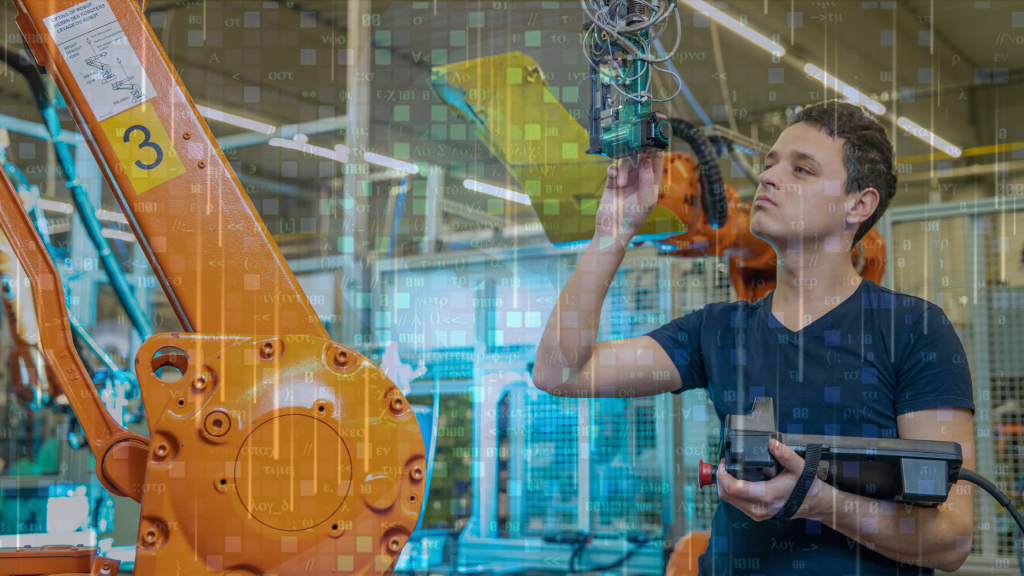
Construction sites are no longer alien territory for robots. As construction companies seek ways to increase efficiency, reduce costs, and improve safety on job sites, the adoption of robotic solutions has become increasingly popular. Robots are being developed not to replace human workers, but to work alongside them. They tackle tasks that are often the toughest, the most tedious, and sometimes even the most dangerous.

Newsletter

How to burn £10m in one year – Lessons from Modulous’ Downfall

INDUSTRY INSIGHTSHow to burn £10m in one year – Lessons from Modulous’ Downfall The story of Modulous falling into Liquidation in November 2023 is one that surprised the entire construction tech scene.  How could a company burn through over £10m in cash in just over a year, whilst only generating £92,000 in revenue? The answer?  Lack of focus, investor misalignment and lack of transparency. But with every downfall comes a bunch of lessons.  We were lucky enough to be joined by their ex Client Accounts Director who provided an inside-view on what happened during Modulous’ downfall. You can listen to the full episode here.   The Promise – Transforming Modular Residential Construction Modulous aimed to transform the construction industry by developing a software tool that could streamline the design and planning process for residential projects. Alongside this, the company worked on creating a modular hardware system that could be efficiently manufactured and assembled on-site. The combination of these solutions held the potential to significantly reduce construction time and costs while improving quality and sustainability.   Funding, Growth and Expansion Fueled by investor interest and a £10 million Series A funding round, Modulous experienced rapid growth.The company embarked on a hiring spree, expanding its team to around 60 employees within a short period. Simultaneously, Modulous made the decision to expand into the US market, despite the challenges posed by differences in building regulations and market dynamics between the UK and the US.   The Cracks Begin To Show As Modulous grew, several warning signs emerged. The company struggled to maintain focus, with resources divided between software development, hardware design, and market expansion. The skillsets of some team members were misaligned with the company’s immediate needs, leading to inefficiencies and communication breakdowns. “So you had a large development team, software development team working on this when actually the market outside may have been starting to come up with answers a lot faster. So, but I’m, you know, again, probably being horribly over simplistic because, you know, that software team moved heaven and earth to develop things over a short period of time.” Moreover, the pressure to secure additional funding and demonstrate progress to investors led to questionable decision-making and a lack of transparency within the organization. “Well, there may be an argument to say, you know, how involved were the investors in keeping on top of stuff to actually be able to do this? And how honest were the founders being with the investors about that, if they’re not so closely involved day to day.”   The Downfall: Modulus Enters Liquidation The cracks in Modulous’ foundation began to show when the company faced delays in design and manufacturing, leading to cost overruns and missed deadlines on pilot projects. As the company burned through its funding at an alarming rate, it resorted to delaying staff salaries and pension payments. In November 2023, just 15 months after its Series A funding round, Modulous entered liquidation, leaving employees and investors in shock.   Lessons For The Future The collapse of Modulous offers valuable lessons for industrialized construction startups. here are the four key lessons learned from Modulous’ journey:   Focus is crucial Startups must maintain a clear focus and avoid overextending their resources across too many initiatives simultaneously. Modulous struggled to balance its efforts between software development, hardware design, and market expansion, ultimately leading to a lack of focus and efficiency.   Honest communication Transparency and open communication with employees and investors are essential, particularly during challenging times. As Modulous faced delays and financial struggles, a lack of transparency within the organization contributed to its collapse.   Manage investor expectations Startups must set realistic goals and manage investor expectations to avoid undue pressure that can lead to poor decision-making. Modulous’ rapid growth and expansion, fueled by investor interest, created pressure that ultimately impacted the company’s stability.   Align skills with needs Hiring the right people with the appropriate skills and experience is critical for success. Modulous experienced challenges when the skillsets of some team members were misaligned with the company’s immediate needs, leading to inefficiencies and communication breakdowns. The story of Modulous serves as a cautionary tale for industrialized construction startups. While the company’s vision was compelling, its rapid growth, lack of focus, and internal challenges ultimately led to its downfall. As the industry moves forward, it is essential to heed the lessons learned from Modulous’ experience. Interested in learning more? Check out the full episode with Chris Spiceley 👇 Listen Now   WEEKLY MUSINGSAI, deep tech & construction robotics Building with A.I.? Don’t wing it. Nate Fuller on LinkedIn: Essential Questions to Ask Before Hiring an A.I. Company Is your A.I. provider the real deal? For construction companies—and really any industry—getting this right is crucial. It starts with asking the right… www.linkedin.com/posts/nate-fuller_essential-questions-to-ask-before-hiring-activity-7201593957204566017-qi2A?utm_source=share&utm_medium=member_desktop Lost in deep tech translation Michael Jackson on LinkedIn: #vc #venturecapital #startups #entrepreneurs #entrepreneurship #tech… | 17 comments That moment when an LP who can’t even figure out how Docusign works sends you “hot deeptech dealflow” from some of his old banker friends. 🙃 #vc… | 17 comments on LinkedIn www.linkedin.com/posts/michaeljacksonvc_vc-venturecapital-startups-activity-7206929847795728386-iqpE?utm_source=share&utm_medium=member_desktop Robots to the rescue Jake Hall on LinkedIn: #construction #manufacturing #robot #constructionindustry #robotics… | 73 comments The #construction industry is facing 𝟓𝟓𝟎,𝟎𝟎𝟎 𝐨𝐩𝐞𝐧 𝐣𝐨𝐛𝐬. Robots and Automation are being developed to fill the labor gap and create an attractive… | 73 comments on LinkedIn www.linkedin.com/posts/jacobrhall_construction-manufacturing-robot-activity-7206641411633401857-fExD?utm_source=share&utm_medium=member_desktop   RESEARCH Sustainable Construction & Modern Modular Living 011h – Accelerating The Sustainable Construction 011h optimizes build-to-rent development through a cloud off-site construction network, utilizing flat panels and pods crafted from engineered timber and CLT to streamline project execution. The company’s successful delivery of projects for industry leaders like Aedas Homes and Culmia has garnered investor interest. As they continue to showcase their impact and sustainability efforts at industry events, 011h is poised to capture a growing share of the construction market. To get early access to the full reports (coming soon) sign up here. Note, this waitlist will CLOSE at 25 members. Don’t miss

construction tech startup founder lessons chris spiceley modulus podcast episode
Q&A

From Modular Dreams to Cautionary Tales – Chris Spiceley – Q&A

This Q&A is taken from the full podcast episode we recorded with Chris. Q: Can you tell us about your background and how you got involved with Modulus? A: I’ve worked in various construction delivery roles, including project management and program and delivery director for companies like Mace and Lend Lease. I got involved with Modulous while working at Claritas, a contractor set up by John Wardle. Modulus seemed like a good potential partner for Claritas, and as I learned more about their model and software, I believed they had the potential to change the industry on a global scale. Q: What was Modulus trying to achieve, and how did they plan to do it? A: Modulus aimed to streamline the early stages of a project by basing their design on a series of systems, using actual models that could be delivered rather than just estimates. They wanted to create an approach for residential construction that could be applied globally, starting in the UK and then expanding elsewhere. Q: What were some of the challenges Modulus faced during your time there? A: Modulus took on too much by expanding to the U.S. market while still trying to establish their technology and business model in the UK. They also lacked focus, trying to develop both software and physical modular products simultaneously. This led to a high burn rate and inability to generate revenue. Q: Can you tell us about the 14-unit pilot project in Bristol and the issues faced during its construction? A: The 14-unit apartment scheme with Bristol City Council faced numerous challenges. Design was delayed due to client-side issues, internal problems, and supply chain delays. The pressure to secure the next tranche of funding led to poor decision-making, such as not addressing issues with subcontractors and cutting corners to meet deadlines. Q: How did Modulus’ financial difficulties affect the staff, and what could have been done differently? A: When Modulus faced financial troubles, there was a lack of transparency and honesty from the founders to the staff. This left employees, especially those on visas, in a difficult position without enough time to make informed decisions about their future. The founders should have been more upfront about the situation and made tough decisions earlier to extend the company’s runway. Q: What are your thoughts on the viability of offsite manufacturing and modular construction in the UK? A: Offsite manufacturing requires standardization and control of demand to be successful. One-off, bespoke projects are challenging and often unprofitable. Localized assembly plants may be a more viable model for modular construction in the UK, rather than large, centralized factories, due to logistical challenges and the nature of the market. Government policy and support are crucial for driving the adoption of modern methods of construction. Q: What’s next for you, and what do you think the future holds for the construction industry? A: I’m excited about the potential of a new timber product I’m involved with, and I’m also working with a management consultancy to help organizations tackle the challenges we’ve discussed. I believe that if we can change some of the behaviors in the contracting models and utilise the expertise of specialist engineers, we can transform how we deliver construction projects in the UK. The government’s role in creating and stimulating demand will be crucial in this process.

Newsletter

Winning Business Models Of Construction Robotics

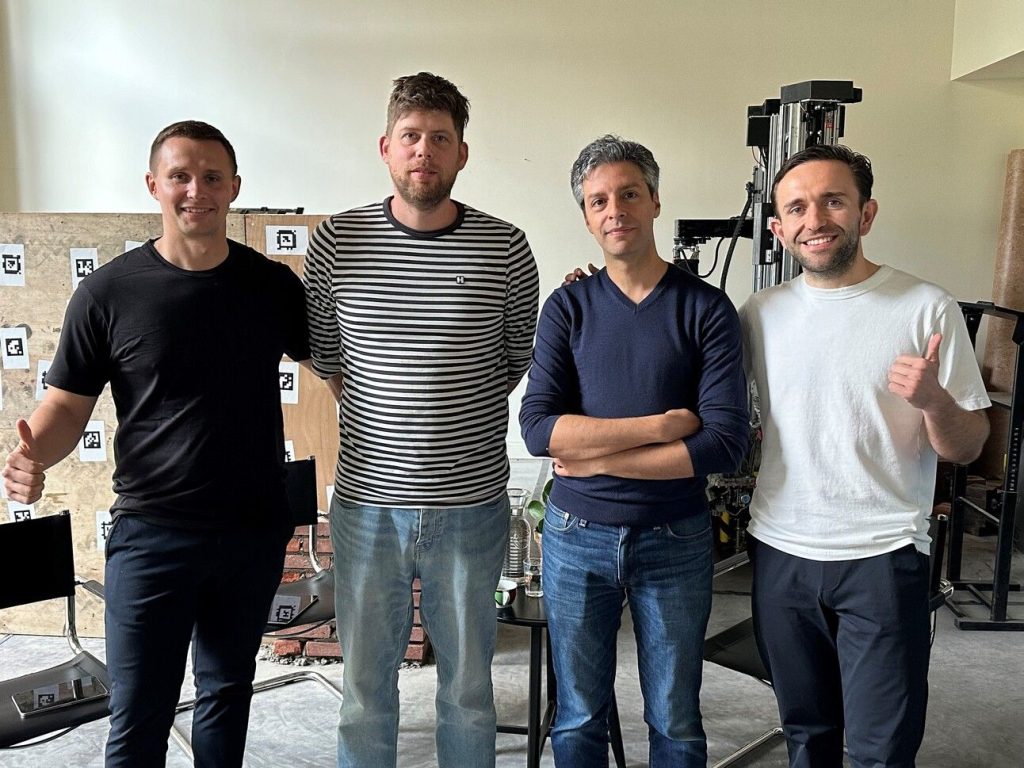
INDUSTRY INSIGHTThe Rise of Robotics in Construction: Insights for Startups and Investors In May, we travelled to Amsterdam. After sitting down with one of the most fascinating CEOs we’ve had on the show over the last 2 years, it was obvious to us that not all founders are created equal. Salar al Khafaji is the Founder and CEO of Monumental. A brick-laying robotics company backed by some of the greatest investors in construction technology. Although this post does not reveal Salar’s journey (we will soon release a series of videos on that topic), our trip, along with some episodes featuring our friends at Foundamental, sparked our curiosity in construction robotics and served as the inspiration for this post.   What Investor’s Look For In Robotics Companies: In April, on Bricks & Bytes, we discussed robotics with Patric Hellermann of Foundamental. Here are some of the points that transpired from our discussion. When evaluating construction trades ripe for robotic automation, investors look for:   Product-Centric Founders Investors seek founders with a strong product mindset who can componentise their technology stack and create modular, scalable solutions.  “The ideal background is a software and product background because it allows you to componentize a platform. And it allows you to have a mindset of automating just enough, but not everything.”   A Granular Focus Startups that target specific, granular parts of the construction workflow and build initial capabilities around them are more attractive to investors. This focused approach allows companies to develop expertise and establish a strong foundation for future expansion. In addition, investors consider the following characteristics: Controlled environments with highly repeatable motions Trades requiring no more than two axes of motion Tasks where worker safety is a concern, driving faster adoption Activities prone to causing frequent worker injuries, such as repetitive bending Applications with simple geometries and large, uniform surfaces   Outcome-Oriented Business Models. Investors favor startups that sell access to their robots rather than the robots themselves. By offering robotics-as-a-service or acting as a robotic subcontractor, companies can capture more value and scale their operations more effectively.   3x Winning Business Models For Robotics Getting the business model right is essential to success. It requires unconventional thinking, not simply selling robots to contractors in the hope that your robotics company will succeed. Martin and Owen with Sebastian (Co-Founder and CTO) and Salar (Co-Founder and CEO) of Monumental So far we have discovered that there are three primary business models for robotics companies in the construction industry: Selling Robots Outright. While selling robots directly to contractors is an option, it may not be the most scalable or profitable approach. Offering Robots-as-a-Service. In this model, the startup owns and maintains the robots, providing access to contractors on a subscription or pay-per-use basis. This approach reduces upfront costs for contractors and allows the startup to maintain control over the technology. Acting as a Robotic Subcontractor. Perhaps the most promising model is for the startup to act as a robotic subcontractor, providing the automated service itself. This approach captures the most value and mirrors how human subcontractors operate today. In the long-term, a hybrid model that combines in-house service provision in major cities with franchising to partners in other regions could offer the best of both worlds. Robotics in construction is still in it’s infancy. But there has been a huge influx in funding over the last few years. The business models noted above are what we know so far, but that’s not to say as robotics become the norm, the winning business model develops into some different altogether.   How To Build a Winning Robotics Company The rise of robotics in construction presents a transformative opportunity for startups, investors, and the industry as a whole. Robotics has the potential to revolutionise the way we build by addressing labor shortages, delivering predictable outcomes, and leveraging technological advancements. As the industry evolves, the startups to watch will embrace a product-centric approach, focus on granular problem-solving, and adopt scalable business models. To build a successful robotics company in the construction industry, startups should: Embrace a product mindset rather than an automation-centric approach Target granular parts of the workflow to build initial capabilities Componentise the technology stack for reuse and expansion Sell access to the robot rather than the robot itself Prioritize repeatability over cutting-edge AI applications With the right strategies and a deep understanding of the construction landscape, the future of robotics in this sector is bright, promising a new era of efficiency, safety, and innovation.   WEEKLY MUSINGSData Woes, Explaining Tech, and Building Big in India A.I. is cool, but bad data in = bad data out. Erin Khan on LinkedIn: #data #showerthoughts #contech #ai #again #aec #constructiondata… | 21 comments We’re transitioning from, “there’s an app for that” to, “there’s an A.I. for that” – which should make us really think twice about the integrity of our data in construction… | 21 comments on LinkedIn www.linkedin.com/posts/erin-khan-655a761a_data-showerthoughts-contech-activity-7204513805656080387-A_Lw?utm_source=share&utm_medium=member_desktop Next challenge: explaining the internet to pigeons. I just had a call with a customer who asked me what a “cloud” is. Working with contractors is going to make me a great father one day. I’ve become a pro and explaining things at an elementary level while simultaneously making them feel smart. — AEC Technology Dashboard (@AEC_Tech_Dash) Jun 6, 2024 Big money for big builds. MARS doubles down on India’s Infra.Market with new $50M investment | TechCrunch Infra.Market, an Indian startup that helps construction and real estate firms procure materials, has raised $50M from MARS Unicorn Fund. techcrunch.com/2024/05/28/mars-doubles-down-on-indias-infra-market-with-new-50m-investment/?   RESEARCH Bricklaying Bots & EV Charging Rugged Robotics – Modernised Layout Processes Rugged Robotics is modernising construction layout processes through their full-service platform operated by skilled experts. By leveraging robotic automation, they deliver ultra-fast, precise layouts with exceptional design fidelity. Their solution captures even the most intricate geometries, provides actionable data for installation clarity, and lays out all trades in a single pass. Rugged Robotics’ team brings a deep understanding of building control and runway requirements to ensure optimised

vivin hegde zacua ventures early stage startups bricks and bytes episode
Q&A

Transforming Construction Through Early-Stage Startups – Vivin Hegde – Q&A

This Q&A is taken from the full podcast episode we recorded with Vivin. Q: Can you tell us about your background and how you ended up in venture capital? A: My journey to venture capital was not a straight path. I was born and raised in India, where I became a mechanical engineer. After a brief stint in investment banking at Deutsche Bank, I joined McKinsey, where I spent about six and a half years working on projects in various industries across different geographies. I then joined Hilti, a leading construction technology company, where I worked in corporate strategy and later in frontline sales in the Bay Area. This experience gave me a deep understanding of the construction industry and its workflows. Subsequently, I helped set up Hilti’s venture capital arm and also worked with Trimble’s venture arm before co-founding Zacua Ventures with my partners, Juan and Mauricio. Q: What inspired you and your partners to start Zacua Ventures? A: My partners and I had similar experiences working with corporate venture capital arms in the construction industry. We realized that there was an opportunity to create a neutral player that could help de-risk the entry of corporates into the construction tech space while also supporting startups by providing them with access to the corporate ecosystem. We wanted to create a firm that had a global presence, focused on early-stage investments, and could bring together people with skill sets in understanding the startup ecosystem, the corporate ecosystem, workflows, and investments. Q: What is Zacua Ventures’ investment philosophy and framework? A: Zacua Ventures is focused on investing in early-stage startups in the built environment space. We have three specific themes that we invest in: productivity, sustainability, and organization and infrastructure resiliency. We maintain a concentrated portfolio, investing in 20-22 companies per fund, and take a hands-on approach to support our portfolio companies. Our investment framework involves a thorough diligence process, including customer interviews and input from our corporate partners, to ensure that we are investing in startups that are solving real pain points in the industry. Q: Can you share a case study of a portfolio company that exemplifies your investment criteria? A: One of our first investments was in Document Crunch, a startup that enhances contract transparency and mitigates risk in construction. We were impressed by the founder’s deep understanding of the industry and the clear pain point that the startup was addressing. Contracts are used in almost every process in construction, and having clear contracts is the basis of building trust in an industry that is built on risk mitigation. We led Document Crunch’s pre-seed round and have continued to support the company through subsequent rounds. Q: How do you see the future of venture capital evolving, particularly in the construction tech space? A: I believe that specialization is becoming increasingly important in the venture capital industry. Specialist firms, like Zacua Ventures, that have a deep understanding of a particular industry or geography are often outperforming generalists, particularly among emerging managers. In the construction tech space, we are seeing a lot of interest and investment activity globally, with trends and solutions varying across geographies due to differences in market maturity, regulatory landscapes, and specific challenges faced by each region. As the industry continues to evolve, I expect to see more specialized venture firms emerging to support the growth of construction tech startups.

gs ventures yaniv lusana and aaron toppston venture capital investment q&a
Q&A

The GS Futures Formula – Yaniv Lusana & Aaron Toppston – Q&A

This Q&A is taken from the full podcast episode we recorded with Yaniv and Aaron. Q: Can you tell us about GS Group and GS Futures? A: GS Group is a large Korean conglomerate with three main business lines: retail, energy, and construction/real estate. GS Futures is the venture capital arm of GS Group, primarily focused on investing in early-stage startups that are developing technologies for the construction and real estate industries. Q: What is GS Futures’ investment approach? A: GS Futures aims to be a strategic investor and partner to their portfolio companies. They provide not only capital but also industry knowledge and potential commercial opportunities through their connections with GS Group. When evaluating potential investments, they consider whether a technology is a “vitamin” (nice to have) or a “painkiller” (a must-have solution to a major problem). Q: What do you look for in founders when considering an investment? A: GS Futures values humble, coachable founders who have a deep understanding of the problem they are solving. Interestingly, they’ve noticed that about 75% of their portfolio company founders are motorcycle riders. Q: How has technology adoption in the construction industry evolved recently? A: Historically, the construction industry has been slow to adopt new technologies, with less than 1% of project budgets typically allocated to tech solutions. However, this is starting to change as more startups emerge to address real pain points in the industry. Q: What are some of the exciting technologies you see in the construction space? A: GS Futures is particularly excited about robotics, alternative sustainable building materials, and AI-enabled software solutions for the construction industry. Q: Are there any areas in construction tech that you feel are currently underinvested? A: Yes, we believe end-to-end workflow and supply chain management solutions that can navigate the complex stakeholder landscape in construction are still underinvested. There’s a big opportunity for startups that can help connect the various parties involved in a construction project and streamline processes. Q: How do you think about incumbents like Procore in the construction tech space? A: Procore has done a great job serving the needs of large general contractors, but we see gaps in their offerings for subcontractors and project owners. There’s still room for new entrants to address these underserved segments of the market. Q: What are some of the unique challenges construction tech startups face compared to typical SaaS companies? A: Construction tech startups often deal with slower adoption curves and may lack the recurring revenue models that typical SaaS companies enjoy. However, the large market opportunity in construction still makes it an attractive space for venture investment. Q: How are you seeing the venture capital landscape evolve in the construction tech space? A: We’re seeing more corporate venture capital firms investing in construction technology as a form of R&D, while institutional venture capital has retreated somewhat due to rising interest rates. This presents an interesting dynamic for startups in the space seeking funding.

vertical saas omar el hayat euclid ventures
Q&A

A Vertical SaaS Perspective – Omar El Hayat – Q&A

This Q&A is taken from the full podcast episode we recorded with Omar. Q: Can you tell us about Euclid Ventures and your investment focus? A: Euclid Ventures is a first-check fund focused on investing in vertical software and software-enabled platforms in large, underserved industries. We lead $1-3 million rounds and generally invest at the first institutional capital stage. Construction is our largest investment area, making up about 35% of our deals and 40% of our dollars invested. Q: How important is it for founders to have domain experience in the industry they’re targeting? A: We believe that having founders or founding teams with domain knowledge and industry connections is crucial for early success in vertical SaaS. It allows them to truly understand the market problem, build credibility with potential customers, and acquire early adopters. In fact, our analysis showed that 84% of successful vertical SaaS exits had at least one industry founder on the team. Q: What are some of the challenges and opportunities in the construction industry for vertical SaaS companies? A: Construction is a highly fragmented market with numerous sub-markets, each with its own set of challenges and opportunities. The industry has a low technology adoption rate (around 1% of spend), indicating significant room for growth and disruption. However, selling to the construction industry can be challenging due to long sales cycles, multiple stakeholders, and limited software budgets. Q: What is your advice for vertical SaaS startups when it comes to go-to-market strategies in construction? A: Go-to-market strategies in construction can vary depending on the target customer and the specific sub-market. Some successful approaches include targeting the top 100-500 companies with enterprise sales, focusing on specific subcontractor niches, or adopting a bottoms-up approach with inbound marketing and self-serve onboarding. Building strong relationships and establishing local presence are often key to success. Q: How do you evaluate potential investments, and what do you look for in founding teams? A: We look for exceptional teams with unique insights into the market and a clear path to building a category-defining company. We care about the combination of a strong team and a compelling market insight. We also evaluate the urgency and velocity of the problem they’re solving, as nice-to-have solutions often struggle to gain traction in construction. Q: What role do you think AI and machine learning will play in transforming underserved industries like construction? A: AI and machine learning have the potential to transform underserved industries, but the specific applications and paradigms are yet to be discovered. We believe that the key is to focus on applying these technologies to solve specific, urgent problems within the industry rather than trying to “AI-ify” an entire market. As the technology matures, we expect to see more compelling use cases emerge. Q: What sets Euclid Ventures apart from other VCs, and why should founders partner with you? A: At Euclid Ventures, we bring decades of experience in supporting founders and helping them scale their vertical SaaS businesses. We have a strong track record of backing successful companies and helping them reach product-market fit and achieve long-term success. Additionally, we offer access to a network of over 70 vertical software founders who can provide guidance and support to our portfolio companies.

construction tech
Technology

Building The Trust That Makes Millions | Construction Tech

The construction technology sector is undergoing a renaissance, with investment pouring in and a growing awareness of the industry’s need to modernize. But for startups entering this arena, success isn’t just about having a great product. It’s about understanding the unique landscape of construction and tailoring your go-to-market strategy accordingly.

construction go-to-market strategies
Technology

Where The Gold Lies In Construction Tech| BB Expert Excerpts

The construction technology sector is undergoing a renaissance, with investment pouring in and a growing awareness of the industry’s need to modernize. But for startups entering this arena, success isn’t just about having a great product. It’s about understanding the unique landscape of construction and tailoring your go-to-market strategy accordingly.

Learn how PLG, Project-Led, and Problem-Led Growth strategies can revolutionise your startup
Technology

Construction-Innovation’s New Success Blueprint | BB Expert Excerpts

Venture capital is pouring into the construction innovation, going from £4.5 billion pre 2019 to a staggering £30 billion. Yet, experts in this field are starting to recognize that to hit the gold – they have to come up with more than flashy gadgets and Silicon Valley buzzwords. Construction industry demands its own algorithm and technology to align with their go-to-market strategies.

kp reddy shadow ventures venture capital for construction tech
Q&A

Shadow Ventures: Redefining VC Norms – KP Reddy – Q&A

This Q&A is taken from the full podcast episode we recorded with KP. Q: Can you tell us about your background and how you got involved in construction technology? A: My dad was a civil engineer, and like any good Indian dad, he took me to work when I was 11 years old. I grew up in the business, and when computers became popular in the mid-80s, my dad bought a PC and told me to figure it out. My first startup was a web-based construction management company in 1997, before everyone else in the industry. Q: What advice would you give to founders looking for the right co-founder? A: Finding the right co-founder is like dating. You have to take the time to get to know the person, understand each other’s strengths and weaknesses, and ensure there’s a strong connection. It’s a minimum 10-year relationship, so it’s crucial to be patient and not rush into an emotional attachment without running an analytical process. Q: Where do founders often go wrong when building a startup? A: Founders are often patient about the wrong things and impatient about the wrong things. They should focus on validating their ideas and conducting thorough customer discovery before scaling. Founders with industry knowledge sometimes have too much arrogance, thinking they know everything, which can lead to failure. Q: What is your investment thesis at Shadow Ventures? A: At Shadow Ventures, we invest in seed-stage startups in the built environment, including construction tech, design technologies, and prop tech. We focus on companies with strong technical defensibility and passionate founders who can get others excited about their vision. We generally write $2 million checks for 10% ownership. Q: What challenges do robotics startups face in the construction industry? A: Robotics startups in construction face a talent challenge. Top roboticists often want to work on other projects, so attracting the right talent with a passion for solving construction problems is difficult. Additionally, the capital stack for hardware companies is different, requiring a mix of equity and debt financing to fund inventory and growth. Q: How do you see AI impacting the venture capital landscape? A: AI has the potential to enable entrepreneurs to bootstrap their companies more easily, potentially reducing the need for venture capital in certain sectors. With AI tools, founders can build and market their products faster and cheaper, questioning the role of VCs in the process. The right VCs, who understand the technology and are technical themselves, will survive. Q: What’s your take on profitability for startups? A: Profitability is not always the primary focus for startups, as long as they can attract investors who believe in their growth strategy. Companies like Amazon and Procore have sustained losses for years while growing, backed by investors who support their vision. However, when investors start demanding profitability, companies must adapt and focus on generating cash flow and dividends. Q: What excites you about the future of construction technology? A: The construction industry is ripe for disruption, with a growing need for technology to address labor shortages and increasing demand for housing and infrastructure. There’s so much going on in the space, from robotics to AI, that it’s an exciting time to be involved. As someone with a background in civil engineering and a passion for understanding how things work, I find this intersection of technology and construction incredibly fascinating.

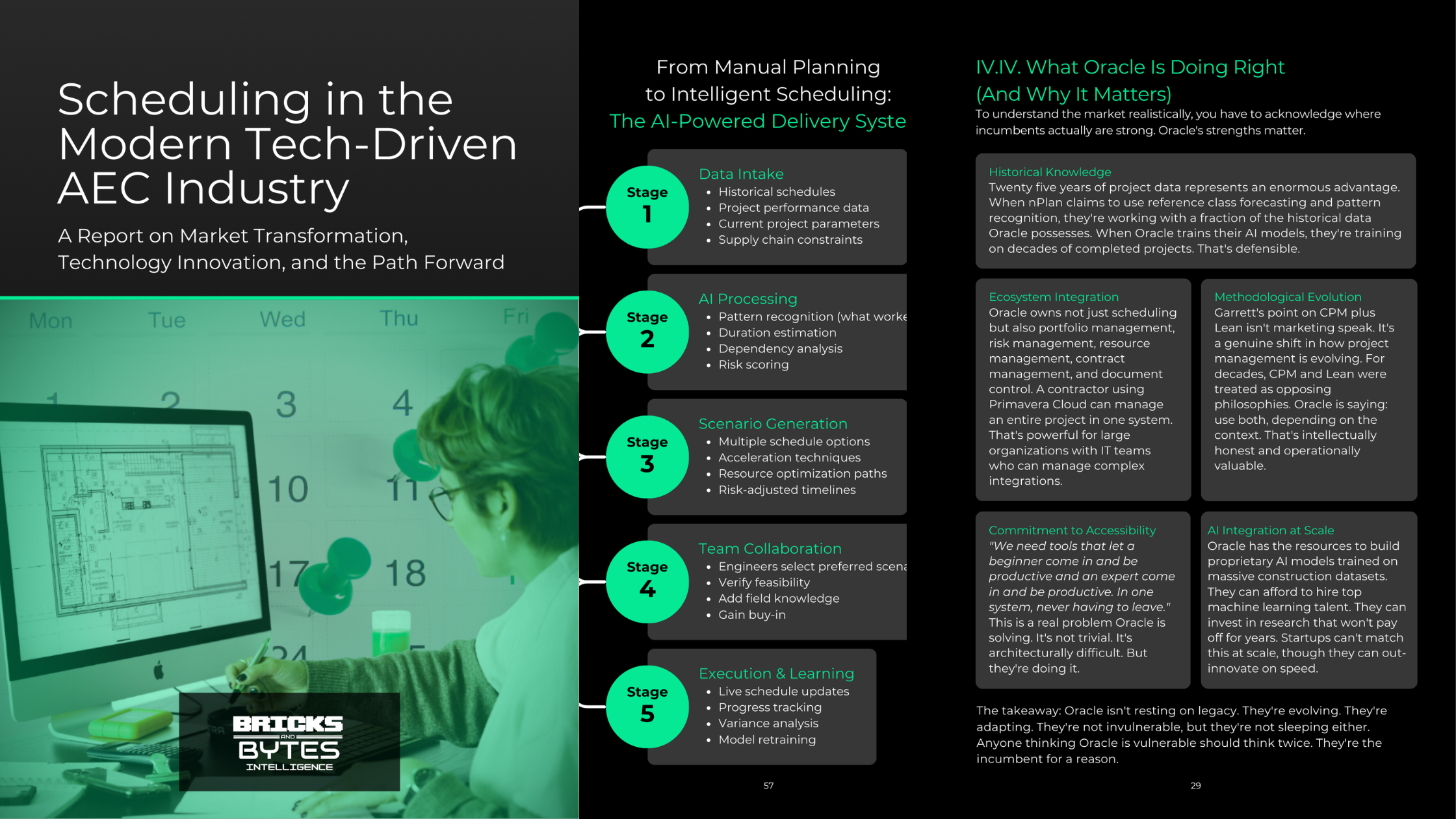
Get a FREE copy of our Scheduling in the Modern Tech-Driven AEC Industry: A Report on Market Transformation, Technology Innovation, and the Path Forward” (worth $150) and a FREE weekly email to stay up to date on construction tech. SIGN UP TODAY!

Scheduling in the Modern Tech-Driven AEC Industry

Sign up to the #1 Newsletter In AEC Tech. Join over 2,100 like-minded Founders, Investors and Techies disrupting the way we build. 

Scheduling in the Modern Tech-Driven AEC Industry