
Author name: Owen Drury

Newsletter

ICYMI: Founding SpaceX, Implenia’s Innovation Strategy and Origin Story of Foundamental

This Week’s Quickfire BytesFuel your curiosity with this week’s contentW/C 16th September 2024 NEW EPISODES How Implenia Navigates Innovation in a Traditional Industry – Karel Van Eechoud’s Approach For Innovation “Innovation isn’t just about digital solutions – sometimes it’s about reinventing the materials we use every day.” In this episode, we had Karel Van Eechoud, Head of Innovation at Implenia. We got to learn about the challenges of urban construction, the importance of material innovation, and the role of entrepreneurship in a large construction company. How to Build a Space Company: Jim Cantrell’s Journey From SpaceX’s Founding to Phantom Space – BONUS Episode Ever wonder what it takes to start a rocket company? Or how SpaceX got off the ground? In this episode of BitBuilders, we had Jim Cantrell, one of SpaceX’s founding team members. He shared incredible stories from the early days of SpaceX and lessons learned building hard tech startups. Super Series Preview With Foundamental – Episode 001 – Origins Note: This is the 1st episode of our 8-part Super Series with Foundamental. The unique origin story of how three unlikely partners came together to create a global powerhouse in construction tech investing. How Gecko Robotics is Transforming Asset Management Using Robot Inspectors – Troy Demmer Are robots the future of infrastructure safety? This startup’s journey might surprise you. We learned about Troy’s journey from healthcare to robotics, the challenges of building hardware startups, and how Gecko is transforming infrastructure maintenance for both private and public sectors. View All Podcasts BRICKS & BYTES BULLETINCould an Entrepreneur in Residence Save Your Construction Firm? We’ve seen the term “Entrepreneur In Residence” (EIR) coined in many ways. Is it just a “trendy” word? Is it a must-have title these days? Why the hell do you need one in construction? Well, Victor Muchiri, an EIR at Barton Mallow, recently shared insights with us. His perspective sheds light on this emerging role in construction. Read Full Article 2 FAVORITE QUOTES: “Innovation will never, let’s say, it will never have a purely 100% return on innovation, meaning part of your activities will be indirectly contributing to this ROI.” – Karel’s nuanced view on measuring the return on investment for innovation activities “The only thing he is about in SpaceX is about going to Mars. In fact, I would submit to you that his entire enterprise set is about settling Mars.” – Jim’s insight into Elon Musk’s core motivation behind SpaceX and his other ventures LATEST STORIES: How AI and IoT are Revolutionising Heavy Equipment Management in Construction Discover the significant opportunity for improvement in heavy equipment management in construction. Learn how to optimise equipment usage and reduce costs. Cognitive Biases in Project Management: The Hidden Influences Shaping Our Decisions Discover how cognitive biases in project management impact decision-making. Learn to identify and overcome availability, optimism, and salience biases for better project outcomes. How Latin America and the Middle East are Reshaping the ConTech Landscape The construction tech landscape is expanding. Latin America and the Middle East are emerging as powerhouses of innovation, challenging Silicon Valley’s dominance. View All Articles BONUS CONTENTWhat Are Investors Betting On? OUR SPONSORS Shft — helping contractors like you leverage BIM to secure a leading position in the race towards construction’s digital future.  BuildVision — streamlining the construction supply chain with a unified platform for contractors, manufacturers, and stakeholders. Powered by beehiiv


super series foundamental
Videos, Venture

Inside Foundamental: Pioneering Global Construction Tech VC

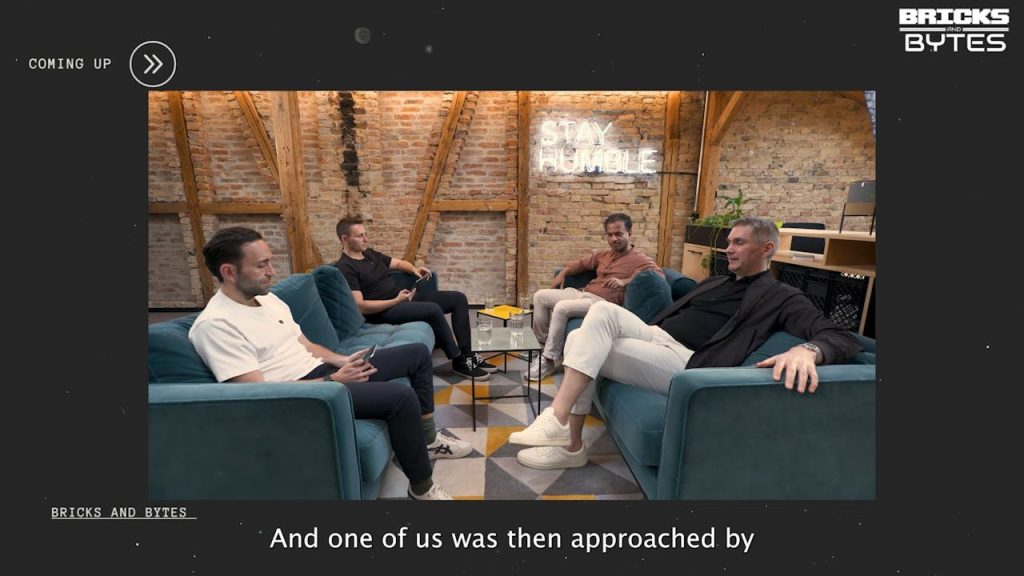
  In episode 001 of our Super Series featuring Foundamental, we gained exclusive insights into this innovative venture capital firm that’s making waves in the construction tech space. Founded by Patric, Shubh, and Adam, Foundamental stands out for its unique approach to investing globally in the architecture, engineering, construction, and supply chain (AECS) sectors. The Origin Story Foundamental’s journey began when an LP approached one of the founders, expressing dissatisfaction with existing construction tech funds but seeing potential in them. This sparked a 9-10 month period of intense diligence, during which the team projected forward to ensure they could deliver high returns over the next 15+ years. What sets Foundamental apart is their commitment to being truly global. Unlike many VC firms that claim global reach but primarily focus on one region, Foundamental distributes its first checks equally across three major geographies. This approach allows them to tap into different market cycles and gain a comprehensive understanding of global trends in construction tech. The Why Behind Construction Tech The team shared compelling reasons for focusing on construction tech: • Exploding demand: The world is projected to add one New York City every month until 2060. • Declining labor productivity: Revenue and margins per employee are shrinking annually. • Labor shortage: There’s a significant lack of qualified workers in the industry. • Knowledge-driven market: Construction companies rely heavily on billable hours and expertise. These factors create a perfect storm where technology becomes crucial to bridge the gap between increasing demand and decreasing efficiency. Investment Philosophy Foundamental’s investment philosophy is rooted in their belief that VC is more of a craft than a factory. They nurture individual personalities and strengths within their team, allowing each partner to bring unique perspectives to the table. The firm focuses on delivering high DPI (Distributions to Paid-in Capital) rather than just raising funds. This approach leads them to cap their fund sizes, typically around 100 million euros, to avoid deployment pressures that could compromise returns. Their investment strategy involves writing initial checks ranging from 500k to 1.5 million euros, with the potential to invest up to 10 million in winning positions. Uniquely, they allocate 50-60% of their fund to follow-on investments, often increasing their ownership in high-performing companies. Global Perspective and Decision Making Foundamental’s global structure demands a unique approach to decision-making. The team has developed a muscle for immersing themselves in different geographical contexts during deal discussions. This allows them to leverage insights from various markets and identify trends that might be leading or lagging in different regions. Their process involves intense debate followed by a “dissent and commit” principle. Once a decision is made, the team fully commits to it, avoiding reopening discussions unless circumstances change significantly. Building Credibility and Fundraising In the early days, Foundamental focused on convincing people who already had conviction in them as individuals. This approach made fundraising easier, as they only had to prove their strategy and market understanding, not their personal credibility. The firm maintains a concentrated LP base, currently at 10 and unlikely to exceed 20. This allows them to provide a boutique experience to their investors, discussing market trends, macro factors, and mega shifts in depth. Looking Ahead As Foundamental continues to grow and evolve, they remain committed to their unique approach of global, sector-focused investing in construction tech. With their third fund now underway, they’re poised to continue making significant impacts in the AECS space, driving innovation and returns in this crucial yet often overlooked sector. By combining global reach with deep sector expertise and a craft-like approach to VC, Foundamental is carving out a unique niche in the investment landscape, proving that sometimes, thinking differently is the key to success. Check out the rest of the eight-part series HERE.  

How AI and IoT are Revolutionising Heavy Equipment Management in Construction
Technology

How AI and IoT are Revolutionising Heavy Equipment Management in Construction

  Did you know that heavy equipment sits idle for up to 40% of its time on construction sites? Recent studies by major equipment manufacturers reveal alarming statistics about heavy equipment efficiency. Komatsu’s analysis of telematics data from approximately 75,000 machines over a year showed an average idle time of 38% for their equipment in North America. Similarly, Volvo Construction Equipment estimates that large construction fleets, averaging around 450 machines, typically experience 28-30% idle time. These figures can fluctuate based on factors such as application, weather conditions, and industry segment. Industry experts suggest that to balance operational needs and minimise waste, idle time should ideally be kept below 20%. These statistics highlight a significant opportunity for improvement in the construction industry, where optimising equipment usage could lead to substantial cost savings and increased productivity.   Current Challenges in Heavy Equipment Management Construction companies face numerous challenges when it comes to heavy equipment: Inefficient utilisation High maintenance costs Safety concerns Fuel waste Difficulty in tracking equipment across large sites   These issues not only impact project timelines but also significantly affect the bottom line. Introducing AI and IoT in Construction AI and IoT are not just buzzwords – they’re powerful tools transforming the construction landscape. IoT devices collect vast amounts of data from equipment, while AI analyses this data to provide actionable insights. As discussed during a Bricks, Bucks, and Bytes episode:  “Now the company with all of that has. pivoted more into actually bringing the machinery, bringing the insights, the analytics for monitoring productivity, monitoring safety, monitoring emissions, monitoring fuel efficiency for these machinery or fleets of machinery for their clients.” This shift towards data-driven decision-making is revolutionising equipment management Specific Applications of AI and IoT in Heavy Equipment Operations Predictive Maintenance. AI algorithms can predict when equipment is likely to fail, allowing for proactive maintenance and reducing costly downtime. Real-time Equipment Tracking and Utilisation Optimization. IoT sensors provide real-time location and usage data, helping managers optimise equipment deployment across sites. Fuel Efficiency Management. AI analyses operation patterns to suggest fuel-saving measures, cutting costs and reducing environmental impact. Safety Monitoring and Accident Prevention. IoT devices can detect unsafe operation conditions and alert operators, preventing accidents before they happen. Automated Operation and Remote Control. Advanced AI systems are enabling semi-autonomous or fully autonomous operation of certain equipment, improving precision and safety. Case Study: Tenderd’s Success in the Middle East Tenderd, an analytics platform for effective and sustainable operations, has successfully implemented AI and IoT solutions in the Middle East. It has established itself as a dominant player in the Middle Eastern construction technology sector, likely leading its category in the region.  Saudi Arabia has emerged as a key focus for many companies due to its thriving construction industry. In this booming market, Tenderd has positioned itself as a top-choice provider, not only for the high-profile Neom project but potentially for numerous other developments across Saudi Arabia’s rapidly expanding construction landscape. Tenderd’s success demonstrates the growing demand for smart equipment management solutions in the construction industry.Read more on Tenderd HERE. Future Potential and Emerging Trends The future of AI and IoT in construction equipment management looks promising: Integration with Building Information Modeling (BIM) for seamless project management Augmented Reality (AR) interfaces for equipment operators Advanced robotics for dangerous or repetitive tasks Machine learning algorithms for optimising entire construction processes   Implementation Challenges and Solutions While the benefits are clear, implementing AI and IoT solutions can be challenging: High initial costs: Start small and scale up as you see returns on investment. Resistance to change: Provide thorough training and highlight the benefits to workers. Data security concerns: Partner with reputable technology providers with strong security measures. Integration with existing systems: Look for solutions that offer APIs for easy integration. Practical Takeaways: Getting Started with Smart Equipment Management Assess your current equipment management practices Identify key areas for improvement Research AI and IoT solutions that address your specific needs Start with a pilot project on a single site or with a specific equipment type Measure results and adjust your approach as needed Gradually expand implementation across your operations The construction industry is on the brink of a technological revolution. By embracing AI and IoT for heavy equipment management, companies can significantly improve efficiency, safety, and profitability. The question is no longer if you should adopt these technologies, but when and how.      

Cognitive Biases in Project Management
Videos, Founders & Operators

Cognitive Biases in Project Management: The Hidden Influences Shaping Our Decisions

  In the complex world of project management, our minds can be our own worst enemies. Cognitive biases in project management significantly impact how we approach and execute projects. Three key biases stand out: availability bias, optimism bias, and salience bias. Availability bias, a crucial concept in cognitive biases in project management, limits our perspective to what we know, potentially blinding us to crucial factors outside our immediate experience. Optimism bias, while great for team morale, can lead to unrealistic expectations and inadequate planning. Perhaps most intriguing among cognitive biases in project management is salience bias – our brain’s tendency to filter out perceived “noise.” In project execution, this often means focusing on tangible aspects like construction timelines while overlooking critical administrative tasks. Ironically, data from over 750,000 projects shows that these “invisible” elements, such as documentation and approval processes, are the leading causes of project delays. Another sneaky culprit in the realm of cognitive biases in project management is the planning fallacy – our tendency to drastically underestimate task completion times. This bias can wreak havoc on project schedules and resource allocation. To combat these cognitive biases in project management, project managers must cultivate awareness and implement strategies to counteract their effects. This might involve diverse team compositions, structured risk assessments, and buffer time for often-overlooked administrative tasks. By acknowledging and addressing these cognitive pitfalls, we can significantly enhance project outcomes and efficiency. Understanding and mitigating cognitive biases in project management is crucial for success in today’s complex project environments. By staying vigilant and implementing strategies to counteract these biases, project managers can lead their teams to more realistic planning and successful project completion. Listen to the full episode with Dev Amratia HERE.

Newsletter

Could an Entrepreneur in Residence Save Your Construction Firm?

INDUSTRY INSIGHTSHave you ever heard of an Entrepreneur in Residence (EIR)? We’ve seen the term “Entrepreneur In Residence” (EIR) coined in many ways. Is it just a “trendy” word? Is it a must-have title these days? Why the hell do you need one in construction? Well, Victor Muchiri, an EIR at Barton Mallow, recently shared insights with us. His perspective sheds light on this emerging role in construction. Victor is a construction tech and fintech enthusiast with a passion for driving industry growth through strategic partnerships and innovative solutions. What is an Entrepreneur in Residence? An EIR joins a company to provide expertise and guidance on entrepreneurial endeavours. In construction, the EIR evaluates ideas within the firm. They look for ways to commercialise internal innovations and generate new revenue streams. Muchiri explains: “How do I evaluate some of those ideas? How do I think about taking some of the IP that exists within these four walls and then going and commercializing them and trying to get revenue in the door?” The EIR role differs from typical innovation management.  Whilst innovation teams focus on finding external solutions to internal problems, the EIR looks for ways to monetise the company’s existing ideas and processes. Why Have an EIR? It will not be news to anyone that reads this newsletter but construction productivity has been flat or decreasing for decades. An EIR can help companies rethink processes and find new business opportunities. They bring an entrepreneurial mindset to longstanding industry challenges. Muchiri argues that every major contractor should consider having an EIR. “If you’re a general contractor, you should also be thinking about that. What are you doing within your company that’s pretty interesting? And can you go and make money?” The EIR role allows construction firms to tap into their internal innovations. Many companies have valuable intellectual property or efficient processes. An EIR can help turn these assets into new revenue streams. Key Focus Areas for Construction EIRs So what do EIRs in construction actually work on? Victor highlighted several key areas: E-commerce marketplaces: Creating platforms for contractors to sell their innovations to others in the industry. Fintech and payments: Improving financial processes and cash flow in construction projects. Risk management: Enhancing pre-qualification, insurance, and financial services for contractors. Emerging technologies: Evaluating AI, robotics, AR/VR, and other tech for construction applications. The EIR assesses both internal innovations and external technologies. They look for opportunities to create new products, services, or even spin-off companies. Barton Malow was founded in Detroit, Michigan, 100 years ago and has since built a reputation for both building landmark projects and positively impacting the communities it serves. Challenges and Considerations Implementing the EIR role comes with challenges. Construction firms must balance innovation with their core business of building projects. Muchiri notes that whilst innovation is crucial, it’s not the primary focus for most contractors. Another challenge is the long sales cycles in construction. New ideas often take time to gain traction. EIRs must be patient and persistent in pursuing opportunities. Data utilisation is also a key hurdle. Many contractors struggle to effectively capture and use project data. This limits the potential for data-driven innovations. Balancing VC-backed startups with internal innovation is another consideration. Muchiri cautions that VC incentives don’t always align with contractor needs. EIRs must navigate this landscape carefully. Impact on the Industry The EIR role has the potential to shake up the construction industry. By commercialising internal innovations, contractors can create new revenue streams. This could lead to more specialsed, tech-enabled construction firms. EIRs may also help bridge the gap between startups and established contractors. Their entrepreneurial mindset can help firms adopt new technologies more effectively. In the long run, EIRs could drive significant productivity gains in construction. By rethinking processes and leveraging emerging tech, they may help solve longstanding industry challenges. How Construction Companies Can Use an Entrepreneur In Residence 1. Assess internal innovationsConstruction companies often overlook valuable internal innovations. Conduct a thorough audit of unique processes, technologies, or solutions developed within the organization. This may involve forming a dedicated team to review operations across different departments and projects. Engage with both experienced project managers and newer employees to identify potential innovations. Once identified, the EIR can evaluate these ideas for their commercial potential and develop strategies to monetize them within the broader construction industry. 2. Consider an unconventional candidate for the EIR roleThe ideal EIR candidate may not come from a traditional construction background. Look for individuals with diverse experiences in areas such as technology startups, venture capital, or other innovative sectors. Key qualities to seek include an entrepreneurial mindset, ability to identify market opportunities, and experience in product development and commercialization. The right candidate should be able to bridge the gap between construction industry challenges and innovative solutions. Consider candidates who can bring fresh perspectives whilst quickly grasping the nuances of the construction sector. 3. Integrate the EIR with existing innovation teamsEnsure the EIR works closely with established innovation or R&D departments. This integration is crucial for maximising the impact of both the EIR and internal innovation efforts. Establish regular collaboration sessions between the EIR and innovation teams to share insights, align objectives, and work on joint projects. The EIR can provide an external, entrepreneurial perspective to internal R&D efforts, whilst innovation teams can offer industry-specific knowledge to guide commercialization strategies. This synergy can lead to more effective innovation outcomes and increase the potential for successful commercialization of new ideas. To roundup… From what we learnt from Victor, whilst most of the industry focuses on bringing external innovation in, an EIR focuses on bringing internal innovation out.  Clearly the role is only available to those who have the budget i.e. incumbents or larger companies . And everything about larger companies is very slow. So it feels counterintuitive when larger companies try to adopt the startup mentality needed to develop commercial products at speed. But by nature of innovation, there is a lot of experimentation as to the correct strategy. And a diversified

world map
Startups

How Latin America and the Middle East are Reshaping the ConTech Landscape

  When you think of technology hubs, Silicon Valley likely springs to mind. But in the world of construction technology, new stars are rising. Latin America and the Middle East are emerging as powerhouses of innovation, challenging the status quo and bringing fresh solutions to age-old industry challenges. Let’s explore how these regions are making their mark on the global ConTech stage. Latin America: Building the Future Brazil: The ConTech Giant Brazil is leading the charge in Latin American ConTech. With its booming construction industry, the country has become a breeding ground for innovative startups. Key Player: Ambar, a construction management platform, has raised over $20 million to streamline project workflows. Mexico: Bridging Technology and Tradition Mexico’s unique blend of traditional construction methods and cutting-edge technology is fostering a vibrant ConTech ecosystem. Success Story: Construyo, a digital platform connecting contractors with clients, has revolutionised project bidding processes across the country. The Middle East: Building Smart from the Ground Up United Arab Emirates: The Future is Now The UAE, particularly Dubai, is not just building skyscrapers – it’s building the future of construction. Innovative Solution: WakeCap, a Dubai-based startup, uses IoT technology to improve worker safety and productivity on construction sites. Saudi Arabia: Transforming with Technology As part of its Vision 2030 plan, Saudi Arabia is heavily investing in construction and technology. Rising Star: Tenderd, a heavy equipment rental platform, secured $30 million in funding to revolutionise machinery management in the region. Currently, Saudi Arabia stands out as a major hub for construction activity, attracting significant interest from companies worldwide. In this thriving market, Tenderd has established itself as a leading provider of construction solutions. Their services are in high demand not only for the high-profile Neom project but potentially for numerous other developments in Saudi Arabia’s rapidly expanding construction sector. What’s Driving ConTech Growth in These Regions Unique Challenges: Both regions face distinct issues like extreme weather and rapid urbanisation, spurring innovative solutions. Government Support: Many countries offer incentives and funding for tech startups, including those in the construction sector. Young, Tech-Savvy Population: A workforce eager to adopt new technologies is driving digital transformation in construction. Investment Influx: Global investors are taking notice, pouring capital into promising ConTech ventures. Bernardo Gamboa, Partner at Global Projects Strategy, focusing on Latin American construction tech, notes: “We are starting to see a lot of solutions for the region in very early stages as an investor. Getting into those early stages and being able to help at that level is riskier, but at the end, the payback is much higher.” In this episode, Bernardo Gamboa, Partner at Global Projects Strategy, shared fascinating insights into the construction tech landscape in Latin America The Global Impact These emerging hubs aren’t just solving local problems – they’re creating solutions with global potential. From AI-powered project management tools to sustainable building technologies, innovations from Latin America and the Middle East are making waves worldwide. This shift is driven by a deep understanding of regional construction needs combined with technological expertise. For instance, companies in these regions are creating advanced project management tools that handle multilingual teams and complex supply chains. They’re developing IoT solutions that function reliably in extreme weather conditions, from the heat of the Middle Eastern deserts to the humidity of tropical Latin America. Moreover, these innovations often have universal applications. A drone-based site inspection system developed for sprawling construction projects in Saudi Arabia could be just as valuable on a New York City skyscraper. Similarly, a blockchain-based contract management platform created to navigate the complexities of Latin American bureaucracies could streamline processes for construction firms worldwide. What This Means for the Future Increased Collaboration: Expect to see more partnerships between startups from these regions and global construction firms. Tailored Solutions: Technologies developed for specific regional challenges could find applications in similar environments globally. New Investment Opportunities: As these hubs grow, they’ll attract more international investment, further fueling innovation. Diversity in Innovation: Different perspectives and challenges will lead to a more diverse range of solutions in the ConTech space. The Road Ahead While challenges remain, including regulatory hurdles and infrastructure gaps, the trajectory is clear. Latin America and the Middle East are not just participating in the ConTech revolution – they’re helping to lead it. For investors, entrepreneurs, and construction professionals worldwide, keeping an eye on these emerging hubs isn’t just advisable – it’s essential. The next big thing in ConTech might just come from a place you least expect.      

Newsletter

ICYMI: Origins, Building Real AI, Scaling Robotics, and the Latest News

This Week’s Quickfire BytesFuel your curiosity with this week’s contentW/C 9th September 2024 NEW EPISODESEpisode 001 – Origins – Super Series With Foundamental In episode 001 we go right back to the start. How did Foundamental come to be? What was the “random mash-up” that led to the firm’s genesis? bricks-and-bytes-super-series.vhx.tv/packages/super-series-with-foundamental-1/videos/episode-1-super-series-1 Dev Amratia – Building Real Artificial Intelligence in Construction Tech – CEO of nPlan “AI is not just about replacing humans, it’s about elevating them.” Dev Amratia, CEO of nPlan, shares how AI is transforming construction project management. In this episode, we had Dev Amratia and we got to learn about nPlan’s journey in revolutionising construction risk management, the power of AI in forecasting project timelines, and the importance of company culture in building a successful startup. open.spotify.com/episode/6dmYlM6jkgAPt4Z8WCKCwT Scaling Robotics From Cloud to Construction – How DroneDeploy is Reshaping Reality Capture Building robots is hard. Deploying them at scale? Even harder. In this episode of BitBuilders, we had David Inggs, Head of Robotics at DroneDeploy, sharing invaluable insights on the challenges and opportunities in construction robotics. Tune in to find out about:  ➡️ The critical difference between building and operating robots  ➡️ Why software, not hardware, is the biggest hurdle for mobile robots  ➡️ How data centers are driving early adoption of risky robotics in construction  ➡️ The potential future dominance of humanoid robots over quadrupeds. open.spotify.com/episode/2sKvBoPZoa97NFm8q63EzH How Gecko Robotics is Transforming Asset Management Using Robot Inspectors – Troy Demmer Are robots the future of infrastructure safety? This startup’s journey might surprise you. In this episode of Bricks and Bytes, Gabriele got a chance to interview Troy Demmer, co-founder of Gecko Robotics. We learned about Troy’s journey from healthcare to robotics, the challenges of building hardware startups, and how Gecko is transforming infrastructure maintenance for both private and public sectors. open.spotify.com/episode/6risq29nhGJAsHexCUlWIV New Scheduling Tools, US Startups High Failure Rate, & How Supply-Side Focus is Reshaping Tech Companies Is the traditional construction scheduling software about to become obsolete? In this episode of Bricks, Bucks and Bytes, we discussed Planera’s fresh take on construction scheduling, which just secured $13.5M in Series A funding. We also explored the surprising uptick in US startup failures and what it reveals about the current market. Additionally, we delved into the potential shift from demand-focused to supply-focused business models in tech. open.spotify.com/episode/0sanKoL8EgGqci5AgeN9XJ View All Podcasts BRICKS & BYTES BULLETINSuper Series Day! Today feels like a huge climax of what we have been working on over the last few months – the release of our Super Series with Foundamental. But… We’ve done quite a bit of promotion on this across our channels, so in this newsletter, we won’t bore you with what WE have to say. Instead, let’s focus on the top takeaways from Foundamental themselves. Read Full Article 2 FAVORITE QUOTES: “We just never really appreciated how hard it is to then sell it. We just thought if they build it and it’s amazing, people just come. Not true.” – Dev on the the challenges of selling a product, dispelling the myth that great products sell themselves “Remember when we had robots that used to look like dogs, it was just like a weird phase and everything immediately moves to humanoids.” – David on the future of robotics, suggesting that quadruped robots might be seen as a temporary phase before humanoid robots become dominant LATEST STORIES: Exploring Construction Robotics Opportunities: A Market Ripe for Innovation Discover untapped construction robotics opportunities in a market ripe for innovation. Learn why now is the time to revolutionize the industry. Investor Perspectives: What VCs Look for in Construction Tech Startups Construction tech is booming. Discover what VCs look for in construction tech startups: market size, team expertise, innovative technology, scalability, and early traction. Unlocking ROI: Mighty Buildings’ Approach to Factory Deployment Unlock construction profitability with Mighty Buildings’ innovative ROI calculation approach. Learn how to optimise factory deployment for 3D-printed housing projects. View All Articles BONUS CONTENTWhat Are Investors Betting On? OUR SPONSORS Shft — helping contractors like you leverage BIM to secure a leading position in the race towards construction’s digital future.  BuildVision — streamlining the construction supply chain with a unified platform for contractors, manufacturers, and stakeholders. Powered by beehiiv

Brick & Mortar Ventures
Venture Capitalists, Venture

Brick & Mortar Ventures – Construction Tech Venture Capitalist

Introduction Brick & Mortar Ventures, founded in 2015, is a venture capital firm dedicated to transforming the architecture, engineering, construction, and facilities management industries through innovative technology. They focus on identifying, investing in, and nurturing emerging companies that offer groundbreaking software and hardware solutions. By challenging traditional processes and integrating advanced technologies, Brick & Mortar Ventures aims to significantly improve project delivery, efficiency, and safety in the built world. Key Staff Members – Investors Darren Bechtel – Managing Director Guillaume Bazouin – Partner, EMEA Curtis Rodgers – Partner Austin Yount – Principal Kaustubh Pandya – Partner Alice Leung – Vice President, Platform & Product Strategy Key (AEC) Tech Investments Fieldwire Brick & Mortar Ventures invested in Fieldwire, a field management platform designed for construction teams. The platform enhances on-site productivity by streamlining communication, task management, and real-time collaboration among teams. Fieldwire’s success is evident in its widespread adoption across the construction industry, leading to more efficient project execution and significant cost savings. Rhumbix Rhumbix is another key investment, offering a construction productivity platform that digitizes field data collection. By providing real-time insights into labor and materials, Rhumbix has improved decision-making processes and operational efficiency for construction projects. Focus Area In Construction Tech Brick & Mortar Ventures concentrates on the architecture, engineering, construction, and facilities management sectors. Their investments target a wide range of technological advancements, from digitalisation of traditional processes to cutting-edge innovations. Areas of interest include cloud-based collaboration tools, workforce telematics, asset tracking systems, and autonomous construction equipment. They also focus on reality capture technologies and exoskeletons, aiming to enhance productivity, safety, and project delivery within these industries. By investing in both incremental improvements and radical disruptions, Brick & Mortar Ventures seeks to drive significant transformation in the built environment. Investment Strategy Brick & Mortar Ventures employs a strategic approach to investing in companies that promise substantial impacts on the built environment. Their philosophy centers on identifying early-stage startups with the potential to disrupt traditional industry practices. They prioritise companies developing scalable solutions that address critical inefficiencies and safety concerns in construction and facilities management. By fostering close partnerships and providing strategic support, Brick & Mortar Ventures ensures these companies can achieve sustainable growth and innovation. Their hands-on involvement and industry expertise help portfolio companies navigate challenges, scale their operations, and ultimately transform the architecture, engineering, and construction sectors. Investment Metrics Correct as of August 2024. AEC-Tech Activity Number of early AEC-Tech Unicorns: 0AEC-Tech Rank: 13 Deal Activity Number of deals in last 12 months (incl. follow-ons): 4Number of deals per year in last 3 years (average, incl. follow-ons): 6 Other Resources

construction robotics opportunities
Videos, Robotics

Exploring Construction Robotics Opportunities: A Market Ripe for Innovation

  In the rapidly evolving construction technology landscape, robotics is a field brimming with potential. Industry experts are highlighting numerous construction robotics opportunities for innovators and entrepreneurs in this space. The construction sector, known for its traditional approaches, is on the cusp of a technological revolution. What makes this moment particularly exciting is the vast “white space” in construction robotics opportunities. Unlike many tech sectors facing saturation, construction offers a playground for innovation across various trades. Interestingly, the primary challenge in leveraging construction robotics opportunities isn’t the technology itself. The real hurdle lies in market penetration and adoption. This presents a dual opportunity: not only to develop cutting-edge robotic solutions but also to craft strategies for seamless integration into existing construction workflows. Looking ahead, the next five years are predicted to be transformative for construction robotics opportunities. We can expect to see: Increased competition as more startups enter the space Validation of market needs and opportunities Emergence of proven use cases and applications   For entrepreneurs and investors, the message is clear: now is the time to explore construction robotics opportunities. The field is wide open, waiting for innovative solutions that can revolutionize one of the world’s oldest industries. Listen to the full episode HERE.

Construction profitability
Videos, Robotics

Unlocking ROI: Mighty Buildings’ Approach to Factory Deployment

  In the rapidly evolving world of construction technology, calculating Return on Investment (ROI) for manufacturing plants is crucial. Mighty Buildings, a pioneer in 3D-printed housing solutions, has developed a streamlined approach to this complex process. The cornerstone of their strategy lies in three key factors: Projected Volume: This is the estimated number of buildings or panels to be produced annually. It’s the foundation of the ROI calculation, providing a clear picture of potential output. Capital Expenditure (CAPEX): This relatively fixed cost represents the initial investment required to set up the manufacturing plant. Operational Expenditure (OPEX): A variable cost that fluctuates based on factors such as electricity prices and labor costs. These can vary significantly between locations like Illinois and California, or international sites. By carefully analyzing these elements, Mighty Buildings can swiftly assess the viability of deploying a factory near a demand pool. The final piece of the puzzle is the projected price and margin for selling the units, which helps determine the overall profitability of the venture. This systematic approach allows Mighty Buildings to make data-driven decisions, ensuring optimal placement of manufacturing facilities and maximizing returns in the innovative field of 3D-printed construction. Listen to the full episode with Mighty Buildings HERE.

Newsletter

Super Series Day!

INDUSTRY INSIGHTSSuper Series Day! Today feels like a huge climax of what we have been working on over the last few months – the release of our Super Series with Foundamental. But… We’ve done quite a bit of promotion on this across our channels, so in this newsletter, we won’t bore you with what WE have to say. Instead, let’s focus on the top takeaways from Foundamental themselves. Here are 15 takeaways that stuck with us from the series Consider exploring investment opportunities in sectors outside your direct expertise. Foundamental was created by partners without construction backgrounds, highlighting that deep industry knowledge isn’t always necessary. Take your time and thoroughly research market potential and trends before making long-term commitments. The founders spent 9-10 months conducting due diligence before committing to the AECS tech sector. Consider the optimal fund size for your investment strategy, as bigger isn’t always better in venture capital. Foundamental caps their fund size around 100 million euros to maintain focus and avoid deployment pressure. Deep empathy is needed to succeed in AECS technology. The construction industry is primarily project-based, service-oriented, and knowledge-driven, making it different from typical software-as-a-service (SaaS) models. Don’t dismiss service-based startups in construction tech; they may evolve into scalable software businesses. Successful construction tech companies often start with service-based models before transitioning to software solutions. Focus on technologies that improve outcomes and efficiency in construction projects. The biggest challenge in construction is that it’s an outcome industry, which is why it primarily purchases services. The construction industry is facing a significant labor shortage, with projections indicating a shortfall of over 1 million workers in Europe and the US by 2030. Cybersecurity for buildings is an under-innovated space with significant potential. For design software, focus on solutions that enable seamless data exchange and collaboration between various design tools. Data infrastructure and interoperability between different design software tools is a major pain point in the architecture and engineering sector. The demand for construction is increasing globally, with projections of adding one New York City worth of construction to the planet every month until 2060. Profitable businesses can be built in construction technology from day one, contrary to the popular venture capital mindset of prioritizing growth over profitability. Ignore the herd heuristic. Look for unconventional business models that address specific pain points in the construction industry. Vertical singularities – unique opportunities specific to the construction industry – often challenge conventional wisdom and may initially seem unattractive to generalist investors. As a founder, cultivate transparency and open communication with your investors and advisors. Founders who demonstrate vulnerability and openly discuss challenges tend to build stronger relationships with investors and make better decisions. Identify areas in construction where your solution can easily fit into existing budgets and workflows to accelerate adoption. The construction industry offers many “buy-ready markets” where there’s already a budget and established processes for specific outcomes. Focus on developing truly disruptive solutions that challenge the core business models of major industry players. To be an attractive acquisition target, startups need to “legitimately scare the daylights” out of the incumbent. Enjoyed these takeaways? There’s plenty more where that came from. Get the full scoop here. 50% off for the first 10 orders. Use code BB50 👇👇👇 Watch Now WEEKLY MUSINGSFunding, AI, and Founder Grit A Navatech milestone Prakash Senghani on LinkedIn: #digitaltransformation #contech #saifety #safetytech | 39 comments 📢 FUNDING ANNOUNCEMENT!!! 📢 I am SO SO pleased to be able to announce that we’ve completed the first close of our seed round, it’s been a journey from a… | 39 comments on LinkedIn Don’t boil the ocean with AI Nate Fuller on LinkedIn: #construction #buildingconstruction #ai #digitaltransformation… Are you trying to boil the ocean with your A.I. initiatives? In the construction industry, business value is often scattered across complex processes and value… Is founder grit an asset or a liability? Grit And Stubbornness Look Similar (How To Diagnose The Difference in AECS) 🎧 Video thesis: View here A shorter one this week, but no less important: Is founder grit an asset or a liability? It can switch from one to the other, and the diagnosis requires some tricks. Extra-tricky: AECS has so many nuances and niches – more than other sectors – that there is always one more BONUS CONTENTWhat Are Investors Betting On? OUR SPONSORS Shft — helping contractors like you leverage BIM to secure a leading position in the race towards construction’s digital future.  BuildVision — streamlining the construction supply chain with a unified platform for contractors, manufacturers, and stakeholders. Powered by beehiiv

Investor Perspectives: What VCs Look for in Construction Tech Startups
Venture

Investor Perspectives: What VCs Look for in Construction Tech Startups

  The construction tech landscape is booming. With innovation transforming age-old practices, venture capitalists are taking notice. But what exactly catches a VC’s eye in this evolving sector? Let’s dive into the minds of investors and uncover what makes a construction tech startup stand out. The Construction Tech Revolution From AI-powered project management to IoT sensors on job sites, construction tech is reshaping the industry. This digital transformation is attracting significant investor attention. A  study by Foundamental, an investment fund specialising in construction tech startups, found that in 2021, construction tech startups raised a record $8.7 billion in funding. This was the highest annual amount ever raised by the sector What’s on a VC’s Checklist? So, what do investors look for? Let’s break it down: Market Size and Potential. VCs want to see a big addressable market. Construction, being a trillion-dollar industry, ticks this box. But your startup needs to target a sizable slice of this pie. Team Expertise. A blend of construction know-how and tech savviness is crucial. VCs appreciate collaborators who can look beyond surface-level assessments to recognize the true value of unique business models in their specific industry. Innovative Technology. Your solution should solve real problems in novel ways. Whether it’s AI for risk assessment or blockchain for supply chain transparency, innovation is key. Scalable Business Model VCs. look for startups that can grow rapidly. Your business model should allow for expansion across regions or construction sectors. Early Traction. Nothing speaks louder than customer adoption. Early partnerships with construction firms can significantly boost your appeal to investors. The Construction Conundrum Construction isn’t just another industry. It has unique challenges that VCs are acutely aware of: Long sales cycles Regulatory hurdles Resistance to change   Your startup needs to show how it’s navigating these obstacles. Red Flags That Scare Investors Away Beware of these common pitfalls: Overreliance on a single client Lack of industry partnerships Ignoring regulatory compliance The Distribution Dilemma The key to success in the construction industry lies in developing highly effective and industry-specific distribution channels. Companies that can create streamlined networks with multiple relevant touch points throughout the construction process will be best positioned to leverage and benefit from artificial intelligence advancements. VCs are increasingly focusing on your go-to-market strategy. How will you reach customers efficiently in this fragmented industry? Success Stories: Learning from the Winners Let’s look at a real-world example. Infra.Market, an Indian construction materials marketplace, caught investors’ attention by solving a critical industry problem.  InfraMarket has achieved a remarkable financial position, consistently generating billions in yearly revenue. What’s particularly noteworthy is their sustained profitability. Unlike many high-growth companies that may occasionally dip into profitability, InfraMarket has maintained a positive bottom line throughout most of its operational history. This consistent profitability, coupled with their substantial revenue, underscores the company’s strong business model and market position. This combination of rapid growth and profitability is music to a VC’s ears.  More on Infra.Market’s rise HERE. The Data Advantage In the age of AI, data is king. VCs are increasingly interested in startups that not only collect valuable data but know how to leverage it effectively.  While major players like Procore possess valuable data, their insight into project optimsation through AI is limited. Despite having access to significant and relevant information that would be coveted by anyone tackling this challenge, even these industry giants only capture a fraction of the total data needed for comprehensive AI-driven project optimization. This suggests that there’s still considerable room for innovation and improvement in leveraging AI for construction project management. This insight highlights a crucial opportunity for startups. While established players may have large data sets, they often lack a comprehensive view. VCs are looking for startups that can: Gather unique, high-quality data from multiple sources Implement robust data analysis capabilities Use data to drive actionable insights for construction projects Ensure data privacy and security in an increasingly regulated environment   Remember, it’s not just about having data – it’s about making it talk. Show investors how your data strategy gives you a competitive edge and how it can be monetized in the long run. Balancing Innovation and Practicality While cutting-edge tech is exciting, VCs also value practical solutions that address real-world construction challenges. Your startup should demonstrate how its innovation translates to tangible benefits for construction firms. As Patric says: “Most of the AI companies build on the initial pitch that, hey, actually, we’re doing something 90% cheaper than is currently being done today.” However, he cautions: “What they fail to say or fail to see, perhaps, in some cases, is that the same principle is getting applied to them.” This suggests that VCs are looking for more than just cost-cutting through technology. Global Perspectives: Think Beyond Borders Construction tech isn’t limited by geography. Infra.Market, for example, has established a strong global presence in the export market. Their product range, which includes tiles, granite, natural stones, electrical components, and wood-based materials, is distributed to numerous countries worldwide. This international reach demonstrates the company’s ability to cater to diverse markets and their significant role in the global construction materials supply chain. VCs love startups with global potential. Advice for Aspiring Construction Tech Founders Know your industry inside out Build a diverse team with both tech and construction expertise Focus on solving real, pressing problems Develop a clear, scalable go-to-market strategy Be prepared to educate investors about construction’s unique challenges The Future of Construction Tech Investment As the sector matures, we’re likely to see: More focus on sustainability and ESG factors Increased interest in AI and machine learning applications Growing importance of interoperability between different tech solutions Key Takeaways Remember, VCs are looking for: Large market opportunity Innovative solutions to real problems Scalable business models Strong teams with industry expertise Efficient distribution strategies      

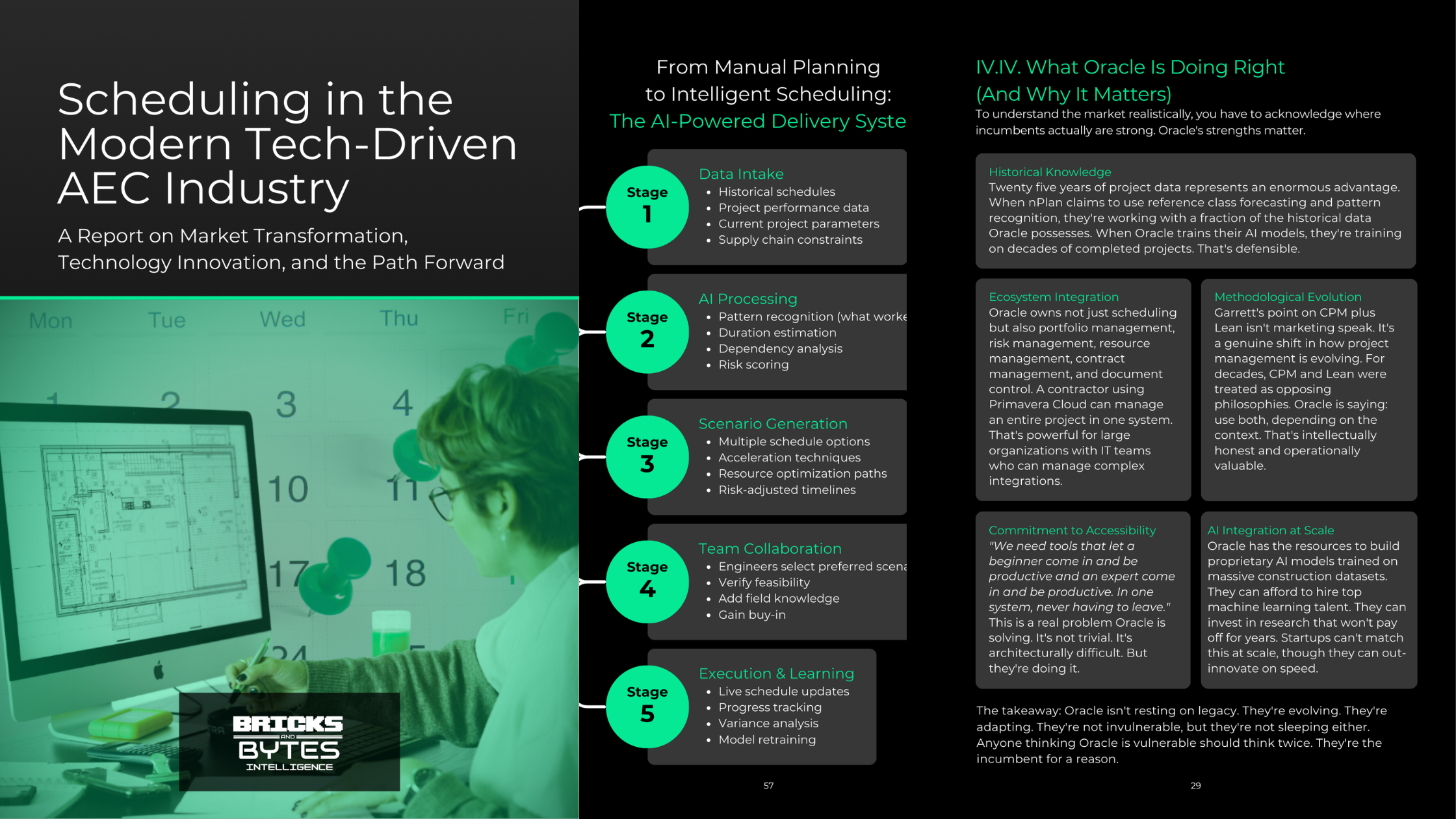
Get a FREE copy of our Scheduling in the Modern Tech-Driven AEC Industry: A Report on Market Transformation, Technology Innovation, and the Path Forward” (worth $150) and a FREE weekly email to stay up to date on construction tech. SIGN UP TODAY!

Scheduling in the Modern Tech-Driven AEC Industry

Sign up to the #1 Newsletter In AEC Tech. Join over 2,100 like-minded Founders, Investors and Techies disrupting the way we build. 

Scheduling in the Modern Tech-Driven AEC Industry