
Author name: Owen Drury

Newsletter

ICYMI: Space Tech, Balancing Disruption, & Billion-Dollar Blindspots

This Week’s Quickfire BytesFuel your curiosity with this week’s contentW/C 2nd September 2024 UPCOMING SERIES Super Series Episode 001 – Origins In episode 001, we go right back to the start. How did Foundamental come to be? What was the “random mash-up” that led to the firm’s genesis? Series #1 with Foundamental is coming Wednesday, September 11th 2024. Watch Teasers NEW EPISODESConstruction On Mars – How Space Tech is Transforming Robotics as a Tool in Construction “Construction robots are tools, not job replacers.” – Dr. Henning Roedel In this episode of BitBuilders, we had Dr. Henning Roedel, former robotics lead at DPR Construction, sharing insights on the future of construction robotics. Tune in to find out about:  ➡️ Why robotics startups should focus on being tools, not subcontractors  ➡️ The importance of quick, iterative pilots vs. long-term commitments  ➡️ Key performance indicators for successful robotics implementation  ➡️ The pros and cons of different business models for construction robotics open.spotify.com/episode/1yiyxSDjsDDShU2mKVkD5T Bridging Silicon Valley and Construction Sites – The Balance of Innovation and Tradition In Construction – Scott Ellison “Go slow to go fast.” The counterintuitive advice for startups in construction tech In this episode, we had Scott Ellison share insights on the future of construction technology. We learned about balancing disruption with respect in an age-old industry, the importance of problem-led growth, and why the “jockey” matters more than the “horse” in early-stage investing. open.spotify.com/episode/1btWZZ1xKJsSdGPcnaUrcb Billion-Dollar Blindspots: Are Construction Tech’s ‘Best’ Lists Building on Quicksand? In this episode, we explored McKinsey’s updated report projecting a $22 trillion construction market by 2040, alongside the industry’s looming labor crisis. We discussed the expansion of the Bricks and Bytes podcast network, including new shows like “BitBuilders” focusing on robotics in construction. Patric also shared his critical analysis of “best-of” lists and market maps in construction tech, revealing surprising insights about company success rates. open.spotify.com/episode/4FrgSAE75BmhKDYhkiyQzf View All Podcasts BRICKS & BYTES BULLETINThe Outsider Redesigning Architecture Altaf’s story began with a seemingly routine project: reconstructing a UNESCO World Heritage Site in 3D.  As Altaf collaborated with architects, he was struck by a startling realization. “Most of their tools or software stacks were built in the late 90s, maybe early 2000s,” he recalls. “There’s a lot of silos and inefficiencies in the entire process of executing a design.” This epiphany set Altaf on a path that would challenge his career aspirations and push him to the limits of his capabilities. As a hobby, he developed a plugin for SketchUp, a popular 3D modeling software.  bricks-bytes.beehiiv.com/p/outsider-redesigning-architecture Read Full Article 2 FAVORITE QUOTES: “My recommendation is do sorties, right? Limit your pilots. If it’s early stage tech, limit it to a week or two, right? Um, or a one day thing.” – Henning Roedel suggests that robotics startups should conduct short, focused pilots rather than long-term commitments to quickly validate their technology. “In the US, the construction workforce will lose 40 percent until 2030 from today. Another 40 percent.” – Patric on the severe labor shortage issue facing the construction industry, particularly in the United States LATEST STORIES: Exits in Construction Tech: Analysing Recent M&A Activity and IPO Trends Explore the evolving landscape of construction tech exits: M&A trends, IPO opportunities, and valuation insights. Uncover what’s driving liquidity in this dynamic sector. Headcount Growth vs. Substance: What Really Matters When Evaluating Construction Tech Startups Startups are constantly vying for attention from investors and industry leaders. But what really sets a promising startup apart from the rest? Is it rapid headcount growth, or something more substantial? Beyond the ENR Top 400: Conquering Construction’s Fragmented Market Discover strategies for construction tech startups to succeed beyond the ENR Top 400. Learn how to navigate and thrive in the fragmented construction market. View All Articles BONUS CONTENTWhat Are Investors Betting On? OUR SPONSORS Shft — helping contractors like you leverage BIM to secure a leading position in the race towards construction’s digital future.  BuildVision — streamlining the construction supply chain with a unified platform for contractors, manufacturers, and stakeholders. Powered by beehiiv


Beyond the ENR Top 400: Conquering Construction's Fragmented Market
Technology

Beyond the ENR Top 400: Conquering Construction’s Fragmented Market

  The construction industry, with its vast global market size, presents an alluring opportunity for tech startups. However, beneath the impressive scale of the industry lies a challenge that has stymied many: market fragmentation. While the allure of landing a contract with one of the ENR Top 400 contractors is strong, successful startups are learning that the path to sustainable growth often lies beyond these industry giants. Understanding Market Fragmentation in Construction Market fragmentation in construction is characterised by a vast number of small to medium-sized businesses operating alongside a handful of large corporations. This structure creates a unique set of challenges for tech startups trying to gain a foothold in the industry. As Patric Hellermann astutely observed, “In construction, you have to figure out what is your strategy for the middle market and the SMB segment. There’s only 400 contractors in the top ENR 400.” This insight underscores the limitations of focusing solely on top contractors and the need for a more comprehensive market approach.   In this episode, Patric gave us candid insights on why advice from generalist VCs might be hurting construction tech startups. The Top 400 Contractors: Opportunities and Limitations The ENR Top 400 contractors represent the cream of the crop in the construction industry. These companies often have substantial resources, are more likely to adopt new technologies, and can provide startups with credibility and large contracts. However, they also present significant challenges. While top contractors often have the resources and incentive to adopt new technologies, they may also have the capability to develop their own solutions in-house. This presents a double-edged sword for startups: large contractors can be valuable early adopters, but relying solely on them may not provide the scalable customer base needed for long-term success.  It’s crucial for startups to look beyond the top tier and consider the broader market, including mid-sized and smaller contractors who may lack the resources to develop their own tech solutions but still have a pressing need for innovative tools. The Untapped Potential of the Middle Market and SMBs The middle market and small to medium-sized businesses (SMBs) in construction represent a vast, often overlooked opportunity. These companies face unique challenges that tech solutions can address, such as resource constraints, need for efficiency improvements, and desire for competitive advantages. Strategies for Reaching Beyond the Top 400 Develop a Tiered Product Strategy: Create offerings that cater to different market segments, from enterprise-level solutions to more accessible options for smaller contractors. Scalable Sales and Marketing: Implement digital marketing strategies and self-service options that allow smaller companies to adopt your technology without requiring extensive sales resources. Leverage Partnerships: Collaborate with industry associations, software platforms, and other ecosystem players to reach a broader audience. Build a Community: Foster a user community that can drive word-of-mouth growth and provide valuable feedback for product development. Case Study: PlanGrid’s Success PlanGrid, now part of Autodesk, is a prime example of a startup that effectively penetrated the middle market. As Patric recounts, “Plangrid is a great example of a company that, you know, captured the longer tail of the market and had a, your go-to-market strategy that was well-suited to capturing. And they had thousands and thousands of customers when they were acquired by Autodesk.” This success demonstrates the power of addressing the needs of smaller contractors and creating a product that can scale across the fragmented market. Overcoming Common Challenges Startups aiming to conquer market fragmentation must navigate several challenges: Addressing Diverse Needs: Smaller contractors often have different requirements than large enterprises. Startups must find ways to meet these varied needs efficiently. Balancing Customisation and Scalability: Offer enough flexibility to meet specific needs without compromising the ability to scale. Managing Longer Sales Cycles: Smaller companies may have longer decision-making processes. Startups need strategies to maintain engagement throughout extended sales cycles. Building Credibility: Without the backing of major contractors, startups must find alternative ways to establish trust and credibility in the market. The Role of Technology in Market Penetration Technology itself can be a powerful tool for overcoming market fragmentation. Cloud-based solutions offer accessibility to companies of all sizes, while AI and machine learning can provide personalised experiences at scale. Martin Piekarz, in a recent episode, highlights the potential of AI: “I think with AI we will see accounting companies that are basically AI software companies, right?” This observation extends to various aspects of construction tech, where AI-driven solutions can offer sophisticated capabilities to even the smallest contractors. Metrics for Measuring Success in a Fragmented Market In a fragmented market, traditional metrics like revenue growth may not tell the whole story. Startups should consider: Customer Acquisition Cost (CAC) across different market segments User engagement and adoption rates Network effects and viral coefficient Customer Lifetime Value (CLV) to CAC ratio Future Outlook: Consolidation vs. Continued Fragmentation While some predict eventual market consolidation, the construction industry’s inherent local nature suggests that fragmentation may persist. Startups should prepare for both scenarios, building flexible strategies that can adapt to market evolution. Conquering market fragmentation in construction is no small feat, but it presents a significant opportunity for tech startups willing to look beyond the Top 400 contractors. By developing strategies that address the needs of the middle market and SMBs, leveraging technology for scalable solutions, and measuring success with appropriate metrics, startups can navigate the complexities of the fragmented construction market. As Jenny Song wisely advises, “You can’t build a billion-dollar business in construction just by going after the enterprise segment.” The path to success lies in embracing the industry’s fragmentation, turning what many see as a challenge into a strategic advantage.      

Exits in Construction Tech: Analysing Recent M&A Activity and IPO Trends
Venture

Exits in Construction Tech: Analysing Recent M&A Activity and IPO Trends

  The construction technology sector has been buzzing with activity in recent years, with startups introducing innovative solutions to age-old industry challenges. But as the sector matures, the focus is increasingly shifting towards exits – be it through mergers and acquisitions (M&A) or initial public offerings (IPOs). Let’s dive into the current landscape of construction tech exits and what it means for the industry’s future. Current State of Construction Tech Exits The exit landscape in construction tech is evolving rapidly. As Patric Hellermann, notes, “We are seeing a lot of M&A, not always the M&A that VCs and founders necessarily would call the dream outcome. So anything between 10 to 200 million, I think it’s actually quite liquid right now.” This observation highlights a crucial trend: while big-ticket exits may grab headlines, there’s significant activity in the mid-market range.   In this episode, we discussed unexpected trends in construction tech funding and why unicorns in the sector are both rising and falling. M&A Activity: The Primary Exit Route M&A has emerged as the dominant exit strategy for construction tech startups, especially in the current economic climate. This trend is underscored by the recent launch of Zacua Ventures’ $56 million fund, which emphasises M&A as the primary exit route for startups given the unfavourable IPO market. Notable recent acquisitions in the space include Autodesk’s purchase of PayApps for approximately $300 million, as mentioned by Patric: “Autodesk bought PayApps for I think 490 million Aussie dollars, so about 300 million US just a few weeks ago, and Trimble bought FlashTracked in the same space.” These acquisitions highlight the interest of established tech giants in integrating construction-specific solutions into their portfolios. IPO Trends: A Challenging Landscape While IPOs have been less common in the construction tech space recently, they remain an aspiration for many startups. However, market volatility and economic uncertainties have made this path more challenging. The recent surge in technology IPOs, with 110 occurring in just six months in the US, signals a broader trend of increasing exit opportunities across venture-backed sectors. This uptick suggests a maturing market where innovative companies are finding paths to liquidity, potentially paving the way for construction tech firms to follow suit as the industry continues to evolve and attract investor interest. Factors Driving Exit Activity Several factors are influencing exit activity in the construction tech sector: Market maturity and consolidation Need for technological integration by established players Economic pressures driving strategic shifts   A prime example of these factors at play is Lendlease’s recent decision to exit international construction and development markets. This move, aimed at freeing up AUD 4.5 billion (USD 3 billion) to focus on domestic operations, reflects the broader market headwinds facing the construction industry. Challenges in Construction Tech Exits Exiting in the construction tech space comes with its unique set of challenges: Valuation complexities due to the sector’s cyclical nature Integration issues in M&A, particularly when tech companies acquire construction-focused startups Market volatility affecting IPO plans and valuations Impact on the Construction Tech Ecosystem The current exit landscape is shaping the construction tech ecosystem in several ways: Driving innovation as startups aim to develop attractive acquisition targets Influencing funding strategies, with investors potentially favoring startups with clear exit potential Encouraging partnerships between startups and established players as a precursor to potential acquisitions Regional Trends While much of the high-profile exit activity has been centred in established markets like the US, emerging markets are also seeing increased activity. The construction tech sector in India, for example, has been attracting significant venture capital, potentially setting the stage for future exits. Future Outlook Looking ahead, several trends are likely to shape the exit landscape in construction tech: Increased M&A activity as established players seek to acquire innovative technologies Potential for IPOs to become more viable as the market stabilises and high-growth construction tech companies mature Emergence of new exit strategies, such as SPACs or direct listings Implications for Stakeholders For startups and entrepreneurs: Focus on building sustainable businesses with clear value propositions that could attract potential acquirers. For investors: Consider M&A as a primary exit strategy when evaluating investment opportunities in the current market. For established construction and tech companies: Stay alert to acquisition opportunities that could enhance your technological capabilities and market position. Conclusion The exit landscape in construction tech is dynamic and evolving. While M&A currently dominates, the potential for IPOs remains on the horizon. As Patric aptly puts it, “It’s happening. And in FinTech Financial Services, we talked about it earlier, I mean, especially in financial services, perhaps we’re currently seeing a liquid market.” For all stakeholders in the construction tech ecosystem, understanding these exit trends is crucial. They not only reflect the current state of the industry but also shape its future trajectory.      

Newsletter

The Outsider Redesigning Architecture

ANNOUNCEMENTNew Podcast Formats Wow. There has been a lot going on at Bricks & Bytes recently. And to add more to the mix, last week we released episode 001 of Groundbreakers. More on this later. But the re-structuring is in full flow. This is all part of our plan to better segment our content based on our audience’s interests. With Bricks & Bytes, we found the breadth of content to be too large. We struggled to produce consistently good content that appealed to our audience’s vast array of personas. So with that, Bricks & Bytes currently consists of the following podcast formats: Bricks & Bytes – A broad construction tech podcast  Bricks, Bucks & Bytes – Funding, Market and Investor News BitBuilders – Robotics In Construction and Space Groundbreakers – The Construction Tech Operators and Founders Podcast And next week, we release series 01 of our Super Series format. This is a paid-only form of content that goes DEEP (with a capital D) into the truly generational companies building in the AEC space. What better way than to kick it off, with in our opinion (and we have spoke to many) the top investor in the space. Foundamental. Watch the trailer here: Groundbreakers – The Founders & Operators Podcast As we’ve built Bricks & Bytes over the years we’ve grown an interesting network of people. And as the brand grows, as does the quality of expert we get access to. With this, we thought dedicating a podcast to a highly curated list of Founders and Operators in AEC technology was the right way to go.  The aim with Groundbreakers is to provide a stage for the very top Founders and Operators.  How do we find and curate these people? Our expert network Introductions and recommendations from other top Founders and Operators Undisputed previous success So watch this space; you will not be disappointed with the lineup. September’s episodes: 002 – Dev Amratia – nPlan – 12th September 003 – Dustin DeVan – Ediphi – 26th September Follow Groundbreakers here. INDUSTRY INSIGHTSThe Outsider Redesigning Architecture Altaf’s story began with a seemingly routine project: reconstructing a UNESCO World Heritage Site in 3D.  As Altaf collaborated with architects, he was struck by a startling realization. “Most of their tools or software stacks were built in the late 90s, maybe early 2000s,” he recalls. “There’s a lot of silos and inefficiencies in the entire process of executing a design.” This epiphany set Altaf on a path that would challenge his career aspirations and push him to the limits of his capabilities. As a hobby, he developed a plugin for SketchUp, a popular 3D modeling software.  To his surprise, people started buying it. Suddenly, Altaf found himself at a crossroads: pursue his PhD dreams or dive into the world of entrepreneurship? The decision wasn’t made lightly.  For a year and a half, Altaf wrestled with the choice, continuing to work on plugins and observing the market response. The turning point came from an unexpected source – rejection from Stanford’s PhD program. This setback forced Altaf to reevaluate his path, leading to the birth of Snaptrude, a cloud-based platform aimed at revolutionizing architectural design. But bringing innovation to an industry steeped in tradition proved to be a Herculean task.  Altaf and his team ventured into uncharted territory, facing technical challenges that would have deterred many others. “Cloud is even harder,” Altaf explains, “especially with the web browser as a client, because not a lot of fundamentals are available.” Altaf and his team make plans for 2024 The team had to build everything from scratch, including the geometry kernel – the heart of CAD software. It was a monumental undertaking that required not just technical skill but also a clear vision of what the future of architectural design could look like. As Snaptrude began to gain traction, Altaf faced another challenge: securing funding.  His persistence in the face of rejection became legendary. Shubh, an early investor, recalls saying no to Altaf multiple times before finally investing. This tenacity in the face of adversity showcased Altaf’s unwavering belief in his vision and his ability to turn setbacks into opportunities for growth. Throughout the journey, Altaf’s vision remained clear: to create a modern design tool as collaborative as Google Docs, but with the complexity needed for detailed construction design. This vision shaped Snaptrude’s development, focusing on interoperability and adding value to existing workflows rather than trying to replace them entirely. Altaf’s approach to building his team reflected his innovative spirit. He sought out individuals with entrepreneurial experience, fostering a culture of ownership and innovation within Snaptrude. This “give a shit, no bullshit” culture became a driving force behind the company’s growth and success. Snaptrude attends this year’s NXT BLD/DEV As Snaptrude continues to evolve, Altaf’s ambitions grow even grander. He envisions a future where Snaptrude has transformed the urban landscape, enabling architects to create more sustainable, efficient, and livable cities. The company’s recent $14 million Series A funding round is a testament to the potential that investors see in this vision. Reflecting on his journey, Altaf offers valuable insights for aspiring entrepreneurs.  “It always takes way longer than you anticipate with everything,” he advises. But perhaps more important than any specific piece of advice is the mindset that Altaf has cultivated – a commitment to continuous learning and self-improvement. From an outsider with a hobby project to the founder of a company that’s raised $21.8 million in funding, Altaf Ganihar’s journey embodies the power of persistence, fresh perspectives, and the courage to challenge the status quo.  In an industry resistant to change, Altaf and Snaptrude are proving that sometimes, it takes an outsider to see the possibilities that insiders have overlooked. As Altaf puts it, “If I did not jump in and try doing this, who else would have?” His story serves as an inspiration to innovators everywhere, demonstrating that with vision, persistence, and the right mindset, it’s possible to disrupt even the most established industries. Check out

Global Founders Capital
Venture Capitalists, Venture

Global Founders Capital – Construction Tech Venture Capitalist

Introduction Global Founders Capital (GFC) is a global venture capital firm dedicated to supporting talented entrepreneurs at every stage of their journey, from the initial idea to IPO. GFC prides itself on its extensive network and operational experience, enabling it to back innovative startups across various industries and geographies. With a mission to help founders create category-defining ventures, GFC provides not just capital but also strategic support through its platform, ensuring that companies have the necessary resources to scale and succeed globally. Key Staff Members – Investors Roel Janssen – Partner David Sainteff – Partner Don Stalter – Partner Cedric Asselman – Partner Fabricio Pettena – Partner Arnd Lodowicks – Partner Key (AEC) Tech Investments Nium Although primarily known for its fintech innovations, Nium also provides infrastructure that supports digital transactions in various sectors, including AEC. Their solutions streamline financial operations in construction projects, reducing complexity and improving efficiency. GFC’s investment in Nium is indicative of its interest in enabling technology that enhances operational efficiency in construction and engineering projects. Climeworks Climeworks is a leader in carbon capture technology, offering scalable solutions for reducing CO2 emissions from the atmosphere. This investment aligns with the increasing focus on sustainability within the AEC industry. By supporting Climeworks, GFC is contributing to the advancement of green technologies that are essential for sustainable construction practices. Moss Moss is a company revolutionising financial services for SMEs, including those in the construction sector. With its digital platform, Moss provides tools for managing expenses and cash flow, crucial for the financial health of small to medium-sized enterprises in the AEC industry. GFC’s investment in Moss highlights its commitment to fostering technologies that support the financial backbone of the construction sector. Focus Area In Construction Tech Global Founders Capital focuses on investing in early-stage startups with high growth potential across various sectors. The firm is particularly interested in technology-driven companies that can redefine their industries. Key areas of interest include: Fintech Companies that innovate financial services and provide new, efficient solutions for banking, payments, and financial management. E-commerce Startups that revolutionize online retail, logistics, and customer experience. SaaS (Software as a Service) Businesses offering scalable software solutions that enhance productivity and business operations. Healthtech Innovations in healthcare technology that improve patient care, diagnostics, and health management. Consumer Tech Platforms and products that enhance daily life and consumer experiences. Investment Strategy Global Founders Capital’s investment strategy centers around identifying and supporting visionary founders with the potential to build market-leading companies. Their approach includes: Early-Stage Focus: GFC invests from pre-seed to seed stages, providing the necessary capital and support to help startups take off. Operational Suppor: Beyond funding, GFC offers extensive operational assistance, leveraging their team’s experience in building successful technology companies to guide startups through challenges and growth phases. Global Reach: With a presence in key markets worldwide, GFC taps into local ecosystems to identify promising startups and support their expansion into new regions. Long-Term Commitment: GFC believes in building long-term relationships with founders, supporting them through multiple funding rounds and the various stages of their company’s lifecycle. Investment Metrics Correct as of August 2024. AEC-Tech Activity Number of early AEC-Tech Unicorns: 0AEC-Tech Rank: 12 Deal Activity Number of deals in last 12 months (incl. follow-ons): 13Number of deals per year in last 3 years (average, incl. follow-ons): 112 Other Resources

Headcount Growth vs. Substance: What Really Matters When Evaluating Construction Tech Startups
Venture

Headcount Growth vs. Substance: What Really Matters When Evaluating Construction Tech Startups

  Startups are constantly vying for attention from investors and industry leaders. But what really sets a promising startup apart from the rest? Is it rapid headcount growth, or something more substantial? Let’s dive into this crucial debate and explore what truly matters when evaluating construction tech startups. The Headcount Growth Metric: A Deceptive Indicator? It’s easy to be impressed by a startup that’s rapidly expanding its team. After all, hiring new employees often signals confidence and growth. However, as venture capitalist Patric Hellermann points out, “If you’re the sucker that actually thinks, hey, just because a company is growing headcount, it’s a great company… You’re actually falling prey to venture hyping shit up.” This provocative statement highlights a crucial point: headcount growth alone doesn’t necessarily indicate a startup’s true value or potential for success.   In this episode, we discussed Patric’s critical take on using headcount growth to measure startup success. Substance in Construction Tech: What Really Matters So, if not headcount, what should we be looking at? The answer lies in the substance of what a startup offers. This includes factors like: Innovative solutions addressing real industry pain points Strong product-market fit Customer satisfaction and retention rates Revenue growth and path to profitability Quality of partnerships and collaborations   Saurabh Saxena, an experienced entrepreneur and investor, emphasises the importance of staying close to the customer: “The only signal that you need to figure out is from the customer. So you need to be, I know people say it. They almost varied as a corporate badge or a vision statement or whatever BS that people throw around but really knowing a customer is sitting down with the customer, having beers with them.” The Debate: Growth vs. Substance While rapid growth can be exciting, it’s crucial to balance this with substantive innovation. Saurabh introduces the concept of “headroom” in business models, explaining why some construction tech startups fail to achieve expected growth: “What is the headroom of a business model is really, really important to know. And the best indication of that is to really talk to a lot of people and then just reassess.” This perspective aligns with insights from recent articles about construction tech startups globally, which suggest that while growth in headcount may be a visible metric, the real value lies in the innovative solutions these startups provide to address existing pain points in the industry. Risks of Overvaluing Headcount Growth Prioritising headcount growth over substance can lead to several risks: Inefficiency and bloat Unsustainable burn rates Loss of focus on core product development Difficulty in maintaining company culture   As companies scale beyond 100 employees, they often face a critical challenge: maintaining the high standards of quality that characterised their early stages. This growth phase can lead to a dilution of talent, a shift in company culture, and increased complexity in operations. Indicators of Substance in Construction Tech Startups When evaluating a construction tech startup, consider these key indicators of substance: Customer satisfaction and retention rates Revenue growth and profitability trajectory Pace of innovation and product development Quality and relevance of industry partnerships Additionally, Saurabh introduces the “Rule of 40” as a useful metric: “Whatever your growth rate is plus the EBITDA or margin should be at least 40%. So it could be 20% growth rate, 20% EBITDA, and that’s a healthy business because it’s kind of like a balance between healthy growth plus margins.” How Investors Should Evaluate Construction Tech Startups For investors, it’s crucial to look beyond surface-level metrics. Patric advises, “Pay attention to what customers and suppliers are doing in niche communities. If you have access to customers and suppliers and you can see what they say about a business, that’s awesome.” This approach aligns with the need for due diligence that goes beyond press releases and funding announcements, focusing instead on the real impact a startup is having in the industry. The Role of Talent Quality in Startup Success While headcount growth itself may not be the best indicator, the quality of talent a startup attracts is crucial. When assessing a startup’s potential, consider the calibre of their most recent hires. A top-tier talent acquisition speaks volumes about the company’s attractiveness and future prospects. Exceptional professionals, particularly those of A+ calibre, conduct thorough due diligence before joining a venture.  This insight underscores the importance of a startup’s ability to attract top talent who conduct their own due diligence before joining. Future Trends in Construction Tech Startup Evaluation As the construction tech sector evolves, we can expect to see more sophisticated methods of startup evaluation emerge. These may include: AI-driven analysis of product impact and market fit More comprehensive data analytics on customer usage and satisfaction Increased focus on sustainability and long-term industry impact In evaluating construction tech startups, it’s clear that a holistic approach is necessary. While headcount growth can be an indicator of a company’s expansion, it should never be the sole or primary metric. Instead, focus on the substance of what a startup offers – its innovative solutions, market impact, and potential for long-term success. As Patric  succinctly puts it, “Your lifetime is more expensive than anyone’s money. So I’m investing my lifetime now into it. You’re actually falling prey to venture hyping shit up. What you should be doing is looking for substance.”      

Newsletter

ICYMI: Exciting New Series, Founder Deep Dives, Mighty Buildings

This Week’s Quickfire BytesFuel your curiosity with this week’s contentW/C 26th August 2024 UPCOMING SERIES The Bricks & Bytes Super Series A deep dive into the minds of AEC tech’s top investors. Series #1 with Foundamental is coming Wednesday, September 11th 2024. Watch Teasers NEW EPISODES8 Rejections to Architectural Revolution: Altaf’s Journey Building Snaptrude On this first-ever episode of Groundbreakers – we dive into the remarkable journey of Altaf, founder of ⁠SnapTrude⁠, who’s reshaping the architecture and construction industry. From his roots in geometry research to revolutinising design tools, Altaf shares how persistence and vision turned rejection into triumph. We’re also joined by Shub Bhattacharya from ⁠Foundamental⁠, an early investor in SnapTrude, offering unique insights into the startup’s growth. open.spotify.com/episode/5er4XQYF57gYz1yUtiACaS How Mighty Buildings is Reshaping Construction’s Future with 3D Printed Homes Is 3D printing the future of construction? This startup’s journey might surprise you. In this episode of BitBuilders, Gabriele interviews Alexey Dubov, co-founder of Mighty Buildings. We learned about Alexey’s journey from robotics to construction tech, the challenges of building a hardware startup in the construction industry, and how Mighty Buildings is transforming home building with 3D printing technology… and much more! open.spotify.com/episode/4RNMBYMVCabZIMmz2v0ie5 The Niche Domination Strategy – Why 1% of a Huge Market Could Kill Your Startup Is your startup targeting just 1% of a massive market? Think again. This common pitch strategy might be hurting your chances with investors. In this episode, we learned about Opus Flow’s €1.7 million investment to boost their ERP solution for sustainable installers. We also explored the 3D visualization market, discussing by 7.2 (formerly known as Apex Partners)’s investment in Lumion, a key player in AEC software. Patric also shared valuable insights on building successful startups in crowded markets like construction tech. open.spotify.com/episode/6MFL8o71Y5FCpClwG5tVLZ View All Podcasts BRICKS & BYTES BULLETINNSFW: Build a F*cking Business The Fallacy of ‘1% of the Market’: Why You Need to Build a Real Business In our most recent episode of Bricks, Bucks & Bytes, Patric offered a groundbreaking, blunt but powerful piece of advice:  “If you want to build a fucking business, build a fucking business.” This colorful statement was prompted by our discussion on a trap many entrepreneurs fall into when pitching their startups – the “1% of the market” argument. bricks-bytes.beehiiv.com/p/nsfw-build-fcking-business Read Full Article 2 FAVORITE QUOTES: “More than FOMO, which is the fear of missing out, the most important thing is fear of messing up.” – Altaf on the mindset of architects and why they might be hesitant to adopt new technologies “Nothing interesting happens in the solid core. You’re not allowed to say that anymore.” – Alexey on the innovation in established companies, suggesting that startups have an advantage in driving change LATEST STORIES: Navigating Startup Valuations: A VC’s Perspective – Bricks and Bytes Startup valuations are crucial in venture capital. Jenny Song from Navitas Capital discusses their disciplined approach to valuing startups in today’s dynamic market. The ConTech Tightrope: Mastering Product Development and Market Entry Simultaneously In the competitive contech landscape, startups must master the delicate balance between product development and market entry. This article explores the challenges and strategies for success. Matrak: Revolutionising Construction Supply Chain Visibility Learn how Matrak, an Australian startup, is revolutionising the industry with its advanced construction supply chain visibility solutions. View All Articles BONUS CONTENTWhat Are Investors Betting On? OUR SPONSORS Shft — helping contractors like you leverage BIM to secure a leading position in the race towards construction’s digital future.  BuildVision — streamlining the construction supply chain with a unified platform for contractors, manufacturers, and stakeholders. Powered by beehiiv

khosla ventures construction tech venture capitalist
Venture Capitalists, Venture

Khosla Ventures – Construction Tech Venture Capitalist

Introduction Khosla Ventures is a premier venture capital firm that focuses on transformative technology and bold entrepreneurial ventures. Founded by Vinod Khosla, the firm aims to assist companies that have the potential to address significant societal problems and create substantial value. With a philosophy grounded in the belief that innovation can change the world, Khosla Ventures provides both capital and strategic advice to help startups navigate the complexities of growth and market penetration. Key Staff Members – Investors Vinod Khosla – Founder Keith Rabois – Partner Alex Morgan – Partner Samir Kaul – Founding Partner and Managing Director David Weiden – Partner Key (AEC) Tech Investments Mighty Buildings Khosla Ventures invested in Mighty Buildings, a company focused on revolutionizing the construction industry through 3D printing technology. Mighty Buildings uses advanced materials and automation to create modular homes quickly and sustainably. The firm’s investment has been crucial in helping Mighty Buildings scale its operations and bring its innovative approach to affordable housing to the market. Their technology reduces waste and labor costs, addressing the housing crisis while promoting sustainability in construction. Veev Another significant investment in the AEC sector is Veev, which reimagines home building by integrating design, construction, and technology. Veev uses a vertically integrated approach, combining prefab construction with advanced materials and smart home technology to reduce costs and improve efficiency in residential construction. Khosla Ventures’ support has been crucial in scaling Veev’s operations and expanding its innovative construction solutions. Focus Area In Construction Tech Khosla Ventures is deeply invested in sectors that promise high impact and innovation. These areas include: Sustainability The firm supports companies working on clean energy, sustainable agriculture, and environmental protection, emphasizing long-term ecological benefits. Artificial Intelligence Khosla Ventures backs AI startups that leverage machine learning and data analytics to solve complex problems across various industries. Space Exploration Investments in companies like Rocket Lab highlight the firm’s interest in advancing space technology and exploration capabilities. Food and Agriculture Focuses on innovative solutions for food production and agricultural efficiency, including plant-based foods and sustainable farming practices. Healthcare Investments focus on revolutionary technologies in diagnostics, treatments, and overall healthcare delivery, aiming to make healthcare more efficient and accessible. Investment Strategy Khosla Ventures adopts a contrarian and risk-tolerant investment strategy, focusing on groundbreaking ideas with the potential for massive societal impact. The firm prioritizes: Disruptive Innovation: Investing in technologies that have the potential to disrupt existing markets and create new ones. Long-term Vision: Supporting companies with a clear long-term vision, even if it involves high risk and initial failure. Founder Focus: Emphasizing partnerships with passionate and visionary founders, providing not just capital but also strategic guidance and operational support. Hands-on Approach: Engaging deeply with portfolio companies, offering extensive resources and expertise to help them navigate challenges and scale effectively. Societal Impact: Prioritizing investments that address significant global challenges in healthcare, sustainability, and technology. Investment Metrics Correct as of August 2024. AEC-Tech Activity Number of early AEC-Tech Unicorns: 0AEC-Tech Rank: 11 Deal Activity Number of deals in last 12 months (incl. follow-ons): 86Number of deals per year in last 3 years (average, incl. follow-ons): 82 Other Resources

Newsletter

NSFW: Build a F*cking Business

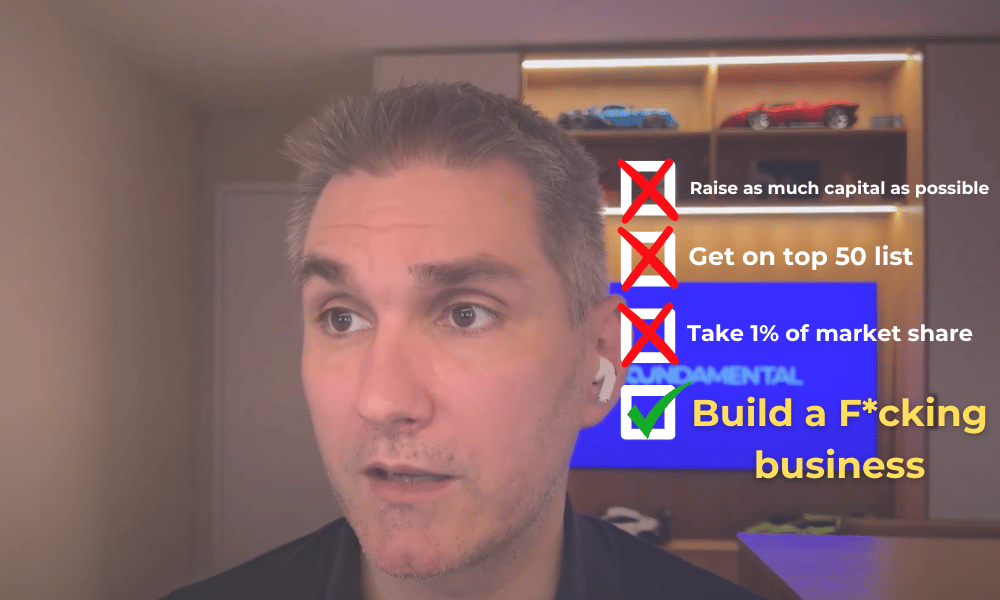
INDUSTRY INSIGHTSThe Fallacy of ‘1% of the Market’: Why You Need to Build a Real Business In our most recent episode of Bricks, Bucks & Bytes, Patric offered a groundbreaking, blunt but powerful piece of advice:  “If you want to build a fucking business, build a fucking business.” This colorful statement was prompted by our discussion on a trap many entrepreneurs fall into when pitching their startups – the “1% of the market” argument. The Problem with the 1% Argument Spencer Greene, who inspired this discussion, points out that saying “if we only get 1% of a $20 billion market, that’s $200 million” adds no new information to your pitch.  It’s a lazy way of estimating market size and potential, and it detracts from your case rather than strengthening it. Patric (as we expected) took this criticism a step further, arguing that this approach often stems from founders making “very lazy assessments” of their market size. He emphasises that an entrepreneur’s job isn’t to tell a narrative, but to build a [F***KING] business. Watch: What Building a Real Business Means Building a real business boils down to three key elements: Selling a product Through a specific channel To a specific customer This framework forces entrepreneurs to be much more precise about their market, their offering, and their go-to-market strategy. It’s about finding a niche where you can truly excel, rather than trying to grab a tiny slice of an enormous pie. The Power of Niche Focus Patric is an advocate for a strategy of intense focus on a specific niche. He explained that in many sectors, particularly in construction and AECS (Architecture, Engineering, Construction, and Supply Chain), there are numerous “highly nuanced but still highly repeatable niches” that reward specificity. By focusing on a narrow niche, entrepreneurs can: Define a differentiated product Identify a specific, repeatable customer Develop an effective channel to reach that customer Contrary to what some inexperienced investors might advise, Patric insists that this approach doesn’t limit your potential market. Instead, it allows you to: Master your niche Potentially capture a large share (even over 50%) of that specific market Use that success as a launching pad to expand into adjacent niches A Real-World Example To illustrate this point, we shared an example from outside the AECS sector.  There is/was a software company in the freelancer space that initially had broad categories on their website, including one for “linguists.” When they dug deeper, they discovered a highly specific niche: speech therapists. By creating tailored landing pages and software features for this niche of 70,000 professionals, they achieved incredible conversion rates and captured 70% of that market. They then replicated this strategy across other niche categories. The Takeaway for Founders The key lesson here is to resist the temptation to pitch your startup based on capturing a tiny percentage of a massive market. Instead: Identify a specific, narrow niche where you can excel Develop a product that addresses the unique needs of that niche Create a targeted channel to reach those specific customers Aim to dominate that niche (50%+ market share is achievable in many AECS niches) Use that success to expand into adjacent niches over time Remember, as Patric puts it, “If you have a business instinct to go after a super specific customer that you can address repeatably and you can conquer a large market share, do exactly that.” By following this approach, you’re not just telling a story or making vague projections. You’re building a real, sustainable business with a clear path to growth and profitability. And that’s what will truly impress investors and set you up for long-term success. Interested in learning more? Check out the full episode with Patric👇👇👇 Listen Now WEEKLY MUSINGSContech Jargon, Data, and Floorplans Beyond the jargon Matt Graves PMP, CCM on LinkedIn Dear Contech Companies, I made this post nearly 2 years ago and every day I’m realizing more and more how painfully true this post was. The more I talk to… | 64 comments on LinkedIn Build on data, not just labor Nici Sundén-Cullberg on LinkedIn: The low hanging fruit = making information available Construction… The low hanging fruit = making information available Construction spending is projected to rise from $13 trillion in 2023 to $22 trillion in 2040. So, the… Floorplans made easy Altaf Ganihar on LinkedIn I’m super excited to share something we’ve just released at Snaptrude! We’ve added these neat and clean 2D floorplans right inside the design canvas. They’re… | 21 comments on LinkedIn RESEARCH Custom Wood & Construction Payroll Solutions Trayd – Construction Payroll and Compliance Trayd is a pioneering construction payroll and compliance platform that aims to revolutionise the payroll process within the construction industry. The platform allows workers to receive their pay 7 to 10 days earlier, addressing the urgent need for improved cash flow in an industry where many workers face financial instability. By modernizing payroll processes, Trayd seeks to create efficiencies that benefit all stakeholders involved in construction projects To get early access to the full reports (coming soon) sign up here. Note, this waitlist will CLOSE at 25 members. Don’t miss out. Join Waitlist Cutr – Wood Manufacturing on Demand Cutr is a digital marketplace that connects designers with wood manufacturing partners to streamline the process of creating custom wood products. Cutr’s network of manufacturers allows the company to handle a wide range of projects, from custom-made furniture to prefab houses, interior projects, and tradeshow booths. The platform’s flexible capacity enables it to provide quick, accurate quotes and help clients grow their businesses To get early access to the full reports (coming soon) sign up here. Note, this waitlist will CLOSE at 25 members. Don’t miss out. Join Waitlist BONUS CONTENTWhat Are Investors Betting On? OUR SPONSORS Shft — helping contractors like you leverage BIM to secure a leading position in the race towards construction’s digital future.  BuildVision — streamlining the construction supply chain with a unified platform for contractors, manufacturers, and stakeholders. Powered by beehiiv

founders fund construction tech venture capitalist
Venture Capitalists, Venture

Founders Fund – Construction Tech Venture Capitalist

Introduction Founded in 2005, Founders Fund is a venture capital firm renowned for its contrarian approach to investing and its willingness to support bold, transformative ideas. The firm was established by Peter Thiel, a prominent entrepreneur and investor, alongside Ken Howery and Luke Nosek. Founders Fund focuses on investing in companies that are poised to reshape entire industries and improve the world through technological advancements. With a commitment to long-term vision and significant impact, the firm has been instrumental in the success of several high-profile companies. Founders Fund is known for its diverse portfolio, which spans multiple sectors including aerospace, biotechnology, and artificial intelligence. Key Staff Members – Investors Peter Thiel – Partner Matias Van Thienen – Partner John Luttig – Partner Amin Mirzadegan – Partner Jennifer Campbell – Partner Brian Singerman – Partner Lauren Gross – Partner & COO Trae Stephens – Partner Joey Krug – Partner Sean Liu – Partner Napoleon Ta – Partner Delian Asparouhov – Partner Scott Nolan – Partner Ryan Petersen – Venture Partner Key (AEC) Tech Investments Founders Fund has strategically invested in several innovative companies within the Architecture, Engineering, and Construction (AEC) technology sector. These investments highlight the firm’s commitment to supporting technological advancements that revolutionize how infrastructure is designed, built, and maintained. Anduril Industries Although primarily known for its defense technology, Anduril’s work with autonomous systems and AI has significant implications for AEC tech, especially in areas related to infrastructure security and management. Founders Fund’s investment in Anduril highlights the crossover potential between defense tech and AEC, particularly in the automation of construction site surveillance, infrastructure security, and the deployment of autonomous systems in large-scale projects. Built Robotics Built Robotics develops autonomous construction equipment, such as self-driving excavators, that can perform essential tasks on construction sites with minimal human intervention. Founders Fund’s investment in Built Robotics is a testament to its focus on automation and robotics within the AEC sector. By integrating advanced AI and robotics, Built Robotics is transforming how construction is done, improving safety, reducing labor costs, and increasing efficiency on job sites. Focus Area In Construction Tech Founders Fund has a diverse investment focus, primarily targeting industries with the potential for groundbreaking innovations. The firm is heavily invested in aerospace, supporting companies like SpaceX that push the boundaries of space exploration. Biotechnology is another crucial area, with investments in firms aiming to revolutionize healthcare through genetic engineering and advanced therapeutics. Artificial Intelligence (AI) also features prominently, with investments in companies developing cutting-edge AI technologies to solve complex problems. The firm is interested in defense technologies, backing startups that enhance national security through advanced tech solutions. Financial technology (fintech), which aims to disrupt traditional banking and financial services, is another area of interest, illustrated by investments in companies like Stripe. Lastly, Founders Fund is keen on consumer internet and enterprise software, supporting platforms that improve connectivity and business operations worldwide. Investment Strategy Founders Fund’s investment strategy is characterized by its willingness to take risks on visionary entrepreneurs and ideas that might seem unconventional. The firm prioritizes investments in companies that have the potential to create significant technological advancements and societal impact. Founders Fund believes in the power of contrarian thinking, often investing in sectors and ideas that others might overlook or consider too risky. The firm typically provides not just capital but also strategic support, leveraging its extensive network and expertise to help startups grow and succeed. Founders Fund’s long-term approach means they are patient with their investments, understanding that groundbreaking innovations often require time to develop and mature. Their strategy is also marked by a strong emphasis on leadership, backing founders who demonstrate exceptional vision, resilience, and the ability to execute their plans effectively. This combination of risk-taking, strategic support, and a long-term perspective has positioned Founders Fund as a leading venture capital firm in the tech industry. Investment Metrics Correct as of August 2024. AEC-Tech Activity Number of early AEC-Tech Unicorns: 0AEC-Tech Rank: 10 Deal Activity Number of deals in last 12 months (incl. follow-ons): 50Number of deals per year in last 3 years (average, incl. follow-ons): 69 Other Resources

The ConTech Tightrope: Mastering Product Development and Market Entry Simultaneously
Go To Market

The ConTech Tightrope: Mastering Product Development and Market Entry Simultaneously

  In the fast-paced world of construction technology, startups face a daunting challenge: successfully balancing product development and market entry strategies. This balancing act is crucial, as the construction industry’s unique demands require both innovative solutions and practical market approaches. Many contech startups find themselves navigating this complex landscape, where the pressure to innovate must be carefully weighed against the need to establish a strong market presence. The Unique Challenges of Contech Startups Contech startups operate in an industry known for its traditional practices and resistance to change. This environment presents unique hurdles in both product development and market entry. Bernardo Gamboa, Partner at Global Projects Strategy, notes, “What we do is we have conversations with them and we pilot solutions with them to see and get feedback from the field and from the user. So that’s key in this industry.” This highlights the importance of real-world testing and feedback in the contech space.   In this episode, Bernardo Gamboa shared fascinating insights into the construction tech landscape in Latin America. Product Development in the ConTech Space Developing a contech product requires a deep understanding of construction processes and pain points. Key considerations include: Creating a Minimum Viable Product (MVP) that addresses core industry needs Iterative development based on user feedback Ensuring compatibility with existing construction workflows Go-to-Market Strategies for Construction Technology Entering the construction market with a new technology can be challenging. Successful strategies often involve: Partnering with established construction firms Tailoring solutions to regional construction practices Demonstrating clear ROI to potential clients   In Latin America, the construction industry is a major economic driver, providing significant employment opportunities across various countries in the region. The sector is characterised by a high volume of ongoing projects. This insight underscores the importance of understanding local market dynamics when developing go-to-market strategies. Balancing Resources: Time, Money, and Talent Contech startups must carefully allocate their limited resources between product development and market entry efforts. This often involves: Prioritising features based on market demand Investing in a small, skilled team that can wear multiple hats Leveraging partnerships to extend reach without overextending resources Common Pitfalls and How to Avoid Them 1. Over-engineering Products Without Market Validation: Many contech startups fall into the trap of developing complex, feature-rich products without first validating market needs. How to Avoid: Conduct thorough market research before and during product development Develop a Minimum Viable Product (MVP) and gather user feedback early Implement an agile development process to adapt to market responses quickly   2. Neglecting Marketing Efforts in Favour of Product Development: Some startups focus exclusively on perfecting their product, neglecting the crucial aspects of marketing and customer acquisition. How to Avoid: Allocate resources for both product development and marketing from the start Develop a comprehensive go-to-market strategy alongside product development Leverage industry events, partnerships, and digital marketing to build brand awareness   3. Failing to Adapt to Regional Construction Practices: Startups often create one-size-fits-all solutions that don’t account for regional variations in construction methods and regulations. How to Avoid: Research and understand local construction practices in target markets Develop flexible solutions that can be customised for different regions Partner with local industry experts or companies to gain market-specific insights Future Trends in ConTech Product Development and Market Entry As the construction industry continues to evolve and embrace technology, several key trends are shaping the future of ConTech product development and market entry strategies: Increased Focus on Sustainability and Eco-Friendly Solutions Growing demand for green building technologies and materials Development of AI-driven energy optimization systems for buildings Innovations in waste reduction and recycling technologies for construction sites Carbon footprint tracking and reduction tools for construction projects Greater Integration of AI and IoT in ConTech Products Advanced predictive maintenance systems for construction equipment AI-powered project management tools for optimising workflows and resource allocation IoT sensors for real-time monitoring of construction site conditions and safety Machine learning algorithms for improved building design and performance simulations Emphasis on Data-Driven Decision Making Development of comprehensive data analytics platforms for construction projects Integration of big data analysis in risk assessment and mitigation strategies Use of digital twins for better project planning and execution Collaborative Ecosystem Development Creation of open platforms that allow for easy integration of various contech solutions Increased partnerships between startups, established tech companies, and traditional construction firms Development of industry-wide standards for data sharing and interoperability Practical Takeaways for ConTech Startups Start with a clear understanding of your target market’s needs Develop an MVP and iterate based on user feedback Build partnerships to accelerate market entry Balance resource allocation between product development and marketing efforts Stay flexible and be prepared to pivot based on market response The contech startup journey is indeed a tightrope walk. But with careful planning, market insight, and a willingness to adapt, startups can successfully navigate the dual challenges of product development and market entry.      

construction supply chain
Startups

Matrak: Revolutionising Construction Supply Chain Visibility

  In construction, keeping track of materials can be a logistical nightmare. Enter Matrak, an Australian startup that’s changing the game. Let’s dive into how this innovative company is reshaping the construction supply chain. Founding Story Matrak was founded in 2013 by brothers Shane and Brett Hodgkins in Melbourne, Australia. Brett, who was studying for a Masters in computer science, was working for his father’s window installation company. Frustrated with the challenges of tracking window deliveries and installations, Brett developed a prototype mobile app on his phone. This simple solution caught the attention of both the window manufacturer and the main contractor on the project. Sensing an opportunity, Brett’s older brother Shane, who was working in software development, saw the potential to turn this prototype into a real business. The Hodgkins brothers registered the company and spent the next five years developing the product in their bedrooms. It was a challenging period, with constant pitching to investors but little traction due to the lack of large clients. The breakthrough came around 2018 when Matrak landed a project with Buildcorp. This success led to their first seed round, raising $760,000. A subsequent convertible note round in 2019 brought in an additional $3.6 million, allowing the brothers to work on Matrak full-time and sign up clients like Hickory and Super See.   What Matrak Offers From its humble beginnings as a simple tracking app, Matrak has evolved into a comprehensive platform that provides transparency and connects all stakeholders in the construction supply chain.  The system provides comprehensive, real-time visibility across the entire project lifecycle. It connects initial design plans and project schedules with every phase of construction, tracking materials from production to on-site installation. This integration offers a complete overview of the project’s progress and supply chain dynamics. Imagine zooming in on a 3D model of your building and seeing exactly where each component is in real-time. That’s Matrak’s core offering today, a far cry from its initial prototype but still true to its original mission of helping suppliers and site teams track the manufacture, transport, delivery, and installation of building components. Shubhankar Bhattacharya, a General Partner at Foundamental, adds insight into Matrak’s business model: “From what I recall, at least back in the day, the pricing was very much like a typical subscription plan, pay a certain price per user.” This subscription-based approach allows for scalability and recurring revenue, a significant evolution from the company’s early days.   Tech Magic: How It Works What makes Matrak special? Its seamless integration with design processes. While many solutions track deliveries, Matrak links this data directly to project plans and 3D models. They use: QR codes for tracking IoT devices for real-time updates Integration with 3D design models   This creates a digital twin of the construction supply chain, offering unprecedented visibility. However, as Shub points out, “It’s a very profound value statement and value proposition. It’s a very complex set of things to build and put together as part of the same platform.” This complexity underscores the technical challenges Matrak has overcome. Who’s Using Matrak? Matrak targets: Head contractors (known as general contractors outside Australia) Home builders Component installers (think windows and doors)   A significant majority of finished building components used in Australian homes, including doors and windows, are sourced from China. The estimated range of these imports is between 50% to 70%, highlighting China’s crucial role in Australia’s construction supply chain. This makes Matrak’s solution particularly valuable for managing international supply chains. Shub emphasises this point: “If you have to make a dent in that slice of the Australian housing and construction market, you’re not going to do that without making a decent show of it in China.” Overcoming Hurdles One of Matrak’s biggest challenges? The complex nature of construction supply chains and geopolitical tensions. They’ve addressed this by creating a flexible system that can adapt to different project types and scales. Shub provides context on the challenges: “I think eventually what made on my mind, and I encourage you to think back to what the narrative was like in 2020, especially if you think back to what say mid 2020 was, the Australia China rhetoric was very, very intense.” This highlights the geopolitical risks Matrak must navigate in its expansion plans.   In this episode, we discussed the role of working capital in scaling a construction materials business. Looking Ahead Matrak’s ambitions don’t stop at Australia’s shores. The company has recently raised AUD 2.9 million (USD 1.9 million) in a Series A funding round, with a clear focus on international expansion, particularly in China. This latest funding round, led by China-based G&M Capital and supported by Our Innovation Fund and former Aconex chairman Simon Yencken, underscores the company’s global ambitions. As reported by Business News Australia, the funds will be used to strengthen Matrak’s balance sheet as they prepare to launch Matrak China, a strategic collaboration with G&M Capital. The decision to establish a presence close to the industry’s manufacturing base in China is a game-changer. It allows Matrak to be at the heart of the global construction supply chain, potentially offering even greater visibility and control to its clients. Wrapping Up Matrak’s success offers valuable lessons: Solve a real, pressing problem Integrate with existing workflows Think globally from day one Be prepared to navigate complex geopolitical landscapes   As construction continues to evolve, companies like Matrak will play a crucial role in shaping its digital future. The question isn’t if digital supply chain solutions will become standard, but when. And Matrak is leading the charge, despite the complex technical and geopolitical challenges it faces.      

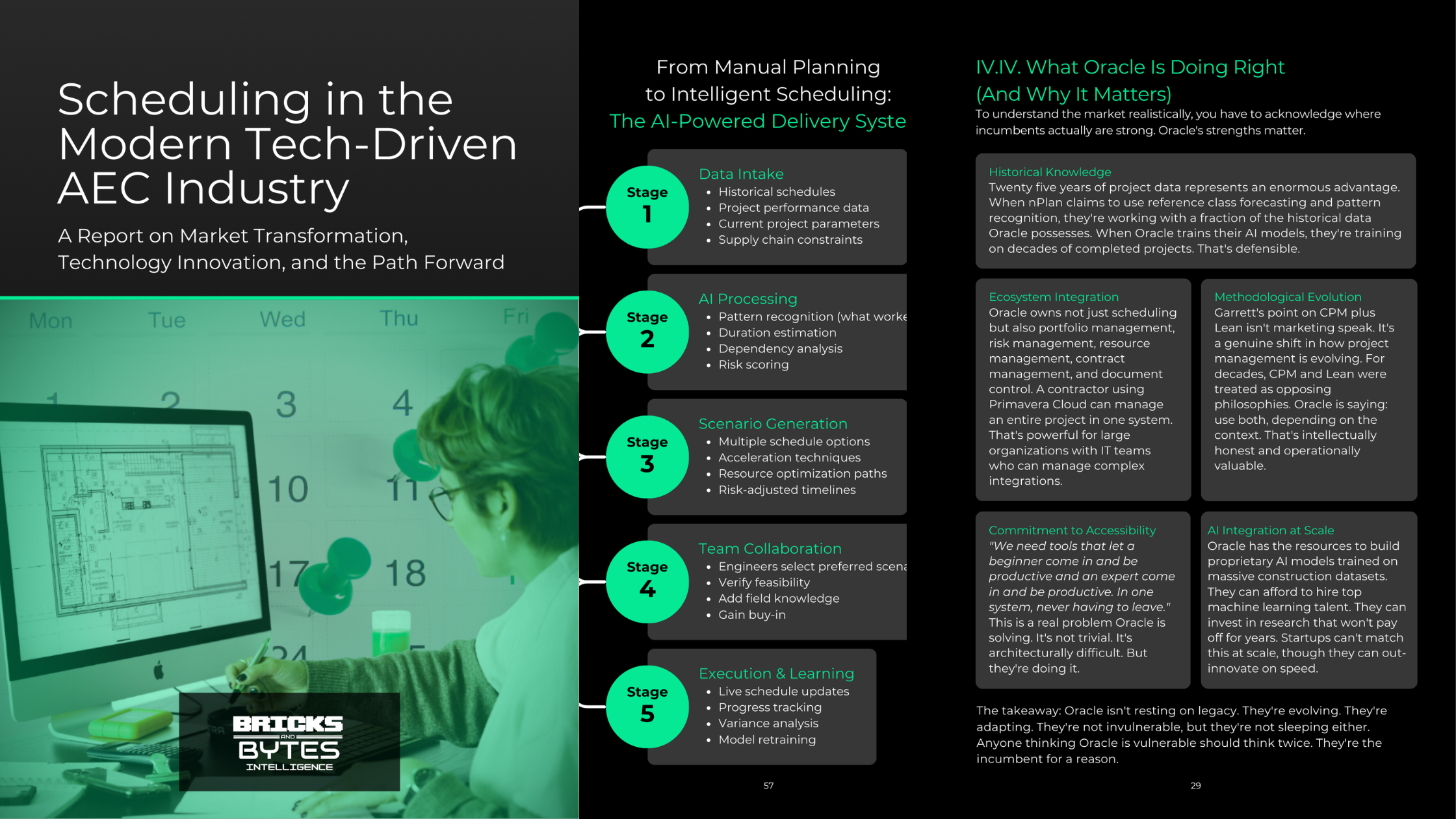
Get a FREE copy of our Scheduling in the Modern Tech-Driven AEC Industry: A Report on Market Transformation, Technology Innovation, and the Path Forward” (worth $150) and a FREE weekly email to stay up to date on construction tech. SIGN UP TODAY!

Scheduling in the Modern Tech-Driven AEC Industry

Sign up to the #1 Newsletter In AEC Tech. Join over 2,100 like-minded Founders, Investors and Techies disrupting the way we build. 

Scheduling in the Modern Tech-Driven AEC Industry