
Author name: Owen Drury

contech startup messaging strategy
Go To Market

Cutting Through the Noise: Why Clear Messaging is the Unsung Hero of Contech Startups

  You’re scrolling through LinkedIn, and you see a construction tech company’s post. Curious, you click through to their profile, then their website. After five minutes of reading, you still have no idea what they actually do. Sound familiar? If you’re nodding along, you’re not alone. Kevin Ferguson, founder of AECO Product Marketing and a veteran of Microsoft and Autodesk, sees this scenario play out daily. With nearly a decade of experience in AEC technology marketing, Kevin has a front-row seat to one of the industry’s most persistent problems: absolutely terrible messaging. TL;DR: The Unsung Hero of Contech Startups Clear messaging is the make-or-break factor for contech startups in an increasingly crowded market The problem: Most contech startups have terrible messaging – even industry experts can’t figure out what they do The stakes: With 2,000-5,000 target customers total, you can’t afford to confuse your audience The solution: Focus on the “how” not just the “what” – explain your cascade of benefits clearly Key insight: Construction buyers are naturally skeptical due to past tech failures Bottom line: Your website is your storefront – invest in clear, jargon-free messaging that builds trust   In this episode, Kevin Ferguson shares why most AEC startups are failing at basic messaging, the real difference between hype and reality in construction tech, and how to actually position products that sell.   The Messaging Crisis in Construction Tech Here’s a sobering reality check: we’re talking about an industry with somewhere between 2,000 and 5,000 target customers total. That’s it. Unlike other tech sectors where you can cast a wide net and hope for the best, construction technology operates in a remarkably finite market. “If I don’t know what they do, then there’s a huge chance that their customers also have no idea what they do,” Kevin explains. And when someone with his industry expertise can’t decipher your value proposition, you’ve got a serious problem. This isn’t just about being clever or creative with your copy. It’s about survival. In a market this small, every confused prospect is a missed opportunity you can’t afford. Your Website: The Make-or-Break Moment Kevin frequently hears from prominent investors that the number one thing contech startups underinvest in is their website messaging. Not the design, not the fancy animations – the actual words on the page. Think of your website as your storefront. When someone walks by a clothing store, they can see the mannequins, understand the style, and decide if they want to step inside. Your homepage needs to do the same thing – give visitors a clear taste of what they should be excited about so they’ll explore the rest of your site. But here’s the kicker: your website also serves as your credibility shield. One of the biggest concerns for construction executives is whether your company will still be around in two years if they invest in your product. Your website messaging is your first and most important defense against that objection. The Trust Deficit Challenge Construction buyers come to the table with a healthy dose of skepticism, and for good reason. They’ve been burned by countless tech promises that didn’t deliver. Solutions that were too complex, weren’t adopted, or simply didn’t work as advertised. “GCs, for the most part, off the bat kind of don’t believe you,” Kevin notes. “Because there’s been so many false promises and solutions that just didn’t work.” This skepticism means you can’t skip steps in your messaging. You can’t just promise a 10% improvement in project speed and expect people to believe you. You need to show them how. The Order of Benefits: Your Messaging Roadmap This is where Kevin’s “order of benefits” framework becomes invaluable. Instead of jumping straight to the big, bold outcome, you need to walk your audience through the logical progression of how you deliver value. Let’s use reality capture as an example: First-order benefit: You get a digital capture of your project (easy to understand, but not compelling enough to buy) Second-order benefit: You can do walkthroughs without going to the physical job site (now we’re getting somewhere) Third-order benefit: You can track progress and approve pay applications remotely (this is where ROI starts to show) Fourth-order benefit: You de-risk the project by only paying for work that’s actually installed (now we’re talking real business impact) Most companies make the fatal mistake of leading with that fourth-order benefit. They’ll say something like “Reality capture de-risks your project by reducing leverage” without explaining how they get there. The result? Prospects think you’re full of it. The Feature vs. Outcome Balance There’s been a huge swing in product marketing toward outcome-based messaging. Everyone wants to lead with the sexy business results. But Kevin has seen this pendulum swing too far in the construction space. “A lot of companies these days skip features and skip the how,” he explains. “Where’s the how? Without any trust built, for a customer to say, ‘yeah, I think that’s possible’ – they need to see the how.” This is especially critical in construction, where buyers are naturally skeptical. They need to understand not just what you’ll deliver, but how you’ll deliver it. The features and functionality aren’t boring technical details – they’re the proof points that make your promises believable.   The Complexity Trap Many contech startups fall into the complexity trap. They’ve built sophisticated products that do multiple things for different stakeholders, and they try to communicate all of it at once. The result is messaging that sounds like a word salad. Kevin’s advice is refreshingly simple: focus on your beachhead product. What’s the one thing you do really, really well? What’s the primary reason 80% of your customers buy from you? “One of the challenges that companies have with messaging is they try to be all things to all people,” Kevin explains. “They want to hit so many value points, address so many personas, and it’s really better to just own one really, really well.” The Anti-Clever Approach In an industry where

construction site heat safety
News, Technology

The Overheated Construction Site: Are We Prioritising Safety or Productivity?

  It’s 35°C (95°F) on a construction site in Phoenix, Arizona. The asphalt is so hot you could fry an egg on it, and your hardhat feels like it’s cooking your brain. Do you power through for the sake of the project schedule, or do you call it a day to protect your health? This scenario is playing out on construction sites across the globe with increasing frequency, sparking a heated debate (pun intended) about where to draw the line between safety and productivity. The discussion reveals a fundamental tension in the construction industry that extends far beyond the weather. TL;DR: The Heat Is On, But Who’s Turning It Down? As extreme heat becomes more common, the construction industry faces a dilemma between protecting workers and maintaining productivity. Construction accounts for 36% of all heat-related occupational fatalities 89% of construction firms report productivity drops as temperatures rise 59% of firms admit missing deadlines specifically due to heat Solutions range from scheduling apps to cooling fabrics to automation Industry debate centers on prevention vs. accommodation strategies Some see heat management as excuse-making, others as life-saving necessity   In this episode, we cover the $5 billion heat crisis destroying construction schedules (and why Martin thinks it’s just an excuse) The Scorching Statistics Let’s start with some sobering numbers that emerged from recent industry research. According to data from weather technology company Perry Weather, 89% of construction firms report a drop in productivity as temperatures rise, with the average site losing four to six hours of productive time per week due to heat. More alarmingly, construction is responsible for 36% of all heat-related occupational fatalities despite representing a much smaller portion of the overall workforce. Perhaps most telling is this statistic: 59% of firms admit to having missed project deadlines specifically because of heat. That’s not just a scheduling inconvenience—it translates to an estimated $5 billion in annual schedule overruns and associated costs across the industry. But here’s where things get interesting. These numbers have sparked two very different reactions within the construction community. The “Toughen Up” Camp On one side, you have industry veterans who view heat management as, frankly, excuse-making. Martin, a construction professional with site experience, represents this perspective well: “Every time you will have 30 degrees inside you will have people, we can’t do this, we can’t do that because it’s too hot.” His concern isn’t callousness—it’s practicality. If construction companies start scheduling around heat, where does it end? Projects already face countless delays from weather, material shortages, regulatory issues, and design changes. Adding heat as another factor that can shut down work threatens to make projects even more unpredictable and expensive. “What will end up happening is that the schedules will be delayed and it will be overextended because of implementation of these things,” Martin argues. From this perspective, the focus should be on adaptation rather than accommodation. Provide more water, create shade, rotate crews, work night shifts in extreme climates—but keep the work moving. There’s historical precedent for this view. Construction has always been physically demanding work performed in challenging conditions. Workers in the Middle East, Southeast Asia, and the American Southwest have been building in extreme heat for generations. The pyramids weren’t built with air conditioning. The “Safety First” Response On the other side are those who point out that we’re not talking about minor discomfort—we’re talking about life and death. When construction accounts for more than one-third of heat-related workplace fatalities, can we really dismiss heat management as mere excuse-making? Patric, bringing a different perspective from Germany, pushes back on the “toughen up” mentality: “Try actually working in Arizona or New Mexico in August. It’s a nightmare.” He points out that this isn’t just about traditional hot climates—climate change is bringing extreme heat to regions that weren’t historically prepared for it. The safety-first camp argues that optimal work temperature is between 20-25°C (68-77°F), and worker productivity drops sharply above 30°C (86°F). At these higher temperatures, not only does productivity decline, but the risk of heat exhaustion, heat stroke, and fatal accidents increases dramatically. The Technology Solutions Interestingly, technology companies are stepping into this debate with solutions that attempt to bridge the gap between safety and productivity. Companies like Perry Weather offer workforce planning tools that help construction managers schedule work around extreme heat conditions, providing recommendations on work duration and break frequency based on temperature forecasts. But perhaps more innovative are the physical solutions emerging. Patrick mentioned seeing “a kind of granule that you can weave into fabric, headbands, shirts, whatever. This granule is able to absorb the body heat and resorb it to the outside as water.” These cooling fabrics can lower body temperature by several degrees and last for an entire work shift. Then there’s the automation angle. As Martin noted, “robotics might be in hot climate part of the solution.” If robots can handle the most physically demanding work during peak heat hours, human workers can focus on tasks that require less physical exertion or can be performed in cooler conditions.   The Global Perspective What makes this debate particularly fascinating is how it reveals different cultural and economic perspectives on workplace safety. In Europe, with its stronger worker protection regulations and different climate conditions, heat management tools might seem like obvious safety improvements. In regions where extreme heat is a daily reality for months at a time, such tools might feel like an unaffordable luxury that threatens economic competitiveness. The conversation also touches on broader questions about labor and development. As one participant noted, “It’s a privilege of the Western world that we kind of come to making up this stuff this way. Because in other parts of the world, things are completely different.” This raises uncomfortable questions: Are heat safety measures a natural evolution of workplace protection, or are they a luxury that only wealthy societies can afford? And if extreme heat is becoming more common globally due to climate change, how do we balance economic development with worker

Newsletter

Fieldwire’s $300m Acquisition – What We Learned From Their CEO

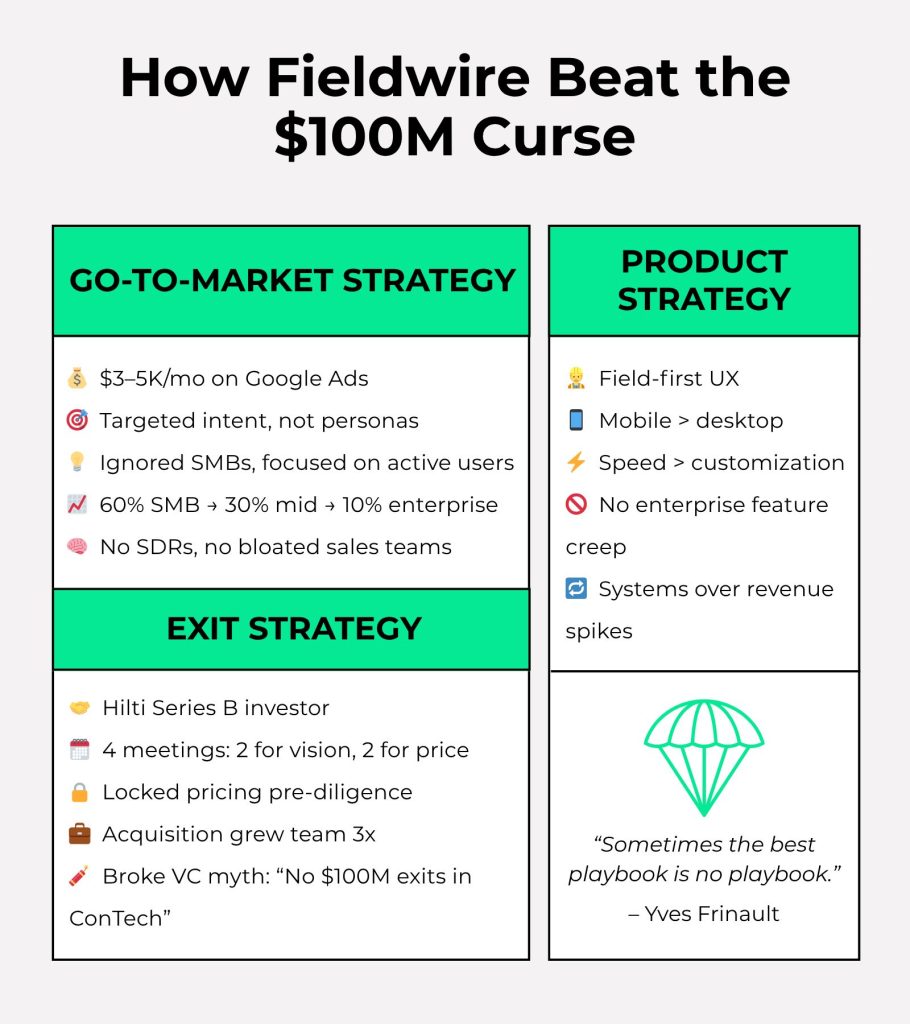
Want to get your message in front of {{active_subscriber_count}} highly engaged innovation leaders? Check out our sponsorship offers. INDUSTRY INSIGHTSFieldwire’s $300m Acquisition – What We Learned From Their CEO The Fieldwire founder who ignored every startup playbook and built the go-to-market machine that changed everything Picture this: It’s 2013. Every construction tech startup is burning VC cash on SDR teams and enterprise sales. Meanwhile, a French paratrooper turned gaming product manager is quietly building something different with just a $3-5K monthly marketing budget. The result? Fieldwire never had a down month on ARR throughout its entire history. When Hilti acquired the company, it helped break what VCs called construction tech’s “$100 million curse.” Here’s what makes this story fascinating: Yves didn’t succeed despite his unconventional background; he succeeded because of it. TL;DR: How a French Paratrooper Cracked Construction Tech’s $100M Ceiling With a $3K Budget Forget sales teams. Forget enterprise features. Here’s how Fieldwire scaled to acquisition without following the startup rulebook: Took lessons from the gaming industry to obsess over UX Bet on field workers before they had smartphones Spent just $3–5K/month on intent-driven Google Ads Said no to enterprise customisation to keep product lean Built PLG systems that scaled, never a down ARR month Locked in Hilti’s acquisition with a smart, founder-friendly deal The kicker? VCs said $100M exits weren’t possible in construction tech. Fieldwire proved them wrong and changed the game forever. The Gaming Insight That Everyone Else Missed When Yves graduated Stanford with a civil engineering degree, construction seemed obvious. But one thing stopped him: “I love construction, but I just hate the freaking paperwork.” That frustration led him to Ubisoft, where he learned lessons that would reshape construction software forever. Here’s the key insight most founders miss: gaming companies had already solved construction’s collaboration problem. While construction drowned in paper processes, gaming studios used Jira, Trello, and Basecamp to coordinate complex, multi-disciplinary projects with tight deadlines. Yves Frinault, CEO & Co-Founder and Javed Singha, Co-Founder of Fieldwire. Credit: Fieldwire.com Gaming taught Yves that products succeeding purely on utility were a myth. “Games are products that have no utility other than being pleasant to use,” he explains. This obsession with user experience would become Fieldwire’s secret weapon in an industry notorious for clunky software. The timing insight was equally crucial. Gaming had just completed its transformation from physical retail to digital distribution. Yves recognized construction was sitting at the exact same inflection point. The lesson: Look for industries that have already solved your problem in a different context. The solutions often exist; they just need translation. The $3K Marketing Budget That Outperformed Million-Dollar Sales Teams While competitors hired expensive sales teams, Yves made a contrarian bet that reveals everything wrong with how most B2B companies think about go-to-market. His monthly ad spend? Just $3-5K. The numbers tell the story: Fieldwire’s inbound machine generated 60% SMB customers, 30% mid-market, and 10% enterprise each month. But here’s the genius part: they only talked to 10-15% of signups initially, focusing exclusively on the most engaged users. SMB customers never got sales calls. “They just go on the website, put their credit card, check out.” Mid-market and enterprise got the full treatment. This worked because of three factors: The market timing was perfect. Google Ads in 2013 required real expertise. While this created barriers for most companies, it created massive arbitrage for anyone with gaming marketing experience. The competition was asleep. Construction tech companies were trying to reach digital-native field workers using outbound tactics designed for Fortune 500 executives. The targeting was fundamentally different. Instead of targeting personas, Yves targeted intent. People searching for “punch list tool” were already problem-aware and actively seeking solutions. When Fieldwire first turned on monetization, their first customer paid within 1-2 hours. That’s the power of product-led growth with the right freemium boundaries. The Field-First Philosophy That Created Category Differentiation While Procore owned project management for executives, Yves identified a massive white space: field workers had been completely ignored by technology. This wasn’t obvious in 2013. “If you told people a plumber would have a smartphone in their pocket, they would laugh you out of the room.” By focusing exclusively on field workers, Fieldwire could optimize for completely different metrics: speed over features, simplicity over customization, mobile-first over desktop compatibility. This created different expansion patterns that reveal important truths about construction industry structure: With subcontractors: “As soon as we proved something worked, it would catch fire and expand rapidly. Zero to entire company within a year.” With general contractors: “More project-oriented growth. Team on site, then entire project, then several projects.” Understanding these dynamics let Fieldwire tailor sales strategies by customer type, something most construction tech companies still get wrong. The Strategic Decisions That Built Exit Value As Fieldwire scaled, Yves made decisions that positioned the company for a premium acquisition: He focused on the middle market sweet spot. Companies with 150-500 people hit a specific inflection point: “Too big for paper, but small enough that the CEO still knows what’s happening operationally.” The data proved this thesis. Fieldwire’s biggest enterprise deals started when the company had just 5 employees. He refused enterprise customization requests. This preserved the product’s simplicity that made Fieldwire scalable. He built systems, not just revenue. One decision reveals everything about sustainable scaling: Fieldwire tried building an outbound sales motion from 2019-2021 and failed. “The company was so tuned for PLG and inbound sales that it was hurting us to set up an outbound motion effectively.” Rather than force it, they solved outbound by merging with Hilti. The Hilti Acquisition: How Strategic Exits Really Happen The Hilti story destroys the myth that exits happen through banker auctions. It began with a 2013 coincidence. McKinsey invited Fieldwire to meet Hilti during a startup tour. By pure luck, Fieldwire was already pre-installed on Hilti’s measuring devices. But here’s what most founders miss: the coincidence only mattered because Fieldwire had built something worth discovering. Hilti invested in Fieldwire’s Series B, creating a multi-year

Newsletter

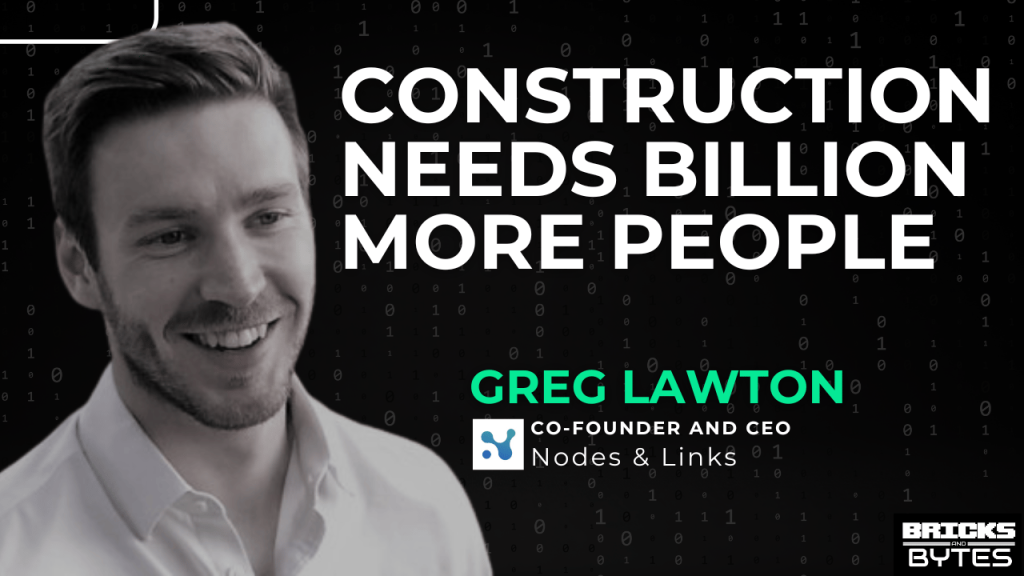
The Billion-Person Problem: How AI Will Replace Your Project Managers – Greg Lawton – EARLY RELEASE

This is an early release of our podcast, exclusive for premium subscribers. To get early access, upgrade here. EARLY RELEASEThe Billion-Person Problem: How AI Will Replace Your Project Managers Greg Lawton, CEO and co-founder of Nodes and Links, reveals how AI is addressing the billion-person workforce shortage in construction and why 60% of his customers now come through referrals alone. In this candid conversation, Greg breaks down the hard truths about scaling a construction tech company across 30+ countries, the surprising differences between raising capital in Europe vs. America, and why he believes we’re heading toward a world where “people just cannot believe that people used to write reports.” In this episode, you’ll: Discover why construction needs a billion more project managers (and how AI workers will fill the gap) Learn the “prevent failure vs. maximize success” framework that transformed Greg’s leadership approach Understand why American customers “bite your hand off” for ROI while Europeans still “think about it” Get insider tips on qualifying investors in construction tech (and why 18 out of 20 VCs in Silicon Valley are great vs. only 3 out of 20 in London) See how one customer achieved $63,000 in productivity gains per scheduler per year Chapters 00:00 – Greg’s unconventional path to construction tech 03:59 – The evolution of construction PMOs from 2010 to today 08:27 – Why the world needs a billion more project managers 14:29 – Target customers and global project scope 16:40 – The AI-first approach from day one (pre-ChatGPT hype) 18:16 – Customer onboarding and the 7-minute report revolution 24:32 – The brutal reality of 0.3% hiring acceptance rates 28:17 – Go-to-market strategy and customer qualification 36:27 – Global construction trends and demand patterns 41:22 – Managing a 50-person distributed team across continents 48:01 – The CEO’s job: Prevent failure vs. maximize success 51:36 – “The Physics of Project Acceleration” book reveal 54:33 – $18M funding round and American expansion strategy 59:45 – Capital raising wisdom for construction tech founders 1:05:19 – Five-year vision: The end of manual report writing 1:07:38 – Cultural differences in global construction execution »»» Listen Now (Premium Subscribers Only) ««« Subscribe to our premium content to read the rest. This is a subscriber only post. Become a paying subscriber of our annual or monthly paid subscriptions to get inside takes on growth in construction tech. Upgrade Translation missing: en.app.shared.conjuction.or Sign In Powered by beehiiv

contech startup go-to-market prioritization
Go To Market

The “Time, Talent, Treasure” Framework: Prioritising Go-to-Market for Early-Stage Contech Startups

  If you’re running an early-stage construction tech startup, you’ve probably felt that familiar knot in your stomach when trying to decide where to focus your marketing efforts. Should you be writing blog posts? Attending trade shows? Running LinkedIn ads? Building that sales deck? The list feels endless, and your resources definitely aren’t. This is where Kalyn Lengieza’s “Time, Talent, Treasure” framework becomes a game-changer. As a seasoned marketing consultant who’s worked with contech startups for almost nine years, Kalyn has seen firsthand how the wrong prioritization can sink promising companies before they even get off the ground. TL;DR: Time, Talent, Treasure The “Time, Talent, Treasure” Framework helps early-stage contech startups make smart go-to-market decision Time: How much time can you realistically dedicate to a marketing activity? Talent: Do you have the right people internally or need to hire/outsource? Treasure: What’s your budget, and where will it deliver the best ROI? Key insight: Construction tech requires authentic relationships – you can’t just flip on ads and expect leads Bottom line: Choose one resource to prioritize per initiative rather than spreading yourself too thin   In this episode, Kalyn Lengieza, owner of Grindstone Consultants, shares why authenticity beats fancy tech features, how relationships still drive deals in our industry, and the real secrets behind successful construction tech marketing.   The Framework That Changes Everything The beauty of the Time, Talent, Treasure framework lies in its simplicity. Instead of trying to do everything at once (spoiler alert: that never works), you force yourself to make conscious choices about resource allocation. Time is about understanding your bandwidth. As Kalyn puts it, “If you have 10 hours in a day as a CEO, are you going to spend how much time creating content? Or are we going to put your talent to that? Or are we going to outsource it?” Talent refers to the people you have access to – whether that’s your internal team, your own skills, or the expertise you can bring in from outside. Treasure is your budget – the cold, hard cash you can allocate to different initiatives. Here’s the kicker: you can’t optimize for all three simultaneously. Something has to give, and that’s where strategic thinking comes in. Why This Matters More in Construction Tech Construction technology isn’t like other industries where you can throw money at Google Ads and watch the leads pour in. As Kalyn explains, “This isn’t just like a faceless industry where you go and you put in a credit card and people buy tech and start using it. It’s very hard to get the growth in tech in the industry without growing the relationships as well.” The construction industry runs on authenticity and relationships. Deals get done on golf courses, at NASCAR races, and in jobsite trailers. This reality makes the Time, Talent, Treasure framework even more critical because you need to be strategic about where you invest your relationship-building efforts. Making the Framework Work: Real Examples Let’s say you’re deciding between content creation and event attendance. Using the framework: Content Creation: Time: High (writing, editing, publishing) Talent: Medium (you can learn, but quality takes skill) Treasure: Low (mostly your time) Trade Show Attendance: Time: High (travel, booth time, follow-up) Talent: Medium (booth staff, sales skills) Treasure: High (booth fees, travel, materials) The framework forces you to ask: Which approach aligns better with your current resource constraints and goals? The Prioritization Process Kalyn emphasizes that prioritization should focus on “impact and velocity” – how quickly can you get closer to your customer? This is crucial because, as she notes, “The sales life cycles in construction tech can be six months to 18 months to longer, depending on what it is.” Ask yourself: Is spending five hours writing blog posts going to get me closer to customers right now? Should I be out meeting with customers instead? Should I be at that industry event? The answer depends on your current stage and what your customers need to hear from you. The Customer-Centric Approach One thing that makes Kalyn’s approach particularly effective is her insistence on putting the customer at the center of everything. She’s adamant about this: “I try to put the customer at the center of everything I do, no matter what, and understand where they’re going, what they’re doing, how they think about it.” This customer-first mindset should inform how you apply the Time, Talent, Treasure framework. Before deciding where to invest your resources, you need to understand: How your customers prefer to learn about new solutions What channels they actually use and trust What problems keep them up at night How they make purchasing decisions   Common Mistakes to Avoid Many contech startups make the mistake of trying to do everything at once. They’ll launch a content marketing program, start LinkedIn advertising, begin attending trade shows, and try to build partnerships simultaneously. This scattered approach typically leads to mediocre results across all channels. The framework forces you to be honest about your limitations and make strategic choices. As Kalyn points out, “A lot of startups try to do, they bite off more than they can chew.” Practical Implementation Here’s how to start using the framework today: List your potential go-to-market activities (content, events, ads, partnerships, etc.) Assess each activity using the Time, Talent, Treasure lens Identify your biggest constraint (usually time for early-stage startups) Choose 1-2 activities that align with your constraints and customer preferences Set success metrics and timelines for evaluation Commit to the choice for at least a full quarter before major pivots The Long Game Remember, construction tech marketing is a marathon, not a sprint. The industry values consistency and authentic relationships over flashy campaigns. The Time, Talent, Treasure framework helps you make sustainable choices that you can execute well rather than ambitious plans that fall apart under resource constraints. As Kalyn wisely notes, “You got to be willing to test and iterate all the time.” The framework doesn’t eliminate the need for experimentation, but it ensures your

Newsletter

Why is OpenAI Hiring a 3-in-1 Engineer for $555k?

OpenAI is paying $555k… for one engineer who does it all. In this week’s Bricks, Bucks & Bytes episode: 💰 OpenAI is hiring a civil/structural/architectural hybrid… for $555,000. 🏗️ Trunk Tools raises $40M and doubles down on becoming construction’s AI layer. 🗿 Monumental Labs is reviving stone architecture with robotic sculptors and prefab facades. But that’s not all: We unpack why OpenAI wants 20+ years of data center experience (and what it means for construction pros) Dustin drops real talk on startup vs tech giant hiring wars Sarah Buchner’s “distribution-first” playbook at Trunk Tools gets analyzed Aurimas Sabulis from Dextall breaks down how “installing windows broke him” and why his prefab mission is personal Micah Springut from Monumental Labs shares how carving classical sculptures led to a $7M vision for stone skyscrapers 🎧 Listen now for: Why OpenAI might kill the outsourced architect model Whether founder brand now matters more than product The quiet power of niche GTM + AI distribution advantage Watch the Full Episode 🗣 Bonus: Some personal highlights Dustin thinks construction execs deserve more than VPs of revenue Martin’s dreaming of stone-built future cities Owen wants your LinkedIn feed to stop reposting garbage charts You might also like: Vibe Coding Will Die, nPlan CTO Warning, Woodchuck $3.75M Raise, Parsepec $20M Series A $5B Heat Crisis, 89% Productivity Drop, Plastic Innovation, $10M Raise Success with Sean Petterson ChatGPT Makes Us Dumber, LIVE from House Factory, Vibe Designing Is Here Apple Kills Cold Calling, In Office Scares CEO’s, Insurance Proves Climate Change Fears New Steel Tariffs Hit, Is A 12hr Work-day Unreasonable? ChatGPT NoteTaker Kills Startups Builder AI $450M Bankruptcy – Beginning Of The End for AI Startups? Johnny Ive $6.5B Hire, TAM Check Why Data Centers Might Crash, Y Combinator Predatory Practices, with Softbank’s $100B Pledge How China Builds Nuclear Plants Cheaper, Construction’s $860bn Problem, & Trump 2.0 Germany Effects 90% Of AI Startups Are Worthless, US Economy CRASH, Is Autodesk Investable + $2bn Startup Meltdown Powered by beehiiv

Newsletter

ICYMI: Vibe Coding DocuSign, Autonomous Tractors, and Robot-Built Homes

Want to get your message in front of {{active_subscriber_count}} highly engaged innovation leaders? Check out our sponsorship offers. This Week’s Quickfire BytesFuel your curiosity with this week’s contentW/C 28th July 2025 NEW EPISODES The Physics of Farm Autonomy – How Autonomy Cuts Farm Capex by 75% Craig Rupp, founder of Sabanto, explains to us from first principles how autonomy is flipping CapEx economics on its head allowing farmers to invest in mode land and retain more of their labor pools. Find out why autonomy increases time and reduces the need for expensive horsepower, the economics behind retrofit kits vs buying new autonomous tractors, and why the next generation of farmers thinks completely different about technology. Every Home Is A Prototype – 30X Growth & Mass Customization from Ex-Amazon VP Vikas Enti, CEO of Reframe Systems and former Amazon Robotics VP, shares how he’s applying mass customization principles from e-commerce to solve the housing crisis, why every home built today is essentially a prototype, and how his team can fix construction mistakes in 9 minutes while the industry takes weeks.. Find out why the assembly line approach is killing modular construction, how they’re solving the skilled trades shortage with iPad instructions, and he real reason construction costs $350-450 per square foot in infill markets. Vibe Coding Will Die, nPlan CTO Warning, Woodchuck $3.75M Raise, Parsepec $20M Series A We dive deep with Alan Mosca (CTO of nPlan) about the AI revolution that’s both exciting and terrifying the construction world. Plus, we hear from Todd Thomas of Woodchuck AI about turning construction waste into profit, and Forest from Parspec Inc on their 20 million Series A raise. Key topics discussed: why contractors thinking they can “vibe code” critical software is setting them up for disaster, the DocuSign problem: why you can’t just prompt your way to enterprise security, and The AI paradox that could kill coding platforms when they get too good. View all Podcasts BRICKS & BYTES PREMIUMEarly Release Episodes How This CMO Built a 60% Word-of-Mouth Acquisition Engine – Matt Daly – EARLY RELEASE DroneDeploy CMO Matt Daly reveals the blueprint for scaling construction tech companies—from building a 60% word-of-mouth acquisition engine to navigating the reality capture market consolidation. Augmenta’s Bold Bet: Automating the ‘Hardest Problem’ in Construction – Francesco Iorio – EARLY RELEASE Francesco Iorio left his Director role at Autodesk to solve construction’s most complex automation challenge. Hear why electrical design became his $350M obsession. Inside TestFit’s Rapid Expansion Playbook – Laura Paciano & Jack Joers – EARLY RELEASE TestFit’s pod strategy revealed: How they launch new markets in months, not years. 2 FAVORITE QUOTES: “James Watt tells us, horsepower equals work divided by time. Autonomy increases time. That’s really what it does.” – Craig Rupp using physics principles to explain the economic advantage of autonomous systems “We’ve now got contractors saying, no, no, we’re a software company now. And I’m like, you’re not.” – Alan Mosca on contractors overestimating their AI capabilities BRICKS & BYTES PREMIUM🚀 Ready to Break Through the $10M Ceiling? Here’s a quick recap of what you’ll receive as a premium subscriber: Premium in-depth articles delivered to your inbox Early access to podcast episodes before public release 33% discount on all future GTM guides we publish UPGRADE TO PREMIUM Want 33% off the guide?Sign Up for Our Monthly Subscription Monthly members ($10/mo) can purchase the guide for just $67 UPGRADE TO MONTHLY YOU MIGHT ALSO LIKE Premium Insights 10 Hard-Won Lessons from Founders Who Sold for Millions A Step-by-Step Guide to Clear Product Marketing for AEC Startups 12 Lessons About Hiring From AEC’s Top Leaders More Insights NSFW: Build a F*cking Business McKinsey’s Secrets to Scaling Construction Tech How Flux Burned Through $29M – Lessons for AEC Innovators Ex AutoDesk CEO’s 12 Lessons For Developing Products Could an Entrepreneur in Residence Save Your Construction Firm? Reports and Case Studies Innovating the Future: Robotics and the Revolution in Construction The Future of Design Software In AEC – Experts Insights Investing In AEC Tech The Future Of Construction Document Management The Construction Tech Revolution In India: Lessons From InfraMarket’s Success Innovation at Windover Construction Swinerton’s Innovation Strategy Most Popular Episodes How To Build A Unicorn In Construction Tech – Patric Hellermann Story Of A Modular Construction Startup That Burned Through £10M in 15 Months – Chris Spiceley McKinsey FINALLY updates their Productivity Curve, & The Future Of Construction – David Rockhill, Partner at McKinsey Procore’s AI Strategy & Implementation – AI’s Role in Modern Construction Disrupt Autodesk? This Ex-Autodesk CEO Has Some Advice – Amar Hanspal Super Series Super Series with Ediphi Super Series With Speckle Super Series With Monumental Super Series with Foundamental OUR SPONSORS BuildVision — streamlining the construction supply chain with a unified platform for contractors, manufacturers, and stakeholders. Powered by beehiiv

construction technology startup fundraising strategy
Venture

Capitalizing Your ConTech Startup: Strategic Fundraising for Sustainable Growth

  When Geoff Tarrant co-founded PayApps, he brought something most construction tech founders don’t have: a deep background in investment banking and capital markets. That financial expertise, combined with building a company that Autodesk eventually acquired for around $600 million, makes his fundraising advice particularly valuable for the construction technology space. His biggest lesson? Most founders are terrible at capitalizing their businesses—not because they can’t raise money, but because they consistently underestimate how much runway they actually need. TL;DR: Essential Fundraising Wisdom from a $600M Exit Key insights from PayApps founder Geoff Tarrant: Raise Before You Need It: The biggest mistake founders make is cutting runway too thin—start fundraising earlier than you think Take More Than You Think: A slightly smaller piece of a bigger pie beats a large slice of a smaller one Focus on Unit Economics: Strong gross margins and customer acquisition costs matter more than immediate profitability Build Relationships Early: Start engaging potential acquirers years before any sale process begins Geographic Expansion Timing: Don’t rush international expansion—ensure product-market fit first Strategic vs. Financial Buyers: Private equity and growth funds often pay higher multiples than IPO markets   In this episode, Geoff Tarrant from Payapps shares how a $600 million construction tech exit really happens, why Australian startups must expand globally, and the brutal truth about fundraising timing.   The Fatal Fundraising Mistake: Cutting It Too Fine “The biggest mistake I see time and time again founders make is if I just go for another three months or six months, I can get revenue to here,” Tarrant explains. “I think the biggest mistake people make is cutting it too fine, not giving themselves enough runway for the business actually to execute.” This isn’t just theoretical advice from someone who got lucky. Tarrant watched countless founders make this mistake throughout his journey, and his investment banking background gave him a front-row seat to see how capital constraints kill otherwise promising businesses. The math is brutally simple: fundraising takes longer than you think, it’s incredibly distracting to the business, and markets can shift while you’re in the middle of a process. If you’re trying to raise money when you have three months of runway left, you’re essentially betting your company’s life on perfect execution during the most stressful period possible. Raise Before You Need It: The PayApps Philosophy Tarrant’s approach was counterintuitive for many tech founders: “My advice continually is raise before you need to raise. And ideally, if you’ve got the option, raise a bit more than you think you actually need.” This flies in the face of the common founder mentality of minimizing dilution at all costs. But Tarrant’s banking background taught him something most founders learn too late: “You’d rather a slightly smaller piece of a bigger pie than a large slice of a smaller one.” PayApps didn’t raise significant institutional money until 2020—what Tarrant calls their Series A, though it was probably closer to a Series B by today’s standards. Before that, they bootstrapped with high net worth individuals and smaller raises. Looking back, he admits they probably could have moved faster with more aggressive early fundraising. “I don’t think there’s a rule of thumb” for dilution levels, Tarrant notes, “but I actually think I could have taken a bit more dilution earlier and actually had a higher share price at exit in hindsight.” The Unit Economics Foundation One area where Tarrant’s finance background really shows is his focus on unit economics over vanity metrics. While he acknowledges that SaaS companies can grow before becoming profitable, he emphasizes the importance of understanding your path to profitability. “If you’ve got really strong unit economics, you can afford not to be profitable,” he explains. “The key question is: how long would it actually take me to get back to breakeven if I needed to?” For construction tech companies, this is particularly important because the sales cycles are longer and the customer acquisition costs can be higher than pure software plays. PayApps maintained consistent 50-70% growth rates through 2018-2021, but Tarrant always kept an eye on the fundamentals underneath that growth. Strong unit economics in construction tech typically means: High gross margins (80%+ for pure software components) Reasonable customer acquisition costs relative to lifetime value Low churn rates once customers are properly onboarded Clear line of sight to profitability as you scale Building Relationships for the Long Game Perhaps the most valuable insight from Tarrant’s experience is how he approached potential acquirers. PayApps didn’t run a traditional sale process—instead, they had built relationships with potential buyers over years. “I think it’s important to build relationships and engage, ultimately a lot of acquisitions do come out of—the higher value and better ones do come out of having built relationships,” Tarrant shares. “Don’t wait until you decide to run a process. I think by then it’s too late.” With Autodesk specifically, PayApps had discussions back in 2021 and built a partnership. They engaged regularly, so when the time came for acquisition discussions, both sides already knew each other well. This wasn’t a cold process—it was the natural evolution of an existing relationship. For construction tech founders, this means: Identify the 5-10 most likely strategic acquirers in your space Find ways to partner, integrate, or collaborate before any sale discussions Attend the same industry events and build genuine relationships Be helpful and valuable to these companies even when you’re not selling The Timing of Geographic Expansion One area where PayApps moved perhaps too quickly was international expansion. They entered the UK at around $4-5 million in revenue and the US at less than $10 million. “I think in hindsight, we were a little bit naive in thinking we could take our product to the UK or US and largely sell it,” Tarrant admits. “There were some key product gaps in the US. There’s some things that like lien waivers in the US that we don’t see elsewhere that was a big part of the claim and payment process.” The lesson for

Newsletter

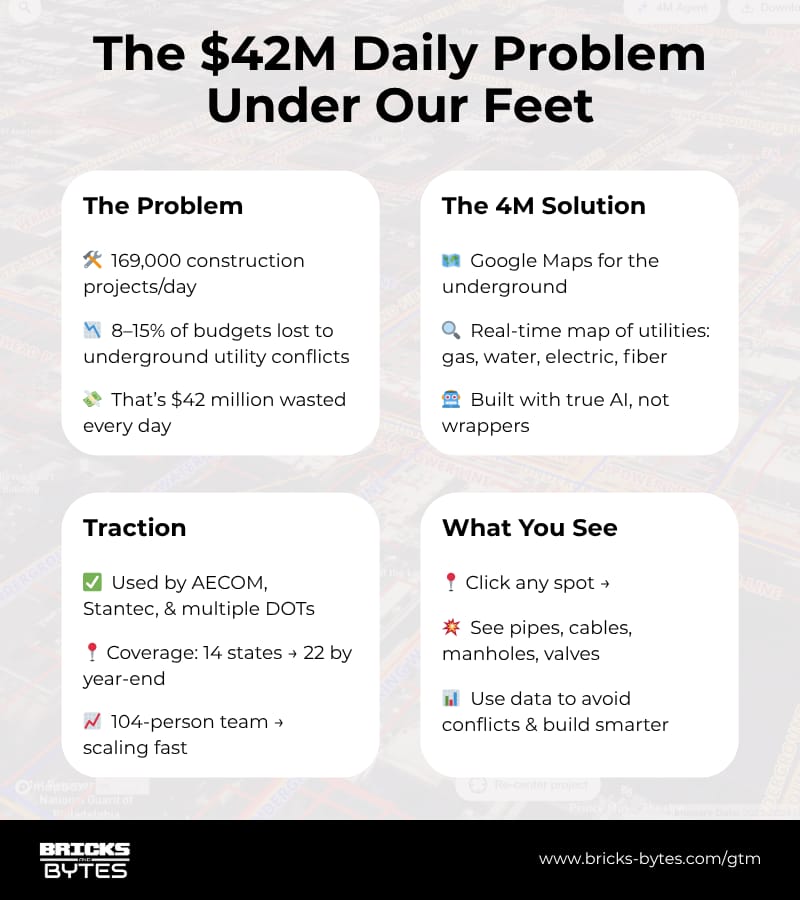
Building The Google Maps of Underground Infrastructure: How 4M Analytics Turned a $42 Million Daily Problem Into Opportunity

Want to get your message in front of {{active_subscriber_count}} highly engaged innovation leaders? Check out our sponsorship offers. INDUSTRY INSIGHTSBuilding The Google Maps of Underground Infrastructure: How 4M Analytics Turned a $42 Million Daily Problem Into Opportunity Picture this: 169,000 construction projects break ground across America every single day.  Each one involves 50 to 60 different entities – engineers, contractors, utility companies, municipal authorities, each of who are trying to coordinate around one massive unknown: what’s buried beneath their feet. The result? Between 8% and 15% of every construction budget gets eaten alive by utility conflicts that nobody saw coming. We’re talking about a $42 million daily problem that has plagued the industry for decades. Until now. We recently sat down with Itzik, the founder and CEO of 4M Analytics, whose journey from Israeli Special Forces landmine clearance to building what he calls “the Google Maps of the underground” is probably one of the most fascinating founder stories we’’ve encountered on Bricks & Bytes. What struck us, was how a small tweak in language (language market fit is real guys) made a huge difference to 4M’s trajectory. TL;DR: The Google Maps of Underground Infrastructure 169,000 projects a day. $42M lost daily. 4M Analytics is solving it with a real-time, AI-powered map of what’s underground. 🧠 AI-native platform predicts utility lines with zero documentation, using satellite imagery, GIS data, and surface clues like manholes and poles. 🗺️ Covers 14 states (soon 22), used by AECOM, Stantec, and multiple DOTs. 📈 Enterprise traction: moving from pay-per-use to project-based SaaS with real usage and expansion. 🔥 Legacy AI, not hype: Real predictive models, real impact — no wrappers. 💥 Life-or-death mission: Itzik’s background in landmine clearance fuels a vision to reduce construction risk and prevent tragedies. 4M isn’t just a mapping tool. It’s an infrastructure play with a growing data moat, high switching costs, and industry validation from the likes of Carl Bass (Autodesk) and Noam Bardin (Waze). The Solution That’s Winning Enterprise Contracts Before we dive into Itzik’s remarkable personal journey, let’s talk about what 4M Analytics has built, and why major players are paying attention. 4M has created the first comprehensive, real-time database of underground utilities across the United States. Think of it as Google Maps, but instead of showing you roads and buildings, it reveals the hidden world of gas lines, water mains, electrical cables, and fiber optic networks buried beneath our cities. Credit: 4M Analytics The company has secured enterprise agreements with some of the biggest names in the industry. Major civil engineering firms like AECOM and Stantec are using the platform. Multiple state DOTs have signed on. The platform covers 14 states currently, with plans to expand to 22 this year. And what’s even cooler is that 4M is a legacy AI company i.e. REAL AI, no wrappers! They’re using AI to generate completely new utility line predictions based on surface features and patterns, creating utility maps where none existed before. The numbers are equally impressive… The team has grown to 104 people, with plans to reach 120 soon. From Explosive Ordnance to Underground Infrastructure Itzik’s path to construction tech couldn’t have been more unconventional. For ten years, he served in Israeli Special Forces, specializing in finding and disposing of buried explosives. It’s expertise you don’t expect to translate to civilian applications, but as Itzik puts it, “everything I did in my life led me to the opportunity to build this company.” The turning point came when he met his wife and realized he was going to be a father. “I thought I was going to become a singer-songwriter,” he laughs. “But somebody needs to take care of them.” Instead of music, he channeled his military expertise into humanitarian work, building what became Israel’s largest landmine clearance company. But it was during this work that he first realized the power of mapping what lies beneath the surface. “I purchased unique excavators and prime movers and really unique frameworks. And eventually I realized that I need to build a map,” Itzik explains. “I took a GIS product and realized that based on my experience, I could build some kind of multi-source data fusion engine that utilizes mostly imagery that could do time lapsing to see what happened 20, 30, 50, 60 years ago and try to predict the past.” The system worked. The correlation between his AI predictions and actual mine locations was compelling enough that he took it to the UN’s International Mine Action Standards team. “They said, ‘We waited like 20 years for somebody to knock on our doors and offer something like that.’” But then came the harsh reality of fundraising. “I spoke with hundreds, I think hundreds of investors,” Itzik recalls. “The few that gave me feedback said they won’t invest because I’m asking money for something that could explode and take everything they did.” … lol. The Google Search That Changed Everything Faced with investor rejection after rejection, Itzik did what any founder does when they don’t know something – he went to Google. He searched: “What can I do with technology that could see beneath the ground?” That search led him to subsurface utility engineering and, crucially, to Jim Anspach – the co-author of the industry’s standard practices and, as Itzik calls him, “the godfather.” Jim Anspach is a principal developer of the field of subsurface utility engineering (SUE), multi-ticket contract locating, consultant utility coordination services (UC) for DOTs, and the American Society of Civil Engineer’s Utility Engineering and Surveying Institute. Studying Anspach’s work, Itzik learned about the traditional four-stage process for managing underground utilities: requesting data from utility owners, sending teams to trace surface features like manholes and valves, deploying geophysical tools like ground-penetrating radar, and finally using vacuum excavation trucks for precise digging. “I said, ‘Whoa, you have to do all of that before excavation or before the design phase even. Nobody centralized the database that could be ready to use, constantly updated, digital.’” The vision crystallized: “I’m going to be building the Google

Newsletter

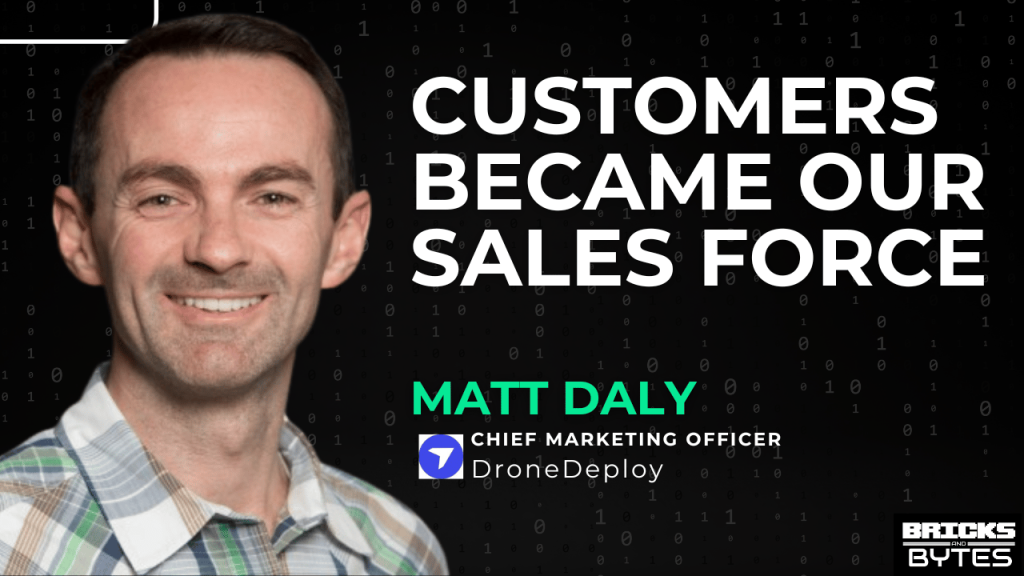
How This CMO Built a 60% Word-of-Mouth Acquisition Engine – Matt Daly – EARLY RELEASE

This is an early release of our podcast, exclusive for premium subscribers. To get early access, upgrade here. EARLY RELEASEHow This CMO Built a 60% Word-of-Mouth Acquisition Engine In this candid conversation, DroneDeploy’s Chief Marketing Officer Matt Daly pulls back the curtain on what it really takes to build and scale a successful construction technology company. From his journey co-founding StructionSite through the strategic merger with DroneDeploy, Matt shares hard-won insights about navigating the complex world of reality capture, AI automation, and serving the notoriously conservative construction industry. In this episode, you’ll: Discover why 60% of DroneDeploy’s new customers come from word-of-mouth and how to build that network effect into your product Learn the three critical jobs every CEO must master: capital acquisition, talent acquisition, and resource allocation Understand when to pursue venture capital vs. growth equity (and why most construction tech companies should consider the latter) Get Matt’s battle-tested hiring framework that eliminates bad hires before they happen Hear why the “Cambrian explosion” of construction point solutions is ending and what consolidation means for your business Learn how AI is finally delivering on the promise of automated insights (and why it’s happening now, not two years ago) Chapters 00:00 – Introduction and DroneDeploy’s robotics platform 03:38 – The StructionSite-DroneDeploy merger: Why consolidation was inevitable 07:29 – The reality capture market shakeout: Who survives the point solution explosion 13:37 – The future vision: Unified, automated, intelligent reality capture 21:33 – Ground robotics cost collapse: From $100K to $15K and what it means 26:28 – Customer personas: GCs, trades, and owners – who pays and why 34:02 – Lessons from SmartTrack: When specialization goes wrong 44:23 – Capital strategies: VC vs. growth equity and why timing matters 49:08 – The three keys to executive hiring that most founders get wrong 51:01 – Resource allocation: The 80/20 rule for product expansion 58:51 – The word-of-mouth acquisition engine that drives 60% of new business 01:00:24 – AI revolution in reality capture: What’s possible now vs. two years ago 01:03:24 – Pricing in the AI era: Why construction software might get cheaper »»» Listen Now (Premium Subscribers Only) ««« Subscribe to our premium content to read the rest. This is a subscriber only post. Become a paying subscriber of our annual or monthly paid subscriptions to get inside takes on growth in construction tech. Upgrade Translation missing: en.app.shared.conjuction.or Sign In Powered by beehiiv

construction technology sales strategy AI disruption
Go To Market

The AI-Proof ConTech Sales Strategy: Adapting to a World Where AI Talks to AI

  The writing was on the wall, but Apple just made it official: AI is about to fundamentally break traditional sales outreach. With the rollout of iOS call screening that lets AI answer and question callers before humans ever get involved, we’ve entered a new era where artificial intelligence literally guards the gates of human attention. For construction technology companies that have built entire go-to-market strategies around cold outreach, this isn’t just a minor inconvenience—it’s an existential crisis. And if you think you have time to adapt, think again. TL;DR: The Death of Cold Outreach and Rise of AI-Proof Sales Key insights for construction technology companies: The New Reality: Apple’s AI call screening means AI will literally gate-keep human conversations Cold Outreach Crisis: Companies raising hundreds of millions on outbound sales models face existential threat Content Is King: Brand building and thought leadership become essential for cutting through AI noise Quality Over Quantity: Move from spray-and-pray tactics to highly targeted, value-driven approaches Network Effects: Warm introductions and founder-to-founder referrals become more valuable than ever Timing Matters: Early adopters of AI-proof strategies gain competitive advantage before market saturation   In this episode, we’re joined by Justin Levine, CEO of  Shepherd, for a no-holds-barred discussion about the future of business, technology, and construction.   When AI Talks to AI: The New Cold Calling Reality Picture this: Your sales development rep dials a prospect, but instead of reaching a human, they encounter Apple’s AI screening system. The AI asks what the call is about. Your SDR, probably using their own AI-powered sales tool, responds with a scripted pitch. The AI on the other end analyzes the response and decides whether the human should even be notified of the call. We’ve officially reached the point where AI is talking to AI to determine if humans should talk to humans. As Patric Hellermann noted during a recent Bricks, Bucks & Bytes discussion, “We predicted this a year ago—at some point, the AI will talk to the AI.” This creates a fascinating paradox for companies that have raised hundreds of millions building automated outbound sales engines. What happens when your AI-powered outreach meets AI-powered gatekeepers? The answer is probably a lot of very expensive technology talking to itself while generating zero pipeline. The Cold Outreach Volume Problem The scale of cold outreach has reached absurd levels. Dustin DeVan, founder of Ediphi, reports receiving around 20 cold calls per day. Justin Levine from Shepard gets a similar volume. When successful entrepreneurs are being bombarded with that level of outreach, you know the system is broken. But it’s not just the volume—it’s the quality. Most cold outreach in the construction tech space follows the same tired playbook: “We love investing in construction companies” or “We work with similar companies like [completely irrelevant examples].” As Dustin pointed out, “Maybe you could qualify in the broader prop tech ecosystem, but nothing to do with what we’re doing.” The problem isn’t just annoying founders—it’s that this spray-and-pray approach has created so much noise that signal has become almost impossible to detect. Now AI will automatically filter that noise, and most cold outreach will never reach human ears. The Content-First Revolution Smart construction tech companies are already pivoting away from cold outreach toward content-driven strategies. The logic is simple: if you can’t break down doors anymore, you need to build something so compelling that people come looking for you. Dustin’s approach with Ediphi illustrates this shift perfectly: “Our approach is moving much more to content and user raising their hands than it is to outreach, which is completely contrarian to what I did at Building Connected, which was primarily outreach driven.” This isn’t just about producing more blog posts or LinkedIn content. It’s about becoming a genuine thought leader in your space, sharing real insights that your target customers actually find valuable. When Owen from Bricks, Bucks & Bytes mentioned how much easier their outreach became after building a brand, he touched on something crucial: content doesn’t just generate inbound leads—it makes your necessary outreach exponentially more effective. The Network Effects Advantage In an AI-gated world, warm introductions become the ultimate currency. Justin Levine’s fundraising experience demonstrates this perfectly: “The best connections have come from founder references. When it comes from those people, the warm intro is just a 10X better.” This creates a network effects business for sales—companies with strong founder networks and customer advocacy programs will have massive advantages over those trying to cold outreach their way to growth. The construction industry, being relationship-driven by nature, actually amplifies this effect. Building Connected had perhaps the perfect example of this with their “best cold outreach flywheel of all time.” Because their product ingested project data, they knew exactly which general contractors were using which software to invite subcontractors to bid. Their SDRs weren’t making truly cold calls—they had perfect targeting data and a relevant reason to reach out. Quality Over Scale: The New Sales Math The AI gatekeeping revolution forces a fundamental shift from volume-based to value-based outreach. When you can’t make 100 calls hoping for one connection, every outreach attempt needs to be thoughtfully crafted and highly relevant. This actually benefits construction tech companies willing to do the work. Instead of generic “we help construction companies” emails, successful outreach will require: Deep research into the prospect’s specific challenges Relevant case studies and outcomes from similar companies Clear, immediate value propositions Warm introduction paths whenever possible As Patric Hellermann noted when discussing venture capital outreach, the most effective approach isn’t about reaching the most people—it’s about reaching the right five people who are genuinely aligned with what you’re building.   The Verification and Trust Challenge AI gatekeepers will likely become sophisticated at detecting and filtering automated or scripted communications. This means authentic, human communication becomes more valuable, not less. Companies that can demonstrate genuine expertise and provide real value in their outreach will stand out dramatically from the AI-generated noise. The construction industry’s emphasis on relationships and trust actually creates

Newsletter

GCs are Vibe-coding Procore. What Could Go Wrong?

Contractors think they’re software companies. Investors think AI is physics. And someone’s vibe-coded DocuSign (again). In this week’s Bricks, Bucks & Bytes episode: 🧠 “Vibe coding” is the new AI snake oil, but the risk? Cosplaying software that looks real… until your docs get hacked. 🚛 GCs are cutting out SaaS tools and building their own, and Alan Mosca’s here to explain why that might blow up in their faces. 🌍 Woodchuck’s Todd Thomas is on a mission to turn construction waste into clean energy while cutting costs and creating new revenue streams. We’re also joined by: Todd Thomas (Woodchuck.ai) – just raised a $3.75M seed to turn construction waste into clean energy with AI Forest Flager (Parspec) – fresh off a $20M Series A to revolutionize MEP product procurement using AI + web crawling 🎧 Listen now for: Lovable’s mock-DocuSign stunt and the AI startup doom clock Why GCs are vibe coding their way into a compliance nightmare The AI tools Alan actually trusts and what he would never vibe-code Watch the Full Episode 🗣 Bonus: Some personal highlights Alan’s done with lazy LinkedIn posts Patric’s Reddit addiction is… kind of enlightening? Owen just wants to see Travis Kalanick publish a physics paper with ChatGPT You might also like: $5B Heat Crisis, 89% Productivity Drop, Plastic Innovation, $10M Raise Success with Sean Petterson ChatGPT Makes Us Dumber, LIVE from House Factory, Vibe Designing Is Here Apple Kills Cold Calling, In Office Scares CEO’s, Insurance Proves Climate Change Fears New Steel Tariffs Hit, Is A 12hr Work-day Unreasonable? ChatGPT NoteTaker Kills Startups Builder AI $450M Bankruptcy – Beginning Of The End for AI Startups? Johnny Ive $6.5B Hire, TAM Check Why Data Centers Might Crash, Y Combinator Predatory Practices, with Softbank’s $100B Pledge How China Builds Nuclear Plants Cheaper, Construction’s $860bn Problem, & Trump 2.0 Germany Effects 90% Of AI Startups Are Worthless, US Economy CRASH, Is Autodesk Investable + $2bn Startup Meltdown Powered by beehiiv

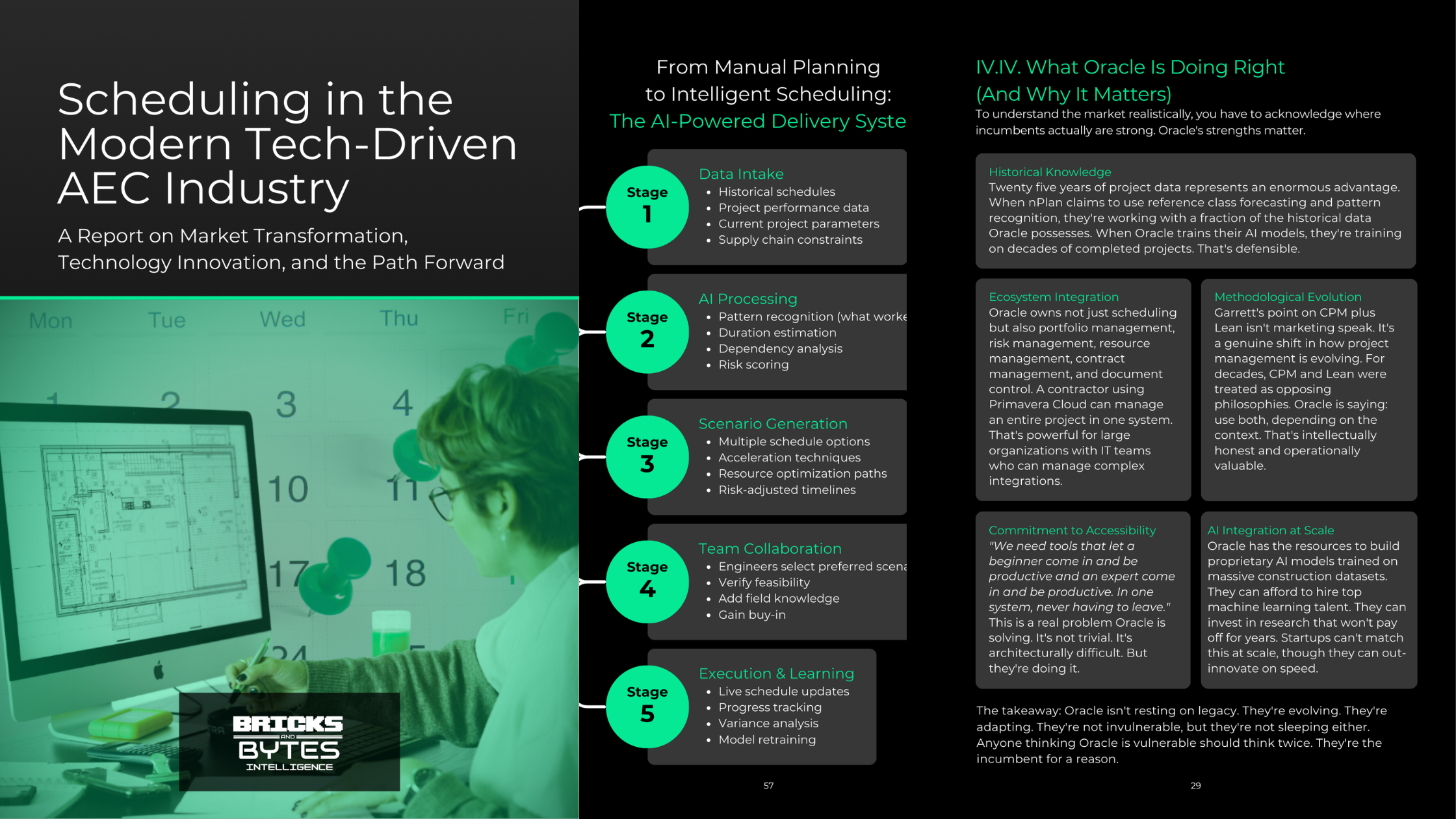
Get a FREE copy of our Scheduling in the Modern Tech-Driven AEC Industry: A Report on Market Transformation, Technology Innovation, and the Path Forward” (worth $150) and a FREE weekly email to stay up to date on construction tech. SIGN UP TODAY!

Scheduling in the Modern Tech-Driven AEC Industry

Sign up to the #1 Newsletter In AEC Tech. Join over 2,100 like-minded Founders, Investors and Techies disrupting the way we build. 

Scheduling in the Modern Tech-Driven AEC Industry