Author name: Owen Drury

Newsletter

PlanGrid Founders are Back… And Everything Just Changed

AI wars, Trimble’s big swing, and the $299B payment black hole. In this week’s Bricks, Bucks & Bytes episode: 🐅 PlanGrid’s founders return with TigerEye, and they’re aiming straight at construction AI. 📸 Trimble drops a reality-capture bomb and launches “Agentic AI” across their platform. 💸 $299B is evaporating from construction thanks to slow payments (yes… billion). 🧱 NxLite raises $9.2M to reinvent energy-efficient windows with nanotech. 📐 Takeoff AI gets $30.5M, but the industry still doesn’t trust automated quantities. But that’s not all: Dustin walks through why takeoff AI keeps failing. Martin explains why drawings are fundamentally broken. Will from Rabbet reveals how slow payments silently kill contractors. And we preview the Suffolk Boost 6 cohort 🎧 Listen now for: Why TigerEye’s “no-bullshit AI for construction” could change the landscape overnight The Trimble agent push and why Dustin thinks most BigCo AI is “probably trash” The real physics behind energy-control coatings (and why nanotech matters) Which takeoff problems AI still can’t solve (hint: inconsistent drawings) The math behind the $299B payment drain and why owners actually lose money by paying slow Watch the Full Episode You might also like: OpenAI Turner Mega Deal, OpenSpace Buys Disperse, Government Shutdown Impact on Construction nPlan Raises £11.9M Series B, AI Agents Lack Evals Crisis, WhatsApp Dominates 90% Site Communication Procore’s AI Bomb, Should VCs Pick Ideas, Revolutionary Site Layout Tool Buildots Acquisition, Procore Groundbreak’s Awkward Week, Pre-Con Is On Fire NEOM Cancelled, SoftBank’s $5.4B Bet, Track3D Raises $10M $500k Salaries for Mechanics, VC’s Getting Defrauded, DOT Causes Chaos $94M Fundraising Record, New Procore CEO, Oracle Push, Zoom Kills Careers Live from AU, Hosts World Travels, University Entrepreneurship Culture, NFL Insider Oracle $100B Hour, AI Government Fail, OpenSpace CEO, Barefoot Office Debate Microsoft’s $10M AEC Gamble, Autodesk $1.7B Earnings, Nemetscheck Acquires AI Startup Powered by beehiiv

Newsletter

ICYMI: OpenSpace Acquires Disperse, SpeckleCon Full Stream, & HVAKR’s 3-to-1 Engineer Efficiency

This Week’s Quickfire BytesFuel your curiosity with this week’s contentW/C 10th November 2025 NEW EPISODES How Our High School Band Led To HVAC Software – Building HVAKR Davis Muxlow and Andrew Krippner from HVAKR discuss building construction tech from the ground up, the innovator’s dilemma killing legacy software companies, and why making products faster might actually hurt your revenue. LIVE at SpeckleCon 2025 – Bricks & Bytes – Full Stream In this special episode, we’re broadcasting live from SpeckleCon 2025 in London, where the future of construction technology is being written in real-time. We sat down with some of the biggest names in AEC tech to talk about the one thing everyone’s finally paying attention to: data. OpenAI-Turner Mega Deal, OpenSpace Buys Disperse, Government Shutdown Impact on Construction & Startup Valuation Truth Bombs We break down what happens when a fully remote startup brings everyone together IRL—plus two major construction tech deals that have everyone talking. View all Podcasts BRICKS & BYTES PREMIUMEarly Release Episodes The Data Fragmentation Problem Killing Your Project Performance – Joe Wilson – EARLY RELEASE Listen Now: Joe Wilson went from GC to developer to owner’s rep, and saw the same data chaos everywhere. Here’s what he built 90% of Construction Firms Have Zero Employees – Dmitry Alexin – EARLY RELEASE Listen Now: Dmitry Alexin transitioned from forecasting GDP for West African countries to building Handoff, an AI agent that automates the chaos of residential construction. 2 FAVORITE QUOTES: “The problem is, and this is my opinion is those seed rounds. You’re not worth that much money when you raise at 30 million or 50 million or sometimes 100 million. You’re not truly worth that. It’s they didn’t pay to acquire you they paid to get ownership, they paid to get a percentage of a future. It’s buying a future.” – Dustin DeVan on why inflated seed valuations prevent construction tech consolidation “Sometimes it’s not even necessarily their fault and they’re just pure and simple in an innovator’s dilemma. Like they just can’t shake up their legacy product because it would be too disruptive to their existing customers.” – Andrew Krippner on why established companies can’t compete despite having more resources SPECIAL OFFERSThe GTM Bundle Together, they give you the full GTM playbook for construction tech from building trust-first marketing to structuring your sales motion, pricing models, and land-and-expand strategy. Individually, each guide is $100. Today, you can get both for $150. GET THE GTM BUNDLE NOW YOU MIGHT ALSO LIKE Premium Insights 10 Hard-Won Lessons from Founders Who Sold for Millions A Step-by-Step Guide to Clear Product Marketing for AEC Startups 12 Lessons About Hiring From AEC’s Top Leaders More Insights NSFW: Build a F*cking Business McKinsey’s Secrets to Scaling Construction Tech How Flux Burned Through $29M – Lessons for AEC Innovators Ex AutoDesk CEO’s 12 Lessons For Developing Products Could an Entrepreneur in Residence Save Your Construction Firm? Most Popular Episodes How To Build A Unicorn In Construction Tech – Patric Hellermann Story Of A Modular Construction Startup That Burned Through £10M in 15 Months – Chris Spiceley McKinsey FINALLY updates their Productivity Curve, & The Future Of Construction – David Rockhill, Partner at McKinsey Procore’s AI Strategy & Implementation – AI’s Role in Modern Construction Disrupt Autodesk? This Ex-Autodesk CEO Has Some Advice – Amar Hanspal Super Series Super Series with Ediphi Super Series With Speckle Super Series With Monumental Super Series with Foundamental OUR SPONSORS Aphex – The multiplayer planning platform where construction teams plan together, stay aligned, and deliver projects faster. Archdesk – The #1 construction management software for growing companies. Manage your projects from Tender to Handover. BuildVision – Streamlining the construction supply chain with a unified platform for contractors, manufacturers, and stakeholders. Powered by beehiiv

Newsletter

Why Pilots Fail Between the Starting Line and Scale

Want to get your message in front of {{active_subscriber_count}} highly engaged innovation leaders? Check out our sponsorship offers. INDUSTRY INSIGHTSWhy Pilots Fail Between the Starting Line and Scale Joshua Weyand’s System for Moving Pilots Into Enterprise Adoption You landed the pilot. Your champion signed off, funding was approved, and you started shipping software to a real project. The team was motivated. After a span of six weeks, the process of adoption came to a complete standstill. Your champion has become silent. The project has reached its conclusion. The pilot has been put on hold. This happens more often than anyone admits in construction tech. Not because the product failed or because your champion lost faith, but because something else occurred between that initial commitment and the scaling conversation. Momentum died in the middle. Joshua Weyand spent years as Director of Emerging Technologies at Suffolk Construction, managing 90 active pilots simultaneously across the company. Of those, roughly 40 were unique products. When his team approached project teams about piloting new technology, they saw about a 60 per cent willingness rate to actually try something new. The pilots started. The pilots got funded. Yet plenty of them died somewhere between completion and enterprise adoption. “The problem isn’t the pilot,” Josh told us. “The problem is what happens after the pilot ends.” This is the gap nobody talks about in construction tech. It’s costing deals. Joshua Weyand, former Director of Emerging Tech at Suffolk Construction, managed 90 active pilots and learned why most stall. TL;DR Most construction tech pilots don’t fail because of the product. They die after the pilot. Joshua Weyand (ex–Suffolk) ran 90 pilots and found the problem: momentum dies between pilot and scale. His 3-step system: Embed early. Don’t hand off the pilot. Stay close, learn the real constraints. Run a second pilot. In a new region or project type to prove repeatability. Pre-plan rollout. Map IT, Legal, Risk, and Union hurdles before scale. Key metric: Pilots that transition, not just start. Why vendors fail: Treat pilots as sales wins Poor comms on product changes Ignore on-site constraints Bottom line: Don’t pitch features. Pitch your pilot process. That’s how pilots turn into enterprise deals. Why One Pilot Isn’t Enough Most companies run pilots the same way: land a champion, deploy on their project, collect feedback, measure ROI, decide to scale or kill. It’s linear. It’s simple. It works fine for buying a piece of software that does one thing in one way. Construction is different. Union rules that prevent facial recognition in New York don’t apply in Arizona. A solution perfect for a new build might fail catastrophically on a renovation because the crew structure, timeline, and coordination challenges are entirely different. Market dynamics shift between pilot start and scaling. What seemed like a perfect strategic fit at month two becomes complicated by month six. Political winds shift. Priorities realign. Budgets get redirected toward more urgent initiatives. Josh realized that most companies never account for this complexity during the pilot itself. They run one pilot, see success, assume it’ll replicate everywhere, and wonder why scaling stalls. They treat the pilot as the finish line when it’s actually just the beginning. The vendors who understood this built the systems to handle it. The ones who didn’t watch deals die in the middle. The Three-Stage Framework Josh developed a system that turns pilots into enterprise adoption. It’s not complicated, but it requires intentionality at every stage. Stage One: The Initial Pilot This is where most vendors make their critical error. The sales team closes the deal and moves on. The solutions engineer disappears. Suddenly the customer owns the entire implementation, running it blind while trying to understand how the software fits into their actual workflow. What actually needs to happen is different. “If I can lean on them and say, ‘Hey, what were some roadblocks you noticed when you did a rollout at another company?’ that’s unbelievably valuable,” Josh said. “If I can avoid a mistake you’ve already made, then I’m going to have a better chance of rolling out.” The vendor’s job in Stage One isn’t to sell. It’s to embed. Stay close. Run the pilot with the team. Learn what actually happens on a real project with real constraints. You are collecting data to determine if your product functions effectively in their specific environment, which includes their actual processes, political dynamics, and union regulations, rather than in a theoretical setting. This stage answers one question: does your product work here? Stage Two: The Second Pilot (The Critical Stage) This is where most construction tech deals collapse, and it’s also where most companies skip their most important step. Josh’s insight was to run a second pilot in a completely different context. Different project, different region, different constraints. Why? Because construction isn’t uniform. A new build in Texas operates under completely different union rules, labor dynamics, and project complexity than a renovation in New York. A pilot that succeeded brilliantly in one context might fail entirely in another. If you run one pilot, see success, and assume it scales everywhere, you’re gambling with your customer’s money and your credibility. Different region, different rules. One pilot isn’t enough. What actually matters is the postmortem analysis. After the first pilot ends, sit down and assess three things: what worked, what didn’t, and what you learned that contradicted your assumptions. Then go into the next pilot with those lessons embedded in your approach. You’ll discover whether friction is decreasing, whether your implementation process is improving, whether you’re building repeatable case studies that work across different contexts rather than lucky one-offs. Each iteration should produce less friction, better processes, and more confidence about what will and won’t work in their organization. You’re not just running pilots. You’re building a repeatable playbook. You’re turning one success into a pattern. “You’re continuing to build out best practices and SOPs and lessons learned,” Josh explained. “That makes it easier to scale through an organization, whether you’re going the

Newsletter

The Data Fragmentation Problem Killing Your Project Performance – Joe Wilson – EARLY RELEASE

This is an early release of our podcast, exclusive for premium subscribers. To get early access, upgrade here. EARLY RELEASEThe Data Fragmentation Problem Killing Your Project Performance Most construction CEOs are sitting on millions of dollars in untapped competitive advantage, buried in disconnected software tools. Joe Wilson spent 15 years as a builder, general contractor, and owner’s rep, watching companies drown in data while starving for insights. Now, as founder of Projexion, he’s solving the fragmentation crisis that’s keeping your projects over budget and behind schedule. Joe breaks down the hidden cost of your tech stack, why hiring data scientists won’t solve your builder’s problems, and the specific shift from reactive fire-fighting to proactive risk management that’s changing how the best contractors operate. In this episode, you’ll: Discover why the “point solution explosion” is costing you more than subscription fees and the specific framework for turning 10-20 disconnected tools into actionable intelligence without ripping out your existing tech stack Learn the exact ROI calculation one controller used to justify eliminating 3 days of monthly manual reporting. Plus, how that time savings cascaded across 80 concurrent projects to transform team behavior Understand the critical difference between data collection and data utilization, and why the companies winning right now aren’t hiring more data scientists; they’re making their builders into data managers Get the inside playbook on transitioning from construction operator to tech founder, including the non-technical founder’s approach to building enterprise software that actually solves field-level problems Explore the untapped goldmine in pre-construction and design data, and why the next competitive advantage isn’t in better estimating tools, it’s in understanding what’s been modeled versus what’s still a liability waiting to surface mid-project Chapters: 00:00 – Introduction: When the AI note-taker fails 01:21 – From 15 years as a builder to tech founder 03:25 – The construction data crisis: How we got here 06:23 – What data fragmentation actually costs your business 11:15 – Why connectivity matters more than individual solutions 15:30 – Building analytics without becoming a data scientist 21:45 – The non-technical founder’s journey into software 28:00 – Finding product-market fit in a skeptical industry 33:12 – Partnership strategy: Why you can’t build this alone 38:45 – Real use cases: The 3-day time savings story 43:20 – Shifting from reactive to proactive risk management 48:30 – What executive teams are actually doing with their data 53:15 – The data analyst hiring wave—and why it’s not enough 56:03 – Three days monthly saved on Excel reconciliation 59:31 – Overcoming skepticism: When to stop convincing 1:02:38 – What’s next: Pre-construction data opportunities 1:05:19 – Closing thoughts and how to get involved »»» Listen Now (Premium Subscribers Only) ««« Subscribe to our premium content to read the rest. This is a subscriber only post. Become a paying subscriber of our annual or monthly paid subscriptions to get inside takes on growth in construction tech. Upgrade Translation missing: en.app.shared.conjuction.or Sign In Powered by beehiiv

Newsletter

Inside OpenAI’s Construction Power Move

Escape rooms, government shutdowns, and OpenAI in hard hats. In this week’s Bricks, Bucks & Bytes episode: 🏢 Dustin DeVan reveals how company offsites can compress 3 months of learning into 3 days and why he stopped drinking to build better. 🗳️ The crew breaks down the US government shutdown, the political “divorce” analogy that says it all, and why Europe’s quietly sliding right. 🤖 Turner Construction signs a massive enterprise deal with OpenAI, giving every employee access to GPT, the biggest AI rollout the industry’s ever seen. 💥 OpenSpace acquires Disperse, and we bring on both CEOs, Jeevan and Olli, to unpack why “spatial AI” might be construction’s next great leap. But that’s not all: Dustin’s offsite “escape room” turned into a lesson on startup culture. Patric argues OpenAI’s deal with Turner changes nothing until construction fixes its data plumbing. Martin drops the real talk: “Until AI standardizes your processes, it’s just marketing. Jeevan and Olli explain why merging vision and velocity beats partnerships every time. 🎧 Listen now for: How OpenAI’s CFO plans to demand revenue shares from AI-built products Why legal AI will only win when it kills law firms’ $2M-per-lawyer margins The birth of “spatial AI” and how OpenSpace + Disperse might build it first Watch the Full Episode You might also like: nPlan Raises £11.9M Series B, AI Agents Lack Evals Crisis, WhatsApp Dominates 90% Site Communication Procore’s AI Bomb, Should VCs Pick Ideas, Revolutionary Site Layout Tool Buildots Acquisition, Procore Groundbreak’s Awkward Week, Pre-Con Is On Fire NEOM Cancelled, SoftBank’s $5.4B Bet, Track3D Raises $10M $500k Salaries for Mechanics, VC’s Getting Defrauded, DOT Causes Chaos $94M Fundraising Record, New Procore CEO, Oracle Push, Zoom Kills Careers Live from AU, Hosts World Travels, University Entrepreneurship Culture, NFL Insider Oracle $100B Hour, AI Government Fail, OpenSpace CEO, Barefoot Office Debate Microsoft’s $10M AEC Gamble, Autodesk $1.7B Earnings, Nemetscheck Acquires AI Startup Robotics Mega Show with Dusty Robotics and ex-Waymo exec & CTO of Bedrock Robotics Powered by beehiiv

Newsletter

ICYMI: nPlan Raises £11.9M, Kane Group’s 2-Mile XR Project, & Factors Finances 500 Contractors

This Week’s Quickfire BytesFuel your curiosity with this week’s contentW/C 3rd November 2025 NEW EPISODES You Can’t Build Buildings With AI – Why Skilled Trades Matter More Than Ever Gary Cowan, head of digital construction at Kane Group, shares how MEP contractors are becoming technology companies, why the traditional education system is failing construction workers, and the real challenges behind construction automation that nobody talks about. nPlan Raises £11.9M Series B, AI Agents Lack Evals Crisis, WhatsApp Dominates 90% Site Communication In this episode of Bricks, Bucks & Bytes, we sit down with some of construction tech’s boldest builders who aren’t holding back. Fresh off massive funding rounds and hard-won lessons, they reveal what’s really happening behind the hype. “Why Your Construction Tech Stack Looks Like a Mess” – Construction Tech Stack Management Complexities Josh Weyand from Trunk Tools talks about navigating the messy world of construction technology, why some solutions stay point solutions while others scale enterprise-wide, and the critical mistake vendors make when trying to sell to large contractors. View all Podcasts BRICKS & BYTES PREMIUMEarly Release Episodes From Garage Band to SaaS: Disrupting HVAC Design – Davis Muxlow & Andrew Krippner – EARLY RELEASE Listen Now: When two mechanical engineering students started a band at Cal Poly, they had no idea their partnership would eventually disrupt the HVAC design industry. 90% of Construction Firms Have Zero Employees – Dmitry Alexin – EARLY RELEASE Listen Now: Dmitry Alexin transitioned from forecasting GDP for West African countries to building Handoff, an AI agent that automates the chaos of residential construction. 2 FAVORITE QUOTES: “I see a lot of problems in of the universities and lecturers or lecturing the kids and they haven’t been out for 15 years and it’s such a different landscape today.” -Gary Cowan on the gap between academic construction education and industry reality “Every contractor is six months away from cash out. We all know this.” – Patric Hellermann describing the precarious financial reality of construction contractors. SPECIAL OFFERSThe GTM Bundle Together, they give you the full GTM playbook for construction tech from building trust-first marketing to structuring your sales motion, pricing models, and land-and-expand strategy. Individually, each guide is $100. Today, you can get both for $150. GET THE GTM BUNDLE NOW YOU MIGHT ALSO LIKE Premium Insights 10 Hard-Won Lessons from Founders Who Sold for Millions A Step-by-Step Guide to Clear Product Marketing for AEC Startups 12 Lessons About Hiring From AEC’s Top Leaders More Insights NSFW: Build a F*cking Business McKinsey’s Secrets to Scaling Construction Tech How Flux Burned Through $29M – Lessons for AEC Innovators Ex AutoDesk CEO’s 12 Lessons For Developing Products Could an Entrepreneur in Residence Save Your Construction Firm? Most Popular Episodes How To Build A Unicorn In Construction Tech – Patric Hellermann Story Of A Modular Construction Startup That Burned Through £10M in 15 Months – Chris Spiceley McKinsey FINALLY updates their Productivity Curve, & The Future Of Construction – David Rockhill, Partner at McKinsey Procore’s AI Strategy & Implementation – AI’s Role in Modern Construction Disrupt Autodesk? This Ex-Autodesk CEO Has Some Advice – Amar Hanspal Super Series Super Series with Ediphi Super Series With Speckle Super Series With Monumental Super Series with Foundamental OUR SPONSORS Aphex – The multiplayer planning platform where construction teams plan together, stay aligned, and deliver projects faster. Archdesk – The #1 construction management software for growing companies. Manage your projects from Tender to Handover. BuildVision – Streamlining the construction supply chain with a unified platform for contractors, manufacturers, and stakeholders. Powered by beehiiv

Newsletter

From Garage Band to SaaS: Disrupting HVAC Design – Davis Muxlow & Andrew Krippner – EARLY RELEASE

This is an early release of our podcast, exclusive for premium subscribers. To get early access, upgrade here. EARLY RELEASEFrom Garage Band to SaaS: Disrupting HVAC Design When two mechanical engineering students started a band at Cal Poly, they had no idea their partnership would eventually disrupt the HVAC design industry. Davis Muxlow and Andrew Krippner, co-founders of HVAKR, share their unconventional journey from indie surf rock to building a fast-growing construction tech company that’s making legacy software players sweat. Davis and Andrew dive deep into the innovator’s dilemma plaguing the MEP space, why customer obsession beats feature obsession every time, and how they’re navigating the tricky economics of AI-powered products that actually make engineers more productive (yes, even when it means fewer seats sold). In this episode, you’ll: Discover why legacy software companies keep shipping products that slow users down – and how startups can exploit this structural weakness to gain market share Learn the “projects completed vs. time spent” metric shift that changed how HVAKR measures success and why your engagement metrics might be lying to you Understand the brutal SaaS pricing dilemma every AI-powered product faces: when your software makes users 3x more productive, do you eat your TAM or completely reinvent your pricing model? Hear the real-world playbook for breaking into a conservative, entrenched industry where buyers are overwhelmed with 20+ vendor pitches weekly Get insights on building with conviction – why HVACR spent a year perfecting their product before launching, and why that patience is paying off in customer loyalty Chapters 00:00 – From indie surf rock to MEP software: How a college band became business partners 06:25 – The entrepreneurial DNA: Growing up around Ramboard and plastics manufacturing 15:42 – Why they chose to disrupt HVAC design (and why the incumbents couldn’t) 28:15 – The innovator’s dilemma: Why billion-dollar companies ship worse products 41:30 – Customer obsession vs. feature obsession: Building what engineers actually need 52:18 – The pricing model problem: What happens when your product makes users too efficient 01:02:40 – Legacy software’s fatal flaw: Rolling out updates that make work slower 01:05:38 – Time spent vs. projects completed: Rethinking SaaS success metrics 01:08:23 – The double-edged sword: When your product works too well 01:09:19 – The future of AI-powered SaaS pricing and the per-project revolution »»» Listen Now (Premium Subscribers Only) ««« Subscribe to our premium content to read the rest. This is a subscriber only post. Become a paying subscriber of our annual or monthly paid subscriptions to get inside takes on growth in construction tech. Upgrade Translation missing: en.app.shared.conjuction.or Sign In Powered by beehiiv

Newsletter

How Buro Happold Tripled Profits Without Tripling Revenue

Want to get your message in front of {{active_subscriber_count}} highly engaged innovation leaders? Check out our sponsorship offers. UPCOMINGBricks & Bytes LIVE at SpeckleCon 2025 – 07th November 2025, London. It’s impossible not to get sucked into the AI hype. BUT based on thousands of hours of conversations we’ve had with industry leaders, we know 80-90% of these companies are nowhere AI-ready due to messy data. Cue Speckle. Global teams are using Speckle to transform their data into a state that makes it actually usable and ready for the AI hype. No more “Garbage In Garbage Out”. Join us at Speckle’s flagship conference – SpeckleCon 2025 – to see our very special live-stream and hear from AI leaders at Gensler, Haskoning, Suffolk Construction and more.  Read more here. And use our discount code “BRICKSBYTES” for 10% off your ticket. Get Tickets INDUSTRY INSIGHTSHow Buro Happold Tripled Profits Without Tripling Revenue Most engineering and professional services firms face a common problem. Revenue keeps growing, but margins don’t follow. You add people, take on more projects, expand your office. Costs rise in step with income. The profit line barely moves. When Marc Barone, COO of engineering consultancy Buro Happold, took stock of this challenge, he noticed something worth investigating: the firm was already strong. Good projects, good people, solid reputation across the UK, Middle East, and beyond. Three and a half thousand people. £400M in revenue. “There’s absolutely nothing wrong with Buro Happold,” he recalls. “It just could have been slightly more profitable.” In three years, he fixed that gap. Revenue grew 75 percent. Profits nearly tripled. The question for other firms: how do you triple profits without tripling everything else? The answer isn’t a single tactic. It’s a system of four interconnected levers, applied in sequence. Buro Happold’s work spans global landmarks, but their biggest transformation happened inside the firm. Photography: Mohamed Somji TL;DR Most firms grow revenue but not profit, running faster on a treadmill of more people, more projects, and higher costs. Buro Happold broke that cycle. In 3 years, they grew revenue 75% and tripled profit — without tripling headcount or chaos. Their secret? A system of four levers applied in sequence: Say No to the Wrong Work – Focus only on projects that fit your skills, margins, and strategy. Low-margin work burns bandwidth and hides better opportunities. Stop Wasting Time – Audit meetings, travel, and approvals. Free hours for value-adding work instead of bureaucracy. Build a Confident Culture – Profitability starts with people. Empower teams to make decisions from confidence, not fear. Use Tech to Enable, Not Replace – Automate repetitive work (contracts, drawings, admin) so humans focus on judgment and creativity. Each lever reinforces the other, better projects simplify operations, good culture accelerates tech adoption, and tech frees time for strategy. The bigger lesson: profitability isn’t about growth. It’s about discipline.Find the one lever constraining you, fix it, then move to the next. Boring is profitable. The Real Profitability Problem Here’s what most firms miss about growth. More revenue doesn’t automatically create more profit. If you grow revenue by hiring proportionally more people and allocating proportionally more overhead, your margins stay flat or decline. You’re just running faster on a treadmill. But what if you could grow revenue while keeping costs stable or even compressing them? This is possible because most service businesses leave margin on the table in four specific places. Revenue often scales with headcount, but profits don’t. Most firms run faster without moving forward. First, project selection. They win work that shouldn’t have been won. Low margins. High distraction. Wrong cultural fit. Second, operations. Organizations bloated with nonessential activity. Meetings that don’t need to happen. Travel that serves no real purpose. Approvals that add no value. Third, culture. Teams operating from fear or exhaustion instead of confidence. When people are burned out, they protect themselves and make defensive decisions. When they’re confident, they make bold decisions that save money. Fourth, technology. Tools deployed without purpose. Automation that replaces human judgment instead of enabling it. Complexity that creates busywork. Fix these four things, in sequence, and profitability follows naturally. Lever 1: The Discipline to Say No This is the hardest part of growth. When a project arrives, the instinct is to say yes. You need to keep people busy. You need the revenue. You fear the empty bench. The better frame: Which projects will move the needle on actual profit? A £10M project at 3 percent margin isn’t a win. It’s a distraction. It consumes leadership bandwidth, stretches your team, and leaves you exhausted for minimal gain. Meanwhile, a £2M project at a 15 percent margin funds innovation, pays for good people, and sustains the business. The discipline is a simple framework: Can we deliver this with our technical skills? This isn’t about sales capability. It’s about technical delivery. Can your team actually execute well? Technical risk, the stuff insurance doesn’t cover, destroys margins faster than anything else. This matters because increasingly, the toughest projects come with extreme liability pressure. If you don’t have the right skills and insurance structure in place, you’re exposed. Does the margin math work? Run real numbers, not hopeful ones. What’s the margin after risk, overhead, and contingency? If it’s below your threshold, decline it. Does it fit your strategy? Does this project align with where you want to go as an organization, or are you just chasing work? The psychology is counterintuitive. Saying no to revenue is harder than saying yes. But it compounds faster. When you’re selective, you stop firefighting constant crises. You have bandwidth for strategy. You build a reputation for quality, not just capacity. Your team doesn’t burn out. The opposite creates a death spiral: low-margin work keeps people busy, so you can’t pursue better work, so margins stay low, so you chase volume, so you take worse work. Buro Happold applied this ruthlessly. They passed on projects that didn’t fit. The result was counterintuitive: fewer total projects but better margins and less chaos.

Newsletter

The Scheduling Wars: AI Builders vs. The Old Guard

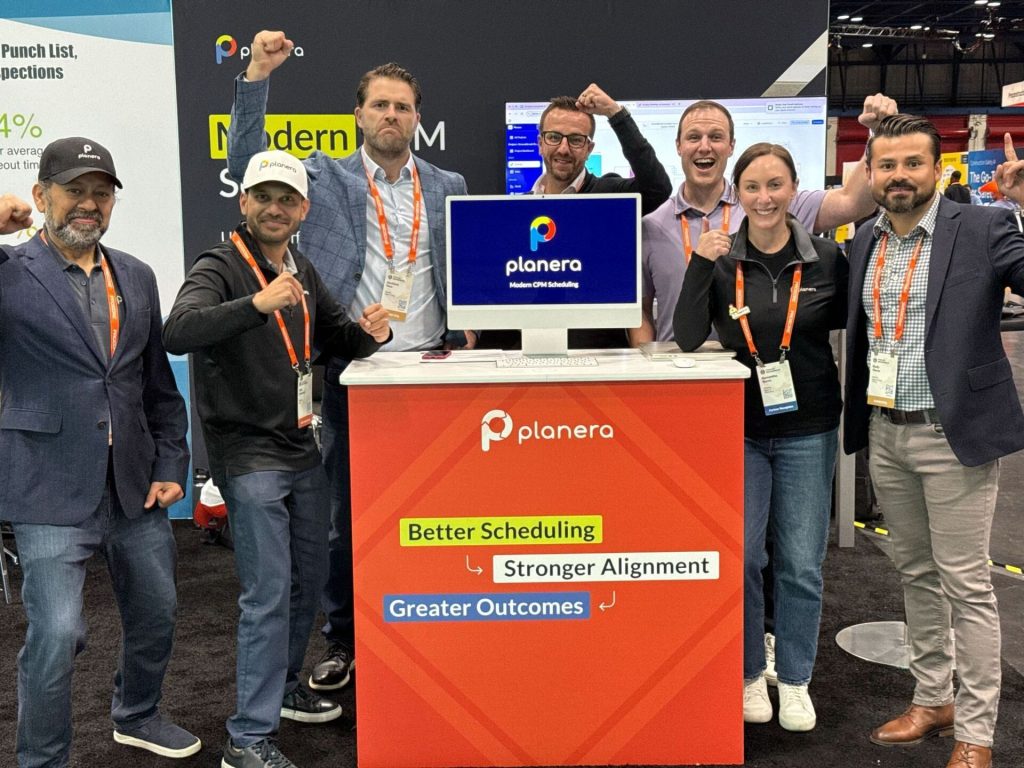
AI scheduling wars, billion-dollar data centers, and the WhatsApp revolution in construction. In this week’s Bricks, Bucks & Bytes episode: 🚀 nPlan raises £11.9 million Series B from Cap Horn, Chevron Ventures and Suffolk Tech for its AI “Schedule Studio.” 💻 Planera doubles down on browser-based collaborative scheduling after an $8 million raise for data-center projects. 🌍 Navatech’s Prakash Senghani on turning WhatsApp into the most adopted construction tech platform on Earth and why Saudi startups are more fearless than ever. But that’s not all: Alan Mosca (nPlan) reveals how a construction AI experiment accidentally beat state-of-the-art molecule generation benchmarks. Nitin Bhandari (Planera) explains why scheduling is a team sport, not a spreadsheet. Prakash Senghani (Navatech) shows how AI agents and voice interfaces are reshaping Middle Eastern projects. 🎧 Listen now for: The coming convergence of LLMs + knowledge graphs in construction AI. Why “vibe coding” could backfire for enterprises rushing into agentic apps. How Saudi’s youth-driven boom is making it the world’s new testing ground for ConTech adoption. Watch the Full Episode You might also like: Procore’s AI Bomb, Should VCs Pick Ideas, Revolutionary Site Layout Tool Buildots Acquisition, Procore Groundbreak’s Awkward Week, Pre-Con Is On Fire NEOM Cancelled, SoftBank’s $5.4B Bet, Track3D Raises $10M $500k Salaries for Mechanics, VC’s Getting Defrauded, DOT Causes Chaos $94M Fundraising Record, New Procore CEO, Oracle Push, Zoom Kills Careers Live from AU, Hosts World Travels, University Entrepreneurship Culture, NFL Insider Oracle $100B Hour, AI Government Fail, OpenSpace CEO, Barefoot Office Debate Microsoft’s $10M AEC Gamble, Autodesk $1.7B Earnings, Nemetscheck Acquires AI Startup Robotics Mega Show with Dusty Robotics and ex-Waymo exec & CTO of Bedrock Robotics Construction Productivity Myths, UAE Real Estate, TIMES VC Rankings, with Barton Malow Powered by beehiiv

Newsletter

ICYMI: WE’RE HIRING – Content Marketer, Frankenstein Tech Stacks, & Document Crunch’s B2B Playbook

This Week’s Quickfire BytesFuel your curiosity with this week’s contentW/C 27th October 2025 BRICKS & BYTES IS HIRING Be Our First Content Marketing Hire You will have the opportunity to create some of the most cutting-edge content that exists within AEC and help us build the biggest media platform in AEC tech. You will be responsible for: Owning and shaping content strategy across YouTube, LinkedIn, and our podcasts Tracking and optimising performance and doubling down on what work Spotting trends early and turning them into stories Building the foundation for a future content team You’ll thrive if you: Have 3–6 years’ experience in content, growth, or media Are both creative and analytical Understand storytelling, algorithms, and what moves audiences If you’ve got 3–6 years of content experience, deep platform literacy (YouTube, LinkedIn, newsletters preferred), and want to scale with us – apply. Full Job Description NEW EPISODES “Why Your Construction Tech Stack Looks Like a Mess” – Construction Tech Stack Management Complexities Josh Weyand from Trunk Tools talks about navigating the messy world of construction technology, why some solutions stay point solutions while others scale enterprise-wide, and the critical mistake vendors make when trying to sell to large contractors. From Seed to Series B – What Actually Worked Along the Way Lori Peters from Document Crunch shares why construction tech marketing is fundamentally different from other SaaS industries, how to scale from seed to Series B, and what’s actually working in 2025. Procore’s AI Bomb, Should VCs Pick Ideas, Revolutionary Site Layout Tool In this episode of Bricks, Bucks & Bytes, Owen, Martin, Dustin, and Patric dives into one of the most controversial questions in startup investing: Should founders ask VCs for business ideas? View all Podcasts BRICKS & BYTES PREMIUMEarly Release Episodes 90% of Construction Firms Have Zero Employees – Dmitry Alexin – EARLY RELEASE Listen Now: Dmitry Alexin transitioned from forecasting GDP for West African countries to building Handoff, an AI agent that automates the chaos of residential construction. From CAD to VR: 13 Years of Digital Transformation – Gary Cowan – EARLY RELEASE Listen Now: Gary Cowan, Head of Digital Construction at Kane Group, reveals how an Irish MEP contractor evolved from treating BIM as a compliance checkbox to running 10+ simultaneous projects using VR. 2 FAVORITE QUOTES: “I’m so thankful that no one really references the McKinsey study anymore about being the least digitized. And if someone does reference it, then you know, they’re a newbie.” – Lori Peters on how the industry has moved past outdated narratives about digital adoption “I built an ADU, literally the guy walked the site and he goes, how does 400k sound? And I said, Sounds a little high. Okay. 375. Okay. Like that was his estimate.” – Dustin DeVan illustrating the informal, gut-feel approach many small contractors use for pricing SPECIAL OFFERSThe GTM Bundle Together, they give you the full GTM playbook for construction tech from building trust-first marketing to structuring your sales motion, pricing models, and land-and-expand strategy. Individually, each guide is $100. Today, you can get both for $150. GET THE GTM BUNDLE NOW YOU MIGHT ALSO LIKE Premium Insights 10 Hard-Won Lessons from Founders Who Sold for Millions A Step-by-Step Guide to Clear Product Marketing for AEC Startups 12 Lessons About Hiring From AEC’s Top Leaders More Insights NSFW: Build a F*cking Business McKinsey’s Secrets to Scaling Construction Tech How Flux Burned Through $29M – Lessons for AEC Innovators Ex AutoDesk CEO’s 12 Lessons For Developing Products Could an Entrepreneur in Residence Save Your Construction Firm? Most Popular Episodes How To Build A Unicorn In Construction Tech – Patric Hellermann Story Of A Modular Construction Startup That Burned Through £10M in 15 Months – Chris Spiceley McKinsey FINALLY updates their Productivity Curve, & The Future Of Construction – David Rockhill, Partner at McKinsey Procore’s AI Strategy & Implementation – AI’s Role in Modern Construction Disrupt Autodesk? This Ex-Autodesk CEO Has Some Advice – Amar Hanspal Super Series Super Series with Ediphi Super Series With Speckle Super Series With Monumental Super Series with Foundamental OUR SPONSORS Archdesk – The #1 construction management software for growing companies. Manage your projects from Tender to Handover. BuildVision – Streamlining the construction supply chain with a unified platform for contractors, manufacturers, and stakeholders. Powered by beehiiv

Newsletter

5 Uncommon Lessons From Second-Time Founders

Want to get your message in front of {{active_subscriber_count}} highly engaged innovation leaders? Check out our sponsorship offers. UPCOMINGBricks & Bytes LIVE at SpeckleCon 2025 – Meet the Panel Speakers Vignesh Kaushik – The Regional Director of Design Technology at Gensler for the Asia Pacific, Middle East, and Greater China regions. Vignesh also runs the blog platform “Thank God It’s Computational (TGIC),” with a mission to help accelerate the adoption of leading technologies among professionals in AEC companies. Murat Melek – As the Director of Artificial Intelligence, Murat leverages his expertise in data science and design to drive innovation in the construction sector. With over 20 years of experience in the AEC industry, Murat holds a Ph.D. in Structural Engineering from UCLA and a Master’s in Data Science from UC Berkeley. Michael Drobnik – As the Lead of Design Technologies and an HdM Associate, Michael leads a multidisciplinary and global team that supports architectural projects with digital methods and tools, ranging from BIM, Computational Design, Visuals, and Animations to the Analogue/Digital Workshop Join us at Speckle’s flagship conference – SpeckleCon 2025 – on 7th November to see our very special live-stream. Read more here. And use our discount code “BRICKSBYTES” for 10% off your ticket. Get Tickets INDUSTRY INSIGHTS5 Uncommon Lessons From Second-Time Founders The Problem Nobody Talks About Construction tech is exploding. Billions in funding. Thousands of founders. New companies launching every month. But here’s what most first-time founders don’t realize: eighty percent of them are building for the wrong customer, solving the wrong problem, or using the wrong strategy to get there. They build features when they should build moats. They obsess over the product when they should obsess over distribution. They optimize for growth when they should optimize for understanding. And they make decisions that feel logical at the time but extract massive hidden costs later. But there’s a pattern among founders who’ve been through it before. They think differently. Not because they’re smarter. Not because they have more capital. But because they’ve paid the price for learning what actually matters. Six builders who’ve exited and launched again offer a perspective most founders don’t have yet. Here’s what distinguishes them on the second attempt. After a win, credibility compounds, but only if used to build differently. Credit: Unsplash TL;DR Most first-time founders build for validation. Second-time founders build for leverage, legacy, and life. Here’s what changes the second time around: You build leverage, not just product. Focus shifts from features to moats, from extraction to enablement. You play to your strengths. Know where your real leverage lies (tech, market, or distribution) and partner for the rest. You value discernment over hustle. Wisdom is knowing when to walk away, not just push harder. You build for who you want to become. Legacy, sustainability, and people’s outcomes replace speed and valuation as north stars. The best second-time founders don’t get softer. They get clearer about what actually matters, and what it really costs to win. The First Time You Build a Product. The Second Time You Build Leverage. First-time founders optimize for building a product that works, raising capital, and proving something works in the market. What changes is subtle but profound. Something shifts in how success gets redefined. The Philosophy Shift Success metrics alone don’t determine how you build. A business with 140% net retention, with customers expanding by 40% annually on average, looks like a scaling victory. But metrics aren’t destiny. Some founders reach that inflection point and ask a different question: What do I actually want to optimize for? “I think a lot more about my legacy today than I probably did when I was younger. I’ve only got probably 20 more years of mattering in this business.” This represents a fundamental shift. Legacy changes everything about how you operate. When you care about legacy, you make different product decisions. You don’t extract value from customers. You enable them. You don’t chase every feature request. You obsess over core value. You don’t hire recklessly. You build culture that compounds. Britton Langdon built M-Suite to 140% NRR. On the second attempt with BuildFactory, he’s embedding different constraints from day one. Same discipline. Different North Star. Britton and Erin Langdon — turning their success in construction tech into a legacy of community impact. Credit: GCRCF Building For Enablement, Not Extraction But there’s a different approach: pricing tied to value created, unlimited access, enablement-first philosophy. This starts with a principle: how you treat people matters more than how much you can charge them. “First time I must admit not so nice of a person to work with or work for. I’ve gone through my own growth curve and growth journey.” This shift from extraction to enablement happens between attempts. The best founders realize that the product decision (unlimited users) comes after the philosophy decision (enable, don’t extract). Most founders reverse that order. Nitin Bhandari redesigned Planera’s pricing model around this principle. Unlimited users. Value-based pricing. A clear statement of intent: we’re not squeezing customers, we’re growing with them. Understanding Where Your Actual Leverage Lives Founders often think they need to be excellent at everything: product, market understanding, and distribution all at once. That’s not how it works. You have to choose your starting level. Technology expertise matters. Market understanding matters. Distribution relationships matter. But you can’t build all three from scratch simultaneously. The smarter play: identify where your actual advantage lies and start there. Find partners for the rest. Maksim Markevich learned this expensively at Kreo Software. Built exceptional technology. Didn’t understand the market. Had no distribution relationships. By the time he started Sunbeam and PVFARM, the strategy shifted: begin with partners who know the industry. They bring expertise and relationships. You bring the solution. “Understanding of the market, of the problems, of the value chain is crucial. It is way more crucial than technology itself.” This matters because many first-time founders think building is about being brilliant at everything. Second-time builders know it’s about being honest about

Newsletter

90% of Construction Firms Have Zero Employees – Dmitry Alexin – EARLY RELEASE

This is an early release of our podcast, exclusive for premium subscribers. To get early access, upgrade here. EARLY RELEASE90% of Construction Firms Have Zero Employees Dmitry Alexin transitioned from forecasting GDP for West African countries to building Handoff, an AI agent that automates the chaos of residential construction. In this candid conversation, Dmitry reveals why he abandoned Silicon Valley for Austin, how he turned a simple cost estimating service into a full-stack automation platform, and the hard lessons learned from taking venture capital money while staying true to construction’s unique realities. In this episode, you’ll: Discover why 90% of construction firms are one-person operations – and how this massive market inefficiency became Handoff’s billion-dollar opportunity Learn the “services-first” approach to product development – how Dmitry spent two years manually doing cost estimates to truly understand the problem before automating it Understand why location matters more than you think – the contrarian case for why construction tech CEOs should avoid San Francisco (and where to build instead) Master the art of strategic capital – how mixing industry investors (like Masco) with generalist VCs creates unfair competitive advantages beyond just funding Hear the brutal truth about founder ego – why your Ivy League degree and big tech experience might actually hurt you in traditional industries, and how to fix it Chapters 00:00 – Introduction: What is Handoff? AI Agents for Residential Construction Explained 02:04 – The Shocking Reality: 90% of US Construction Firms Have Zero Employees 04:21 – Cloud Kitchens, Dark Kitchens, and Travis Kalanick’s Construction Data Problem 06:45 – The “Aha Moment”: When the Only Data Source is a Physical Book 09:32 – Building a Cost Estimating Service Before Building a Product 14:18 – Why We Started as a Manual Service (And Why You Should Too) 21:45 – The Construction Data Desert: Why This Industry is Ripe for Disruption 28:12 – Navigating the Hype Cycle: AI Washing vs. Real AI Application 34:50 – The Fundraising Journey: From Seed to Series A and Beyond 42:30 – Strategic Investors: Why Masco and Industry Players Change Everything 47:15 – The Vertical AI Thesis: Why Construction Tech is Finally Having Its Moment 56:41 – Masco as a Strategic Partner: Data, Distribution, and Industry Insight 58:07 – The San Francisco Problem: Why Construction Tech Founders Should Leave the Valley 01:00:03 – Austin vs. Silicon Valley: Proximity to Customers Over Proximity to Capital 01:01:25 – No Ego Allowed: The Hardest Lesson for Technical Founders Entering Traditional Industries 01:03:35 – We’re Hiring: Building the Future of Residential Construction from Austin, São Paulo, and Buenos Aires »»» Listen Now (Premium Subscribers Only) ««« Subscribe to our premium content to read the rest. This is a subscriber only post. Become a paying subscriber of our annual or monthly paid subscriptions to get inside takes on growth in construction tech. Upgrade Translation missing: en.app.shared.conjuction.or Sign In Powered by beehiiv

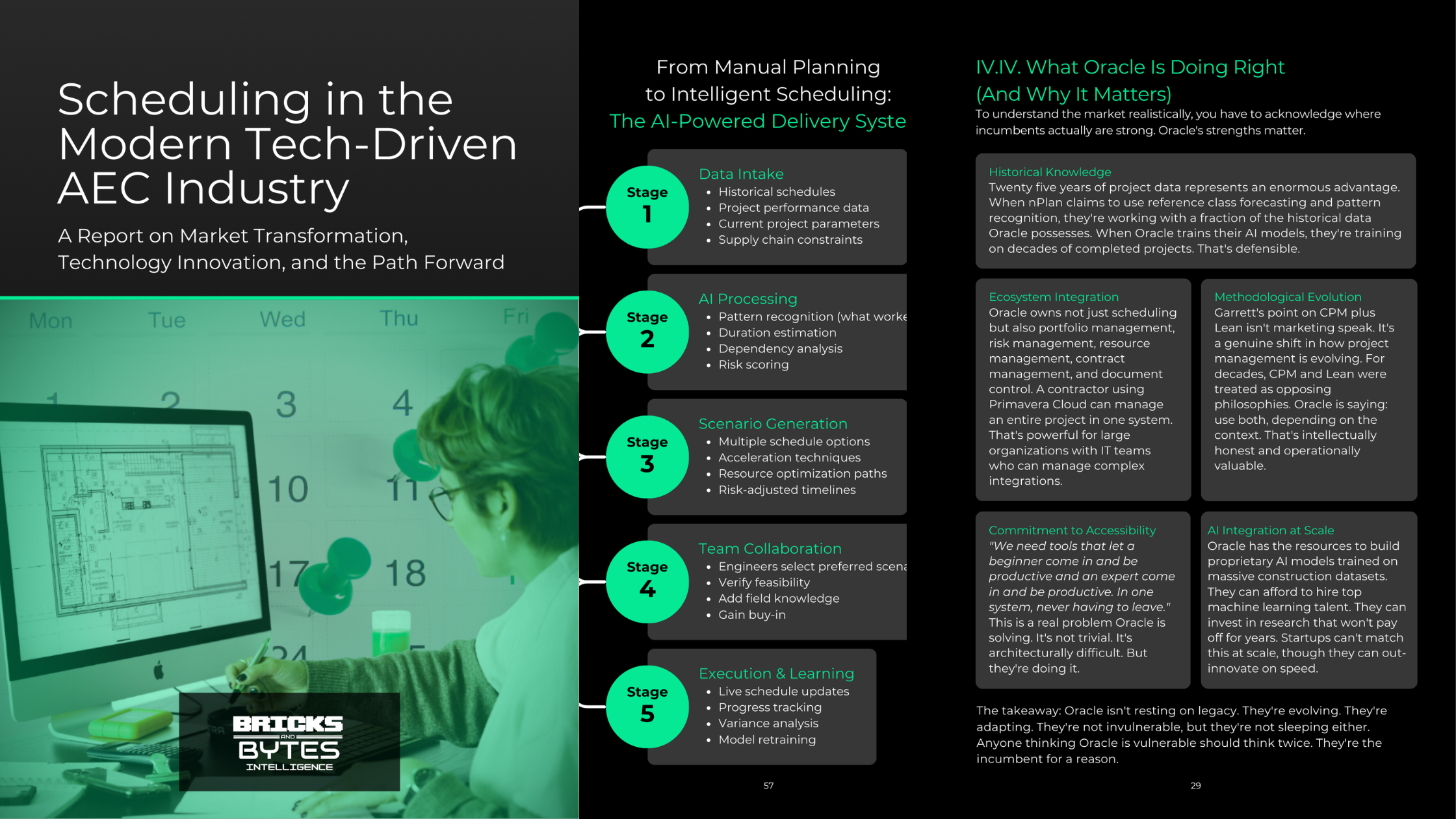
Get a FREE copy of our Scheduling in the Modern Tech-Driven AEC Industry: A Report on Market Transformation, Technology Innovation, and the Path Forward” (worth $150) and a FREE weekly email to stay up to date on construction tech. SIGN UP TODAY!

Scheduling in the Modern Tech-Driven AEC Industry

Sign up to the #1 Newsletter In AEC Tech. Join over 2,100 like-minded Founders, Investors and Techies disrupting the way we build. 

Scheduling in the Modern Tech-Driven AEC Industry