Author name: Owen Drury

Newsletter

ICYMI: Consigli’s $390M Exit, King-Making VCs, & PE Hunts AEC

This Week’s Quickfire BytesFuel your curiosity with this week’s contentW/C 8th December 2025 A BRICKS & BYTES FIRSTThe Great LLM Debate: Powers VS La Corte  Have LLMs “Solved” Construction Estimating? Join us for a raw debate moderated by Patric Hellermann as we dissect: Accuracy vs Liability: When drawings are messy, does the AI guess or ask Parsing vs Estimating: Is extraction just a “tech demo” that fails in the real world? The Moat: If estimating is automated, does software become a commodity? Event Details NEW EPISODES What PE Firms Look for in Construction Tech Investments – Insider View Darren Martin from AInvested shares how the harsh realities of digital transformation in AEC, how private equity firms value tech-enabled companies, and why most innovation initiatives fail to scale AEC’s Craziest Acquisition Ever? Landing Page 101, UK Construction Doomed, Robotics to win 2026 We dive into the construction tech industry’s hottest acquisition while unpacking what it means for the future of AEC software. What If You Could Give 80 Teams 3 Days Back Every Month? This Company Did. Wilson from PROJEXION talks about the real state of construction data (spoiler: it’s a disaster), why hiring data scientists isn’t solving the problem, and how teams are finally breaking free from the endless cycle of firefighting. View all Podcasts BRICKS & BYTES PREMIUMEarly Release Episodes The Autodesk Storytelling Playbook – Lee Mullin – EARLY RELEASE Listen Now: After 18 years at Autodesk, Lee Mullin reveals why your product demos are sabotaging sales and the exact messaging framework that turns skeptical buyers into believers. Why AI Should Build McDonald’s Before It Builds Burj Khalifa – Alim Uderbekov & Genevieve Davis – EARLY RELEASE Listen Now: $300B industry running on spreadsheets. Surfaice AI’s founder reveals why this won’t last long. 2 FAVORITE QUOTES: “If you use a set money in the right way, you know, you can drop 30% of your project management labor right now.” – Darren Martin on concrete example of current AI capabilities in construction project management “Sometimes VCs forget that there’s the word venture in front of their capital.” – Dustin DeVan on the “king-making” strategy where VCs deploy massive funding to overwhelm competitors YOU MIGHT ALSO LIKE Premium Insights 10 Hard-Won Lessons from Founders Who Sold for Millions A Step-by-Step Guide to Clear Product Marketing for AEC Startups 12 Lessons About Hiring From AEC’s Top Leaders More Insights NSFW: Build a F*cking Business McKinsey’s Secrets to Scaling Construction Tech How Flux Burned Through $29M – Lessons for AEC Innovators Ex AutoDesk CEO’s 12 Lessons For Developing Products Could an Entrepreneur in Residence Save Your Construction Firm? Most Popular Episodes How To Build A Unicorn In Construction Tech – Patric Hellermann Story Of A Modular Construction Startup That Burned Through £10M in 15 Months – Chris Spiceley McKinsey FINALLY updates their Productivity Curve, & The Future Of Construction – David Rockhill, Partner at McKinsey Procore’s AI Strategy & Implementation – AI’s Role in Modern Construction Disrupt Autodesk? This Ex-Autodesk CEO Has Some Advice – Amar Hanspal Super Series Super Series with Ediphi Super Series With Speckle Super Series With Monumental Super Series with Foundamental OUR SPONSORS Aphex – The multiplayer planning platform where construction teams plan together, stay aligned, and deliver projects faster. Archdesk – The #1 construction management software for growing companies. Manage your projects from Tender to Handover. BuildVision – Streamlining the construction supply chain with a unified platform for contractors, manufacturers, and stakeholders. Powered by beehiiv

Newsletter

The Scheduling Market is Finally Fragmenting, and That’s Good News

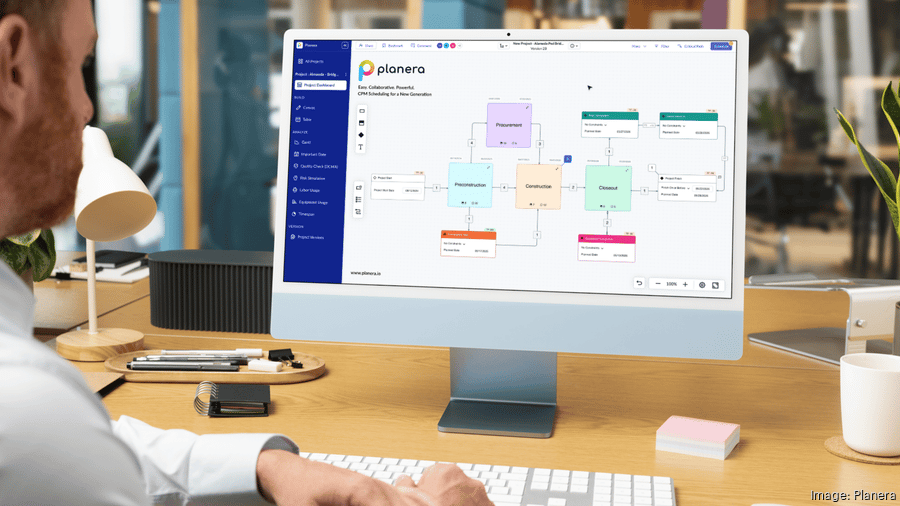
INDUSTRY INSIGHTSThe Scheduling Market is Finally Fragmenting, and That’s Good News Why The Wrong Question Matters For sixty years, construction has asked the same question: which single tool will own scheduling? That’s the wrong question. And the market finally knows it. Construction is a paradox. It’s one of the most collaborative industries on earth. Hundreds of trades, thousands of workers, dozens of stakeholders on a single project, all coordinating in real time. Yet when it comes to scheduling, the industry might as well be working in silos. “People light up when they’re on whiteboards together, drawing how they’ll actually execute the work,” says Nitin Bhandari, founder of Planera. “Then they look at a formal schedule, and the room goes silent. Nobody says a word because they just want to get out of that meeting.” That disconnect has been the defining feature of construction scheduling for sixty years. But something is shifting. For the first time in decades, the market isn’t asking which single tool will replace Primavera. Instead, it’s asking, “Which tools work together?” This shift matters, not because of the technology, but because of what it reveals about how construction actually gets built. CPM scheduling with a collaborative, whiteboard-native interface. Credit: Planera TL;DR: The Scheduling Market Just Snapped, and It’s Finally Moving the Right Way The old “one tool to rule them all” dream is dead. Here’s the 10-second version of what’s actually happening and why it matters. Scheduling is fragmenting, not consolidating, and finally reflecting real project workflows. The real issue is disconnected planning layers, not bad software. Five players now dominate five distinct niches. The monolith era is over. The $20–100M mid-market is the biggest unsolved opportunity. Construction GTM = slow, high-touch, relationship-led, but retention is unmatched. Winners specialise, integrate tightly with the field, and drive cultural change, not just tool adoption. The Real Problem Isn’t Tools The problem with construction scheduling isn’t broken tools. It’s a broken structure. Most projects run three planning cycles simultaneously, and they barely speak to each other. The master schedule sits in the office, updated monthly or quarterly, designed primarily for contract compliance. The four-to-six-week look-ahead plan sits with project engineers, updated weekly to coordinate detailed work. And then there are the daily huddles on-site, where superintendents talk through what happened today and what’s coming tomorrow. Information flows downward. Rarely back up. When something changes on the job, the master schedule doesn’t know about it. When the master schedule slips, the daily teams can’t see why. This inefficiency would be frustrating in any industry. In construction, where margins hover between 3 and 5 percent, it compounds into significant losses. The deeper issue is accessibility. Legacy scheduling software, particularly Primavera P6, which dominated for twenty-five years, is powerful but complex. It requires training, experience, and domain knowledge. When tools demand this much expertise, companies need dedicated schedulers. When you need dedicated schedulers, you create a bottleneck. And when you create a bottleneck, you create a silo. The knowledge of how to actually execute the work, held by hundreds of people on the job, never makes it into the schedule. Garrett Harley from Oracle, who has spent twenty years in this space, acknowledges this head-on: “The discipline of planning and scheduling as a function is in trouble. We’ve had complexity associated with our tools. That’s been a fair criticism of Primavera. It’s not necessarily approachable for folks that are new.” But here’s the thing: this isn’t a fundamental limitation of scheduling methodology. It’s a software design problem. Five Companies, Five Niches Aphex closes the Friday-to-Monday planning gap. For sixty years, the question was singular. Which tool will own scheduling? Today, the question is plural. And that changes everything. The market is fragmenting, not consolidating. Different scheduling problems require fundamentally different solutions. CPM compliance scheduling is different from weekly production planning. Weekly planning is different from real-time field coordination. Enterprise orchestration is different from single-project execution. Rather than trying to own all of these with a single platform, the strongest companies are picking their niche and dominating it completely. Planera: Making Scheduling Collaborative Planera is winning the collaboration game. Their core insight: people engage with whiteboards, not Gantt charts. They combine the collaborative feel of digital whiteboards with full CPM analytical power underneath. Nitin describes the problem they’re solving plainly: “Scheduling is so bottlenecked by a few people, a few schedulers who know how to use the software. But they don’t even know how the job should be done. Meanwhile, all the project people that really know what’s going on don’t know how to use the scheduling software.” By democratizing access without sacrificing rigor, they’re expanding from five schedulers on a project to a hundred team members contributing to planning. Aphex: Closing the Planning Gap Aphex owns something different: the plan-communicate-track loop. Jason and Carlos identified a specific failure in construction planning. The weekly plan is created Friday, but by Monday it’s outdated because the field changes constantly. Their insight: the value of planning isn’t the plan itself. It’s the conversation. By integrating detailed planning, visual communication, and real-time tracking in one workflow, they’re solving what Patrick describes as the real-time execution problem. nPlan: Automating the Tedious nPlan approaches it through intelligent automation. Alan Mosca founded the company on a straightforward observation: teams drown in manual reporting and data entry. Why should planners spend hours generating progress reports and scenario analyses when AI can do it? Their Schedule Studio generates planning recommendations from historical data. Barry, their AI agent, automates reporting and forecasting. “You’re not going to have to do the granular motions anymore,” Alan explains. “Your job becomes to have ideas of what to look at, not crank the handle on some process that hasn’t changed in decades.” Barry AI + Schedule Studio. Credit: nPlan Nodes & Links: Orchestrating Complexity For mega-projects, Nodes & Links addresses a different constraint entirely. On a five-hundred-million-dollar infrastructure project, there are simply not enough skilled people to manage the complexity. Thousands of tasks, hundreds of stakeholders,

Newsletter

Did AECOM Overpay by 200x?

$390M acquisitions, collapsing UK confidence, and robots quietly lining up to take real jobs. In this week’s Bricks, Bucks & Bytes episode: 🚨 AECOM buys Consigli for ~$390M and the industry can’t agree if it’s genius or insanity. 📉 UK Construction PMI crashes to 39.4, the steepest downturn in 5.5 years. 🤖 Robotics funding heats up as labor efficiency hits a hard ceiling. But that’s not all: Dustin DeVan dissects why AECOM may have overpaid by nearly 200x revenue. Martin Piekarz questions whether $390M could’ve built the same product twice over. And Owen breaks down the hidden politics of “buy vs build” inside giant consultancies. 🎧 Listen now for: Why public companies buy instead of investing in R&D (Wall Street optics exposed) The real danger for startups after hyperscale acquisitions Why AI “king-making” is warping startup valuations What the UK downturn really means for contractors on the ground Why robots, not software, are the only path to double-digit productivity gains Watch the Full Episode 🗣 Bonus: Some personal highlights Dustin closed an investor breakthrough at a coffee shop run by ex-convicts Owen chose his house based on walking distance to a pub (elite site-selection logic) Martin lives minutes from the Thames and Hyde Park (but denies all royal ambitions) The team reveals the Great LLM Debate, a UFC-style AI showdown now in motion You might also like: $875m Founders Return to Construction, $9.2M Nextlight Raise, AI Go-To-Market Race OpenAI Turner Mega Deal, OpenSpace Buys Disperse, Government Shutdown Impact on Construction nPlan Raises £11.9M Series B, AI Agents Lack Evals Crisis, WhatsApp Dominates 90% Site Communication Procore’s AI Bomb, Should VCs Pick Ideas, Revolutionary Site Layout Tool Buildots Acquisition, Procore Groundbreak’s Awkward Week, Pre-Con Is On Fire NEOM Cancelled, SoftBank’s $5.4B Bet, Track3D Raises $10M $500k Salaries for Mechanics, VC’s Getting Defrauded, DOT Causes Chaos $94M Fundraising Record, New Procore CEO, Oracle Push, Zoom Kills Careers Live from AU, Hosts World Travels, University Entrepreneurship Culture, NFL Insider Oracle $100B Hour, AI Government Fail, OpenSpace CEO, Barefoot Office Debate Powered by beehiiv

Newsletter

ICYMI: Aconex’s $1.2B Exit Still Stands, 20 Tools Creating Data Chaos, & 3 Days Monthly Saved Instantly

This Week’s Quickfire BytesFuel your curiosity with this week’s contentW/C 1st December 2025 NEW EPISODES What If You Could Give 80 Teams 3 Days Back Every Month? This Company Did. Wilson from PROJEXION talks about the real state of construction data (spoiler: it’s a disaster), why hiring data scientists isn’t solving the problem, and how teams are finally breaking free from the endless cycle of firefighting. “I Broke Down Crying” – Aconex $1.2bn Exit Story Rob Phillpot, founder of Aconex and now investor at Glitch Capital, talks about billion-dollar exits, why construction tech hasn’t seen another mega-acquisition since 2018, and what’s next for the industry. How Fast Can You Really Build a $500M Data Center? – Inside the Adrenaline Rush of Data Center Construction Katie Coulson from Skanska Advanced Technology shares how they’re building data centers and semiconductor fabs at tech company speed, why they’re often starting construction before the design is even finalized, and what 31 years in construction has taught her about the future of the industry. View all Podcasts BRICKS & BYTES PREMIUMEarly Release Episodes The Autodesk Storytelling Playbook – Lee Mullin – EARLY RELEASE Listen Now: After 18 years at Autodesk, Lee Mullin reveals why your product demos are sabotaging sales and the exact messaging framework that turns skeptical buyers into believers. Why AI Should Build McDonald’s Before It Builds Burj Khalifa – Alim Uderbekov & Genevieve Davis – EARLY RELEASE Listen Now: $300B industry running on spreadsheets. Surfaice AI’s founder reveals why this won’t last long. 2 FAVORITE QUOTES: “I think the next wave of disruption is gonna be tools where humans don’t have to do all the data entry themselves, because we’re bad at it, we do it late, we do it wrong, we make mistakes.” – Rob Philpot on eliminating manual data entry in construction software “The legacy narrative is, well, you need a higher data scientist and you need your Power BI and, well, your data is in a really terrible spot. And so we can’t do anything with it.” – Joe Wilson describing the old paradigm that creates adoption barriers YOU MIGHT ALSO LIKE Premium Insights 10 Hard-Won Lessons from Founders Who Sold for Millions A Step-by-Step Guide to Clear Product Marketing for AEC Startups 12 Lessons About Hiring From AEC’s Top Leaders More Insights NSFW: Build a F*cking Business McKinsey’s Secrets to Scaling Construction Tech How Flux Burned Through $29M – Lessons for AEC Innovators Ex AutoDesk CEO’s 12 Lessons For Developing Products Could an Entrepreneur in Residence Save Your Construction Firm? Most Popular Episodes How To Build A Unicorn In Construction Tech – Patric Hellermann Story Of A Modular Construction Startup That Burned Through £10M in 15 Months – Chris Spiceley McKinsey FINALLY updates their Productivity Curve, & The Future Of Construction – David Rockhill, Partner at McKinsey Procore’s AI Strategy & Implementation – AI’s Role in Modern Construction Disrupt Autodesk? This Ex-Autodesk CEO Has Some Advice – Amar Hanspal Super Series Super Series with Ediphi Super Series With Speckle Super Series With Monumental Super Series with Foundamental OUR SPONSORS Aphex – The multiplayer planning platform where construction teams plan together, stay aligned, and deliver projects faster. Archdesk – The #1 construction management software for growing companies. Manage your projects from Tender to Handover. BuildVision – Streamlining the construction supply chain with a unified platform for contractors, manufacturers, and stakeholders. Powered by beehiiv
Newsletter

The Autodesk Storytelling Playbook – Lee Mullin – EARLY RELEASE

This is an early release of our podcast, exclusive for premium subscribers. To get early access, upgrade here. EARLY RELEASEThe Autodesk Storytelling Playbook Lee Mullin spent 18 years mastering go-to-market strategy at Autodesk from technical support to leading product launches across construction tech. Now running BuildArc, he’s helping AEC tech companies break through the noise in an overcrowded market. In this conversation, Lee reveals why most companies are sabotaging their own sales by leading with product features instead of customer stories, and shares the exact messaging frameworks that turn skeptical buyers into believers. I In this episode, you’ll: Discover the “Context-Contrast-Call” framework that transforms product demos from forgettable feature lists into compelling narratives that move buyers from “maybe” to “yes” Learn why venture-backed AEC tech companies fail at differentiation and the exact messaging strategy that cuts through a market where everyone promises the same productivity outcomes Master the art of customer-centric storytelling by understanding the critical difference between what customers say they need versus the actual problems they’re trying to solve (and why this distinction determines product-market fit) Steal the messaging hierarchy framework that ensures your entire organization—from technical support to sales to marketing—tells a consistent story that builds trust instead of creating customer confusion and churn Get the proven iPad-on-site pitch strategy that convinced skeptical contractors to adopt mobile technology when they were still using paper plans, and how to adapt this approach for any transformational tech Chapters: 00:00 – Why storytelling is the hidden differentiator most AEC tech companies miss 03:24 – The “faster horse” problem: What customers say vs. what they actually need 06:13 – Building your messaging framework: One story, multiple touchpoints 08:42 – The consistency trap: Why disconnected stories kill customer satisfaction 11:53 – Lee’s journey: From Autodesk technical support to go-to-market leader 15:32 – The hard truth about differentiation in a crowded AEC tech marke 18:45 – Customer-centricity vs. product-centricity: Which story are you telling? 23:17 – Common messaging mistakes that make buyers tune out immediately 27:56 – The strategic narrative: Your big idea that changes customer behavior 31:08 – Real example: How BIM 360 positioned against entrenched competitors 35:42 – Why most companies fail to articulate their actual value proposition 39:28 – Building messaging that works across the entire customer journey 43:15 – The role of emotion in B2B construction tech decisions 46:53 – How to validate your messaging with real customer conversations 51:20 – The “jobs to be done” framework applied to AEC technology 56:09 – The hero framework: Making your customer the protagonist 58:37 – Context-Contrast-Call explained with the iPad construction site example »»» Listen Now (Premium Subscribers Only) ««« Subscribe to our premium content to read the rest. This is a subscriber only post. Become a paying subscriber of our annual or monthly paid subscriptions to get inside takes on growth in construction tech. Upgrade Translation missing: en.app.shared.conjuction.or Sign In Powered by beehiiv

Newsletter

How Fast Can You Really Build a Data Center?

INDUSTRY INSIGHTSHow Fast Can You Really Build a Data Center? The Operational Framework Behind Extreme Compression When you ask most data center contractors how long a project takes, the answer is predictable: two to three years. Katie Coulson, Executive Vice President and General Manager of Skanska Advanced Technology, operates differently. Her projects compress significantly faster without sacrificing safety or quality. The philosophy separating her approach from standard practice: “If everything works, we’re probably not trying hard enough.” This isn’t about working harder. It’s about working differently. Speed becomes a diagnostic tool, revealing where processes are broken. Understanding this framework matters enormously. The workflows enabling faster execution are fundamentally different from traditional construction sequences. IBM Data Center Expansion, Southbury. Credit: Skanska TL;DR: How to Actually Build a Data Center Fast Speed in data center construction isn’t magic. It’s operational discipline. Katie Coulson (Skanska) shows that 2–3 year timelines collapse ONLY when you rebuild the entire workflow, not just push people harder. Here’s the real playbook behind extreme compression: Speed is a diagnostic tool – If nothing breaks, you’re not pushing hard enough. Subs > spreadsheets – Using the same high-trust mechanical/electrical crews across states eliminates onboarding friction and drives consistent speed. Procurement starts during design – Pre-qualify vendors early, standardize components, and compress buyout from 6–8 weeks to days. Prefab runs on BIM – Offsite mechanical/electrical assemblies reduce on-site work, improve safety, and remove weeks from the schedule. Labor arbitrage matters – Build skids in low-cost regions, ship to high-cost ones, and let local crews focus on final integration. Owner-furnished equipment is the critical path – Weekly vendor reviews and proactive tracking prevent the schedule from collapsing. Culture beats tools – No software fixes a slow organization. Speed emerges from teams who experiment, communicate aggressively, and adapt daily. Bottom line: Contractors don’t lose to Skanska on tech. They lose on operational sequencing, vendor relationships, and culture. If you aren’t re-engineering these foundations, speed stays out of reach. Why Speed Remains Rare in Construction The data center boom creates urgency, yet most general contractors still operate on traditional timelines. This gap is structural. Subcontractor Ecosystem Speed requires crews who understand your culture and have executed similar work before. Trust matters more than cost when the schedule is compressed. Skanska works with the same specialized electrical and mechanical subs across multiple states precisely because these crews understand what the client requires. They reduce onboarding friction and enable rapid execution in unfamiliar markets. Without this relationship depth, moving fast becomes nearly impossible. Supply Chain Brittleness In high-tech construction, owners furnish 40 to 60 percent of equipment. When cleanroom subs, equipment vendors, and electrical suppliers operate on their own schedules, one bottleneck cascades across the entire timeline. Coordinating these dependencies requires constant communication and weekly reviews. Most general contractors lack the institutional bandwidth to manage this complexity. A single delayed shipment can consume weeks of schedule buffer. Procurement Complexity Procurement still lives in spreadsheets and email at most contractors. Buyout cycles stretch across weeks because vendors aren’t pre-qualified and pricing frameworks don’t exist in advance. By the time an RFQ goes out, weeks of design work have already consumed the schedule buffer. This sequential approach creates a bottleneck that forces everything downstream to wait. These barriers explain why competitors cannot match Skanska’s speed. They also create opportunity for those willing to solve them. Fast-track execution at a Skanska high-tech jobsite Move One: Parallel Procurement and Pre-Qualification How It Works Traditional construction follows a sequential pattern: design completes, specifications finalize, vendors bid, responses arrive weeks later, negotiations occur, orders placed, manufacturing begins. The cycle consumes six to eight weeks. Fast-track construction inverts this. Procurement begins during design, not after it. The mechanism: During design, identify components that repeat across projects (electrical equipment, mechanical systems, cooling infrastructure) Pre-qualify vendors and develop pricing frameworks based on preliminary specifications Vendors provide budgetary quotes knowing final specs will closely match initial scope When design completes, the bid phase compresses to days instead of weeks Why Standardization Matters Katie noted this approach works particularly well in standardized data center work: “There are a lot of owners who are not having so many different types of buildings or different types of things; they’re really building similarly so that it’s a lot easier to price.” When projects follow similar patterns, pre-qualification becomes increasingly effective. What This Means for Technology Tools that succeed in this space don’t replace RFQs; they enable pre-qualification workflows and maintain vendor relationships across multiple cycles. The companies winning in fast-track construction have built institutional vendor relationships. Technology should help them scale those relationships. Move Two: Subcontractor Lock-In and Geographic Portability Why Relationships Matter More Than Commodities A subcontractor who has executed three data center projects with your company understands your safety expectations, quality standards, and timeline pressure. They know which details matter. They are an extension of your team. Skanska pays a premium to work with the same specialized subs across multiple projects because the premium is less expensive than onboarding new crews and managing performance variance. Katie stated directly: “We definitely have some contractors that we work with consistently on these tech type projects, and they understand really that speed that it takes. And so especially if we’re going into different markets we have some contractors that want to go with us to those different markets because they understand how the projects work, how to get the people there.” The Two-Tier Geographic Model When expanding into new markets, Skanska brings core subcontractors (often at higher labor rates than local subs) and supplements them with local crews for routine work. The specialized work stays with proven teams. This creates strategic partners who travel and tactical resources that provide geographic coverage. What This Means for Technology Tools managing subcontractor workflows often assume commodity labor where workers are interchangeable. That assumption fails in fast-track construction. The constraint isn’t finding workers; it’s finding crews with the right experience and cultural fit. Technology that helps contractors maintain and scale relationships with proven

Newsletter

ICYMI: Skanska’s 85% Client Secret, AEC’s Fundamental Incapacity to Change, and Forma’s ‘AI on the Shoulder’ Fix

This Week’s Quickfire BytesFuel your curiosity with this week’s contentW/C 24th November 2025 NEW EPISODES How Fast Can You Really Build a $500M Data Center? – Inside the Adrenaline Rush of Data Center Construction Bricks And Bytes · Episode open.spotify.com/episode/1J4ApZpxERl41YP6gOhIsG “The Industry Is Fundamentally Incapable of Change” – Spacemaker Founder Explains Why Carl Christensen, co-founder of Spacemaker (acquired by Autodesk), shares why the AEC industry struggles with digital transformation, how outcome-based design can break through systemic barriers, and what it really takes to sell your company.. View all Podcasts BRICKS & BYTES PREMIUMEarly Release Episodes Why AI Should Build McDonald’s Before It Builds Burj Khalifa – Alim Uderbekov & Genevieve Davis – EARLY RELEASE Listen Now: $300B industry running on spreadsheets. Surfaice AI’s founder reveals why this won’t last long. The Data Fragmentation Problem Killing Your Project Performance – Joe Wilson – EARLY RELEASE Listen Now: Joe Wilson went from GC to developer to owner’s rep, and saw the same data chaos everywhere. Here’s what he built 2 FAVORITE QUOTES: “I kind of have a motto that if everything works, we’re probably not trying hard enough.” – Katie Coulson’s personal philosophy on innovation “So I think what people wanted when we try to explain what we were doing is that they want a magic button.” – Carl Christensen on the initial customer expectations for AI YOU MIGHT ALSO LIKE Premium Insights 10 Hard-Won Lessons from Founders Who Sold for Millions A Step-by-Step Guide to Clear Product Marketing for AEC Startups 12 Lessons About Hiring From AEC’s Top Leaders More Insights NSFW: Build a F*cking Business McKinsey’s Secrets to Scaling Construction Tech How Flux Burned Through $29M – Lessons for AEC Innovators Ex AutoDesk CEO’s 12 Lessons For Developing Products Could an Entrepreneur in Residence Save Your Construction Firm? Most Popular Episodes How To Build A Unicorn In Construction Tech – Patric Hellermann Story Of A Modular Construction Startup That Burned Through £10M in 15 Months – Chris Spiceley McKinsey FINALLY updates their Productivity Curve, & The Future Of Construction – David Rockhill, Partner at McKinsey Procore’s AI Strategy & Implementation – AI’s Role in Modern Construction Disrupt Autodesk? This Ex-Autodesk CEO Has Some Advice – Amar Hanspal Super Series Super Series with Ediphi Super Series With Speckle Super Series With Monumental Super Series with Foundamental OUR SPONSORS Aphex – The multiplayer planning platform where construction teams plan together, stay aligned, and deliver projects faster. Archdesk – The #1 construction management software for growing companies. Manage your projects from Tender to Handover. BuildVision – Streamlining the construction supply chain with a unified platform for contractors, manufacturers, and stakeholders. Powered by beehiiv

b&b live at suffolk construction tech accelerator
Startups, Technology

Inside Suffolk’s BOOST Demo Day: Where the Future of Construction Tech Gets Built

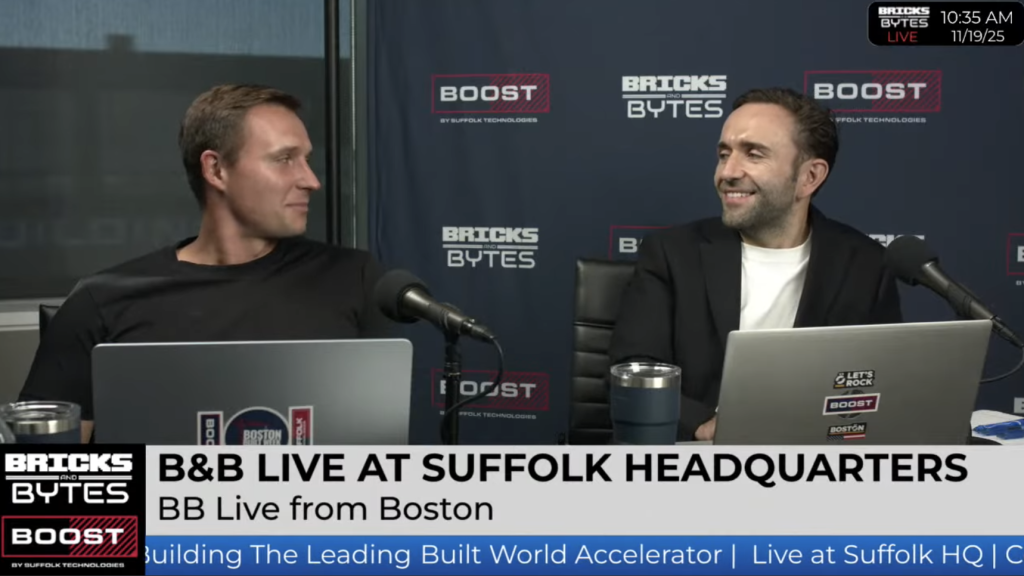
Boston in November isn’t exactly tropical, but that didn’t stop the Bricks & Bytes team from broadcasting live from Suffolk Construction’s headquarters for one of the industry’s most anticipated events. We set up shop at BOOST Demo Day 2025, bringing viewers an unfiltered look at the eighth cohort of startups transforming construction—from AI-powered design tools to robots working 60 feet in the air. The vibe? Equal parts scrappy startup energy and big industry muscle. Suffolk Technologies has been running BOOST for six years now, and the program has evolved from a nice-to-have accelerator into something resembling construction tech’s farm system. With 38 graduates who’ve collectively raised $720 million, Parker Mundt, Partner at Suffolk Technologies and head of BOOST, wasn’t shy about the program’s ambitions: go international, keep growing, and prove that construction innovation doesn’t have to be a slow burn.       The Hardware Renaissance One theme dominated the conversations: robotics is having a moment. Parker dropped a stat that turned heads: robotics applications tripled this year compared to previous cohorts. The reason? Founders are getting scared of software. With horizontal AI players eating everyone’s lunch and $200,000 suddenly being enough to get working robots in the field (impossible just five years ago), hardware suddenly looks a lot more defensible. Gabe Rodriguez from Puppet Robotics embodied this shift perfectly. The ex-Cruise engineer left self-driving cars behind after a metal stud framing tour in Indiana, where he watched workers 60 feet up breathing diesel fumes. His solution? Modular robots with swappable tools that let tradespeople work from ground level. “Robotics doesn’t have to be fully autonomous,” he explained. “It can augment workers, letting them be in multiple places at once.” No humanoids required.     The Materials Innovation Struggle Teresa Liu and Sharon Tracy from Ouros Materials brought a different kind of heat—literally. Their ceramic polymer composite materials are three times stronger than concrete, fire-resistant, and carbon-storing. The catch? Getting anyone to be the guinea pig for new building materials when people’s lives are at stake. Sharon, who has a ceramic engineering background, put it bluntly: “People don’t want to be the guinea pig, and there’s so much at stake in a building.” Their strategy? Start small with exterior panels and siding, prove it works, then license the technology to major manufacturers rather than trying to compete directly. Smart move for a space where 50-100 years of understanding isn’t just preferred. It’s mandatory.     The Software Platform Play Not everyone was ditching software, though. Yashar Moradi from MOD made a compelling case for why prefabrication needs a platform, not more point solutions. The civil engineer turned software developer built an AI that scans designs and matches them to the world’s largest prefab supplier library—and made the whole thing open source. Why? “We want everybody to speak the same language. We don’t want to create another silo.” Since launching go-to-market in January, MOD has already secured $2 billion in project volume across Germany, Switzerland, and now the U.S. Yashar’s hot take? We should’ve stopped laying bricks one at a time decades ago.     The Big Picture Behind all the startup pitches, Jit Kee, Suffolk’s CTO and co-founder of Suffolk Technologies, painted the real vision. The future isn’t just about better software or smarter robots. It’s about organizations that are half humans, half AI agents, working together in ways we’re only beginning to understand. “We have to define those interfaces and workflows that maximize the potential of both,” he said. Timeline? Maybe three years. David Hindley from Autodesk, who’s been doing M&A deals since 2003, had advice for founders: “Be successful on your own, control your destiny, be cashflow breakeven.” Translation? Don’t wait around hoping to get acquired. Growth hides a lot of problems, but independence is the ultimate negotiating position.     The Dunkin’ Donuts Debate The unofficial controversy of the day? Whether Dunkin’ Donuts coffee is actually good or just legally addictive. The European contingent remained unconvinced, despite multiple attempts at conversion. As demo day wrapped up, one thing was clear: construction tech isn’t waiting for permission anymore. The startups are scrappier, the capital is flowing, and the industry (surprisingly) is more receptive than anyone expected. Not bad for a sector that still runs 80-story builds on Excel spreadsheets.

Newsletter

Inside The $1.2bn Exit – Aconex’s Record Breaking Acquisition

INDUSTRY INSIGHTSInside The $1.2bn Exit – Aconex’s Record Breaking Acquisition In 2017, Aconex was sold to Oracle for $1.2 billion. It remains the largest AEC tech acquisition globally. Rob Phillpot, founder and then head of product and engineering at Aconex, watched it happen from inside. Most people attribute exits like this to luck, timing, or innovation. But the real story is different. It’s a sequence of systematic decisions made at specific inflection points, decisions that compound over time. Phillpot describes that moment: “I felt both immensely, like I felt sad, but I felt immensely proud at the same time.” Pride at the validation of what the team had built. Sadness that something irreplaceable was ending. But here’s what matters: that moment wasn’t the inflection point. The real inflection points came years earlier, when the company made five specific decisions that made a billion-dollar exit not just possible, but inevitable. Rob Phillpot: Aconex co-founder and the architect behind its pricing and product decisions. TL;DR Aconex didn’t become a $1.2B exit by luck. They removed friction everywhere: Switched to project-based pricing → unlimited usage → adoption exploded. Built a project network effect that followed teams across jobs. Expanded globally in the right order, so the GFC slowed them but never crushed them. Tiered by usage, not missing features, so customers never rationed. Learned that going public means you lose strategic control, even if the business is strong. The real scaling wall (3–10M ARR) is founder delegation psychology, not systems. One principle: remove friction → compounding adoption → inevitable scale. The Pricing Decision That Changed Everything Construction tech founders typically default to transaction-based pricing: per user, plus storage, plus transaction fees. It seems logical. Mathematically clean. It protects your margins. In practice, it hits adoption hard. When pricing penalizes usage, customers can’t predict costs, and they ration. They give licenses only to power users, hesitate before uploading drawings, and think twice before processing RFIs. Rationing erodes adoption, and adoption is your moat. The Decision: From Transactions to Construction Value Aconex pivoted to construction-value-based pricing. Rather than charging per user, per storage unit, and per transaction, they priced the entire project as a single unit. This meant unlimited users, unlimited documents, unlimited uploads. This sounds like a cost nightmare. In reality, it played out very differently. When customers stop counting pennies, behavior changes fundamentally Every team member gets an account (not just rationed power users who get licenses) Every drawing gets uploaded (not just critical ones that seem worth the transaction cost) RFIs get processed faster (without hesitation about burning transaction credits) Usage skyrocketed. More usage meant stronger product lock-in, better data, and network effects that compounded over time. When pricing removes usage friction, adoption becomes viral across entire project teams. The Invisible Network Effect The leverage came from targeting project networks, not individual companies. A construction project has 50 to 200 companies working together. When projects end and teams disperse, they carry knowledge of the tool forward to their next five projects; they already know it works. His network effect wasn’t accidental. It was the direct consequence of removing usage throttling: when people stop worrying about costs, they use your product more, get more value, and keep coming back. Why Storage Fears Were Wrong Early concerns about storage costs seemed rational at the time. “If we offer unlimited uploads, we’ll go bankrupt on storage.” That fear was understandable in the early 2000s when storage was expensive. But the math was fundamentally wrong. Storage costs are marginal; customer acquisition and retention costs are existential. The companies that heavily utilized it renewed their contracts. The companies that rationed left. Phillpot reflects on this insight: “If people use your software a lot, that’s not a problem. In fact, that’s a great thing.” The reasoning is straightforward: if someone’s using your product heavily, they’re getting value. And if they’re getting value, they’ll come back. The cost of storing another document or deploying to another user is basically zero compared to the cost of losing a customer. The principle is this: move away from pricing that primarily protects incremental costs and toward pricing that maximizes how much value customers extract from your product. Align what they pay with what they value, not with what it costs you to serve them. Geographic Expansion: Master Your Home Market First When Aconex was dominant in Australia by 2003, the logical next move seemed obvious: the US. Biggest market. Fastest growth. Most capital. They didn’t do that. Instead, they went to the UK. Similar legal system. Cultural proximity. The market size is big enough to move the revenue needle. But here’s the strategic insight: the US had multiple well-funded competitors already fighting it out. None of them had gone global yet. In a market where eight competitors are fighting each other, very few have the oxygen to expand internationally. That’s a window. The UK: culturally closer, legally aligned, strategically uncontested — the perfect next market. The GFC Payoff: Geographic Diversification as Moat The Global Financial Crisis (GFC) was the 2007–2009 period of severe stress in global financial markets that triggered deep recessions in many countries and hit construction activity especially hard in markets exposed to credit and housing bubbles. By then, Aconex had exposure across Australia, the UK, the Middle East, Hong Kong, and Asia. The UK move proved prescient during the 2008 financial crisis. When the GFC hit, different markets behaved differently: US and UK construction contracted hard (traditional commercial and residential markets depressed) Middle East projects went bust (development pipeline froze) Australian mining projects continued (different cycle, commodity-driven) Asian infrastructure remained funded (government spending continued) While competitors who’d bet everything on US growth got crushed, Aconex merely slowed. They never went into negative growth. They emerged from the crisis as the clearly dominant global player. Distribution Models: Where Resellers Fail and Partners Win The geographic expansion taught another critical lesson about go-to-market strategy. Resellers don’t work for SaaS. In the old software days, resellers made their money on services

Newsletter

Why AI Should Build McDonald’s Before It Builds Burj Khalifa – Alim Uderbekov & Genevieve Davis – EARLY RELEASE

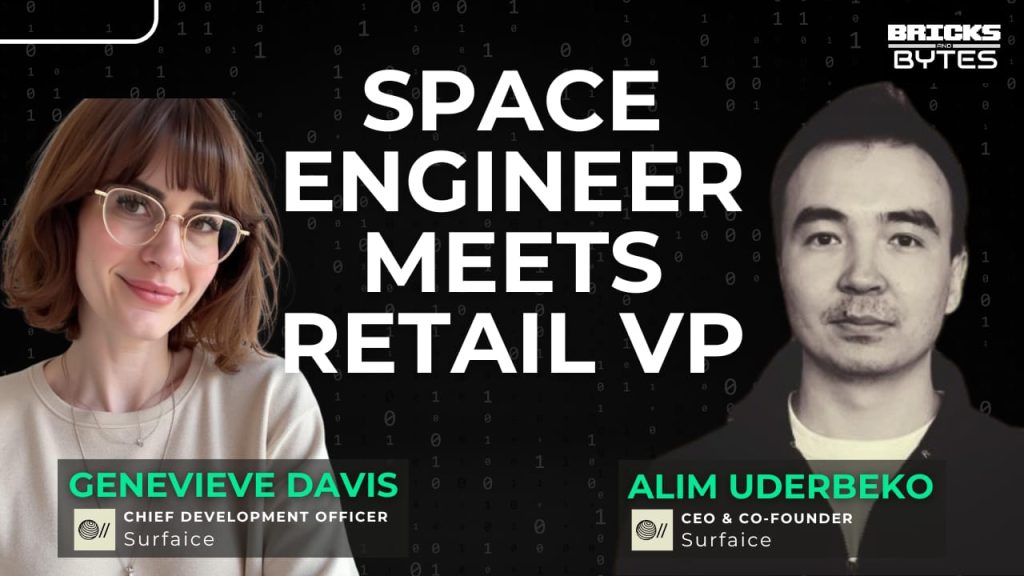
This is an early release of our podcast, exclusive for premium subscribers. To get early access, upgrade here. EARLY RELEASEWhy AI Should Build McDonald’s Before It Builds Burj Khalifa When a $300 billion industry still celebrates introducing Excel as an innovation win, you know there’s a massive opportunity waiting. Alim Uderbekov (CEO, Surfaice) and Genevieve Davis (former VP at 7-Eleven) are building AI agents specifically designed to automate the repeatable chaos of retail store rollouts, where tens of thousands of milestones across hundreds of locations currently live in scattered spreadsheets and email threads. This conversation reveals why vertical AI beats horizontal software, how the “McDonald’s model” of standardized construction is ripe for automation, and why retailers (not general contractors) are the customers who actually care about speed to revenue. In this episode, you’ll: Discover why store development teams managing $300B in annual projects are still running on Excel and fragmented systems, and what that means for AI adoption timelines Learn how Surfaice is applying “vertically integrated AI” to automate standard construction projects before tackling one-off builds, and why this sequencing matters for market entry Understand the critical difference between building AI for construction management platforms versus building for owners who measure success in days-to-revenue, not project management features Hear how a 20-year retail development executive went from “AI will take our jobs” to co-founding an AI company and what this signals about industry readiness for transformation Get insider perspective on why Procore’s AI moves don’t threaten specialized retail construction AI, and what network effects actually matter in this space Chapters: 00:00 – Introduction: Meeting on the Beach and the Birth of Surfaice 04:14 – Why McDonald’s Built 40,000 Stores is the AI Blueprint for Construction 07:10 – The $300 Billion Industry Running on Excel: Current State of Store Development 09:05 – Vertical vs Horizontal AI: Why Construction Software Needs to Think Like Humans 14:48 – From Space Station Software to Retail Rollouts: Alim’s Unconventional Path 20:28 – The Store Development Workflow: 100 Moving Parts Per Store, Zero Single Source of Truth 28:35 – Building AI Agents That Actually Understand Retail Construction Context 35:42 – Why Surfaice Chose Owners Over General Contractors as Primary Customer 42:16 – The Excel Employee of the Year Award: What It Reveals About Industry Tech Adoption 48:53 – Data Unification Strategy: Connecting Lucernix, SiteWise, CoStar, and Everything Else 54:20 – Network Effects in Specialized vs General Construction Software 1:00:42 – Procore AI vs Point Solutions: Why Integration Scope Matters More Than Features 1:03:27 – Customer Selection as Competitive Strategy: Speed-to-Revenue Beats Project Management »»» Listen Now (Premium Subscribers Only) ««« Subscribe to our premium content to read the rest. This is a subscriber only post. Become a paying subscriber of our annual or monthly paid subscriptions to get inside takes on growth in construction tech. Upgrade Translation missing: en.app.shared.conjuction.or Sign In Powered by beehiiv

Newsletter

ICYMI: LIVE at Suffolk, $33M+ Raised Across ConTech, & Spacemaker’s Exit Lessons

This Week’s Quickfire BytesFuel your curiosity with this week’s contentW/C 17th November 2025 BRICKS & BYTES LIVELIVE at Suffolk Technologies Hear from the BOOST 6 co-hort, Suffolk Construction CTO Jit Kee Chin, AutoDesk VP on Corporate Development David Hindley, Goldbeck’s Danny Dellit & Björn Felicetti and Suffolk’s very own Parker Mundt. Watch It Now NEW EPISODES “The Industry Is Fundamentally Incapable of Change” – Spacemaker Founder Explains Why Carl Christensen, co-founder of Spacemaker (acquired by Autodesk), shares why the AEC industry struggles with digital transformation, how outcome-based design can break through systemic barriers, and what it really takes to sell your company.. 90% of Construction Firms Have ZERO Employees – The Reality of Residential Construction in America Dmitry Alexin from Handoff talks about how AI is transforming residential construction, why 90% of US construction firms are one-person operations struggling with back-office work, and how a former IMF economist ended up building technology that delivers cost estimates in 30 seconds. PlanGrid Founders Return to Construction, 27% of GCs Using Personal Funds, $9.2M Nextlight Raise, AI Go-To-Market Race, with Will Mitchell from Rabbit We break down the biggest shakeups in construction tech, from the PlanGrid founders’ surprise return to AI, to the shocking payment crisis threatening to sink contractors across the industry. View all Podcasts BRICKS & BYTES PREMIUMEarly Release Episodes The Data Fragmentation Problem Killing Your Project Performance – Joe Wilson – EARLY RELEASE Listen Now: Joe Wilson went from GC to developer to owner’s rep, and saw the same data chaos everywhere. Here’s what he built 2 FAVORITE QUOTES: If you only work with kind of generalist venture capital firms and you’re kind of sitting there in Cerebral Valley…you’re going to be very isolated from the reality of construction.” – Dmitry Alexin on the SF tech bubble’s disconnect from construction realities “None of these companies are building their own foundational models. They’re using models and they’re using other people’s models. And so I just, I think that it’s going to be a go-to-market race.” – Dustin DeVan on why multiple AI companies will succeed rather than one winner SPECIAL OFFERSThe GTM Bundle Together, they give you the full GTM playbook for construction tech from building trust-first marketing to structuring your sales motion, pricing models, and land-and-expand strategy. Individually, each guide is $100. Today, you can get both for $150. GET THE GTM BUNDLE NOW YOU MIGHT ALSO LIKE Premium Insights 10 Hard-Won Lessons from Founders Who Sold for Millions A Step-by-Step Guide to Clear Product Marketing for AEC Startups 12 Lessons About Hiring From AEC’s Top Leaders More Insights NSFW: Build a F*cking Business McKinsey’s Secrets to Scaling Construction Tech How Flux Burned Through $29M – Lessons for AEC Innovators Ex AutoDesk CEO’s 12 Lessons For Developing Products Could an Entrepreneur in Residence Save Your Construction Firm? Most Popular Episodes How To Build A Unicorn In Construction Tech – Patric Hellermann Story Of A Modular Construction Startup That Burned Through £10M in 15 Months – Chris Spiceley McKinsey FINALLY updates their Productivity Curve, & The Future Of Construction – David Rockhill, Partner at McKinsey Procore’s AI Strategy & Implementation – AI’s Role in Modern Construction Disrupt Autodesk? This Ex-Autodesk CEO Has Some Advice – Amar Hanspal Super Series Super Series with Ediphi Super Series With Speckle Super Series With Monumental Super Series with Foundamental OUR SPONSORS Aphex – The multiplayer planning platform where construction teams plan together, stay aligned, and deliver projects faster. Archdesk – The #1 construction management software for growing companies. Manage your projects from Tender to Handover. BuildVision – Streamlining the construction supply chain with a unified platform for contractors, manufacturers, and stakeholders. Powered by beehiiv
Newsletter

How to Build a Marketing Engine That Actually Scales in Construction Tech

INDUSTRY INSIGHTSHow to Build a Marketing Engine That Actually Scales in Construction Tech Lessons from 10 years of go-to-market strategy in the industry Here’s what most construction tech founders miss: marketing isn’t the function you turn on after product-market fit. It’s the function that helps you discover what your market actually wants. Lori Peters has spent the last decade building go-to-market strategies across multiple construction tech startups. When she joined her most recent venture, Document Crunch, the product already existed and the team had early traction. Yet one pattern kept emerging from conversations with founders: those who regretted not investing in marketing sooner saw dramatically better outcomes once they did. The insight wasn’t about sales acceleration, though that improved. It was about understanding how a relational industry actually buys and building your entire go-to-market motion around that reality rather than against it. Construction tech operates on principles that reverse nearly everything founders have learned about B2B marketing. Understanding those principles and building around them separates the companies that scale from those that struggle. Building trust starts in person: tech founders and construction execs connecting at a live industry event. Credit: Concrete Georgia TL;DR Construction tech doesn’t scale with traditional SaaS marketing. It scales through trust, relationships, and showing up in person. Marketing isn’t post-PMF. It creates PMF in construction. Digital-first funnels fail; events, communities, and regional presence win. GTM evolves from testing → geographic presence → full sales/marketing alignment. Community is the biggest growth flywheel; word-of-mouth compounds faster than ads. Credibility (especially from construction-native founders) is a massive advantage. AI has shifted discovery from SEO → GEO (generative engines like ChatGPT), but trust still rules. Bottom line: the companies that win build marketing around relationships, not metrics. The Construction Tech Marketing Paradox In enterprise SaaS, the playbook is well known: minimize in-person engagement, optimize for self-serve, build scalable digital funnels, avoid expensive conferences. In construction, this approach fails completely. Conferences and events rank among the biggest lead generation channels for construction tech companies. Other SaaS businesses actively discourage their teams from attending them. The difference isn’t cosmetic. It cuts to how these two markets fundamentally operate. Buying in construction is deeply connected to relationships. Buyers prefer not to handle things on their own. There’s a lack of trust in solutions from companies they’ve never come across. They need to understand the people behind the product, know their construction background, and believe they’ll be supported when things go wrong. Word-of-mouth expansion becomes the metric that matters most. What looks like inefficiency on the surface is actually the natural outcome of a strategy that prioritizes relationships over metrics. When you build the right foundation, word-of-mouth doesn’t feel like an antiquated holdover. It feels like the inevitable result of doing things properly. The Three Evolutions: From Testing to Alignment Marketing strategy rarely arrives fully formed. Instead, it evolves through stages, each unlocking new capacity for growth. Showing up where your customers are: a regional field marketing moment in construction tech. Credit: OpenSpace Stage One: The Test-Everything Era Early on, the playbook is simple: test everything, measure what sticks, then scale that. This means building partnerships with adjacent companies, hitting the conference circuit, pursuing PR aggressively, and doing the podcast rounds. The philosophy is to make noise everywhere and see where it resonates. This approach works, but with geographic limitations. Early users concentrate in regions where your network already exists. The lesson here matters: in a relational industry, you grow where you already have credibility. Trying to scale nationally through digital channels alone produces disappointing results. Stage Two: Geographic Expansion The breakthrough comes when you realize expanding nationally requires physical presence. You can’t build relational trust through a screen. Instead, you go where your customers are. You build community intentionally. You invest in field marketing and develop sales teams that own specific regions. You embed yourselves in local construction associations. This isn’t about sponsoring one event and moving on. It’s about establishing consistent presence over months. One conference appearance doesn’t build relationships. Months of showing up, sponsoring local initiatives, and becoming a trusted fixture does. This requires patience, but it compounds in ways digital campaigns never do. Stage Three: Integrated Go-to-Market Marketing excellence in isolation has limits. The real breakthrough comes when you unify your entire go-to-market machine. Sales, marketing, business development, and field partnerships stop working separately and start operating from shared ICPs, shared messaging, and shared goals. This alignment becomes harder to copy than any single tactic. A competitor can match your messaging or your event strategy. They struggle to match the coordination across an entire organization. One team, one mission: sales, marketing, BD and field partnerships aligned for construction-tech scale. Credit: Autodesk The Counterintuitive Plays That Compound Several tactics emerge when you understand construction’s relational nature. They seem counterintuitive until you see why they work. Community as a Strategic Asset Building an intentional community around your company isn’t a marketing tactic. It’s foundational infrastructure. This means branding your customers and advocates as something meaningful and establishing customer advisory boards not just for feedback but as a network of trusted validators. These initiatives don’t generate immediate revenue. They generate word-of-mouth that spreads faster than paid campaigns ever could. Peters describes the impact: when customers become part of a named community, they invest more deeply in your success. They share your story with others. They help you recruit talent. The compounding effect shows up not in quarterly metrics but in the kind of growth that feels effortless because it’s driven by people who genuinely believe in what you’ve built. The Credibility Multiplier Construction tech founders who actually came from the construction industry have an unfair advantage. This single positioning detail dissolves a significant barrier of skepticism. Generic tech companies can’t replicate it. It’s not because the technology differs. It’s because buyers trust people who’ve lived the problem. Being a founding member of communities like “Built by Builders” amplifies this advantage further. It signals that you’re part of the industry’s fabric, not just

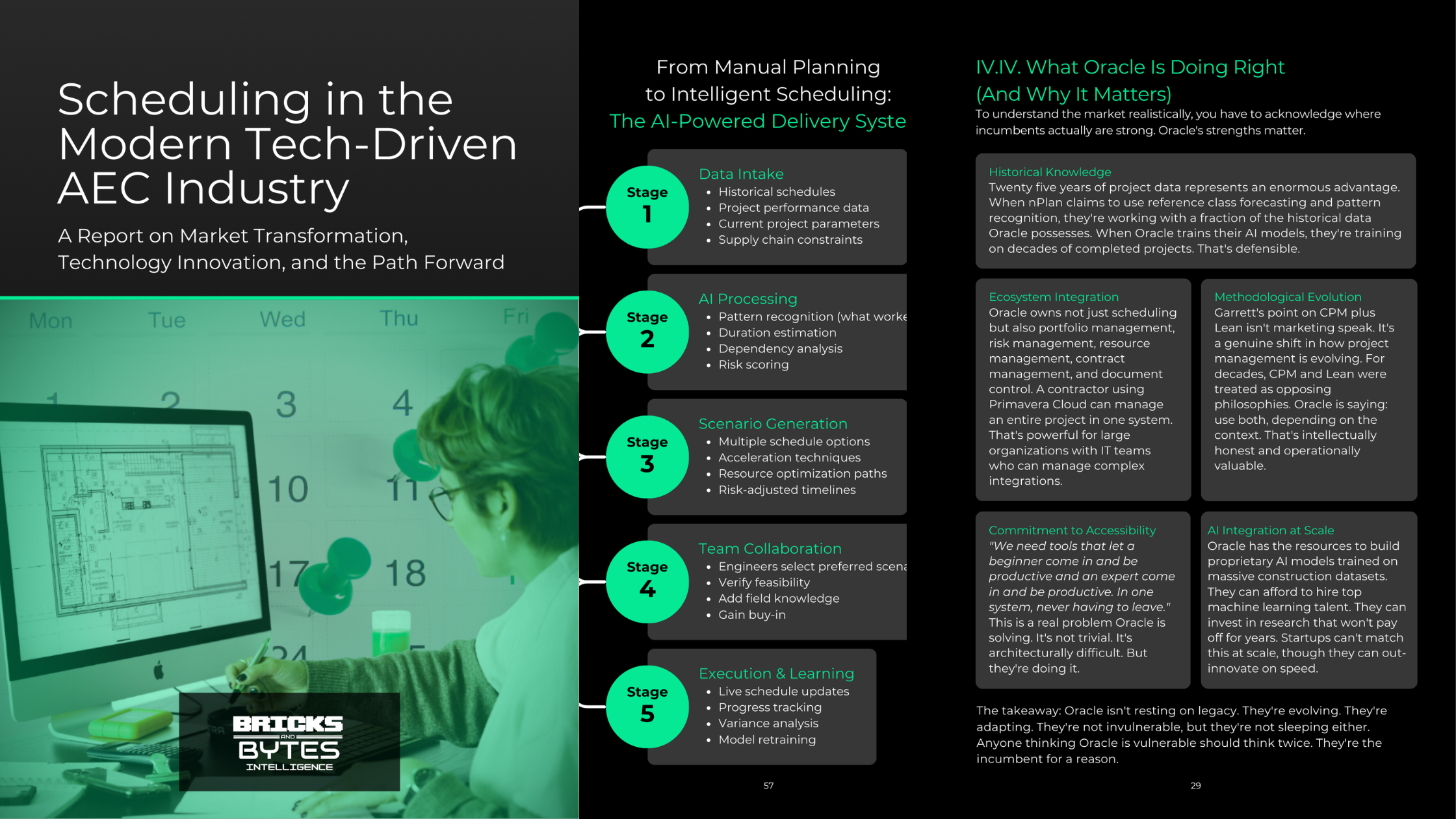
Get a FREE copy of our Scheduling in the Modern Tech-Driven AEC Industry: A Report on Market Transformation, Technology Innovation, and the Path Forward” (worth $150) and a FREE weekly email to stay up to date on construction tech. SIGN UP TODAY!

Scheduling in the Modern Tech-Driven AEC Industry

Sign up to the #1 Newsletter In AEC Tech. Join over 2,100 like-minded Founders, Investors and Techies disrupting the way we build. 

Scheduling in the Modern Tech-Driven AEC Industry