
Author name: Owen Drury

Newsletter

ICYMI: Gecko Robotics, Reality Capture, and AI’s Architectural Impact

This Week’s Quickfire BytesFuel your curiosity with this week’s contentW/C 19th August 2024 NEW EPISODESGecko Robotics: Revolutionising Infrastructure Inspections with Robotics Are robots the future of infrastructure safety? This startup’s journey might surprise you. In our first episode of BitBuilders, Gabriele got a chance to interview Troy Demmer, co-founder of Gecko Robotics. We learned about Troy’s journey from healthcare to robotics, the challenges of building hardware startups, and how Gecko is transforming infrastructure maintenance for both private and public sectors… and many more open.spotify.com/episode/5TIoDIH9zINxUBqiAepZZV Reality Capture’s $200M Investment: Where’s the Profit? – Mostafa Akbari Reality capture in construction raised hundreds of millions, but where are the profitable businesses? In this episode, we had Mo Akbari, ex-founder of HoloBuilder, discussing the state of reality capture technology in construction. We explored funding trends, market dynamics, and the challenges of building sustainable businesses in this space.   open.spotify.com/episode/2FQnWtXiZD0pJJo3Qxu9Eq Why 2D Design Still Beat 3D & The Surprising Impact of AI on Architectural Firms and Pricing Is the future of architecture in 2D, not 3D? Testfit founder’s has got a surprising take… In this episode of Bricks, Bucks and Bytes, we learned how TestFit grew from a weekend project to raising a Series A, changing how architects do feasibility studies. We also discovered why small firms might replace big ones like Gensler, as AI changes how architecture works. Patric shared why “outcome as a service” companies are shaking up the construction tech world. open.spotify.com/episode/2Tri0gR48kopQJ2OgoYMqu View All Podcasts BRICKS & BYTES BULLETINTop Roboticists Key Insights For Reshaping Construction BitBuilder’s Release Day Today (Wednesday 21st August 2024 at 4:00 PM BST) we are releasing episode 001 of BitBuilders. Keep your eyes peeled on Bricks & Bytes’ LinkedIn channel to ensure you don’t miss the first release. BitBuilder is a podcast exploring the most anticipated solution to the labour shortage – robotics.  In addition to robotics, we’ll be releasing the odd episode exploring construction in Space (yes the cosmos) and we’ve already lined up guests who were significant employees at companies like SpaceX and NASA. More on that soon. But for this week’s insights, we thought we’d give away some of the juicy insights from the first 4 episodes of BitBuilders: Episode 1 – starts with Troy Demmer of Gecko Robotics.Episode 2 – we’re joined by Alexey Dubov of Mighty BuildingsEpisode 3 – Henning Roedel joins usEpisode 4 – David Inggs, Head of Robotics at DroneDeploy takes the seat Read Full Article 2 FAVORITE QUOTES: “I don’t want people touching the thing I just designed. No collaboration. You can text me the feedback that you want, right?” – Clifton humorously challenges the assumption that all design tools need to be collaborative “Today, the built world largely operates based upon run it to failure, wait to see what breaks. It’s very reactionary. And so we provide a pathway to use our entire tech stack, robotics with sensor data and AI to give them the ability to be more thoughtful about what does the future look like.“ – Troy explains how Gecko is shifting infrastructure maintenance from a reactive to a proactive approach LATEST STORIES: Nexii’s Roller Coaster: A Construction Tech Unicorn’s Fall and Potential Resurrection – Bricks and Bytes Nexii’s journey from construction tech unicorn to bankruptcy offers key lessons on sustainable growth, innovation, and financial stability in the built environment. bricks-bytes.com/startups/nexii-construction-tech-unicorns-fall-and-potential-resurrection The Electrification Challenge: How Construction Tech Can Address Infrastructure Bottlenecks – Bricks and Bytes The “electrify everything” movement is gaining momentum. But are we ready? Let’s explore how construction technology can help overcome the electrification challenge. bricks-bytes.com/technology/the-electrification-challenge-how-construction-tech-can-address-infrastructure-bottlenecks Powerdot Secures €165 Million for European EV Charging Expansion – Bricks and Bytes Powerdot secures €165M to expand EV charging stations across Europe, advancing sustainable transportation with ultra-fast, low-carbon mobility solutions. bricks-bytes.com/news/powerdot-secures-e165-million-for-european-ev-charging-expansion View All Articles BONUS CONTENTWhat Are Investors Betting On? OUR SPONSORS Shft — helping contractors like you leverage BIM to secure a leading position in the race towards construction’s digital future.  BuildVision — streamlining the construction supply chain with a unified platform for contractors, manufacturers, and stakeholders. Powered by beehiiv

Navigating Startup Valuations: A VC's Perspective
Videos, Venture

Navigating Startup Valuations: A VC’s Perspective

  In the ever-evolving world of venture capital, startup valuations remain a critical factor in investment decisions. Jenny Song, Principal at Navitas Capital, recently shared insights into their approach, emphasising the importance of valuation discipline in today’s market. During the funding frenzy of 2021, their firm stood out by exercising caution. They passed on deals they found interesting but overvalued, a decision that has since proven prudent. As market conditions shift, they’re now witnessing a trend of flat or down rounds, even for growing companies. Jenny highlighted a common pitfall: founders and investors who raised at inflated valuations now face challenging down-round situations. This has led to instances where the firm has had to “clean up cap tables” in subsequent rounds. For her, valuation discipline is crucial to their investment strategy. With typical check sizes ranging from $3-7 million for late seed to Series A rounds, they aim for at least 10% ownership. This approach ensures each investment has the potential to be a “fund returner,” aligning with their goal of underwriting big exits. As the startup ecosystem continues to evolve, maintaining a balanced view on valuations appears key to sustainable investment strategies.

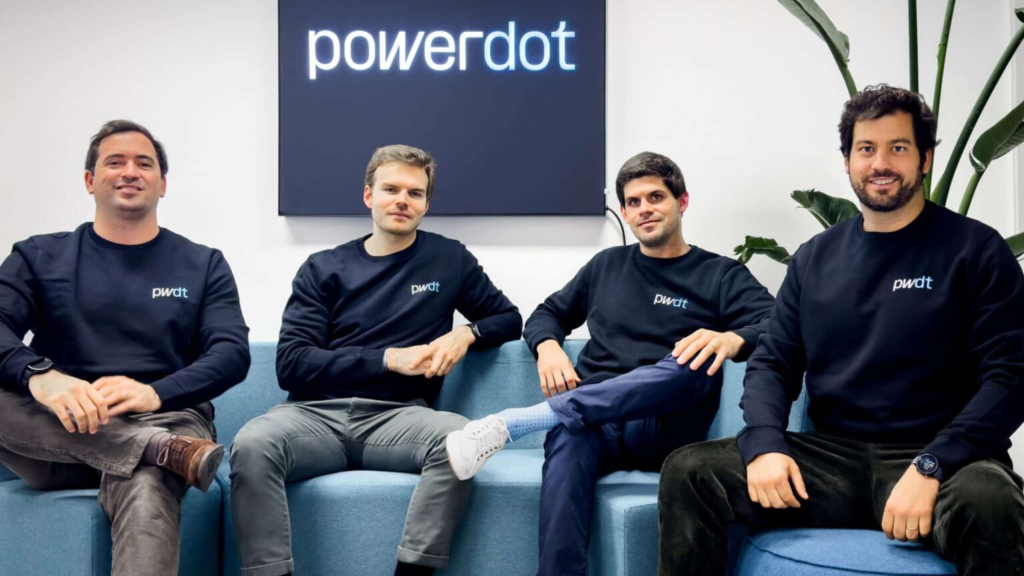
Powerdot Secures €165 Million for European EV Charging Expansion
News

Powerdot Secures €165 Million for European EV Charging Expansion

  Portuguese electric vehicle (EV) charge point operator, Powerdot, has successfully raised €165 million in green financing from a consortium of major banks, including ABN Amro, BNP Paribas, ING, MUFG Bank, Santander, and Société Générale. This new funding is aimed at accelerating the deployment of ultra-fast EV charging stations across Europe, further cementing Powerdot’s position as a leading player in the EV infrastructure space. Company Overview Founded in 2016, Powerdot offers a comprehensive suite of services, including the installation, operation, and maintenance of EV charging stations. The company’s business model is unique in that it provides these services at no cost to partners, instead opting for a revenue-sharing arrangement. This model has facilitated rapid expansion into multiple European markets, including Spain, France, Belgium, Luxembourg, and Poland. Strategic Goals With this latest round of financing, Powerdot plans to significantly increase its footprint across Europe. The funds will be used to expand the company’s network of charging stations, with a target of reaching over 3,100 locations by 2026. Additionally, the investment will enhance the technology behind Powerdot’s charging stations, improving the user experience and supporting the broader adoption of EVs across the continent.   CEO’s Vision Luís Santiago Pinto, Powerdot’s co-founder and CEO, expressed his optimism about the company’s future, highlighting the confidence shown by financial partners in Powerdot’s vision and operational capabilities. He stated that this substantial investment would allow the company to accelerate its deployment strategy and play a crucial role in Europe’s transition to sustainable transportation. Future Outlook The green financing facility includes an additional €60 million uncommitted accordion facility, offering Powerdot flexibility to scale operations further as demand for EV charging infrastructure grows. This investment is not only a testament to the growing importance of sustainable transportation solutions but also positions Powerdot to be at the forefront of this transformative industry.Powerdot’s latest funding round marks a significant milestone in its journey towards becoming a dominant player in Europe’s EV charging landscape. With ambitious expansion plans and strong financial backing, the company is well-positioned to contribute to the region’s transition to greener transportation solutions, setting a precedent for the future of EV infrastructure.      

Nexii's Roller Coaster: A Construction Tech Unicorn's Fall and Potential Resurrection
Startups

Nexii’s Roller Coaster: A Construction Tech Unicorn’s Fall and Potential Resurrection

  In the ever-evolving world of construction technology, few stories are as compelling as that of Nexii. Once hailed as a green construction tech unicorn with a $2 billion valuation, Nexii’s journey from innovation darling to bankruptcy – and potentially back again – offers valuable insights for startups, investors, and industry enthusiasts alike. Founded with a mission to build a sustainable future, Nexii quickly gained attention for its innovative approach to green construction. At the heart of their offering was Nexiite, a proprietary building material positioned as a sustainable alternative to concrete. This breakthrough, combined with precision-manufactured panels, promised to revolutionise the construction industry by reducing build times by up to 75% and nearly eliminating on-site waste. Nexii’s rise was meteoric. The company boasted impressive partnerships, including projects with Starbucks and a collaboration with Siemens to advance sustainable building practices across North America. In a significant milestone, Nexii became the first construction manufacturing company in North America to attain B Corp certification in March 2023, cementing its commitment to social and environmental responsibility. However, as Patric Hellermann noted in a recent discussion, “Asset-heavy businesses that want to have their own factories come with a lot of risk and capital intensity.” This insight proved prophetic in Nexii’s case. In this episode of Bricks, Bucks and Bytes, we discussed Nexii’s attempt to relaunch after going into liquidation, highlighting the challenges in offsite modular construction. Despite its innovative technology and noble mission, Nexii found itself facing significant financial difficulties. In January 2024, the company filed for creditor protection under the Companies’ Creditors Arrangement Act (CCAA), citing debts exceeding $109 million. The root cause? A rapid expansion strategy that included establishing a manufacturing plant in Pennsylvania – a move that incurred high costs outpacing revenue growth. CEO Bill Tucker summed up the situation starkly: despite the potential value of Nexii’s technology, the company had few tangible assets and a precarious financial position, limiting its options for restructuring. This fall from grace mirrors the experiences of other asset-heavy construction tech companies like Katerra and Veev, highlighting the inherent risks of vertical integration in the construction industry. As Martin Piekarz observed, “Maybe asset-heavy modular construction doesn’t work and it’s a delusional concept to develop it because it seems like most companies that have tried to do it, they just fail.” Yet, Nexii’s story may not end here. In April 2024, the company was sold in a court-approved bankruptcy sale to Nexiican Holdings Inc. and Nexii Inc. for $500,000, along with the assumption of over $20 million in debt. This development opens the door for a potential relaunch, leveraging Nexii’s proprietary technology in a market increasingly focused on sustainable building practices. The situation remains fluid, with uncertainty surrounding the future of Nexii’s manufacturing facilities and employees. However, the court-appointed monitor has indicated significant ongoing interest in Nexii’s technology, suggesting potential for future investment and operational opportunities under new leadership. Nexii’s rollercoaster journey offers several key lessons for the construction tech industry: Sustainable growth trumps rapid expansion: While scaling quickly can be tempting, especially in a hot market, it’s crucial to ensure that growth is sustainable and backed by solid financials. Balance innovation with financial stability: Having groundbreaking technology is not enough; companies must also maintain a healthy financial foundation to weather market fluctuations. Understand the challenges of scaling in construction: The fragmented nature of the construction industry makes rapid, large-scale growth particularly challenging. Recognize the value of proprietary technology: Even in financial distress, Nexii’s innovative technology continues to attract interest, highlighting the importance of developing unique, valuable solutions. Looking ahead, the future of sustainable construction tech remains bright. The growing demand for low-carbon building solutions, coupled with advancements in AI and other technologies, presents significant opportunities for innovation. For Nexii, the next chapter remains to be written. Under new ownership, the company has the opportunity to leverage its innovative technology while learning from past mistakes. Industry watchers will be keen to see how the new management navigates existing debts and capitalises on the growing demand for sustainable construction solutions. In conclusion, Nexii’s journey from unicorn to bankruptcy and potential resurrection encapsulates the challenges and opportunities in the construction tech industry. It serves as a cautionary tale about the risks of rapid expansion and asset-heavy models, while also highlighting the enduring value of innovative, sustainable solutions in construction. As the industry continues to evolve, the lessons from Nexii’s experience will undoubtedly inform the strategies of startups, investors, and established players alike.      

Newsletter

Top Roboticists Key Insights For Reshaping Construction

NEW SERIESBitBuilder’s Release Day Today (Wednesday 21st August 2024 at 4:00 PM BST) we are releasing episode 001 of BitBuilders. Keep your eyes peeled on Bricks & Bytes’ LinkedIn channel to ensure you don’t miss the first release. BitBuilder is a podcast exploring the most anticipated solution to the labour shortage – robotics.  In addition to robotics, we’ll be releasing the odd episode exploring construction in Space (yes the cosmos) and we’ve already lined up guests who were significant employees at companies like SpaceX and NASA. More on that soon. But for this week’s insights, we thought we’d give away some of the juicy insights from the first 4 episodes of BitBuilders: Episode 1 – starts with Troy Demmer of Gecko Robotics. Episode 2 – we’re joined by Alexey Dubov of Mighty Buildings Episode 3 – Henning Roedel joins us Episode 4 – David Inggs, Head of Robotics at DroneDeploy takes the seat Be the first to know when the first episode drops👇👇👇 Join the Community INDUSTRY INSIGHTSExclusive Insights on the Future of Building and Space Troy Demmer – Co-Founder of Gecko Robotics In episode 001 we discuss the company’s journey from developing inspection robots for power plants to serving critical infrastructure industries and government contracts.  Troy explains how Gecko’s robots collect massive amounts of data to create detailed “health maps” of assets, enabling predictive maintenance and lifecycle management. Troy also shares insights on navigating the challenges of hardware manufacturing and working with public sector clients. Five key insights: Gecko Robotics started by solving a specific problem for a power plant manager, highlighting the importance of having a co-development partner willing to iterate on early prototypes. The company’s robots can collect 10 million data points in a day, compared to about 10,000 readings over a week using traditional manual inspection methods. Gecko operates a fleet of 1,500-2,000 robots, demonstrating that selling outcomes as a service can be more efficient than mass-producing and selling robots directly The company has expanded into government contracts, helping the US Navy improve ship maintenance efficiency and reduce dry dock times. Troy emphasizes the importance of compressing feedback cycles and prioritizing solving customer problems, even if initial solutions don’t seem scalable for hardware companies. Cool fact: Gecko’s technology can potentially increase throughput for naval shipbuilders by 50%, significantly improving the production of new military vessels. Alexey Dubov – Co-Founder of Mighty Buildings In episode 002—coming Wednesday, August 28th—we discuss Alexey’s journey in developing innovative 3D printing technology for construction.  Alexey explains their material science approach, manufacturing process, and business model of deploying factories close to demand.  He also shares insights on the construction industry’s future and his experience as an angel investor in construction tech startups. Five key insights: Mighty Buildings uses a photopolymer composite material that is lighter and stronger than traditional construction materials, allowing for mass customization and efficient production. The company’s manufacturing process involves 3D printing, robotic milling, PU foam injection, and automated coating, enabling rapid production of customized building panels. Mighty Buildings’ business model focuses on deploying factories close to demand, with a potential ROI of 1-2 years for new factory deployments. The company aims to make their manufacturing process “product agnostic,” allowing for the production of various building types (single-family, multi-family, commercial) using the same process. Dubov emphasizes the importance of finding customers and building an advisory board before developing a product in the construction tech space, focusing on solutions that can be easily integrated into existing workflows. Cool fact: Mighty Buildings can assemble the exterior envelope of a 2,000-square-foot, two-story villa within five work days, significantly faster than traditional construction methods. Henning Rodel – ex-Robotics Lead at DPR Construction In episode 003 – coming Wednesday September 04th – Henning chats to us about his journey from researching space construction materials to becoming a robotics expert in the construction industry.  He shares insights on implementing robotics in construction, the challenges faced by startups in the field, and strategies for successful pilot programs.  Henning also touches on the future of construction robotics and the importance of solving real-world problems on job sites. Five key insights: Construction robotics should focus on being tools or assistants to workers rather than replacing them entirely, addressing safety concerns and improving productivity. Startups should conduct short, focused pilots (1-2 weeks) rather than long-term project commitments to quickly validate their technology and value proposition. The four key performance indicators for construction innovations are schedule, cost, quality, and safety, with sustainability, supply chain, and user experience as additional important factors. There’s an ongoing debate between Robotics-as-a-Service (RaaS) models and outcome-based pricing, with potential future models combining hardware sales with SaaS offerings. Getting comfortable with job site visits and understanding the construction industry’s culture is crucial for robotics startups to succeed in this space. Cool fact: Rodel’s PhD research focused on developing a novel concrete using biology from Earth to bind materials in space, potentially for future lunar or Martian construction projects. David Inggs – Head of Robotics at DroneDeploy, Co-Founder at Rovos (acquired by DroneDeploy) In episode 004 – coming Wednesday September 11th – Gabe chats to David, discussing his journey from founding ROCOS, a robotics infrastructure company, to its acquisition by DroneDeploy.  He shares insights on the challenges and opportunities in the robotics industry, particularly in construction and reality capture.  Inggs also delves into the current state of mobile robotics, the importance of software infrastructure, and the potential future of humanoid robots. Five key insights: The robotics industry faces significant challenges in software infrastructure, particularly in navigation and mapping for mobile robots in dynamic environments like construction sites. There’s a growing demand for reality capture and automation in industries like construction, energy, and mining, driven by safety concerns, insurance incentives, and the need for accurate digital representations of physical environments. The acquisition of ROCOS by DroneDeploy demonstrates the value of combining aerial and ground-based reality capture technologies to provide a more comprehensive solution for enterprise customers. Early-stage robotics startups should focus on solving specific problems and consider

blackhorn ventures construction tech venture capitalist
Venture Capitalists, Venture

Blackhorn Ventures – Construction Tech Venture Capitalist

Introduction Blackhorn Ventures, founded in 2017, is a venture capital firm dedicated to transforming and decarbonizing the industrial economy through digital infrastructure. With a focus on Energy, Construction, Supply Chain, and Transportation sectors, Blackhorn invests in companies that drive operational efficiency and reduce greenhouse gas emissions. Their portfolio features companies utilizing software-centric solutions and asset-light approaches to address critical industrial challenges. By supporting early-stage ventures, Blackhorn aims to create significant environmental and social impacts while delivering strong financial returns. Key Staff Members – Investors Philip O’Connor – Co-Founder and Managing Partner Stephan Cizmar – Partner Micah Kotch – Partner Cameron Carver – Analyst Melissa Cheong – Managing Partner Ted White – Senior Advisor Trevor Zimmerman – Co-Founder and Managing Partner Mark Loch – Operating Partner Bill Ritter – Operating Partner Amanda Rohrer – Senior Associate Theresa Barrett – Executive Assistant Christina Curtis – Senior Advisor of Talent Strategy Jack Fuchs – Co-Founder and Operating Partner Dr. Raymond Levitt – Operating Partner Omar Smith – Senior Associate Will Cognetti – Analyst Bret Kadison – Senior Advisor Brittany Witucky – Finance and Operations Manager Key (AEC) Tech Investments Alumni Ventures has strategically invested in several innovative companies within the Architecture, Engineering, and Construction (AEC) technology sector, focusing on startups that are transforming the industry through advanced technology and sustainable practices. Three notable investments include: Agorus Agorus is a standout in Blackhorn Ventures’ portfolio, revolutionizing the construction industry through its precision-engineered, custom-built homes. The company combines cutting-edge technology with advanced manufacturing processes to drastically reduce construction time and waste. Agorus’s innovative approach enables the rapid production of high-quality homes, addressing the increasing demand for efficient, sustainable housing. Their focus on streamlining the construction process positions them as a leader in the AEC (Architecture, Engineering, and Construction) tech space, where speed and accuracy are critical. Alice Technologies Alice Technologies is a leading AEC tech company in Blackhorn Ventures’ portfolio, offering an AI-powered construction simulation and optimization platform. The platform enables construction teams to explore millions of different project plans to identify the most efficient ways to build complex projects. This technology is transforming how construction projects are managed by optimizing timelines, reducing costs, and improving resource allocation. Alice Technologies’ innovative approach allows for greater flexibility and resilience in construction planning, making it a vital tool for the industry. Ecoworks Ecoworks is a transformative company in the AEC space, specializing in the modernization of older buildings to meet Net Zero standards. Their serial renovation process not only reduces carbon emissions but also significantly improves energy efficiency and living conditions in urban environments. Ecoworks’ ability to upgrade existing structures to be more sustainable without the need for complete rebuilds makes them a crucial player in the AEC industry, particularly in the push toward greener cities. Their approach aligns perfectly with Blackhorn Ventures’ focus on decarbonization and resource efficiency. Focus Area In Construction Tech Blackhorn Ventures invests in sectors critical to the industrial economy, including Energy, Construction, Supply Chain, and Transportation. These industries generate substantial revenue and are key contributors to global greenhouse gas emissions. Blackhorn’s focus is on digital infrastructure that drives operational efficiency and decarbonization. They back companies utilizing enterprise software models, off-the-shelf hardware, and asset-light approaches to achieve scalable environmental impacts. By targeting hard-to-abate sectors, Blackhorn aims to enhance resource efficiency and national security, supporting the deployment of renewable energy, resilient supply chains, and zero-emission transportation solutions. Investment Strategy Blackhorn Ventures employs a strategic approach to early-stage investments, primarily in Series Seed and Series A funding rounds. They believe this stage is crucial for shaping a company’s trajectory and achieving significant impact. Their investment philosophy centers on supporting best-in-class entrepreneurs who are digitizing and decarbonizing industrial sectors. Blackhorn provides comprehensive support in go-to-market strategies, talent acquisition, leadership development, and fundraising syndication. Leveraging deep industry expertise and pattern recognition, they offer substantial value to their portfolio companies, positioning them for scalable success. Their dual focus on financial returns and environmental impact reflects a commitment to creating sustainable industrial advancements. Investment Metrics Correct as of August 2024. AEC-Tech Activity Number of early AEC-Tech Unicorns: 0AEC-Tech Rank: 9 Deal Activity Number of deals in last 12 months (incl. follow-ons): 10Number of deals per year in last 3 years (average, incl. follow-ons): 9 Other Resources

India and Australia: Emerging Markets in Construction Tech
Venture

India and Australia: Emerging Markets in Construction Tech

  The construction tech landscape is shifting. While Silicon Valley still grabs headlines, emerging markets are quietly revolutionising the industry. Today, we’re zooming in on two powerhouses: India and Australia. What can we learn from their successes and struggles? A Tale of Two Markets India: The Giant Awakens. With its booming population and rapid urbanisation, India’s construction sector is on fire. The country’s tech startups are riding this wave, bringing innovation to a traditionally slow-moving industry. Australia: The Innovator Down Under. Don’t let its smaller size fool you. Australia is punching above its weight in construction tech. Its startups are creating solutions with global appeal.  Meet the Game Changers In India, Infra.Market is making waves. This B2B marketplace for construction materials is reshaping how the industry operates. As Patric Hellermann, Founding Partner & GP at Foundamental, notes: “Infra.Market currently has multiple billion dollars of annual revenue, and they are net profitable. And they are actually not net profitable once or randomly. They have been net profitable for almost the entire lifetime of the company.” Meanwhile, in Australia, Matrak is tackling supply chain visibility. Their platform offers real-time tracking of construction materials, from design to installation. The Funding Landscape Both markets are attracting serious investor attention. In India, Infra.Market recently secured a $50 million investment from Mars Unicorn Fund. Australia isn’t far behind, with Matrak raising significant funds for global expansion.   Unique Challenges, Unique Solutions India: Navigating Complexity. India’s vast and fragmented market poses unique challenges. Infra.Market’s success lies in its ability to streamline processes in this complex environment. Australia: The China Factor. Australia’s construction industry is deeply linked to China. Matrak’s focus on supply chain visibility addresses the challenges of international trade. Opportunities Knocking India: Scale and Growth. With its massive population and rapid development, India offers unparalleled scale. As Hellermann points out: “An overwhelming share of imports of construction products and finished products that are used in the Australian market do come from China.” This insight applies to India as well, highlighting the potential for domestic solutions. Australia: Global Testbed. Australia’s advanced economy makes it an ideal testing ground for technologies with global potential. Matrak’s expansion plans demonstrate this perfectly. Tech Focus: Different Strokes for Different Folks India is all about B2B marketplaces and supply chain optimisation. Infra.Market’s platform connects suppliers with contractors, streamlining procurement. Australia focuses on real-time tracking and integration with design processes. Matrak’s solution links 3D models directly to supply chain data. Cultural Nuances Matter In India, relationship-based business practices influence tech adoption. Infra.Market’s success partly stems from understanding these cultural nuances. Australia’s early adopter culture has helped startups like Matrak gain traction quickly. Government: Friend or Foe? Both countries have supportive policies for tech startups. However, navigating regulations remains a challenge, especially in India’s complex bureaucratic environment. Going Global: From Local to Global Infra.Market is leveraging India’s export potential. It has a significant international footprint, exporting a diverse range of construction materials globally. Their product portfolio, which includes tiles, granite, natural stones, electrical components, and wood-based products, finds its way to various markets around the world. This wide-reaching distribution network underscores the company’s strong position in the global construction supply chain and its ability to meet diverse international demand. Matrak, on the other hand, is expanding into China, tapping into the source of many construction materials. What’s Next? India’s construction tech scene is poised for explosive growth, driven by urbanisation and infrastructure needs. Australia is likely to see more startups targeting global markets from day one, following Matrak’s playbook. Lessons for the World Other emerging markets can learn from India’s scale-focused approach and Australia’s emphasis on global relevance from the start. Embrace Local Challenges as Opportunities. India’s fragmented market and Australia’s reliance on international supply chains have spurred innovative solutions. Focus on Profitability from the Start. Infra.Market’s success story teaches us the importance of building sustainable business models. Their approach contrasts with the “growth at all costs” mentality often seen in tech startups, offering a more sustainable path for emerging markets. Leverage Data and AI Wisely. Both Matrak and Infra.Market demonstrate the power of data in construction. However,  emerging markets should focus not just on collecting data, but on building efficient distribution channels to leverage that data effectively. Build for Global Markets from Day One. Australia’s example, particularly with Matrak’s expansion into China, shows the importance of thinking globally from the start. Adapt to Currency Fluctuations. A weaker Australian dollar can be advantageous for some businesses. Many founders see benefits in improved export competitiveness, even if it temporarily lowers their company’s AUD-reported value, as it can boost their short-term commercial opportunities. Invest in Efficient Distribution. Emerging markets should prioritise building strong distribution networks alongside developing innovative products. Balance Technology with Human Touch. In the construction industry, which values and builds upon personal relationships, AI won’t fully replace human interactions. While AI may take over some aspects of outbound sales and customer service, the core human connections that are so crucial to this field will remain irreplaceable.   By learning from the successes and challenges faced by India and Australia, other emerging markets can develop more robust, globally competitive construction tech ecosystems. The key lies in embracing local uniqueness, focusing on sustainable growth, and building with a global perspective from the outset.      

alumni ventures construction tech venture capitalist
Venture Capitalists, Venture

Alumni Ventures – Construction Tech Venture Capitalist

Introduction Alumni Ventures (AV) is one of America’s leading venture capital firms, distinguished by its focus on providing accredited individuals with access to professional-grade venture capital investments. Founded in 2014, AV leverages a vast network of over 625,000 members to source, evaluate, and invest in high-potential startups across various stages, sectors, and geographies. Recognized as one of the top 20 venture firms by CB Insights and the most active venture firm in the U.S. by PitchBook, AV’s innovative approach combines deep network connections with rigorous investment strategies to build diversified, high-quality venture portfolios for its investors. Key Staff Members – Investors Michael Collins – CEO, Board Chairman Peter Graham – Board Director Beth Obermiller – Board Member Andy Ervin – Deputy Chief Investment Officer Wesley Yiu – Partner James Gill – Board Director David Lang – Board Director Michael Phillips – Board Secretary Brian Keil – Managing Partner Errik Anderson – Board Director Laura Bordewieck Rippy – Board Director Mark Edwards – Chief Investment Officer Jonathan Meltzer – Managing Partner Key (AEC) Tech Investments Alumni Ventures has strategically invested in several innovative companies within the Architecture, Engineering, and Construction (AEC) technology sector, focusing on startups that are transforming the industry through advanced technology and sustainable practices. Three notable investments include: Mighty Buildings Mighty Buildings is revolutionizing the construction industry with its 3D printing technology, which is used to create modular homes quickly and sustainably. The company uses a unique, proprietary composite material that hardens when exposed to light, allowing for faster production times and reduced construction waste. Alumni Ventures’ investment in Mighty Buildings supports the firm’s commitment to sustainability and innovation in the AEC sector. This investment highlights their focus on companies that are addressing housing challenges through cutting-edge technology. Petra Petra is a groundbreaking startup that has developed robotic tunneling technology capable of digging through the hardest geological materials. This technology has significant implications for the construction of infrastructure, such as tunnels for utilities and transportation. Alumni Ventures’ investment in Petra aligns with their strategy to back companies that push the boundaries of what is possible in construction, particularly in projects that require highly specialized, innovative solutions. Rabbet Rabbet (formerly known as Contract Simply) offers a cloud-based platform that streamlines the management of construction finances. By automating processes like invoice tracking and payments, Rabbet reduces administrative overhead and enhances transparency in construction projects. Alumni Ventures’ investment in Rabbet is part of their broader strategy to support technology that increases efficiency and reduces costs in the AEC industry. Focus Area In Construction Tech Alumni Ventures focuses on diverse sectors including AI & ML, AR/VR, big data, cleantech, consumer, cybersecurity, fintech, food & agtech, healthtech, industrials, IoT, advanced manufacturing, life sciences, marketing tech, mobility, real estate tech, SaaS, and TMT. The firm invests across multiple stages of company development, from early-stage startups to late-stage growth companies, ensuring a broad and balanced portfolio. AV also emphasizes geographical diversity, with investments spanning North America, Europe, Asia, and beyond). Investment Strategy Alumni Ventures’ investment strategy is characterized by its network-powered approach, leveraging a vast community of alumni and subscribers to source and vet deals. The firm emphasizes diversification across sector, stage, and geography to mitigate risk and enhance potential returns. AV’s co-investing strategy involves partnering with established venture firms that lead investment rounds, ensuring robust due diligence and favorable terms. The firm also focuses on impact investments, supporting companies that address critical societal challenges in health, energy, finance, and transportation. Alumni Ventures provides a unique opportunity for individual accredited investors to participate in high-quality venture capital investments typically accessible only to large institutions, democratizing access to this asset class while fostering innovation and entrepreneurship globally. Investment Metrics Correct as of August 2024. AEC-Tech Activity Number of early AEC-Tech Unicorns: 0AEC-Tech Rank: 8 Deal Activity Number of deals in last 12 months (incl. follow-ons): 68Number of deals per year in last 3 years (average, incl. follow-ons): 108 Other Resources

electric grid
Technology

The Electrification Challenge: How Construction Tech Can Address Infrastructure Bottlenecks

  The “electrify everything” movement is gaining momentum. But are we ready for it? As we shift towards electric vehicles and renewable energy, our infrastructure faces unprecedented challenges. Let’s explore how construction technology can help overcome these hurdles. The Electric Revolution: A Mammoth Task The numbers are staggering. By 2030, electric vehicles could make up 60% of new car sales. But this electric dream requires a robust infrastructure backbone. We’re talking about a complete overhaul of our power grids, charging networks, and buildings.  The Bottleneck Breakdown So, where are we getting stuck? Let’s break it down: Power Grid Capacity: Our current grids weren’t built for this level of demand. Charging Stations: We need millions, and fast. Last-Mile Connectivity: Getting power from the grid to every home and business. Building Retrofits: Older structures need updates to handle increased electrical loads.   Enter Construction Tech: The Game Changer Technology isn’t just changing how we build – it’s revolutionising what we can build. Here’s how: AI: The Master Planner. Artificial Intelligence is taking project planning to new heights. It can optimise resource allocation, predict bottlenecks, and even suggest the best locations for new infrastructure. IoT: The Watchful Eye. Internet of Things devices provide real-time monitoring of infrastructure projects. They can detect issues before they become problems, saving time and resources. Digital Twins: The Virtual Playground. These digital replicas of physical infrastructure allow planners to simulate various scenarios. It’s like having a crystal ball for your projec. Robotics: The Tireless Worker. From autonomous vehicles to 3D printing, robots are speeding up construction and improving precision.   The Material World: A New Frontier It’s not just about building – it’s about what we’re building with. As Patric Hellerman discusses during the Bricks, Bucks & Bytes episode AI, EVs, IPOs and InfraMarket’s Billion Dollar Valuation: “The problem is transformers and inverters, which are basically needed in order to change the voltage level of what you’re producing to where you’re needing it.” Construction tech is stepping up to help source these critical components and manage complex supply chains. In this episode of Bricks, Bucks and Bytes, we had Patric Hellermann explore the complex world of construction tech, energy infrastructure, and global market trends.  Upskilling the Workforce New tech means new skills. Virtual reality training programs are helping workers adapt to new electrification technologies. Online platforms are connecting skilled workers with projects that need their expertise. Navigating the Regulatory Maze Regulations around electrification can be complex. Thankfully, software solutions are emerging to help construction firms stay compliant. Some even use AI to predict regulatory changes! Show Me the Money: Funding the Future Governments are stepping up. The Biden administration recently earmarked $1.3 billion for EV charging infrastructure. But private investment is crucial too. Construction tech startups focused on electrification are attracting significant venture capital. A Global Perspective Different countries are tackling electrification challenges in unique ways: China is leading in EV adoption and charging infrastructure. The electric vehicle (EV) market in China has seen remarkable growth, with the country dominating global sales in 2023. Chinese consumers purchased over 3 million EVs, representing more than half of all EV sales worldwide. This impressive performance is part of a broader trend, with the market expanding at a staggering 40% compound annual growth rate over the past five years. Germany is undertaking a massive overhaul of its power grid to accommodate the surge in renewable energy sources. This initiative, known as the Energiewende (energy transition), involves expanding and modernising transmission lines, implementing smart grid technologies, and enhancing energy storage capabilities. The goal is to efficiently distribute power from wind farms in the north to industrial centres in the south, while maintaining grid stability and reliability. India is tackling rural electrification challenges through innovative approaches. These include deploying microgrids powered by solar and biomass, implementing prepaid smart metres to improve revenue collection, and utilising mobile payment systems for easier bill settlement. The government’s ambitious “Power for All” program aims to provide reliable electricity to every household, focusing on sustainable, cost-effective solutions tailored to remote and underserved communities.   Challenges on the Horizon It’s not all smooth sailing. Construction tech faces its own hurdles: Advanced materials that can store and conduct electricity more efficiently AI systems that can autonomously manage entire power grids 3D printing technology for rapid infrastructure deployment   Expert Insight: A Word of Caution While the potential is enormous, Patric Hellermann offers a sobering perspective: “The implications of “electrify everything” on the infrastructure in order to transport and balance the energy grids physically are orders of magnitude of everything that we have done over the last 10 years to our infrastructure.” This underscores the critical role construction tech must play in addressing these monumental challenges.   Powering Up: The Path Forward The electrification challenge is immense, but so is the opportunity. Construction technology is not just a nice-to-have – it’s essential for making our electric future a reality. From AI-powered planning to robotics-driven execution, tech is the key to overcoming infrastructure bottlenecks.      

Newsletter

ICYMI: Navitas’ AI Vision, Fencing’s Potential, and Scaling Strategies

This Week’s Quickfire BytesFuel your curiosity with this week’s contentW/C 12th August 2024 NEW EPISODESNavitas Capital’s Take on How AI Will Change Construction and Investing – Jenny Song, Principal at Navitas Capital AI is transforming construction tech, but talent and distribution are the real game-changers. In this episode, we had Jenny Song from Navitas Capital. We learned about their unique approach to investing in construction tech, the critical role of AI talent, and how they evaluate startups. open.spotify.com/episode/3xdyxJyDtDqGuBrCkgtWri Fencing – The Hidden Gold Mine in Construction Tech & Nexii’s Surprising Comeback Is the fencing industry secretly one of the most profitable sectors in construction? In this episode, we learned about EverFence’s $7.7 million Series A funding, showing strong interest in the fencing market. We also discussed Nexii’s attempt to relaunch after going into liquidation, highlighting the challenges in offsite modular construction. Plus, we got candid insights from Patric on why advice from generalist VCs might be hurting construction tech startups. open.spotify.com/episode/2aJBTDt2lpRJilyl3Ha27t McKinsey FINALLY updates their Productivity Curve, & The Future Of Construction – David Rockhill, Partner at McKinsey Construction tech is booming, but adopting it remains a challenge. Why? David Rockhill from McKinsey shared some eye-opening insights on our latest episode. He explained how the industry has changed in the last 6-7 years, with tech now tackling on-site issues – the biggest value pool in construction. He also revealed how AR and VR are transforming construction worker training, making it faster and more effective than ever before. open.spotify.com/episode/66p8b0iKXj6nhAXnHaL5Wu View All Podcasts UPCOMING SERIESAnnouncing BitBuilders – The Construction Robotics Podcast Launching Wednesday 21st August 2024. Check out the trailer to get a sneak peek of what we’ve got coming up 👇👇👇 Watch the Trailer BRICKS & BYTES BULLETINMcKinsey’s Secrets to Scaling Construction Tech If you follow us, it will not be news to you that last week we were joined by David Rockhill, Partner at McKinsey.  David is responsible for the construction, real estate and infrastructure division and is the author of a number of notable articles and thought leadership publications such as this one. Fun story – I cold reached out to David on 18th January, after I had read this article and voila… the rest is history! I couldn’t help but start our conversation by asking about the state of the McKinsey productivity curve.  This curve is responsible for nearly every conclusion on why construction NEEDS technology.  The good news? It’s being revamped. Anyway, in this article, we won’t dive into this. Instead, we’ll pick apart David’s thoughts on how large enterprises view, choose and implement new technologies. Read Full Article 2 FAVORITE QUOTES: “You can’t build a billion dollar business in construction just by going after the enterprise segment.” – Jenny Song’s insight into the construction market, emphasising the importance of addressing the middle market and SMB segments “Maybe just asset heavy modular construction doesn’t work and it’s a delusional concept to develop it because seems like most of companies that has tried to do it, they just fail.“ – Martin on the viability of asset-heavy modular construction LATEST STORIES: Cloverleaf Infrastructure Secures $300M to Drive Low-Carbon Data Center Development in the U.S. This financial milestone will propel the development of clean energy-powered data centre campuses across the United States, signaling a substantial leap forward in the company’s mission to reduce carbon emissions in the tech industry. Construction Tech Unicorns: A 2024 Market Overview and Future Prospects As we look at the construction tech landscape in 2024, we’re witnessing a sector that’s not just growing but thriving, with unicorns playing a pivotal role in shaping the industry’s future. Coast: More Than Just Another Fintech Startup Coast describes itself as a “financial services platform for the future of transportation.” While this might sound like just another fintech buzzword, the company’s focus on fleet operators in industries such as trucking, plumbing, and HVAC services sets it apart from generic expense management companies. View All Articles BONUS CONTENTWhat Are Investors Betting On? OUR SPONSORS Shft — helping contractors like you leverage BIM to secure a leading position in the race towards construction’s digital future.  BuildVision — streamlining the construction supply chain with a unified platform for contractors, manufacturers, and stakeholders. Powered by beehiiv
Why Construction Sites Aren't Overrun with Robots Yet David Rockhill
Videos, Robotics

David Rockhill Explores the Construction Robotics Gap

  As the construction industry continues to evolve, robotics is emerging as a game-changing technology. However, adoption rates and attitudes vary significantly across different sectors and applications. Autonomous vehicles are gaining substantial traction in mining, excavation, and road construction. These self-driving machines are revolutionising operations, improving safety, and boosting efficiency in large-scale projects. On-site building work presents a more complex landscape. While there’s curiosity about innovations like bricklaying robots and robotic dogs, many contractors remain hesitant. Questions about cost-effectiveness, deployment challenges, and overall value persist. Progress tracking is one area where robotics shows promise. However, many find it simpler to equip human workers with cameras rather than deploy specialized robots. The shortage of skilled bricklayers has sparked interest in robotic alternatives. With costs for quality craftsmen soaring, automated solutions are becoming increasingly attractive. However, some companies are opting to leapfrog this technology entirely, moving towards panel-based construction methods. As the industry grapples with these innovations, it’s clear that robotics will play a crucial role in construction’s future. The key lies in identifying the right applications, overcoming implementation hurdles, and proving long-term value. To dive deeper into this fascinating topic, be sure to tune in to BitBuilders, our upcoming podcast series on construction robotics, launching August 21.

speedinvest construction tech venture capitalist
Venture Capitalists, Venture

Speedinvest – Construction Tech Venture Capitalist

Introduction Speedinvest is a leading European venture capital firm that specialises in early-stage tech startups. With a mission to accelerate growth from seed to Series A and beyond, Speedinvest offers more than just funding. The firm provides hands-on support from a team of experienced investors and in-house Portfolio Success experts, along with access to an extensive network of founders, industry leaders, and operational experts. Speedinvest is renowned for its sector-focused teams, each dedicated to industries such as Deep Tech, Fintech, Health & TechBio, Climate Tech & Industrial Tech, Marketplaces & Consumer, and SaaS & Infra. This approach ensures deep industry knowledge and tailored support for each startup they invest in. Key Staff Members – Investors Daniel Keiper-Knorr – Founding Partner Stefan Klestil – General Partner, Fintech Marie-Helene Ametsreiter – General Partner, Portfolio Success Rick Hao – General Partner, Deep Tech Michael Sieghart – CFO & Managing Partner Mathias Ockenfels – General Partner, Climate Tech & Industrial Tech Key (AEC) Tech Investments 8VC has made significant investments in the AEC (Architecture, Engineering, and Construction) technology space, particularly focusing on companies that are revolutionising how infrastructure is built and managed. Remberg Speedinvest made a strategic investment in Remberg, a German startup, in 2019. Remberg’s platform focuses on digitising service processes for industrial machinery, which is crucial for the Architecture, Engineering, and Construction (AEC) industry. Their Asset-Relationship-Management (ARM) system enables seamless access to and processing of machine-related information, such as documentation, spare parts, and service cases, all within a single cloud-based platform. This innovation allows manufacturers, service providers, and operators to enhance operational efficiency, minimize downtime, and streamline maintenance operations, making it an invaluable tool in the construction sector. Schüttflix Schüttflix is another standout investment by Speedinvest in the AEC tech space. This German startup revolutionises the logistics of bulk construction materials by providing a digital platform that connects suppliers and buyers directly. Schüttflix simplifies the ordering, transportation, and delivery of materials like sand, gravel, and asphalt, ensuring more efficient and cost-effective construction projects. Speedinvest’s involvement since 2020 has helped Schüttflix scale rapidly across Germany and neighboring countries, solidifying its position as a leader in the digital transformation of construction logistics. Meisterwerk Meisterwerk is an innovative platform aimed at optimizing workflows and project management in the construction industry. Speedinvest’s investment supports Meisterwerk’s mission to digitize the construction sector by providing tools that improve communication, documentation, and on-site management. By integrating various aspects of construction into one cohesive system, Meisterwerk enables contractors, architects, and project managers to better coordinate their efforts, ultimately leading to more efficient and successful project outcomes. This investment highlights Speedinvest’s commitment to advancing technology solutions that address the unique challenges of the AEC industry. Focus Area In Construction Tech Speedinvest targets six primary sectors: Deep Tech Innovations in quantum computing, AI, and other frontier technologies. Fintech Digital banking solutions, financial inclusivity technologies, and fintech infrastructure. Health & TechBio Healthtech startups focusing on digital health, biotechnology, and life sciences. Climate Tech & Industrial Tech Technologies that drive sustainability, improve industrial processes, and combat climate change. Marketplaces & Consumer Platforms that connect consumers and providers in new and efficient ways. SaaS & Infr Software-as-a-Service solutions and infrastructure technologies that support digital transformation. Investment Strategy Speedinvest’s investment philosophy centers around a hands-on approach to support the growth and success of its portfolio companies. The firm prefers to lead funding rounds, dedicating substantial resources and bandwidth to each investment. This strategy includes a significant portion of funds reserved for follow-on investments, ensuring long-term support for startups. Speedinvest’s sector-focused teams bring deep industry expertise, enabling them to provide tailored guidance and support. Additionally, the Portfolio Success team plays a crucial role in connecting founders with relevant experts, advisors, and potential customers, leveraging technology and an extensive network to add real value beyond financial investment By focusing on high-impact areas where startups often need support, such as business development, scaling, and strategic partnerships, Speedinvest ensures that its portfolio companies have the best possible chance of achieving sustained growth and success. Investment Metrics Correct as of August 2024. AEC-Tech Activity Number of early AEC-Tech Unicorns: 0AEC-Tech Rank: 7 Deal Activity Number of deals in last 12 months (incl. follow-ons): 42Number of deals per year in last 3 years (average, incl. follow-ons): 59 Other Resources

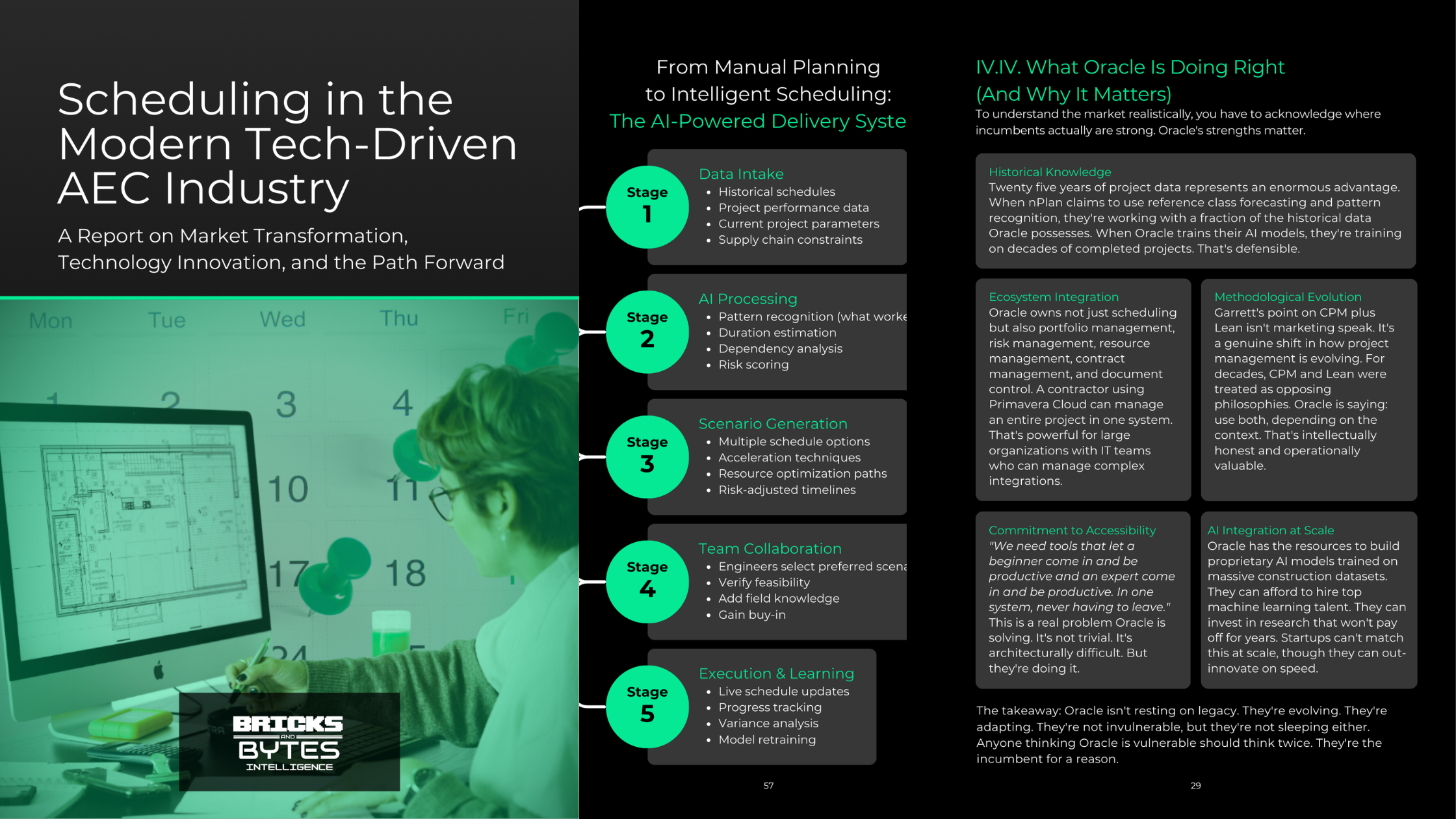
Get a FREE copy of our Scheduling in the Modern Tech-Driven AEC Industry: A Report on Market Transformation, Technology Innovation, and the Path Forward” (worth $150) and a FREE weekly email to stay up to date on construction tech. SIGN UP TODAY!

Scheduling in the Modern Tech-Driven AEC Industry

Sign up to the #1 Newsletter In AEC Tech. Join over 2,100 like-minded Founders, Investors and Techies disrupting the way we build. 

Scheduling in the Modern Tech-Driven AEC Industry