
Author name: Owen Drury

Newsletter

How Flux Burned Through $29M – Lessons for AEC Innovators

Want to go deeper? Join our Patreon community for exclusive, not publicly available content and support the future of architecture, engineering, and construction. INDUSTRY INSIGHTSFlux’s $29m+ Failure – Lessons for the AEC Industry Learning from failures is a powerful tool. Building on our “what went wrong” content (check out our previous post covering Modulous who spent £10m in one year), we’ve examined the story of Flux. Despite raising a $29m Series B, Flux struggled to monetise effectively, which led to its eventual downfall.  But why? And what can we learn? Let’s explore. In 2014, a group of innovative thinkers launched the first company to publicly emerge from Google X’s incubator. Their aim? To improve building efficiency by streamlining the design process and enabling easy information sharing among users. Flux’s ambitious vision focused on solving one of the construction industry’s persistent problems: data interoperability. The company aimed to create a seamless ecosystem where architects, engineers, and other stakeholders could share information effortlessly, similar to how Google’s G Suite enables collaboration across various productivity tools. At its core, Flux aspired to be more than just a software provider.  It aimed to become a platform where developers could build micro-apps, accessing data from various sources such as Revit, SketchUp, and Excel. This approach promised to create a rich, interconnected environment that could significantly enhance building design processes. The ultimate goal was clear: by enabling better information sharing, Flux believed it could lead to the design and construction of superior buildings. This vision resonated with many in the industry who recognised technology’s potential to transform traditional workflows and improve outcomes. However, despite its grand vision, enthusiastic customers, and the clear problem it was addressing, Flux encountered significant challenges that would ultimately lead to its demise. Business Model Issues One of the primary challenges Flux faced was monetisation. The company initially adopted a freemium model, aiming to attract a large user base that could later be converted into paying customers.  However, this strategy proved problematic.  When Flux eventually introduced pricing, there was resistance from the user community, many of whom had grown accustomed to using the product for free. Moreover, Flux found itself selling to the wrong decision-makers. While computational designers and tech-savvy professionals enthusiastically embraced the product, these individuals often lacked the authority to make purchasing decisions within their organizations. The disconnect between the users who saw value in the product and those holding the purse strings became a significant obstacle. Industry-Specific Hurdles The construction industry presented its own unique set of challenges. One of the most significant was a general reluctance to share data due to liability concerns. While Flux’s vision was built on the free flow of information, many companies were hesitant to share even minimal data, fearing potential legal repercussions if shared data led to errors or disputes. Anthony Buckley-Thorp, a former employee of Flux, highlighted this issue with a poignant observation: “The Starry-Eyed dream that again I subscribed to was this free flow of information, right? Like if we can, the architect and the engineer and the client, we can all share information freely. We will be able to design better buildings. It’s a simple fact. But the hard reality is that they don’t want to share the data. They don’t want to share a single byte more than they absolutely need to because they’re exposing themselves to contractual risk.” This quote is significant. Construction is an industry prone to ‘passing the buck’, and this, unfortunately, was a key factor in Flux’s downfall. Furthermore, the construction industry’s project-based nature posed additional difficulties. With projects often spanning several years, the sales cycle for construction tech products can be exceptionally long. This misalignment between the typical lifespan of a tech startup and the duration of construction projects created additional pressure on Flux’s business model. Lastly, Flux’s collaborative approach conflicted with some of the traditional incentives in the construction industry. In an environment where companies often generate revenue through claims against one another, the idea of transparent, seamless collaboration was met with resistance. User Adoption Struggles Whilst Flux found enthusiastic supporters among early adopters and tech-forward professionals, it struggled to bridge the gap to mainstream users. Many potential users were more concerned with completing their daily tasks efficiently than adopting new, potentially disruptive technologies. Additionally, there was often a disconnect between the value that computational designers and other tech-savvy professionals brought to their organisations and how these individuals were perceived by leadership. This undervaluation made it difficult for Flux to demonstrate its worth to key decision-makers who might not fully appreciate the potential impact of the technology. The Pivot and Eventual Downfall As these challenges mounted, Flux found itself at a crossroads. Despite having a product that users loved and substantial funding, the company wasn’t able to achieve the growth and monetisation that its investors expected. In response, Flux made the difficult decision to pivot around 2018. This pivot led to the creation of Helix, a new venture focused on digitising existing built assets. Whilst Helix found some success and was eventually acquired by Density.io, it marked the end of Flux’s original vision. The original Flux model, despite its innovative approach and enthusiastic user base, proved unsustainable in the face of industry realities and monetisation challenges. The company’s inability to convert its technological achievements and user enthusiasm into a viable business model ultimately led to its restructuring. Source: Density.io Lessons Learned Business Model Considerations – Freemium & Selling To The Right PersonOne of the critical lessons from Flux’s experience is the importance of having a clear monetisation strategy from the outset. While the freemium model can be effective in some industries, it proved problematic in the context of construction technology. Future startups should carefully consider how their pricing and business models align with the realities of the construction industry. It’s also crucial to identify and sell to the right decision-makers. Whilst end-users may love a product, if it doesn’t resonate with those holding budgetary authority, scaling will be challenging. Startups need to


Newsletter

ICYMI: Flux’s $29M Failure & Why Leave Science Investments to the Scientists

Want to go deeper? Join our Patreon community for exclusive, not publicly available content and support the future of architecture, engineering, and construction. This Week’s Quickfire BytesFuel your curiosity with this week’s contentW/C 14th October 2024 NEW EPISODESAI, Low-Carbon Cement, and the Missing Science VCs: Hidden Pitfalls in Construction Tech Investing Venture capital flooding into AI startups, but are we overlooking the real breakthroughs in construction materials? In this episode, we explore Findable, a Norwegian startup transforming building documentation, which raised €9 million in Series A funding. open.spotify.com/episode/7LBFLQPrqy37NJQo4X92wt Flux’s $29M Failure: What AEC Can Learn and Avoid “We had 10,000 users, but couldn’t monetize. That’s the hard reality of construction tech.” – Anthony Buckley Thorpe’s candid reflection on Flux’s $29M journey is a wake-up call for AEC innovators. In this episode, Anthony Buckley Thorpe shares the challenges of innovating in construction, lessons from Flux’s journey, and thoughts on building successful AEC tech products. open.spotify.com/episode/4MKymfsFuJ1Q9bTm0pEPbv TestFit’s War on 3D: Rethinking AEC Software – Clifton Harness, CEO Testfit From architect to tech founder – How endurance and industry insight can disrupt AEC? In this episode, Clifton Harness, co-founder of TestFit, shares his journey from observing real estate development as a child to revolutionising building design software. We learnt about bootstrapping a startup, finding the right co-founder, and balancing innovation with customer needs. open.spotify.com/episode/3jVfsSLNh2itYrZRBMPUBk View All Podcasts BRICKS & BYTES BULLETINInside The Robotics Company Changing Construction Today we release our deep dive documentary with Monumental. Here are 10 things we learnt: 1. In Europe, we are tens of thousands of bricklayers short. Bricklaying robots are a necessity at this point. 2. To succeed in robotics, you need to apply a software mindset to hardware. Fast iteration and continuous feedback are essential… Read Full Article 2 FAVORITE QUOTES: “Move carefully and make things better.” – Anthony’s construction industry-specific adaptation of the Silicon Valley mantra “move fast and break things,” emphasising the need for caution and improvement in construction tech “Leave the science investments to the scientists. That’s my call to action here.” – Patric on why scientific investments should be managed by those with scientific backgrounds rather than general venture capitalist LATEST STORIES From Concept to Scale: Product Management Best Practices in Construction Tech Mastering product management in construction tech is crucial for startup success. Learn from companies like Buildots and discover essential best practices. Tech Industry Disruption: No Company Is Safe Tech industry disruption is a constant threat, even for seemingly invincible giants. As Amar Hanspal, former co-CEO of Autodesk, we might be living in a fantasy if we believe that established companies like Autodesk are immune to upheaval. The Evolution of Progress Tracking in Construction: From Manual to AI-Powered Solutions Construction progress tracking has evolved from manual methods to AI-powered solutions. Discover how this revolution is improving efficiency, accuracy, and decision-making. View All Articles BONUS CONTENTWhat Are Investors Betting On? OUR SPONSORS BuildVision — streamlining the construction supply chain with a unified platform for contractors, manufacturers, and stakeholders. Powered by beehiiv

Product management in construction tech
Go To Market

From Concept to Scale: Product Management Best Practices in Construction Tech

  Product management in construction tech is crucial for startup success, requiring a deep understanding of both technology and the construction industry’s nuances. Companies like Buildots, which has raised over $121 million in funding since 2019, demonstrate the potential for success in this space. As Amir Berman from Buildots notes in the Bricks and Bytes podcast: “You’re usually building online products 90% of the time for clients that will interact with it and their product is completely offline.” This dichotomy presents unique challenges and opportunities for product managers in the space. Understanding the Construction Tech Landscape The construction technology market is rapidly maturing, with numerous vendors offering impressive products. This maturation means product managers must be acutely aware of market trends, competitor offerings, and evolving customer needs.   In this episode, Amir Berman Berman shares lessons from his failed startup, proposing controversial new models for ROI and product management in construction tech. Bridging the Digital-Physical Divide One of the biggest challenges in construction tech is connecting digital solutions with physical construction projects. Successful products must seamlessly bridge this gap. To address this: Spend time on construction sites to understand physical realities Involve construction professionals in the product development process Design interfaces that mirror physical construction workflows Ideation and Concept Development Successful product management starts with identifying real pain points in the construction industry. Extensive user research is crucial for developing products that truly meet industry needs. This involves talking to various stakeholders across the globe, including VDC managers, superintendents, and project managers from general contractors worldwide. Building a Resilient Minimum Viable Product (MVP) When developing an MVP, focus on core features that address the most pressing needs of construction professionals. However, it’s also crucial to build resilience into your solution. Anticipate discrepancies between digital plans and real-world conditions, and design your product with the flexibility to handle these inconsistencies effectively. User Feedback and Rapid Iteration In construction tech, user feedback is invaluable. Implement regular feedback loops through surveys, interviews, and usage analytics. Prioritise feedback based on user impact and alignment with product goals. Embrace agile development practices to quickly iterate and release improvements. As Berman advises, “The whole idea is to try to be very, very lean and very, very fast and to test ideas and concepts in the market with whatever you can and invest as little as much from an energy standpoint and financial obligation from the other aspect.” Demonstrating Clear ROI In an industry with tight margins, demonstrating clear return on investment (ROI) is crucial for product adoption. Develop and communicate ROI by: Working with clients to identify key performance indicators Developing case studies that showcase tangible benefits Aligning your pricing model with value creation Scaling the Product As your construction tech product gains traction, focus on scalability. This involves ensuring your solution can handle larger projects, more users, and complex workflows. Optimise performance, enhance data processing capabilities, and consider modular architectures. Prioritise features that deliver the highest ROI for clients.   Data-Driven Product Management Leverage data to drive product decisions in construction tech. Focus on metrics that demonstrate clear value, such as time saved, cost reduction, or improved project outcomes. Implement analytics tools to track user behaviour and product performance. Use these insights to prioritise features, identify pain points, and demonstrate ROI to clients. Integrating with Existing Construction Workflows Successful construction tech products must seamlessly integrate with existing workflows. Understand the day-to-day operations of construction professionals and design your product to enhance, not disrupt, these processes. Consider integration capabilities with popular construction software and provide flexible APIs. Managing Stakeholder Expectations Balance the diverse needs of stakeholders in construction tech product management, including field workers, project managers, executives, and investors. Clearly communicate your product roadmap and how it aligns with business goals. Regularly update stakeholders on progress and adjust plans based on feedback. Staying Ahead of the Curve Keep your finger on the pulse of emerging technologies in construction, such as AI, IoT, and augmented reality. Anticipate future industry needs by closely following construction trends and regulations. Foster a culture of innovation within your product team and consider creating an innovation lab to explore cutting-edge concepts. Conclusion Effective product management in construction tech requires a unique blend of technical knowledge, industry understanding, and strategic thinking. By focusing on real user needs, embracing data-driven decision making, and continuously adapting to industry changes, product managers can drive the success of construction tech startups and shape the future of the industry. As Berman concludes, “Now you can define what’s the end, but for me the end, it goes through increase of business volume… Eventually, that’s it. So my growth personally moved from being product manager, leading product group into like, let’s try to work together in this industry to transform it to a better situation like in a decade.” Remember, as the construction industry continues to digitise, the role of product management will only grow in importance. By implementing these strategies, product managers can position themselves at the forefront of this transformation, creating solutions that not only meet the needs of today’s construction industry but help shape its future.      

general catalyst partners - construction tech venture capitalist
Venture Capitalists, Venture

General Catalyst Partners – Construction Tech Venture Capitalist

Introduction General Catalyst Partners is a venture capital firm that invests in powerful, positive change that endures. The firm supports founders at every stage of their journey, from seed to growth and beyond. Their approach is rooted in the belief that the most successful companies will align with societal values and embrace responsible innovation from the earliest stages. General Catalyst aims to build enduring companies that create significant financial and societal impact by fostering relationships, providing strategic support, and promoting diversity of thought and inclusive prosperity. Key Staff Members – Investors Marc Bhargava – Investment Team, Fintech, Crypto Chris Bischoff – Investment Team, Health Assurance Larry Bohn – Investment Team, Enterprise Niko Bonatsos – Investment Team, Consumer, Enterprise, Crypto Ken Chenault – Investment Team, Consumer, Enterprise, Fintech, Crypto Quentin Clark – Investment Team, Enterprise Joel Cutler – Investment Team, Consumer, Enterprise, Fintech David Fialkow – Investment Team, Consumer, Enterprise Paul Kwan – Investment Team, Global Resilience Holly Maloney – Investment Team, Health Assurance Deep Nishar – Investment Team, Enterprise, Health Assurance Trevor Oelschig – Investment Team, Enterprise Alex Tran – Investment Team, Consumer, Fintech Adam Valkin – Investment Team, Consumer, Enterprise, Fintech Jeannette zu Fürstenberg – Investment Team, Global Resilience Hemant Taneja – Investment Team, Consumer, Health Assurance, Enterprise, Fintech Key (AEC) Tech Investments Material Bank General Catalyst invested in Material Bank, a fast-growing platform that has revolutionized the way architects, designers, and construction professionals source and sample materials. Material Bank aggregates thousands of materials from leading brands and delivers samples overnight, streamlining a traditionally time-consuming process. The platform enhances efficiency in material selection, which is critical in the AEC industry, enabling professionals to make faster, more informed decisions. Material Bank’s innovative approach has garnered significant adoption in the industry, and General Catalyst’s support has been instrumental in its expansion. Cover Technologies Cover Technologies is another notable AEC tech investment by General Catalyst. Cover focuses on transforming the home-building process by using prefabricated components to create custom-designed homes. The company’s technology-driven approach allows for faster, more efficient construction while maintaining high standards of design and sustainability. Cover’s modular construction process significantly reduces waste and builds time, aligning with the industry’s increasing focus on sustainability. General Catalyst’s investment in Cover Technologies supports its mission to bring innovation and efficiency to residential construction. AIM (Automated Infrastructure Management) AIM, a platform that automates the monitoring and management of infrastructure projects, is also part of General Catalyst’s AEC tech portfolio. AIM uses advanced technology to provide real-time data and analytics, enabling better decision-making and project management in the construction industry. The platform is particularly valuable for large-scale infrastructure projects, where accuracy and efficiency are critical. General Catalyst’s investment in AIM underscores their commitment to supporting technology that enhances the construction process, making it more transparent and efficient. Focus Area In Construction Tech General Catalyst focuses on several key areas: Health Assurance Investing in companies that aim to make healthcare more affordable and equitable. Enterprise Supporting businesses that drive innovation in enterprise software and services. Fintech & Crypto Investing in the next generation of financial technology and digital currency solutions. Global Resilience Supporting initiatives that enhance societal resilience against global challenges. Investment Strategy General Catalyst’s investment strategy is comprehensive, supporting companies from inception through growth and beyond. Their approach includes: Creation: Partnering with entrepreneurs to create new companies and identify growth-stage opportunities. Ignition: Supporting early-stage companies, turning ideas into businesses. Endurance: Helping companies that have achieved early success to enhance their growth trajectory. They employ a strategy of responsible innovation, guided by principles such as intentional innovation, inclusive prosperity, accountability, and sustainability. This philosophy ensures that their investments not only achieve financial success but also contribute positively to society. This multifaceted approach allows General Catalyst to effectively support a wide range of companies, fostering long-term relationships and driving meaningful change across various industries. Investment Metrics Correct as of August 2024. AEC-Tech Activity Number of early AEC-Tech Unicorns: 0AEC-Tech Rank: 16 Deal Activity Number of deals in last 12 months (incl. follow-ons): 98Number of deals per year in last 3 years (average, incl. follow-ons): 114 Other Resources

Suffolk Technologies - construction tech venture capitalist
Venture Capitalists, Venture

Suffolk Technologies – Construction Tech Venture Capitalist

Introduction Suffolk Technologies is a venture capital firm dedicated to transforming the built environment through innovative investments. They provide capital, resources, and networks to help startups scale technologies that address challenges in construction, architecture, engineering, real estate, and infrastructure. With a focus on sustainability, productivity, and advanced technologies, Suffolk aims to create a more efficient and eco-friendly future. Their portfolio includes companies that offer groundbreaking solutions in fintech, insurance, sustainability, smart buildings, design, automation, and supply chain management. Key Staff Members – Investors Wan Li Zhu – Co-Founder & Managing Director Jit Kee Chin – Co-Founder & Managing Partner Puneet Mahajan – Managing Partner Key (AEC) Tech Investments OpenSpace Suffolk Technologies invested in OpenSpace, a leader in 360° photo documentation and AI-powered analytics for construction sites. This platform automates site documentation, providing real-time updates and progress tracking, which helps in reducing rework and improving project timelines. Canvas Another significant investment is in Canvas, a robotics company that enhances drywall installation. Canvas uses robotic technology to increase productivity, precision, and safety on construction sites, making drywall work more efficient and consistent. Augmenta Suffolk Technologies also invested in Augmenta, a company developing automated design software for the AEC industry. Augmenta’s platform leverages AI to generate optimized building designs, reducing errors and enhancing efficiency from concept to construction. Focus Area In Construction Tech Suffolk Technologies focuses on investing in companies that are transforming the built environment. Their areas of interest include: Fintech & Insurance Empowering construction professionals with financial tools and risk management solutions to facilitate project completion and growth. Sustainability Investing in technologies that reduce waste, energy consumption, and carbon footprints, promoting environmentally friendly construction practices. Smart Buildings Enhancing building management through advanced technologies that optimize energy use, safety, and occupant comfort. Design Supporting innovative software and tools that improve the efficiency and quality of architectural and engineering designs. Automation Focusing on robotics and AI-driven solutions that increase productivity, reduce labor shortages, and enhance safety on construction sites. Supply Chain Improving logistics and materials management to ensure timely and cost-effective project completion. Investment Strategy Suffolk Technologies’ investment strategy is centered around identifying and supporting startups that are poised to revolutionize the built environment. They prioritise: Innovation: Investing in groundbreaking technologies that address current inefficiencies and future needs in construction and real esta Sustainability: Committing to eco-friendly solutions that reduce environmental impact and promote sustainable building practices. Scalability: Selecting companies with the potential for significant growth and the ability to scale their solutions across the industry. Strategic Support: Providing not just capital, but also access to Suffolk’s extensive network, industry expertise, and resources to help startups grow and succeed. Long-term Vision: Focusing on investments that offer long-term benefits to the industry, stakeholders, and the environment. Through this strategy, Suffolk Technologies aims to foster innovation and drive transformative change in the built world, supporting the next generation of industry leaders and technologies. Investment Metrics Correct as of August 2024. AEC-Tech Activity Number of early AEC-Tech Unicorns: 0AEC-Tech Rank: 15 Deal Activity Number of deals in last 12 months (incl. follow-ons): 3Number of deals per year in last 3 years (average, incl. follow-ons): 5 Other Resources

Newsletter

EXCLUSIVE: The Playbook of Europe’s Hottest Construction Robotics Startup

Want to go deeper? Join our Patreon community for exclusive, not publicly available content and support the future of architecture, engineering, and construction. INDUSTRY INSIGHTSInside The Robotics Company Changing Construction Today we release our deep dive documentary with Monumental. Here are 10 things we learnt: In Europe, we are tens of thousands of bricklayers short. Bricklaying robots are a necessity at this point. To succeed in robotics, you need to apply a software mindset to hardware. Fast iteration and continuous feedback are essential. Sell outcomes, not technology. By offering completed walls instead of robots, Monumental aligns with customer needs and reduces adoption barriers. Understand and adapt to existing industry workflows. Monumental’s subcontractor model integrates seamlessly into current construction processes. Consider the long-term impact on industry structure. Monumental’s approach could lead to a shift from OPEX to CAPEX in construction, potentially driving industry consolidation. Look for founders with non-traditional backgrounds. Investors like Wouter value founders who bring fresh perspectives and approaches to solving industry problems. Invest in in-house prototyping capabilities. 3D printing and other tools enable rapid iteration and reduce dependence on external suppliers. Prioritise modular design. This approach allows for quick repairs, upgrades, and adaptability to different tasks or environments. “Friction Logs” are a secret weapon to addressing challenges within construction sites—the benefit of Salar (founder, CEO) working at companies like Palantir. Start with a specific niche. Focusing on bricklaying provides a clear entry point, with the potential to expand to other construction tasks later. Monumental won’t stop at bricks. Want to watch the full series? Learn the playbook of building Europe’s hottest construction robotics company here👇👇👇 www.patreon.com/bricks_bytes/ WEEKLY MUSINGSThe AI Hype, Robot Demos & Data Centre Boom Don’t get lost in the noise Intelligence Mode⎟Why AI Isn’t Everything in Construction Tech This week on Practical Nerds – tl;dr: AI hype hasn’t changed our investment thesis Defensibility of AI-only companies remains questionable Building authoring tools or data infrastructure is more valuable than AI alone Thoughtful AI applications in outcome-as-a-service models show promise Energy cost… Robot demos and real-world solutions Maria Telleria on LinkedIn: #sftechweek What a Night of Robot Demos at #SFTechWeek! I was thrilled to share the stage on Wednesday night with Dusty Robotics, RIOS Intelligent Machines, and Apis Cor… Data centre spending surges Last Week in ConTech on LinkedIn: This Week in Construction Tech News: 👇 Fortescue Metals has made a $4 billion deal with Liebherr to achieve “real zero” emissions at its Pilbara mines by… OUR SPONSORS BuildVision — streamlining the construction supply chain with a unified platform for contractors, manufacturers, and stakeholders. Powered by beehiiv

tech industry disruption
Videos

Tech Industry Disruption: No Company Is Safe

  In the ever-evolving landscape of technology, tech industry disruption is a constant threat, even for seemingly invincible giants. As Amar Hanspal, former co-CEO of Autodesk, we might be living in a fantasy if we believe that established companies like Autodesk are immune to upheaval. Drawing on his 27 years of experience at Autodesk, Amar referenced the Tears for Fears song “Everybody Wants to Rule the World,” emphasising the lyric “nothing ever lasts forever.” This sentiment perfectly encapsulates the volatile nature of the tech world. Consider Intel, once the undisputed king of PC processors. A decade ago, few would have predicted its current struggles. Microsoft, too, narrowly avoided irrelevance by adapting at a crucial juncture. These examples serve as stark reminders that no company’s position is guaranteed. He posits that the incumbents of today may not hold their positions in ten years. This applies not only to tech giants but also to industries they serve. For instance, the way we design buildings today may be radically different in the near future. In this rapidly changing landscape, adaptability and innovation are key. The message is clear: in the tech industry, complacency is a luxury no one can afford. Check out the full episode with Amar Hanspal HERE.       

Construction progress tracking
Technology

The Evolution of Progress Tracking in Construction: From Manual to AI-Powered Solutions

  Construction progress tracking has come a long way from clipboards and pencils to artificial intelligence and machine learning. This evolution has revolutionised how projects are managed, improving efficiency, accuracy, and decision-making. Let’s explore this journey and see how modern solutions are reshaping the industry. Traditional Manual Progress Tracking Progress tracking is the backbone of successful construction project management. It ensures projects stay on schedule, within budget, and meet quality standards. Over the years, the methods for tracking progress have undergone significant changes, driven by technological advancements and the need for more accurate, real-time data. In the not-so-distant past, construction managers relied heavily on manual methods to track progress: Paper-based systems: Daily reports, checklists, and hand-drawn updates on blueprints. Visual inspections: Regular site walks to assess progress and identify issues. Face-to-face meetings: Weekly or daily gatherings to discuss progress and challenges.   Whilst these methods served their purpose, they were time-consuming, prone to human error, and often resulted in delayed decision-making.   In this episode, Amir Berman of Builddots challenges the status quo in construction technology. We explore how AI and data are silently revolutionizing the industry, despite widespread skepticism. The Shift to Digital Tools The digital revolution brought the first wave of modernisation to progress tracking: Digital cameras: Allowed for visual documentation of site progress. Mobile devices: Enabled on-site data entry and real-time communication. Basic project management software: Introduced digital scheduling and task management. These tools improved communication and data accessibility but still relied heavily on manual input and interpretation. Advanced Digital Solutions As technology advanced, more sophisticated tools emerged: Building Information Modeling (BIM): Integrated 3D modeling with project timelines. Companies offering BIM solutions:  Autodesk Revit: A comprehensive BIM software for architects, engineers, and contractors. Bentley Systems MicroStation: Provides advanced BIM capabilities for infrastructure projects. Cloud-based platforms: Enabled real-time collaboration and data sharing. Leading cloud-based construction management platforms: Procore: Offers a suite of project management tools, including scheduling and document control.  PlanGrid (now part of Autodesk): Specialises in construction productivity software with a focus on field collaboration. Specialised mobile apps: Streamlined on-site data collection and reporting. Examples of mobile apps for construction: BIM 360 (Autodesk): Connects project teams and data in real-time, from design through construction. Fieldwire: Provides task management, plan viewing, and reporting tools for field teams.   These solutions significantly improved project visibility and collaboration but still had limitations in terms of data accuracy and analysis capabilities. The Rise of AI and Machine Learning in Progress Tracking The latest revolution in progress tracking comes with the introduction of AI and machine learning. As Amir Berman shared during an episode in the Bricks and Bytes podcast, Buildots’ AI-driven technology automatically analyses video footage to measure construction progress. It then compares this real-world data against the project’s planned schedule, which serves as a baseline for our assessment.  AI-powered solutions offer: Computer vision: Automatically analyses site photos and videos to track progress. 360-degree cameras: Capture comprehensive site data with minimal human intervention. Automated analysis: Compares actual progress to planned schedules and 3D models. Case Study: BuildDots Buildots exemplifies the power of AI in progress tracking. Amir notes, “The basic foundation of Buildots was that we’re going to introduce a reliable and scalable kind of progress tracking on site by combining your plans, which are the 3D models and the schedules on site.”  Their solution integrates AI-powered analysis of 360-degree camera footage with 3D models and project schedules. This combination allows for automated progress tracking, comparing real-time site conditions against planned timelines. The result is a comprehensive system that provides accurate, up-to-date progress reports and actionable insights, enabling project managers to make informed decisions quickly and efficiently. The Impact of AI-Powered Progress Tracking AI-powered progress tracking solutions are revolutionising project management in the construction industry. By leveraging advanced technologies, these systems dramatically increase data accuracy, eliminating human errors in collection and analysis. They provide real-time insights, allowing managers to access up-to-the-minute progress data and make informed decisions faster than ever before.  Furthermore, the predictive analytics capabilities of AI can forecast potential delays or issues before they occur, enabling proactive problem-solving. This combination of accuracy, speed, and foresight leads to improved decision-making across all levels of project management, ultimately resulting in more efficient operations, reduced risks, and better project outcomes. Challenges and Considerations While AI-powered progress tracking solutions offer significant benefits, their implementation comes with several challenges. Construction firms may face resistance to change when adopting new technologies, requiring careful change management strategies. Data privacy and security concerns are paramount, as these systems often handle sensitive project information. Integration with existing processes and software can be complex, potentially requiring updates to current workflows or additional training for staff.  Moreover, the initial investment in AI technologies and the need for specialised skills to manage these systems can be significant. Overcoming these hurdles requires a strategic approach, clear communication, and a commitment to long-term digital transformation.   Future Trends in Progress Tracking The evolution of progress tracking in construction is far from over, with several exciting trends on the horizon. Internet of Things (IoT) integration is set to play a major role, with sensors providing real-time data on equipment usage, material consumption, and environmental conditions. Augmented Reality (AR) is poised to revolutionise on-site visualisation, allowing workers to see BIM models overlaid on actual progress, enhancing accuracy and decision-making. Advanced predictive modelling, powered by increasingly sophisticated AI algorithms, will enable more accurate risk assessment and scenario planning. These emerging technologies promise to further streamline project management, improve safety, and increase overall project efficiency, pushing the boundaries of what’s possible in construction progress tracking. As Amir notes: “We now figured out collectively how to optimise our operation based on results and performance data. So it opens up a whole new branch of innovation and capabilities.”      

Newsletter

ICYMI: TestFit’s War on 3D, Roofing Robots & Disrupting Autodesk

This Week’s Quickfire BytesFuel your curiosity with this week’s contentW/C 7th October 2024 COMING WEDNESDAYMonumental Super Series Explore the cutting-edge world of construction robotics in this exclusive five-part Super Series featuring Monumental, a pioneering startup revolutionising the building industry. COMING WEDNESDAY OCTOBER 16th WATCH EPISODE TEASERS NEW EPISODESTestFit’s War on 3D: Rethinking AEC Software – Clifton Harness, CEO Testfit From architect to tech founder – How endurance and industry insight can disrupt AEC? In this episode, Clifton Harness, co-founder of TestFit, shares his journey from observing real estate development as a child to revolutionising building design software. We learnt about bootstrapping a startup, finding the right co-founder, and balancing innovation with customer needs. open.spotify.com/episode/3jVfsSLNh2itYrZRBMPUBk Roofing Robots, Market Dynamics, and Startup Challenges – How Two Founders Are Reshaping a $60 Billion Industry Can a robot revolutionise the $60 billion roofing industry? Meet the founders who are making it happen. In this episode, Dylan and Andy from Renovate Robotics share their journey in automating roofing installation, the challenges of hardware startups, and their unique approach to scaling a robotics business in construction. open.spotify.com/episode/5GhmYNTvB3Dx7BjUPSWj0I Disrupt Autodesk? This Ex-Autodesk CEO Has Some Advice – Amar Hanspal “The battle is always the speed between which a startup gets distribution and an incumbent gets innovation.” In this episode, Amar Hanspal, former co-CEO of Autodesk, share the challenges of building successful products, the importance of team dynamics, and crucial lessons for startups in the AEC space. open.spotify.com/episode/20g6etUeQeO0PtxKvSGkWK Enscape’s Journey From Idea To Exit – Moritz Luck, Co-Founder & CEO From garage startup to major exit: The Enscape story In this episode, Moritz, co-founder of Enscape, talks about his journey from a university project to a game-changing 3D rendering software… and many more! open.spotify.com/episode/2O3CFJ4NI9RBa3Y7opRdsk View All Podcasts BRICKS & BYTES BULLETINEnscape’s Journey: From VR to Industry-Changing Rendering Software Enscape is a staple in the world of architectural rendering. Rarely do you speak to an architect who hasn’t used it at least once. But how did it all start? How did we go from VR treadmill to rendering, to large acquisition? We were extremely lucky to sit down with Moritz Luck – co-founder of Enscape to hear his story. Read Full Article 2 FAVORITE QUOTES: “Why are we designing in 3D? I don’t get it.” – Clifton on the industry’s shift towards 3D design, questioning its necessity and efficiency in certain aspects of architectural work “I’ve always kind of thought of hardware and automation as one of the key components of solving the climate crisis.” – Dylan on his motivation for getting involved with Renovate LATEST STORIES: Corporate Innovation Podcast: Uncovering Hidden Gems in the Industry When we first launched our Corporate Innovation Podcast, we thought we were diving into a niche field. Little did we know that we were about to uncover a treasure trove of “niches within niches,” each with its own passionate audience and unique perspectives. Innovative Pricing Models in Construction Tech: Finding the Right Fit for Your Product Pricing strategy is crucial in the construction tech landscape. Explore innovative pricing models that align with customer needs and drive adoption Timeless Advice for Founders in Legacy Industries: Obsess Over the Problem, Not the Solution This timeless wisdom, originally shared by an Amazon manager, holds particular significance for those tackling complex challenges in established sectors. View All Articles BONUS CONTENTWhat Are Investors Betting On? OUR SPONSORS BuildVision — streamlining the construction supply chain with a unified platform for contractors, manufacturers, and stakeholders. Powered by beehiiv

advice for founders
Videos, Founders & Operators

Timeless Advice for Founders in Legacy Industries: Obsess Over the Problem, Not the Solution

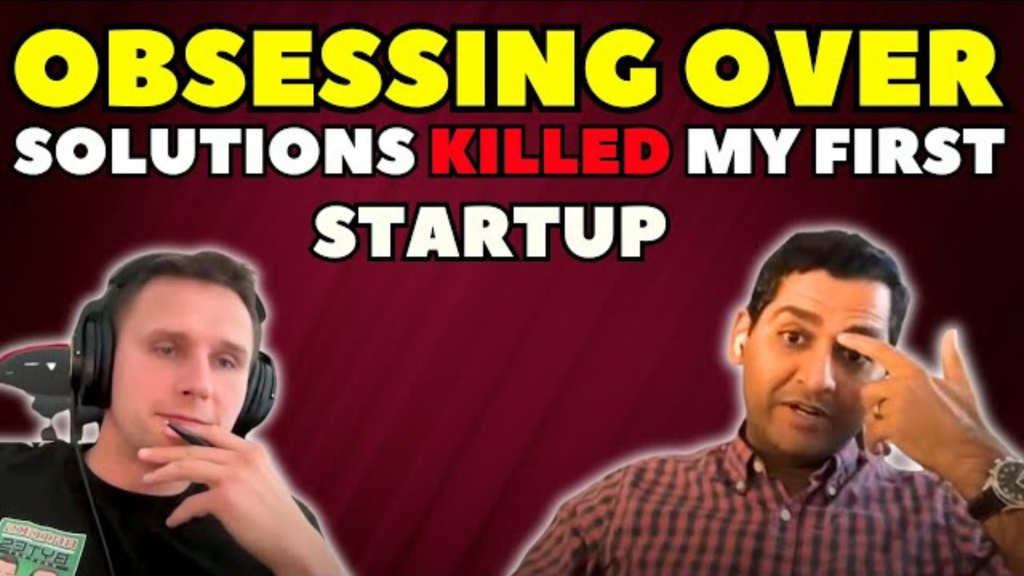
  For founders taking their first steps into the built world, robotics, or any field innovating in legacy industries, one piece of advice stands out: obsess over the problem, not the solution. This timeless wisdom, originally shared by an Amazon manager, holds particular significance for those tackling complex challenges in established sectors. As technologists, it’s tempting to define ourselves by our solutions. However, this approach can inadvertently limit our potential impact. By focusing too narrowly on a specific technology or solution, we risk drawing arbitrary boundaries around the types of problems we can address. Instead, by maintaining a laser focus on the problem at hand, founders give themselves the freedom to explore a wider range of potential solutions. This approach allows for greater flexibility as technologies evolve and new opportunities emerge. It provides a longer time arc to ensure you’re addressing a truly important issue, rather than force-fitting a predetermined solution. This problem-centric mindset offers clarity on the outcomes that need to be delivered, which in turn informs how to build the business effectively. While it may sound cliché, the advice to “obsess over the problem, not the solution” remains profoundly relevant, especially in industries ripe for disruption. By adopting this perspective, founders position themselves to drive meaningful innovation and create lasting impact in legacy industries. Check out the full episode with Vikas Enti from Reframe Systems HERE.       

corporate innovation podcast
Videos, Founders & Operators

Corporate Innovation Podcast: Uncovering Hidden Gems in the Industry

  When we first launched our Corporate Innovation Podcast, we thought we were diving into a niche field. Little did we know that we were about to uncover a treasure trove of “niches within niches,” each with its own passionate audience and unique perspectives. One surprising revelation in this series has been the unexpected allure of corporate innovation episodes. Initially overshadowed by the perceived excitement of founder stories and cutting-edge robotics, these episodes have emerged as some of our most captivating content. Why? Because they shed light on a crucial aspect of the industry: the buyers. In any marketplace, the supply side is only half the equation. Without informed buyers willing to adopt new technologies, even the most groundbreaking innovations would fall flat. This podcast showcases how these corporate leaders represent the demand that drives the entire ecosystem forward. By exploring this often-overlooked aspect of construction tech, we’re not just entertaining our audience – we’re bridging the gap between startups and their potential clients. We’re helping innovators understand the corporate environment and decision-making processes, ultimately fostering a more dynamic and efficient marketplace. Our journey into construction tech podcasting has taught us a valuable lesson: sometimes, the most fascinating stories lie in the places you least expect. The Construction Tech Corporate Innovation Podcast continues to uncover these hidden gems, one episode at a time. Check out the full episode of our September Highlights HERE.       

Bessemer Venture Partners
Venture Capitalists, Venture

Bessemer Venture Partners – Construction Tech Venture Capitalist

Introduction Bessemer Venture Partners (BVP) is a renowned venture capital firm with a rich history dating back to the innovations in steel manufacturing. Today, BVP leverages its heritage to empower modern entrepreneurs, helping them build long-lasting companies across various industries worldwide. The firm is recognized for its extensive portfolio, which includes notable names such as Pinterest, Shopify, LinkedIn, and Twilio. BVP’s approach is characterized by intellectual honesty, curiosity, innovation, and a commitment to mentorship and collaboration, ensuring that its investments not only thrive but also contribute significantly to their respective fields. Key Staff Members – Investors Byron Deeter – Partner Kent Bennett – Partner Sameer Dholakia – Partner Ethan Kurzweil – Partner Charles Birnbaum – Partner Steve Kraus – Partner Amit Karp – Partner Mary D’Onofrio – Partner Adam Fisher – Partner Key (AEC) Tech Investments Procore Technologies BVP invested in Procore, a leading provider of construction management software. Procore offers a comprehensive platform that connects project teams, streamlining project management, documentation, and collaboration. Since BVP’s investment, Procore has grown significantly, eventually going public in May 2021. The company continues to expand its platform, addressing the complex needs of the construction industry and enabling more efficient project execution across the globe. Focus Area In Construction Tech Bessemer Venture Partners invests across a diverse range of sectors, each with strategic importance: Cloud Computing BVP has one of the largest cloud portfolios, supporting emerging technologies and business models in the cloud space. Healthcare and Life Sciences BVP invests in transformative healthcare solutions, from biotech to digital health, aiming to revolutionize patient care and medical research. Consumer Technology The firm backs innovative consumer tech companies, including those in internet marketplaces, gaming, and creator tools. Financial Services BVP focuses on fintech, investing in technologies that streamline financial processes and services. Cybersecurity Recognizing the growing importance of data security, BVP invests in startups developing robust cybersecurity solutions. Developer Platforms and Data Infrastructure BVP supports companies that provide tools and platforms to empower developers and enhance data management capabilities. Deep Tech Investments in deep tech include companies working on advanced technologies like AI, space tech, and autonomous systems. Investment Strategy Bessemer Venture Partners follows a disciplined investment strategy rooted in long-term relationships and intellectual honesty. The firm emphasizes: Curiosity and Innovation: BVP is driven by curiosity to explore new opportunities and foster innovation, enabling it to stay ahead of industry trends and support groundbreaking startups. Learning and Mentorship: BVP values continuous learning and mentorship, ensuring that its partners and portfolio companies benefit from collective knowledge and experience. Collaboration and Empowerment: BVP believes in empowering entrepreneurs by providing the resources and support needed to navigate challenges and seize opportunities. Sector-Specific Expertise: The firm leverages its deep understanding of various sectors to make informed investment decisions and guide companies toward success. By combining these principles, BVP ensures its investments not only achieve financial returns but also contribute to technological advancement and societal progress. Investment Metrics Correct as of August 2024. AEC-Tech Activity Number of early AEC-Tech Unicorns: 0AEC-Tech Rank: 14 Deal Activity Number of deals in last 12 months (incl. follow-ons): 45Number of deals per year in last 3 years (average, incl. follow-ons): 78 Other Resources

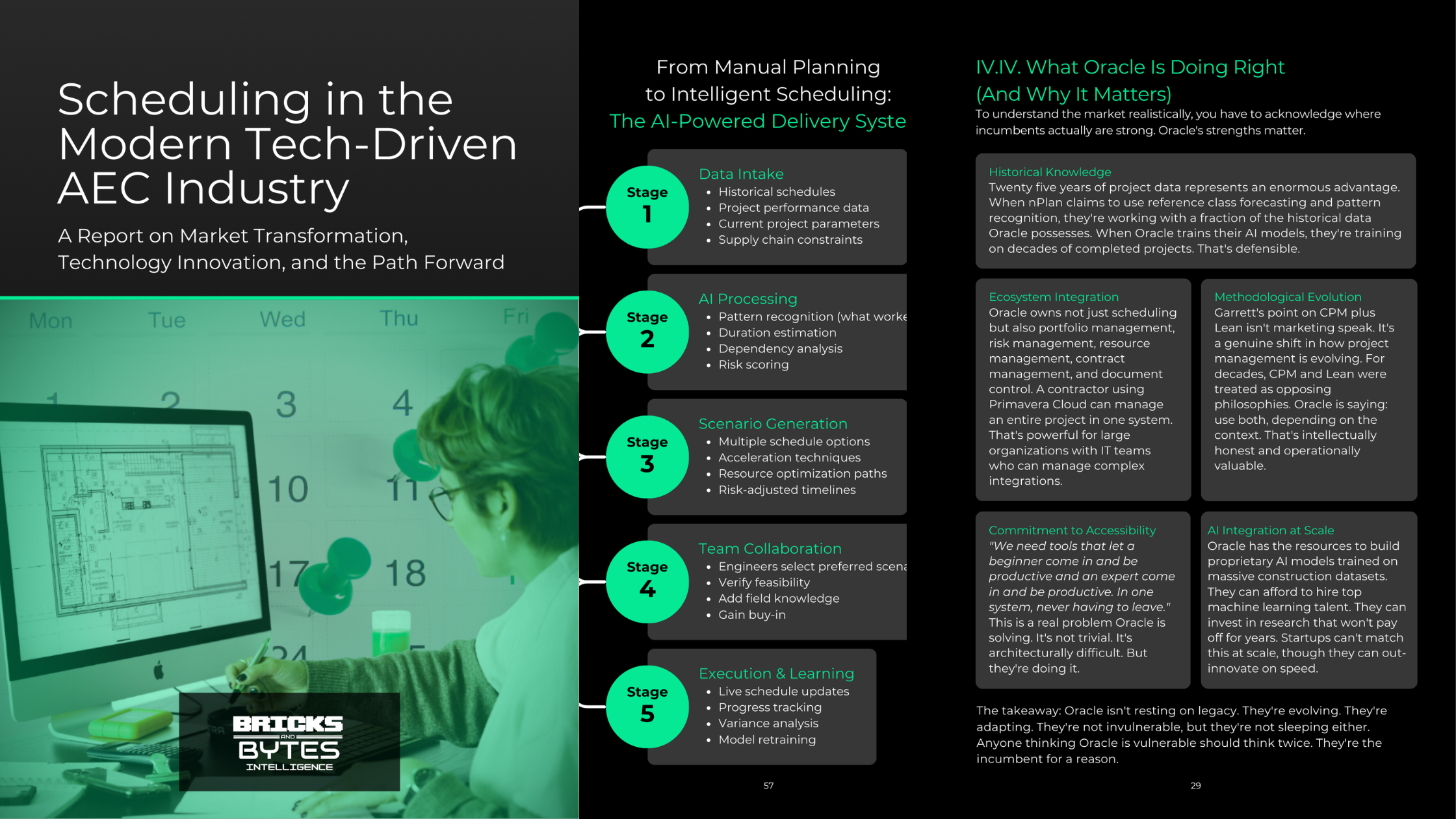
Get a FREE copy of our Scheduling in the Modern Tech-Driven AEC Industry: A Report on Market Transformation, Technology Innovation, and the Path Forward” (worth $150) and a FREE weekly email to stay up to date on construction tech. SIGN UP TODAY!

Scheduling in the Modern Tech-Driven AEC Industry

Sign up to the #1 Newsletter In AEC Tech. Join over 2,100 like-minded Founders, Investors and Techies disrupting the way we build. 

Scheduling in the Modern Tech-Driven AEC Industry