Bricks & Bytes Bulletin
INTELLIGENCE FOR CONSTRUCTION LEADERS
Rhumbix, Forma, MaintainX: Autodesk’s $3.6B Lifecycle Grab
Zach Scheel took our call one day into being an Autodesk employee. Rhumbix, the labor tracking company he’d spent twelve years building, had officially closed the day before. The deal made him the answer to a gap Autodesk had carried for years: nobody in its product suite owned timekeeping, labor productivity, or field data once the model left the trailer and crews hit the site.
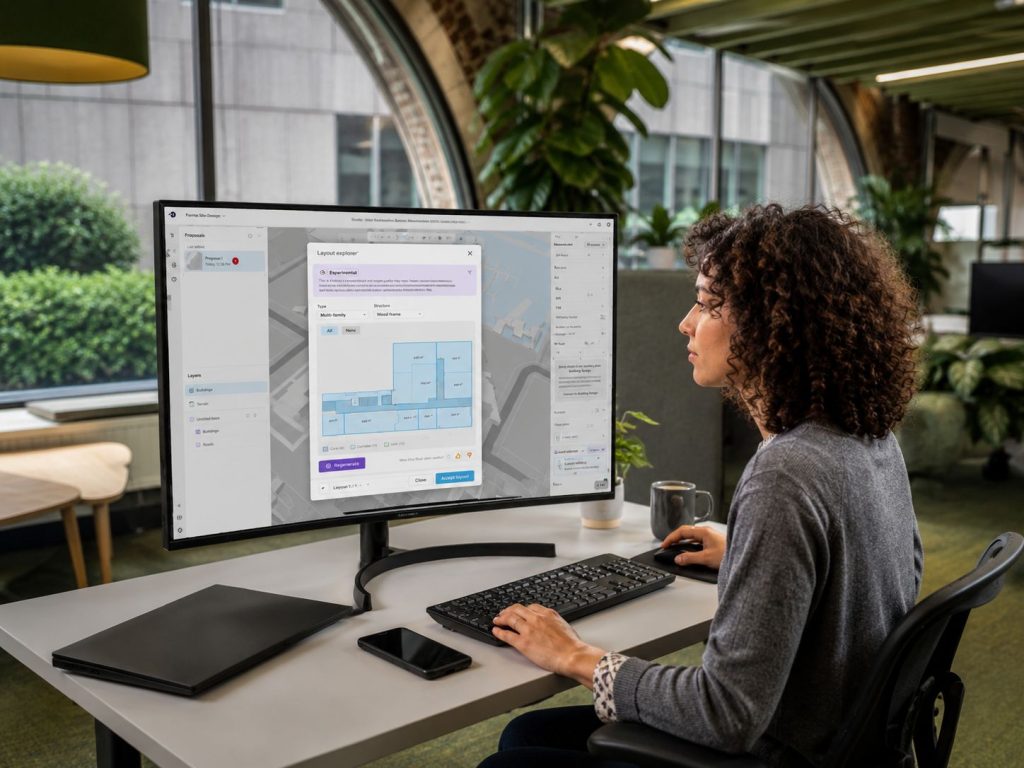
All of that happened in March. Autodesk also rebranded its entire construction platform as Forma that same month. Two months later, it wrote a $3.6 billion check for MaintainX, the largest acquisition in its history, aimed at maintenance and operations software.
They appear different when you go through them separately, but together, they point at the same goal: whoever owns the data across a building’s entire life gets to decide what the next generation of AEC software looks like.

Image: ADSK News
The pattern, laid out
March 24 to 31. Autodesk signs, then closes, its acquisition of Rhumbix. Field labor, timekeeping, and production tracking join the platform.
March 24. Autodesk Construction Cloud disappears into the Forma name. A single data environment now spans design through operations, at least on paper.
May 28. Autodesk agrees to pay roughly $3.6 billion for MaintainX, its largest deal ever. Maintenance, work orders, and asset records after handover round out the set.
Standalone, they look like routine portfolio management. However, when you stack them together over a ten-week horizon, they appear as if a company were trying to fill a gap in the lifecycle that they had been overlooking.
Rhumbix closed a gap Autodesk couldn’t build fast enough
Zach puts it simply during our conversation: Autodesk had solid workflows around as-builts and models, largely inherited from PlanGrid, but nothing covering labor productivity and timekeeping. It may not be the most glamorous category, but it’s one every self-perform contractor has to go through on a daily basis.
The numbers clearly show why Autodesk took the decision. Net dollar retention around 110%, gross revenue retention near 94%, and an enterprise roster including Turner, Hensel Phelps, and DPR. Autodesk had also been an investor in Rhumbix for eight years, watching those numbers up close well before acquisition talks got serious. Financial terms of the deal weren’t disclosed, according to Construction Dive’s reporting, though Autodesk had already led an $8 million funding round for the company back in 2024.
DPR’s own CTO framed the appeal in terms every AEC exec will recognize. Atul Khanzode told Autodesk the acquisition closes “one of the biggest gaps we see today,” connecting real-time field data directly to project and financial outcomes.
Zach lucidly explains what changed for Rhumbix’s customers after this deal: they now have “the resources of a $60 billion company behind our back,” with tighter integration to come across cost management and change order workflows.

Watch: EXCLUSIVE: Rhumbix Founder on Autodesk Acquisition – Why Did Autodesk Buy?
Forma is the shelf Autodesk built for what came next
The rebrand landed in the middle of the Rhumbix close, and it went well beyond a name change. Autodesk folded Autodesk Construction Cloud, Autodesk Docs, and its construction tools under the Forma name, positioning it as one environment spanning planning, design, construction, and operations. Docs became Forma Data Management. Account Admin became Hub Admin. Functionality stayed put. The label underneath it changed for a reason.
A platform rebrand only makes strategic sense if there’s a destination for the unified naming to point at. Forma is that destination, built specifically so Autodesk has somewhere to plug in a maintenance business two months later.
MaintainX and the $40 billion question
MaintainX builds mobile-first maintenance software: work orders, inspections, asset records, the daily mechanics of keeping a facility running. It’s expected to clear $135 million in annualized recurring revenue in 2026, growing above 50%, which puts the headline price at roughly 27x forward ARR by Autodesk’s own math. It now sits inside a new Autodesk Operations Solutions division, alongside Tandem and Fusion Operations, targeting what Autodesk pegs as a $40 billion operations and facilities management market.
We covered the deal’s underlying logic in detail when it broke. Buro Happold CTO Alain Waha argued the real prize is the operational record: what broke, when, how often, and what it cost to fix. As he put it on the show, “make construction predictable, then you are designing against a performance target.” Engineers today design buildings with almost no feedback loop on how their last hundred projects actually performed. MaintainX is the piece that closes it. Full breakdown in our MaintainX coverage.
The market wasn’t so sure
Here’s where the story gets more interesting than the press releases let on. Autodesk’s stock fell roughly 4% the day the MaintainX deal was announced, extending a year in which shares were already down close to 19%. The drop landed despite a strong quarter: Q1 FY27 revenue up 18% year over year, adjusted EPS beating estimates.
Analysts split on what to make of it:
-
Bullish camp. Oppenheimer’s Ken Wong called operations a “natural extension” of Autodesk’s role in the building process, though he flagged that go-to-market synergies aren’t obvious yet. UBS held its Buy rating, pointing to improving execution across Autodesk’s broader business model changes.
-
Skeptical camp. BTIG’s Nick Altmann pegged the deal closer to 18x MaintainX’s expected 2027 revenue, a meaningfully different number than the 27x figure built on 2026 ARR that dominated the initial coverage. Citi flagged a decelerating core design business as the bigger risk sitting underneath the acquisition math. Wells Fargo and BMO both called the multiple “healthy,” which is analyst shorthand for expensive.
None of that changes the strategic logic. It does mean the market is pricing in real integration risk on a deal Autodesk is betting will extend customer relationships from years into decades, in CEO Andrew Anagnost’s own framing from the acquisition announcement.

Read: Autodesk Just Spent $3.6B to Own What Happens After the Building Is Done
Procore is running a different version of the same play
Procore is chasing the same lifecycle data through a different door. We walked through how that shows up for owners specifically in Procore’s new portfolio and capital planning suite, where Procore SVP Geoff Lewis described the ambition as agents handling submittals and RFIs end-to-end, with humans checking the work the way they’d check a junior project engineer.
Both companies have the same objective, but they are pursuing it through different routes. Autodesk is buying the pipes that carry data across the lifecycle. Procore is buying the reasoning layer that sits on top of them.
Key Takeaways
-
Rhumbix, Forma, and MaintainX aren’t three unrelated headlines. They’re sequential moves filling the field, integration, and post-handover layers of a lifecycle Autodesk didn’t previously own.
-
The 27x ARR multiple everyone quoted on MaintainX isn’t the only number that matters. BTIG’s 18x-of-2027-revenue estimate is a reminder to check which year and which metric a headline multiple is actually built on.
-
Wall Street’s mixed reaction, a stock drop despite a beat quarter, shows the market pricing this as genuine integration risk, still unproven.
-
Procore’s Datagrid-led strategy proves this is an industry-wide race for lifecycle data. Autodesk is one racer among several.
-
Anyone choosing a platform this quarter is also choosing who holds their maintenance and operations data years after the building opens, a question now sitting alongside who wins the design and construction bid.
Where This Leaves Buyers
Vendors are still discussing workflows in general conversations in procurement meetings: which tool handles submittals better and which one your subs already use. That’s the wrong time horizon. A more appropriate question to ask is, “What happens to your operational data once the asset is occupied, and which company gets to build the next feature on top of it?”
POWERED BY:


The multiplayer planning platform where construction teams plan together, stay aligned, and deliver projects faster.
|

The construction intelligence platform delivering data and insights to act faster and outperform, from site to boardroom. |

The #1 construction management software for growing companies. Manage your projects from Tender to Handover.
|