
In today’s complex construction landscape, supply chain visibility is no longer a luxury—it’s a necessity. As projects grow in scale and complexity, the need for real-time tracking and efficient material management has never been more critical. Enter supply chain visibility tools, the game-changers revolutionising how we manage construction projects. Let’s explore this trend through the lens of two industry leaders: Matrak and InfraMarket.
The Supply Chain Challenge
Before diving into solutions, let’s set the scene. Construction projects often face delays and cost overruns due to supply chain issues. Late deliveries, misplaced materials, and poor inventory management can throw even the most well-planned project into chaos. This is where visibility tools come in, offering a lifeline to project managers drowning in logistics nightmares.
In this episode, Owen, Martin, and Shub discuss the Australian company Matrak, which focuses on supply chain management in the construction industry.
Meet Some of the Pioneers: Matrak and InfraMarket
Matrak, an Australian startup, and InfraMarket, an Indian powerhouse, are at the forefront of this revolution. While they operate in different markets, both share a common goal: bringing clarity to construction supply chains.
Matrak: The Real-Time Tracker
Founded in 2017, Matrak offers end-to-end visibility of construction materials. Their platform integrates with design drawings, linking every component to its real-time location in the supply chain. This means project managers can zoom in on a 3D model and instantly see if a specific window frame is in production, transit, or ready for installation.
InfraMarket: The Marketplace Maestro
InfraMarket, on the other hand, takes a marketplace approach. Since 2016, they’ve been connecting suppliers with contractors, streamlining the procurement process. Their platform doesn’t just track materials—it helps source them too, addressing supply chain issues before they even begin.
Key Features Face-Off
While both Matrak and InfraMarket aim to improve construction supply chains, they offer unique approaches and features:
Matrak:
- End-to-End Visibility: Matrak provides real-time tracking from design to installation.
- 3D Model Integration: Users can zoom in on specific components in a 3D model to check their status.
- QR Code and IoT Tracking: Utilizes advanced tracking technologies for precise location data.
- Design-Supply Chain Link: Connects design drawings directly to the supply chain status.
- Schedule Integration: Links material status to project schedules for better planning.
Matrak’s platform can be viewed as a fusion of project management tools with supply chain tracking. It aims to consolidate various construction workflows into a single, centralised system. This approach seeks to streamline processes by bringing together different aspects of project management and material tracking in one cohesive platform.
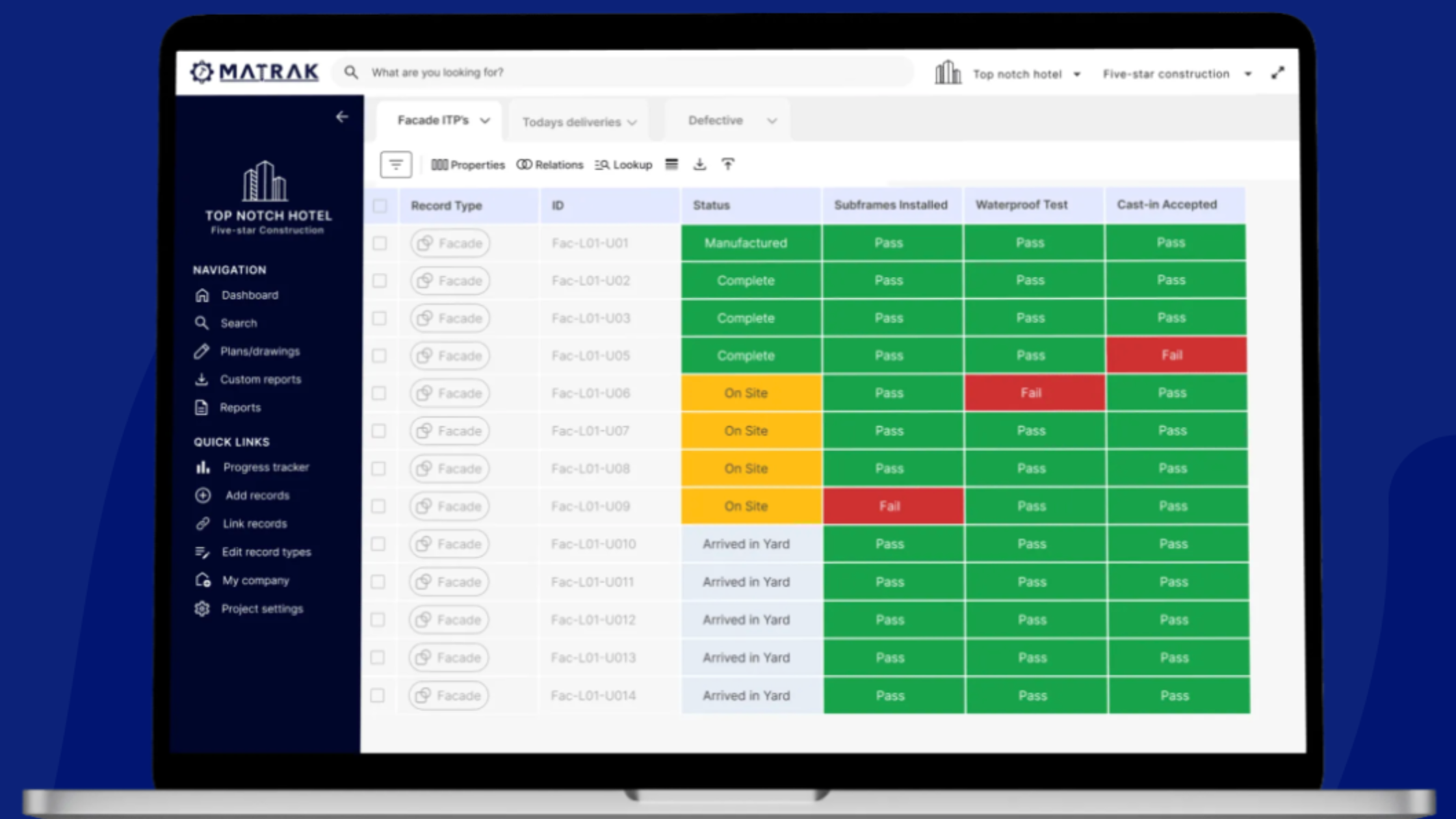
Matrak connects construction teams for instant updates
InfraMarket:
- B2B Marketplace: Connects suppliers directly with contractors, streamlining procurement.
- Wide Product Range: Offers dozens of categories including structural materials, interior finishes, and machinery.
- Working Capital Optimisation: Provides flexibility in receivables and payables management.
- Export Capabilities: Facilitates international trade of construction materials.
- B2C Expansion: Developing a retail arm to serve smaller contractors and individual buyers.
Highlighting InfraMarket’s success, Patric notes, “InfraMarket currently has multiple billion dollars of annual revenue, and they are net profitable. And they are actually not net profitable once or randomly. They have been net profitable for almost the entire lifetime of the company.”
Infra.Market’s tile manufacturing process from warehouse to delivery
Both platforms excel in different areas, with Matrak focusing more on granular tracking and visualisation, while InfraMarket emphasises the procurement and marketplace aspects of the supply chain.
Stakeholder Benefits
These tools aren’t just fancy tech—they’re solving real problems:
For Contractors:
- Reduced delays
- Better cost control
- Improved project planning
For Suppliers:
- Streamlined order management
- Improved cash flow
- Better demand forecasting
For Project Managers:
- Real-time visibility
- Proactive issue resolution
- Enhanced team coordination
Overcoming Implementation Hurdles
Adopting new technology isn’t always smooth sailing. Common challenges include:
- Resistance to change
- Integration with existing systems
- Training and onboarding
Both Matrak and InfraMarket address these issues through user-friendly interfaces, robust support systems, and gradual implementation strategies.
Key Takeaways
- Visibility is crucial: Real-time tracking is no longer optional in modern construction.
- Integration is key: Look for tools that work seamlessly with your existing systems.
- Think beyond tracking: The best platforms offer additional value, like procurement optimization.
- Prepare for AI: The next wave of innovations will leverage artificial intelligence for even greater insights.
The Future is Bright (and Visible)
As AI and machine learning evolve, so too will these platforms. Imagine predictive analytics foreseeing supply chain disruptions before they happen, or autonomous procurement systems optimising orders in real-time. The possibilities are endless.
Supply chain visibility tools are revolutionising the construction industry, going beyond mere efficiency improvements. These technologies are reshaping the entire approach to project management in construction. Companies that are quick to adopt and integrate these tools into their operations are likely to emerge as the frontrunners in the industry’s future landscape.