Did you know that the construction industry accounts for 38% of global CO2 emissions? This staggering figure highlights the urgent need for sustainable building materials. As we build our cities of tomorrow, innovative materials are paving the way for a greener future.
The Evolution of Building Materials
For centuries, we’ve built with what’s available – wood, stone, and brick. As civilizations advanced, so did our materials. The Romans gave us concrete, the Industrial Revolution brought steel, and the 20th century introduced a plethora of synthetic materials.
But progress came at a cost. Traditional construction materials often have a hefty environmental price tag. Cement production alone accounts for 8% of global CO2 emissions. As we face the realities of climate change, the construction industry is pivoting towards sustainability.
What Makes a Material Sustainable?

Sustainable building materials are:
- Renewable or recycled
- Energy-efficient to produce
- Durable and long-lasting
- Non-toxic and pollutant-free
These criteria help us evaluate the true sustainability of materials beyond just their “green” marketing claims.
Innovations Reshaping the Construction Landscape
Now, let’s explore the exciting innovations in sustainable materials:
Recycled Materials: Turning Waste into Wonder
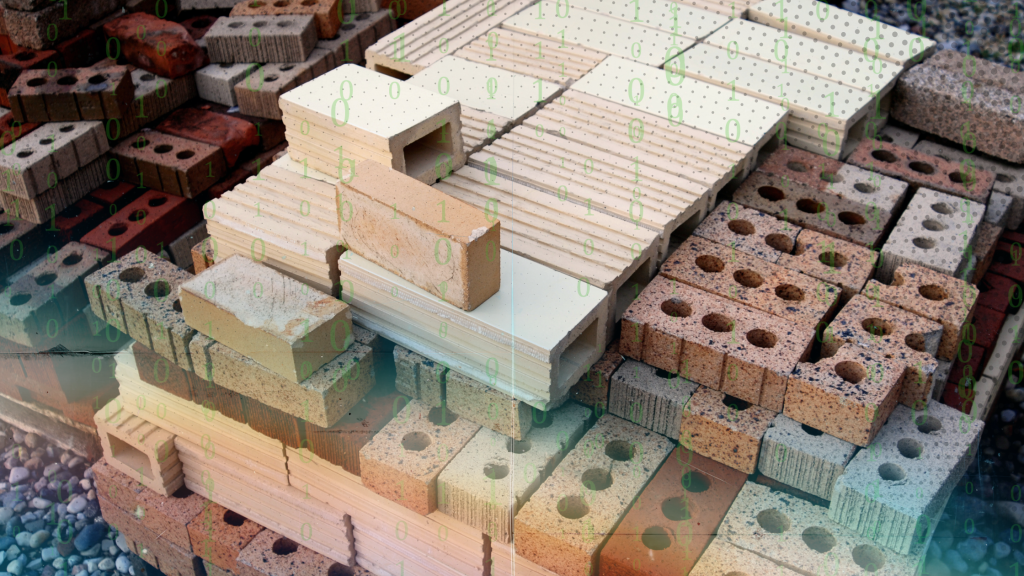
- Plastic Bricks: Companies like ByFusion are transforming plastic waste into construction blocks. These bricks are stronger than concrete and can withstand extreme temperatures
- Recycled Steel: Using scrap steel reduces energy use by 75% compared to new steel production. It also diverts waste from landfills
Bio-based Materials: Nature’s Building Blocks
- Mycelium Insulation: Derived from fungal roots, this material is fire-resistant, biodegradable, and an excellent insulator. Companies like Ecovative are pioneering its use in construction.
- Bamboo: This fast-growing grass is incredibly strong and versatile. It’s being used for everything from flooring to structural elements.
Energy-efficient Materials: Doing More with Less
- Aerogel Insulation: Often called “frozen smoke,” aerogel is ultra-light and super-insulating. It’s being used in high-performance buildings to drastically reduce energy consumption.
- Smart Glass: These windows change opacity based on external conditions, regulating heat and light without the need for blinds or excessive air conditioning.
Low-carbon Materials: Building with a Negative Footprint
- FiberWood: This innovative material uses forestry side streams to produce insulation and packaging. It’s a prime example of circular economy principles in action.
- Carbon-negative Concrete: Startups like CarbonCure are developing concrete that absorbs more CO2 than it emits during production, turning a major polluter into a carbon sink
Spotlight on FiberWood: A Case Study in Sustainable Innovation
FiberWood deserves a closer look. This material, developed by a European startup, transforms what was once considered waste into valuable insulation and packaging materials. By using forestry side streams, FiberWood not only reduces waste but also creates a product with excellent insulating properties.
The company behind FiberWood recently raised €7.7 million to scale up production, highlighting the growing investor interest in sustainable building materials.
Real-world Application: The Woodcube in Hamburg
To see sustainable materials in action, look no further than Hamburg’s Woodcube. This five-story apartment building uses wood and wood-based materials exclusively. It demonstrates that sustainable materials aren’t just for small-scale projects – they’re viable for modern, multi-story urban buildings.
 The project is a prize winner in the “Excellent Places in the Land of Ideas” competition 2013/2014 and is among the top 3 in the German Sustainability Award 2013 with the special prize “Sustainable Construction”. More on The Woodcube here.
Comparing Old and New: The Numbers Speak
To truly appreciate the impact of sustainable materials, let’s compare them with traditional options:
- Concrete vs. Hempcrete: Hempcrete produces 50% less CO2 emissions and actually absorbs CO2 over its lifetime.
- Fibreglass vs. Mycelium Insulation: While fibreglass is energy-intensive to produce and difficult to recycle, mycelium insulation is 100% biodegradable and grows with minimal energy input.
- Steel vs. Bamboo: Bamboo can be harvested in 3-5 years, compared to the decades needed to produce steel. It also has a significantly lower carbon footprint.
Future Trends: What’s Next in Sustainable Construction
As we look to the future, several exciting trends are emerging:
- Bio-engineered Materials: Scientists are exploring materials that can grow and repair themselves.
- Nanotechnology: Nano-materials could revolutionise strength-to-weight ratios and introduce new properties to traditional materials
- Waste Integration: Expect to see more creative uses of waste products in construction, from plastic to agricultural byproducts.
The Regulatory Landscape: Policy Driving Progress
Governments worldwide are recognising the critical role of sustainable construction in meeting climate goals. The EU’s “Renovation Wave” strategy, for instance, aims to double renovation rates in the next ten years, with a focus on energy efficiency and sustainable materials.
As stated by Gregory Dewerpe, Founder & Managing Partner at noa vc (formerly A/O),
“There’s a clear role to play in enabling our society to transition, but it’s not enough because it’s such a large fragmented antiquated industry that unless and until you invest in the digital transformation and data science side of the industry, your sustainability focused solution will be limited in their scope and their scale and their impact.”
This insight highlights the need for a holistic approach, combining sustainable materials with smart technology and data-driven decisions.
The future of construction is sustainable. By embracing these innovative materials, we’re not just building structures – we’re building a better, greener world for generations to come. The question isn’t whether we’ll transition to sustainable materials, but how quickly we can make the shift. What role will you play in this construction revolution?