When Dev Amratia was working on a project off the coast of Russia’s Sakhalin Island, a bridge collapsed 200 kilometers from the site. “I promise you that event felt worse than the COVID pandemic,” he recalls. “We were just like, we don’t even know how we’re going to get food on here.” Later, someone arrived on site and casually mentioned experiencing a similar situation elsewhere. Amratia’s frustration was palpable: “Where were you when we were planning this project?”
Dev, now co-founder and CEO of nPlan, in an episode of the Groundbreakers podcast shares how artificial intelligence is transforming this landscape by doing what humans simply cannot – learning from hundreds of thousands of projects simultaneously to predict and prevent delays before they happen.
The Experience Gap
One of the fundamental challenges in construction project management is the limitation of human experience. As Amratia explains: “We don’t have enough experience to really be able to foresee what might happen to our project, no matter what… That means no matter how much money you have, no matter how good you think your team is, they never have enough experience.”
This insight emerged from hundreds of interviews with project managers and reveals a sobering truth: traditional career development and training in construction can’t keep pace with the complexity of modern projects. No individual or team can accumulate enough experience to anticipate every potential risk.
In this episode of BitBuilders, Dev shares nPlan’s journey in revolutionising construction risk management, the power of AI in forecasting project timelines, and the importance of company culture in building a successful startup.
The Power of Machine Learning
nPlan’s solution leverages AI to analyse over 760,000 construction projects representing $1.8 trillion in capital deployment. As Amratia notes: “The difference between what you plan to do and what you actually do is what you learn… And machines or our algorithms work in the same way. They go see what was planned and what actually happened.”
This massive dataset allows the AI to identify patterns and potential risks that might be invisible to even the most experienced project managers. By analyzing historical schedule data, actual outcomes, and the variations between them, the system can predict likely challenges and suggest mitigation strategies.
Beyond Human Limitations
One particularly interesting aspect of AI-powered risk management is its ability to overcome human cognitive biases. Amratia identifies three key biases that plague traditional project management:
- Availability Bias – We only know what we know
- Optimism Bias – Every team thinks they’ll be the best
- Salience Bias – We tend to focus on physical construction while overlooking administrative challenges
“Over 750,000 projects nPlan has now analyzed, we can see overwhelmingly the largest contributors of project delay is non-physical construction, also known as administration,” Amratia reveals. This insight challenges conventional wisdom about what causes delays and highlights the value of AI’s unbiased analysis.
The Future of Project Management
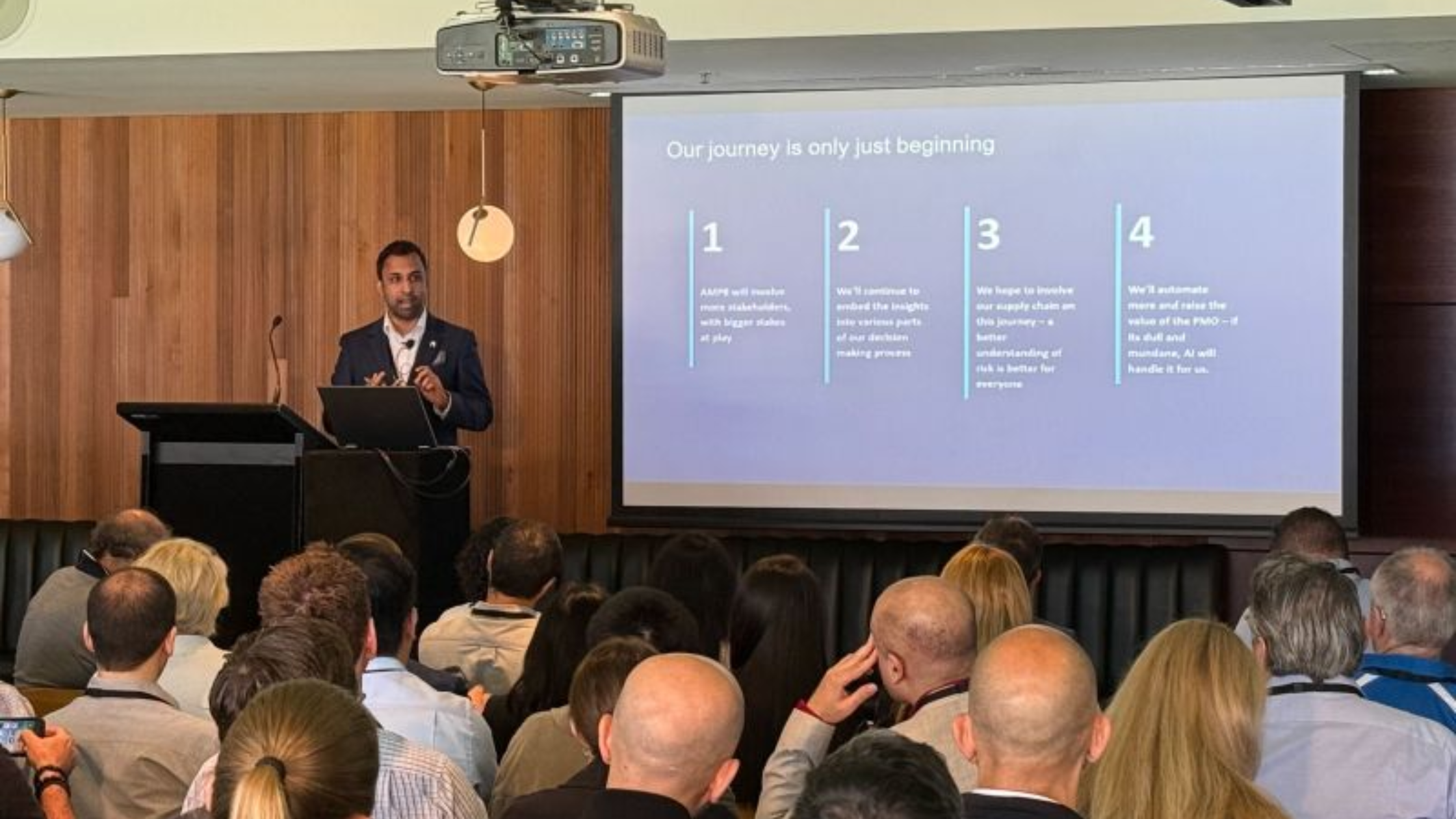
The implementation of AI in construction risk management isn’t about replacing human judgment – it’s about augmenting it. The goal is to elevate the role of project teams, allowing them to focus on decision-making rather than administrative tasks. As Amratia envisions it, machines will handle the complex analytical work while humans focus on what they do best: negotiating, arbitrating, and making strategic decisions.
Key Benefits of AI-Powered Risk Management:
- Comprehensive Risk Assessment
- Analyzes thousands of potential scenarios
- Identifies patterns across similar projects
- Considers both obvious and subtle risk factors
- Improved Decision Making
- Provides data-driven insights
- Reduces impact of cognitive biases
- Enables proactive risk mitigation
- Enhanced Efficiency
- Automates administrative tasks
- Streamlines reporting processes
- Allows teams to focus on strategic work
Implementation Challenges
While the potential of AI in construction risk management is enormous, implementation isn’t without challenges. Teams need to ensure they’re providing quality input data – the more detailed and considered the project plans, the better the AI’s forecasting will be. Additionally, organizations need to overcome potential skepticism and resistance to new technologies.
Looking Ahead
The future of construction risk management lies in the combination of human expertise and artificial intelligence. As systems become more sophisticated, we’ll likely see even greater integration of various data sources, including project drawings, specifications, and real-time site data
For construction professionals looking to stay ahead of the curve, understanding and embracing AI-powered risk management tools isn’t just an option – it’s becoming a necessity. As projects become increasingly complex and stakeholders demand greater certainty in outcomes, the ability to leverage AI for risk management could become a key differentiator between successful and struggling organizations.