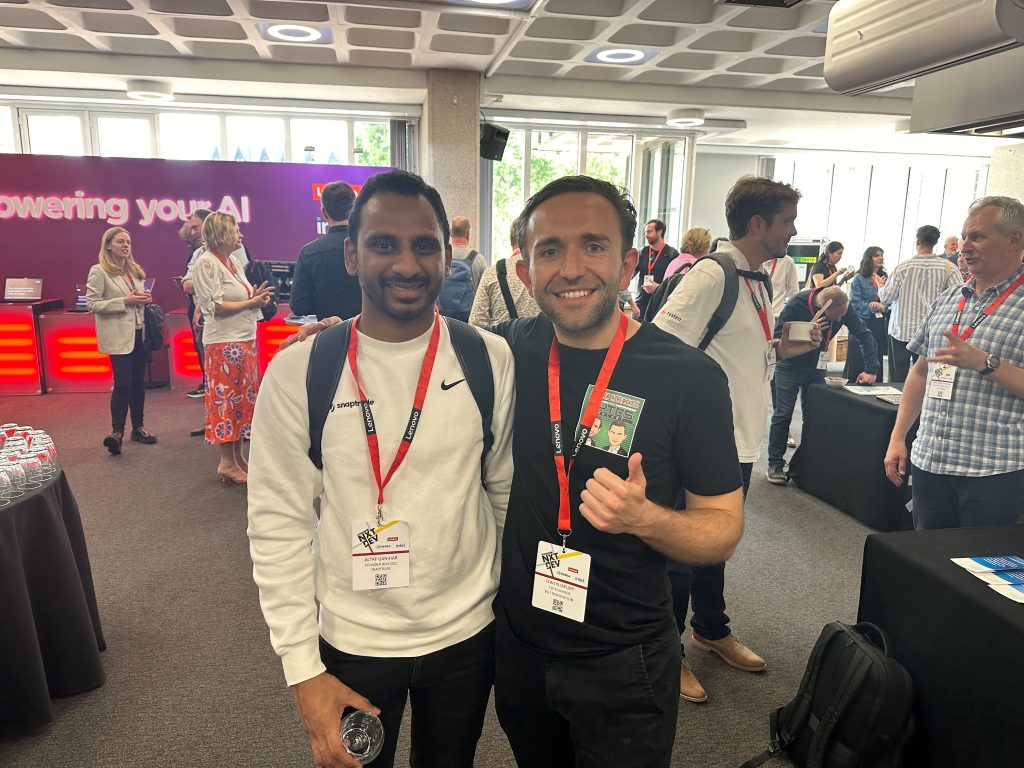
In the conservative world of architecture and construction, where traditions run deep and change comes at a glacial pace, Altaf Ganihar emerges as an unlikely disruptor. With a background in geometry research and computer vision, Altaf’s journey into the realm of architectural design tools was anything but conventional. His story is one of persistence, innovation, and the power of fresh perspectives in an industry resistant to change.
“I’m not an architect. I don’t come from the construction or the engineering background,” Altaf admits with a hint of pride in his voice. It’s this outsider’s perspective that allowed him to see what industry insiders had overlooked for decades, setting him on a path that would challenge his career aspirations and push him to the brink of his capabilities.
The Genesis of an Idea
The spark that would eventually ignite Snaptrude came from an unexpected source. While working on a project to reconstruct a UNESCO World Heritage Site in 3D, Altaf found himself collaborating closely with architects. What he discovered shocked him and planted the seeds of what would become a revolutionary idea.
“Most of their tools or the software stacks were built in late 90s, maybe early 2000s, and not a lot of innovation has happened,” Altaf recalls, his voice tinged with disbelief. “There’s a lot of silos and inefficiencies in the entire process of executing a design.”
This realization was the catalyst for a journey that would transform not only Altaf’s life but potentially the entire architectural industry. As a hobby, he began developing a plugin for SketchUp, a popular 3D modeling software. To his surprise and delight, people started buying it.
“That’s what compelled me to reconsider my academic aspirations,” Altaf says, reflecting on the moment he realized he might be onto something bigger than he initially thought. The decision to abandon his PhD dreams and dive into entrepreneurship wasn’t made lightly. For a year and a half, Altaf wrestled with the decision, working on plugins and observing the market response.
The Turning Point
The turning point in Altaf’s journey came from an unexpected source – rejection. When he didn’t get into Stanford for his PhD program, it forced him to reevaluate his path.
“I thought this plug-in, to my surprise people are paying me money for it. Does it make sense to pursue it for a year and build it more deeply?”
That one year changed everything. Snaptrude was born, with a vision to revolutionize the architectural design process by bringing it to the cloud and making it as collaborative as Google Docs. But the road ahead was far from smooth, and Altaf was about to learn just how challenging it could be to disrupt an established industry.
Building in the Cloud: A Herculean Task
The decision to build a cloud-based CAD software was ambitious, to say the least. Altaf and his team were venturing into largely uncharted territory, facing technical challenges that would have deterred many others.
“Cloud is even harder, I would say, especially with the web browser as a client, because not a lot of fundamentals are available,” Altaf explains, his voice conveying both the excitement and the frustration of those early days. “At least in the desktop era, the geometry kernel, which is the heart of CAD software, you could license it out from some of the big companies. But when you’re doing it on a browser, you would have to actually just build it from scratch.”
This meant not only reimagining how architectural design could work in the cloud but also building the fundamental tools and infrastructure to make it possible. It was a Herculean task, one that required not just technical skill but also a vision of what the future of architectural design could look like.
Persistence in the Face of Rejection
Despite the technical hurdles, Altaf’s persistence began to pay off. Snaptrude started gaining traction, attracting the attention of investors. But even here, Altaf’s journey was marked by rejection, teaching him valuable lessons about persistence and resilience.
Shubh, an early investor in Snaptrude, recalls the journey with a mix of admiration and amusement. “I must have said no to you. How many times, dude?” he asks Altaf during an interview.
“Three times,” Altaf responds with a smile, though Shubh thinks it might have been as many as eight times.
This back-and-forth highlights not just the challenges of securing funding but also Altaf’s unwavering belief in his vision. Where others might have given up after multiple rejections, Altaf saw each “no” as an opportunity to refine his pitch, improve his product, and come back stronger.
The Vision Takes Shape
Through it all, Altaf remained focused on his vision. “The vision hasn’t actually changed,” he says, reflecting on the journey from those early days to now. “What has actually changed is our ability to articulate it and show the proof that we are making headway into that vision.”
This ability to maintain a clear vision while adapting to feedback and market realities has been crucial to Snaptrude’s success. The platform has evolved from a simple plugin to a comprehensive solution that’s reimagining the entire design-to-construction workflow.
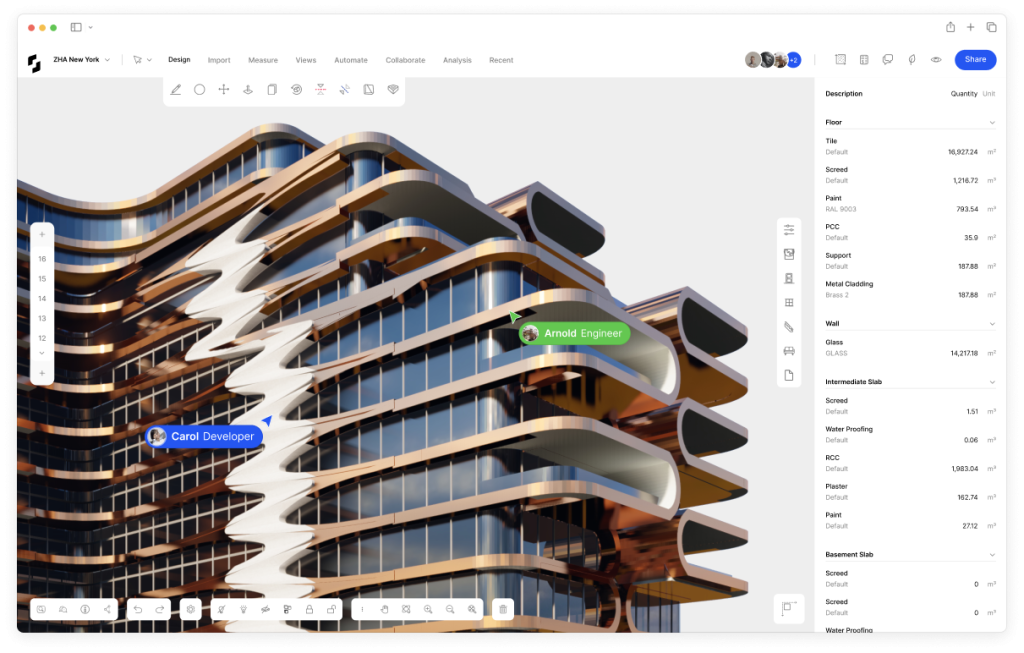
“It’s a modern design tool, which is as collaborative as Google Docs, which everybody uses every day, and brings the complexity which is needed to get into the details of construction or detailed design with the ease and flexibility of freeform modeling,” Altaf explains, his enthusiasm palpable.
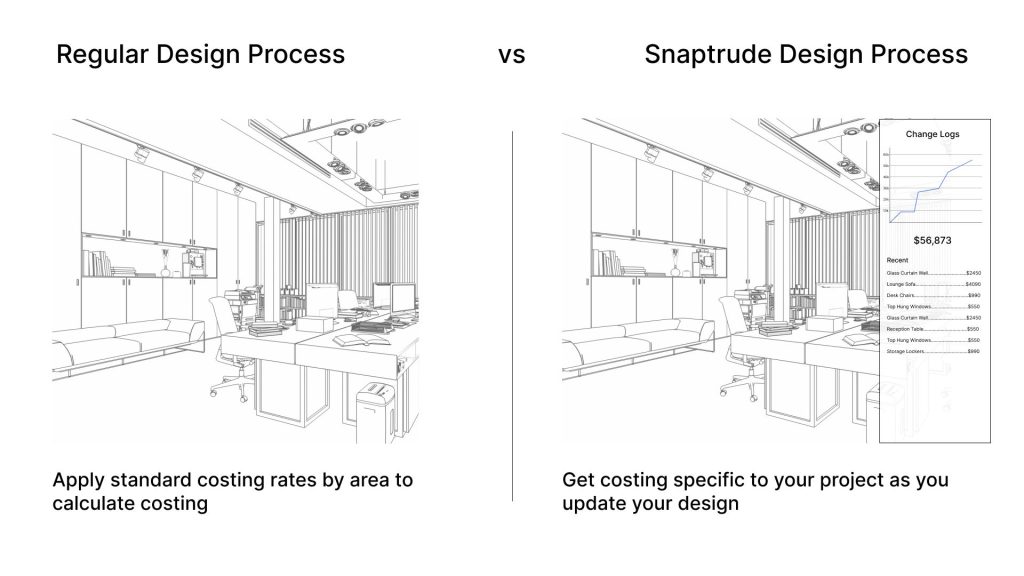
The platform serves as a single source of truth for architectural data, eliminating the need for constant data recreation that plagues traditional workflows. This approach is not just about efficiency; it’s about fundamentally changing how architects work and collaborate.
Challenges of Disrupting an Industry
Bringing innovation to an industry as established as architecture and construction is no small feat. Altaf and his team have had to contend not just with technical challenges but also with the inherent conservatism of the industry.
“The fear of messing up is very, very real,” Altaf acknowledges, understanding the hesitation of firms to adopt new technologies. “And these workflows are very deep and very broad, both simultaneously.”
This fear has shaped Snaptrude’s approach to product development and market entry. Rather than trying to replace existing tools entirely, Snaptrude has focused on interoperability and adding value to existing workflows.
“Can we take your existing work, bring it to Snaptrude, give you a better canvas, which is very seamless in a sketching environment, and as you’re making those changes with your other team members or external stakeholders, you get data to take decisions,” Altaf explains. This approach has allowed Snaptrude to gain a foothold in firms that might otherwise be resistant to change.
Building a Team and Culture
As Snaptrude has grown, so too has the team behind it. Altaf’s approach to building his team reflects his overall philosophy of innovation and collaboration.
“We have got a few leaders in the team,” Altaf says, pride evident in his voice. “We also have actually a lot of founders in the team… And all of these people have had some stints as a founder.”
This emphasis on bringing in people with entrepreneurial experience has helped create a culture of ownership and innovation within Snaptrude. It’s a culture that Altaf describes as “give a shit, no bullshit,” reflecting the team’s passion for their mission and their focus on making a real impact.
The Future of Snaptrude and Architectural Design
As Altaf looks to the future, his ambitions for Snaptrude are grand. “We could walk into cities, maybe London, ten years later and say, this building, this building, this building is designed better and more efficiently because Snaptrude was involved,” he says, painting a picture of a future where Snaptrude has transformed the urban landscape.
This vision extends beyond just improving individual buildings. Altaf sees Snaptrude as a tool for creating more sustainable, efficient, and livable cities. By enabling architects to make more informed decisions and collaborate more effectively, Snaptrude could play a role in addressing some of the most pressing challenges facing urban environments.
The company’s recent $14 million Series A funding round is a testament to the potential that investors see in this vision. But for Altaf, it’s just the beginning. “We might actually change an industry which is, I think, probably the second largest contribution to the world GDP,” he says, the enormity of the potential impact clearly not lost on him.
Lessons Learned and Advice for Entrepreneurs
Reflecting on his journey from academic researcher to startup founder, Altaf offers insights that could prove valuable for other aspiring entrepreneurs.
“It always takes way longer than you anticipate with everything,” he advises. “Take whatever you have, double it and double it again, and then you’ll still be half the way that you need to be.”
This realistic approach to timelines and expectations has helped Altaf navigate the ups and downs of building Snaptrude. But perhaps more important than any specific piece of advice is the mindset that Altaf has cultivated.
“I think it’s always about learning,” he says. “First of all, you have to accept what you’re good at and what you’re not good at. And when you can have a voice of reason, not voice of emotion, you will understand what you’re not good at and work towards it.”
This commitment to continuous learning and self-improvement has been key to Altaf’s growth as a founder and leader. It’s a mindset that he’s instilled in the Snaptrude team, creating a culture of innovation and adaptation that will serve the company well as it continues to grow and evolve.
From an outsider with a hobby project to the founder of a company that’s raised $21.8 million in funding, Altaf’s journey embodies the power of persistence, fresh perspectives, and the courage to challenge the status quo. As he puts it, “If I did not jump in and try doing this, who else would have?”
In an industry resistant to change, Altaf and Snaptrude are proving that sometimes, it takes an outsider to see the possibilities that insiders have overlooked. The story of Snaptrude is far from over, but it’s already rewriting the rules of architectural design. As the company continues to grow and evolve, it stands as a testament to the power of innovation and the potential for technology to transform even the most established industries.