With the global construction industry estimated to reach $15.2 trillion by 2030, it’s become a world engine for economic revival in the post-pandemic era. Yet, this force, as in industry, faces some major challenges – namely productivity and worker safety. Can new innovation in construction lead the change?
After successfully exiting several high-profile technology firms David Redmond – a serial tech- entrepreneur, turned his focus towards construction innovation. Soon, he spotted the top two challenges plaguing the build industry – namely productivity and safety.
In 2018 Redmond launched 36Zero, a work optimisation platform with wearables. It monitors worker movement and site utilisation. This platform, with wearables, was shown to boost productivity by 11% by tracking workers’ movement and site use. The wearables also improve worker safety and health by 12%. Plus, the wearables helped users balance life and work, with a reported 12% improvement in employee health.
36Zero is merely the tip of the iceberg in wearable tech’s construction industry revolution.
The $2 Billion Playbook For Driving Innovation
Build’s Tech Renaissance
This old-school sector, entrenched in tradition, is undergoing a technological renaissance – driven by wearable devices. These high-tech gadgets are aimed to improve worksite safety and increase productivity. They go beyond the realm of science fiction; wearable technology is actively transforming construction sites globally.
The future is here:
- Smart helmets with thermal imaging, hazard sensors, and two-way communication capabilities
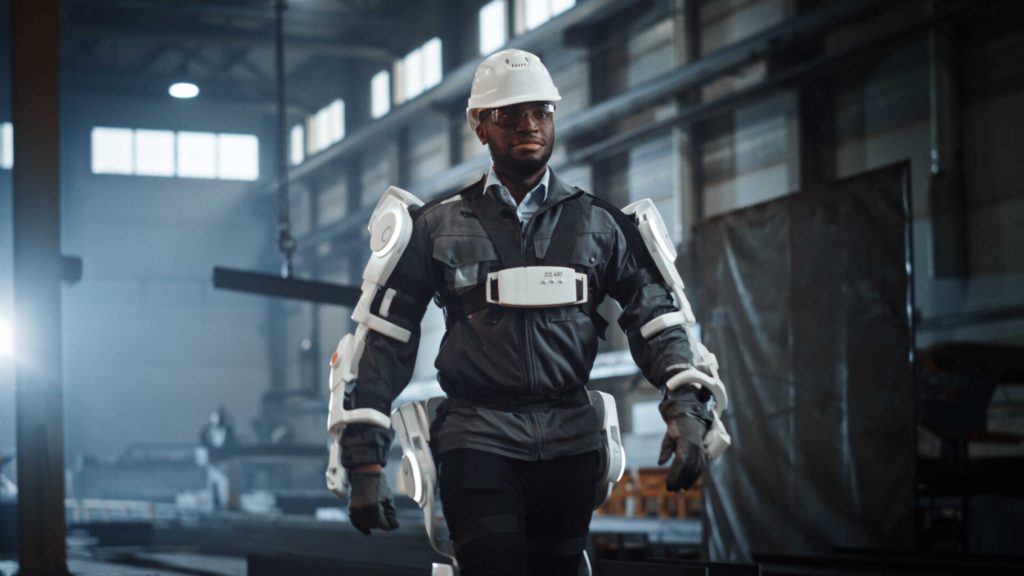
- Lighter, more comfortable exoskeletons offering greater assistance
- Biometric monitoring tracking stress levels and sleep patterns
- Affordable, user-friendly AR glasses visualising building plans and task instructions
- GPS-enabled wearables optimising worker safety, site logistics, and equipment usage
- Smart clothing with sensors monitoring posture, movement, and environmental conditions
The Current Evolutionary Trajectory: Steady Adoption
Wearables are becoming common in construction. This is due to several factors:
- Technological Advancements: Wearable devices are getting lighter and more ergonomic. They also have advanced features like sensors, communication tools, and computing.
- Regulatory Safeguards: Stringent safety rules are compelling construction firms to innovate. They must find new ways to prevent accidents and protect workers.
- Increasing Awareness: The construction industry sees the many benefits of wearable technology. It boosts safety, productivity, and efficiency.
Various factors have boosted wearable technology in construction. The key players are:
- Construction Companies: Investing in wearable tech solutions to improve safety records, augment worker productivity, and gain a competitive advantage.
- Construction Tech Startups: Continuously innovating and developing new wearables tailored to the specific needs of the construction industry.
- Government Agencies: Facilitating the development of regulations and standards for the safe and ethical deployment of wearable technology in construction environments.
- Workers: Gradually adapting to the utilisation of wearables and recognising the potential benefits for their personal safety and well-being.
Formidable Challenges on the Horizon
Wearable technology has great potential. But, for it to be widely adopted, we must overcome several challenges.
- Cost and Return on Investment (ROI): Wearable technology’s startup cost is often high. Construction companies must carefully evaluate the ROI to ensure it’s worth the investment.
- Data Security and Privacy: Wearable devices gather a huge pool of data about employees and their work environment. So, strong security measures are crucial. They ensure data is used responsibly.
- Training and User Acceptance: Promoting user acceptance is pivotal. Comprehensive training programs and user-friendly designs will foster worker adoption of wearable technology.
- Calibration and Maintenance: Wearables need to be properly calibrated. And, they need routine maintenance for accurate data and top performance.
Top 6 Wearables in Construction
Wearable technologies are transforming construction work. They enhance safety and communication among workers. Innovations like smart hard hats and construction smartwatches are making a big impact. So are exoskeletons.
- Smart Hard Hats: These hats, with sensors and communication systems, detect dangers and alert workers. They improve safety and team communication.
- Construction Smartwatches: They track health and offer emergency alerts and hands-free communication. These watches are crucial on job sites.
- Exoskeletons: They support workers, reducing strains and improving lifting. This decreases injuries and boosts productivity.
- Smart Glasses: These glasses display real-time information and stream videos for training. They improve workflows and safety.
- Bodywear and Wearable Sensors: They monitor health and enhance safety. Innovations like wearable sensors and smart helmets make work safer and more efficient.
- Smart Boots: These boots now feature sensors and tracking for safety and comfort. They help workers perform better.
$25 Billion Sq. Foot Captured With Wearables
The integration of wearable technologies in construction signifies a paradigm shift towards a safer, more efficient industry. These innovations empower workers, streamline processes, and elevate standards across job sites. As the construction landscape continues to evolve, embracing these advancements is not just a choice but a necessity for progress.
Final Cut
Wearable technology poses a major shift in construction, this is not just a passing trend. It helps companies create a better future for the industry and its workers. This tech boosts efficiency and safety. It also provides workers with the right tools and information. Advancing technology and solving challenges will enhance construction. Wearable tech will make it data-driven, focused on workers, and safer. This innovation promises a future. In it, we can improve the world and building methods. But perhaps the most exciting question is this: what other industries could be transformed by construction’s innovative technology?