
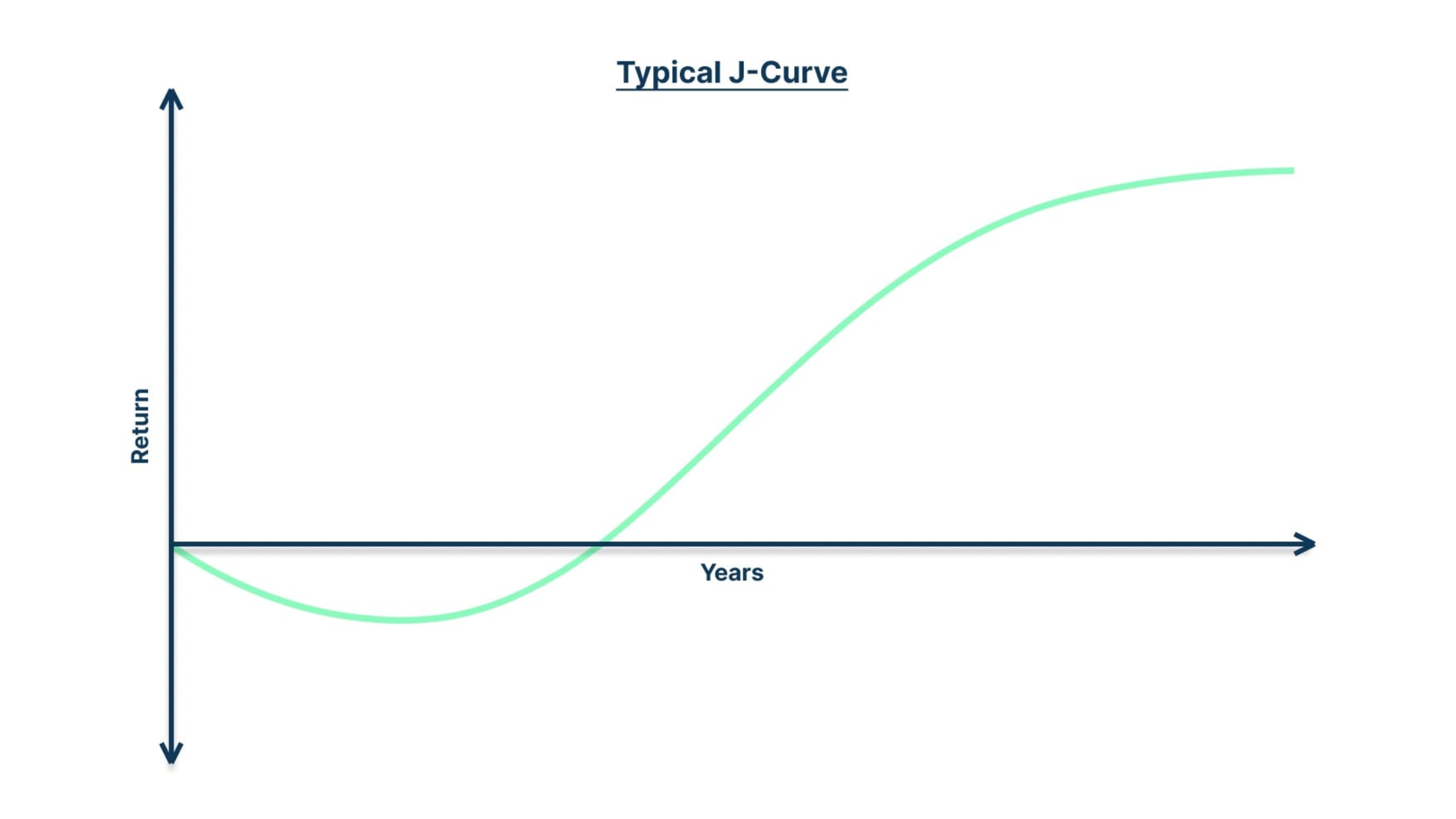
The path to success isn’t a straight line – it’s a J-curve. Just ask Dustin DeVan, founder of BuildingConnected (acquired by Autodesk for $275 million) and now CEO of Ediphi. His experiences offer valuable insights into managing the unique challenges of scaling a construction technology company, particularly when it comes to navigating long sales cycles and the deep trough of the J-curve.
Understanding the J-Curve in Construction Tech
The J-curve in business represents an initial loss followed by (hopefully) significant gains. For construction technology companies, this curve can be particularly pronounced. As DeVan explains about his current venture, Ediphi, “The J-curve of this business, the trough is going to be big.” Why? Because construction technology companies face a perfect storm of challenges: lengthy sales cycles, high development costs, and the need for significant upfront investment in R&D.
The Reality of Sales Cycles in Construction
Unlike consumer apps that can grow virally overnight, construction technology solutions face a more measured adoption curve. “You don’t switch your pre-con solutions quickly because they’re revenue-generating,” DeVan points out. “You’re very sensitive to it.” This sensitivity means that even when you have a superior product, the sales cycle can stretch out as companies carefully evaluate the implications of changing their core operational tools.
Venture Capital: A Necessary Evil?
This combination of long sales cycles and heavy R&D requirements often makes venture capital funding necessary for construction technology startups. As DeVan notes about Ediphi, “We’re trying to build an entire pre-construction platform from the ground up. It’s going to require a lot of R&D.” While some founders shy away from VC funding after a successful exit, the reality is that the depth of the J-curve often requires significant capital to weather the trough.
Strategies for Managing the Trough
How do you navigate this challenging period? DeVan’s experiences suggest several key strategies:
Build a Trial Process: “We’re spending a shit ton of time on building a trial process,” DeVan says. Unlike some competitors who expect customers to buy before trying, Ediphi is investing heavily in creating a structured trial process that demonstrates value within 30 days.
Focus on Clear ROI: Success stories matter. DeVan cites a customer who reported that Ediphi could eliminate almost half of their pre-construction applications, while another saw a 25% increase in estimation capacity with the same team size.
Create a Wedge: With BuildingConnected, DeVan’s strategy was to get 1,000 general contractors actively using the platform before monetising. This created a network effect that made monetization much easier later.
In this episode, Dustin DeVan, founder of Building Connected and Ediphi, shares his journey from selling a company for $275 million to starting anew in the construction tech space.
The Modern Construction Tech Landscape
The construction technology landscape has evolved significantly since DeVan founded BuildingConnected. “Today there’s so much white noise out there. Everyone’s bombarded with, ‘I got this thing, I got this solution,'” he observes. This makes it even more critical to be “laser focused on why, what problem you’re solving.”
Despite the challenges, the opportunity in construction technology remains massive. The key is having the patience and capital to weather the initial trough of the J-curve. As DeVan puts it, “There should be another publicly traded company in construction tech. That company is going to be the one that builds a pre-con platform.”
Essential Takeaways for Contech Founders
Be Realistic About Timing: Understand that sales cycles in construction technology are inherently long and plan accordingly.
Invest in Customer Success: Create structured processes that help customers see value quickly, even if the full implementation takes longer.
Secure Adequate Capital: Ensure you have enough runway to weather the trough of the J-curve before reaching significant revenue.
Focus on Real Problems: In a noisy market, success comes from solving fundamental industry challenges rather than creating point solutions.
The construction technology sector continues to evolve, but one constant remains: success requires managing the delicate balance between investment, patience, and execution. Understanding and preparing for the J-curve isn’t just helpful – it’s essential for survival in the construction technology space. As more companies enter the market, those who can successfully navigate this challenge while maintaining focus on customer value will be the ones who emerge as leaders in the next generation of construction technology.