
Outcomes-as-a-Service (OaaS) is a business model where companies focus on delivering measurable results rather than simply selling products or services. This model has gained significant traction in various industries, including construction technology, where stakeholders are increasingly seeking solutions to concrete challenges and measurable improvements in project outcomes.
Gecko Robotics, a company specialising in robotic infrastructure inspection and maintenance, offers a compelling case study of the successful implementation of OaaS in the construction tech sector.
From Robots to Results: Gecko’s Journey to OaaS
Gecko Robotics, founded by Troy Demmer and Jake Loosararian, emerged from a recognition of the critical need for safer, more efficient, and data-driven infrastructure inspections. The company develops and deploys robotic platforms equipped with advanced sensors and AI-powered data analysis capabilities to inspect assets such as power boilers, tanks, pipelines, and ships.
From the outset, Gecko Robotics chose to offer a service rather than simply selling their robots. As Demmer explains in an interview, “We were selling data. People thought the robot was cool, of course… but for the most part, it was, they only really cared about what was that health map that we created at the end of the day.”
This “health map,” generated from the robots’ comprehensive data collection, provided customers with a clear understanding of the condition of their assets.
Navigating the Robotics Revolution: Scaling Businesses in a Complex Landscape
This service-oriented approach was a natural stepping stone towards an OaaS model. Gecko Robotics shifted its focus from simply providing data to delivering actionable insights and empowering customers to make informed decisions regarding their infrastructure assets.
Addressing Real-World Challenges: Gecko’s Value Proposition
Gecko Robotics’ OaaS model specifically targets asset owners, facility managers, and maintenance teams across industries like power generation, oil and gas, and manufacturing. These customers face various challenges related to infrastructure inspection and maintenance, including safety risks associated with manual inspections in hazardous environments, the high costs of downtime, and the limitations of traditional inspection methods.
Gecko Robotics tackles these challenges head-on by delivering tangible outcomes. The company’s robotic solutions eliminate the need for human inspectors in dangerous locations, thereby significantly improving safety. Additionally, because the robots can operate while assets are online, inspections can be conducted without disrupting operations, minimising costly downtime.
Perhaps most importantly, Gecko Robotics provides customers with granular, comprehensive data, far surpassing the limited insights gleaned from traditional single-point measurements. This data, powered by AI and machine learning algorithms, enables customers to make data-driven decisions about maintenance, repairs, and asset life cycle management.
Demmer highlights the value of this data-driven approach, stating, “The act two of the business is really the thing that’s most critical, which is how do you take that information, how do you take that you know static view of the health map of that asset, and start to… start to translate that in in different dimensions, right? So there’s sort of the longitudinal dimension, so what does this look like over time”
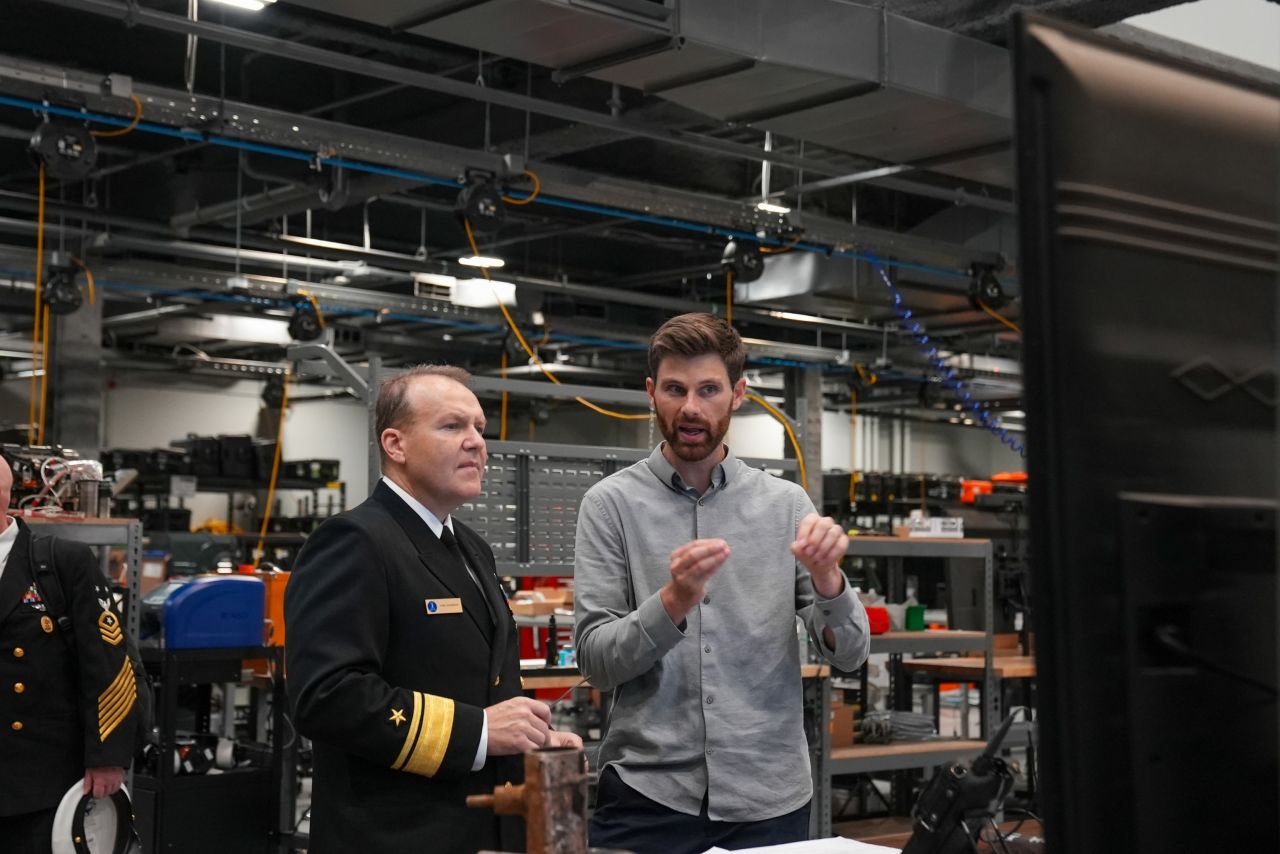
Gecko’s OaaS model in action is exemplified through their work with the US Navy. By helping to expedite the process of getting ships out of dry dock, Gecko Robotics contributes to enhancing the Navy’s operational readiness. Similarly, their involvement in streamlining new ship construction for suppliers showcases their ability to improve throughput and ensure high quality standards.
In this episode of BitBuilders, we learned about Troy’s journey from healthcare to robotics, the challenges of building hardware startups, and how Gecko is transforming infrastructure maintenance for both private and public sectors.
A Win-Win: Benefits for Gecko and Its Customers
The OaaS model offers significant advantages for both Gecko Robotics and its customers. For Gecko, the model fosters deeper customer relationships by positioning the company as a strategic partner invested in their success. The continuous feedback loop inherent in OaaS drives ongoing innovation, allowing Gecko to refine its technology and services based on real-world customer needs. Finally, the OaaS model sets Gecko apart from competitors by focusing on delivering measurable results rather than simply offering products or services.
Customers also reap substantial benefits from Gecko’s OaaS model. By gaining access to comprehensive, data-driven insights, they can shift from a reactive to a proactive maintenance approach, anticipating and addressing potential issues before they escalate into costly failures. This proactive approach, coupled with a deep understanding of their assets’ condition, enables customers to optimise asset life cycle management, making informed decisions regarding maintenance investments and replacement schedules. Ultimately, Gecko’s OaaS offering can lead to cost savings, increased productivity, and reduced risk for their customers.
Navigating the Complexities of OaaS Implementation
While the OaaS model holds immense potential, successful implementation requires careful consideration of several key factors. First and foremost, measurable outcomes must be clearly defined. These outcomes should align with customer priorities and be quantifiable to track progress effectively.
Establishing strong customer partnerships is crucial. This involves close collaboration, clear communication, and ensuring that both parties are aligned on expectations and success metrics. As Demmer points out, finding the right customers, those willing to partner through the initial “clunkiness” of early technology iterations, is critical to success.
Robust data analytics capabilities form the backbone of the OaaS model. Gecko Robotics leverages AI and machine learning to extract actionable insights from the vast amounts of data collected by its robots, allowing for informed decision-making.

Scalability and operational efficiency are also paramount. Building and maintaining a fleet of robots requires careful management of resources and a focus on streamlining operations. Gecko’s strategic decision to maintain a relatively small but highly effective fleet allows them to optimize resource allocation while meeting demand.
Regulatory Compliance and Safety
Finally, regulatory compliance and safety are paramount concerns, especially for robots operating in environments with human interaction. Adhering to stringent safety standards is not only ethical but also essential for building trust with customers and regulators. Navigating complex regulatory landscapes and obtaining necessary certifications can be time-consuming and costly, requiring careful planning and resource allocation.
Beyond Robots: A Vision for the Future of Construction
The Gecko Robotics case study provides a compelling example of how the OaaS model can transform the construction industry. By moving beyond the traditional transactional approach of selling products or services, companies like Gecko are forging new paths, focusing on delivering measurable results that directly address customer needs.
This shift towards data-driven decision-making, facilitated by advancements in robotics, AI, and sensor technology, holds the potential to revolutionise how infrastructure is inspected, maintained, and managed. As Gecko Robotics continues to innovate and expand its offerings, it serves as a beacon for other construction technology companies seeking to embrace the OaaS model and contribute to a future where infrastructure is safer, more efficient, and sustainable.