In 2023, global investment in energy transition technologies hit a record $1.77 trillion, with energy efficiency investments alone reaching $380 billion and set to grow by 10% by 2030. As this sector booms, startups in retrofitting and energy efficiency need robust ways to measure their impact. Let’s explore the key performance indicators (KPIs) that drive success in this dynamic field.
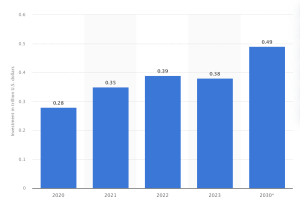
Investment in energy efficiency worldwide from 2020 to 2023, with a forecast for 2030. Source: Statista
Why Measuring Impact Matters
For startups, measuring impact isn’t just about tracking progress. It’s about proving value to investors, customers, and themselves. The right KPIs can guide decision-making and fuel growth.
Types of KPIs: A Holistic Approach
To truly capture the multifaceted nature of success in this industry, we need to look at KPIs across four key areas:
- Financial: The bottom line still matters.
- Operational: Efficiency and scalability are crucial.
- Environmental: The heart of the industry’s mission.
Customer-related: Because without customers, there is no business.
Core KPIs for Retrofitting and Energy Efficiency Startups
- Energy Savings Rate
-
-
- Definition: Percentage of energy saved post-retrofit
- Importance: Directly shows the effectiveness of solutions
- Calculation: (Pre-retrofit energy use – Post-retrofit energy use) / Pre-retrofit energy use x 100
-
- Customer Acquisition Cost (CAC)
-
-
- Definition: Cost to acquire a new customer
- Importance: Indicates marketing and sales efficiency
- Calculation: Total sales and marketing costs / Number of new customers acquired
-
- Customer Lifetime Value (CLV)
-
-
- Definition: Total revenue expected from a customer
- Importance: Shows long-term value of customer relationships
- Calculation: Average purchase value x Average purchase frequency x Average customer lifespan
-
- Carbon Emissions Reduced
-
-
- Definition: Amount of CO2 emissions prevented
- Importance: Demonstrates environmental impact
- Calculation: Energy saved x Emission factor for the energy source
-
- Project Completion Time
-
- Definition: Average time to complete a retrofit project
- Importance: Indicates operational efficiency
- Calculation: Sum of all project durations / Number of projects
Industry-Specific KPIs
- Retrofit Adoption Rate
-
- Tracks the percentage of potential customers who proceed with retrofits after initial assessment
- Tracks the percentage of potential customers who proceed with retrofits after initial assessment
- Energy Audit to Retrofit Conversion Rate
-
- Measures how many energy audits lead to actual retrofit projects
Case Study: Enter’s Success Metrics

Let’s look at how a real-world startup is leveraging KPIs for success. Enter, a German retrofitting platform, has seen remarkable growth. Their focus on key metrics has been instrumental:
- Customer Acquisition: Enter focuses on partnerships with real estate brokers, tracking the number of leads generated through these channels.
- Conversion Rate: They closely monitor how many energy audits translate into retrofit projects, continuously optimising their process.
- Customer Satisfaction: Post-project surveys help Enter maintain quality and improve their offerings.
By honing in on these metrics, Enter has not only secured significant funding but has also expanded rapidly across Germany.
Challenges in Measurement: Navigating the Complexities
While these KPIs are powerful, measuring them accurately can be challenging. Common hurdles include:
- Long project timelines: Energy savings may take months or years to fully materialise.
- Varying baseline conditions: Every building is unique, making standardised measurements tricky.
- External factors: Weather changes, occupancy patterns, and other variables can affect energy use.
To overcome these challenges:
- Use standardised measurement protocols like the International Performance Measurement and Verification Protocol (IPMVP).
- Implement long-term monitoring systems to capture data over extended periods.
- Employ advanced analytics to account for external variables in your calculations.
What Investors Are Looking For: Speaking Their Language

When pitching to investors, certain KPIs carry more weight:
- Clear ROI metrics: Investors want to see how your solutions translate to financial returns.
- Scalability indicators: Metrics that show your ability to grow efficiently are crucial.
- Customer retention rates: High retention demonstrates product-market fit and sustainable growth.
- Environmental impact measures: As ESG considerations become mainstream, quantifiable environmental benefits are increasingly important.
Emerging KPIs: Staying Ahead of the Curve
As the industry evolves, new metrics are gaining importance:
- Grid interaction metrics: How well retrofitted buildings interact with smart grids.
- Embodied carbon reduction: Accounting for the carbon footprint of the materials and processes used in retrofitting.
- Social impact indicators: Measuring improvements in health, productivity, and community well-being.
Implementing Effective KPI Tracking: From Metrics to Action
- Choose relevant KPIs: Not all metrics are created equal. Select those that align with your specific business model and goals.
- Set up automated data collection: Leverage IoT devices and software integrations to gather data efficiently.
- Regular review and adjustment: Your KPIs should evolve as your business grows and market conditions change.
- Clear communication: Ensure all stakeholders understand and can act on the KPI data.
The Power of Effective Measurement
In the fast-paced world of retrofitting and energy efficiency startups, what gets measured gets managed. By focusing on the right KPIs, you’re not just tracking numbers – you’re steering your company towards greater impact, stronger growth, and a more sustainable future.
Remember, the goal isn’t just to improve buildings; it’s to quantifiably demonstrate how you’re making the world better, one retrofit at a time. So, which KPIs will you focus on to drive your startup’s success?