
Updates:
• Filed for IPO via the confidential route, marking a formal step toward going public after raising about US $82.4 million recently and valuation standing near US $2.8 billion.
• The company secured an additional US $50 million in debt from MARS Growth Capital, bringing total debt support to US $150 million, as it gears up for its IPO later this year.
• Infra.Market raised $83 million (₹732 crore) at a steady $2.7 billion valuation as it gears up for an IPO later this year. The funding, led by Nikhil Kamath’s family office and Tiger Global, cements its position as India’s dominant construction-materials marketplace.
———
In the dynamic world of Indian startups, one name is making waves in the construction technology sector: Infra.Market. This unicorn, valued at an impressive $2.5 billion, is not just another tech company – it’s revolutionising how India builds. From sourcing materials to streamlining supply chains, InfraMarket is leaving its mark on every aspect of the construction industry. Let’s dive into the fascinating story of InfraMarket and explore its far-reaching impact.
From Humble Beginnings to Unicorn Status
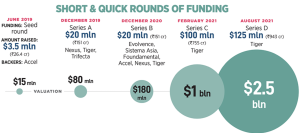
Founded in 2016, Infra.Market’s journey began like many startups – bootstrapped and fueled by vision. For nearly four years, the company grew organically, relying on its own resources and ingenuity. This changed in 2020 when they secured their first external investment round. Since then, Infra.Market has attracted attention and funding from top-tier investors like Tiger Global and Accel, catapulting them into the coveted unicorn club.
A Two-Pronged Business Approach
Infra.Market’s success stems from its dual-focused business model:
- B2B Operations: They’ve created a comprehensive platform for construction materials and machinery procurement. This one-stop shop approach simplifies the buying process for businesses of all sizes.
- B2C Business: Recognizing the potential in smaller markets, InfraMarket supplies retail stores in tier 2, 3, and 4 Indian cities. This strategy has allowed them to tap into a vast, often underserved market.
By catering to both business and retail customers, Infra.Market has positioned itself as a dominant force in India’s construction sector.
Impressive Financial Performance
Their growth story is nothing short of remarkable. Recent reports paint a picture of robust financial health:
- Annual revenue of approximately $1.7 billion in the last year
- Net profit of $36 million from B2B operations
What truly sets them apart is their consistent profitability. In a startup ecosystem where burning cash is often the norm, Infra.Market has been profitable for most of its existence. This financial discipline has not only attracted investors but also positioned the company for sustainable long-term growth.
Innovating the Construction Supply Chain
At the heart of Infra.Market’s success lies its innovative approach to the construction supply chain. By leveraging technology, they’ve created a more efficient, transparent, and cost-effective process for procuring and distributing construction materials. Their platform uses data analytics to optimise inventory, predict demand, and streamline logistics.
This tech-driven approach has several benefits:
- Reduced costs for construction projects
- Improved efficiency in material sourcing
- Greater transparency in pricing and availability
- Minimised waste and better inventory management
Funding Success and Investor Confidence
Their latest funding round with Mars Unicorn Fund is a testament to its strong market position. Despite global economic uncertainties and a cooling venture capital market, Infra.Market has maintained its $2.5 billion valuation. This speaks volumes about investor confidence in their business model and future prospects.
Future Plans: Going Global and Going Public
Infra.Market isn’t content with dominating the Indian market. The company has set its sights on bigger goals:
- Expanding its export business: This move will allow Infra.Market to tap into global construction markets, diversifying its revenue streams.
- Planning for an IPO: Within the next 15-18 months, they aim to go public. This step will not only provide an exit for early investors but also give the company access to public markets for future growth capital.
These ambitious plans signal Infra.Market’s intention to become a global leader in construction technology.
“Our vision of creating India’s largest multi-product construction materials brand and transforming the construction materials supply chain is not limited to India. We are witnessing growth opportunities as we expand our product portfolio and market presence, and the launch of new verticals will help us establish a best-in-class construction materials company from India.”
– Souvik Sengupta, Founder of Infra.Market
Transforming India’s Construction Landscape
Infra.Market’s impact extends far beyond its impressive financial figures. By digitising and streamlining the construction materials supply chain, they’re driving efficiency across the entire industry. This could lead to faster project completions, reduced costs, and improved quality control in construction projects nationwide.
The Bigger Picture: India’s Thriving Startup Ecosystem
Their success is part of a larger narrative – the rise of India’s startup ecosystem. It showcases how technology can disrupt traditional sectors, creating value and driving innovation. As India continues its rapid urbanisation and infrastructure development, companies like InfraMarket will play a crucial role in shaping the country’s future.
Conclusion: A Model for Construction Tech Success
Infra.Market’s journey offers valuable lessons for startups in the construction tech sector and beyond:
- Focus on profitability from the start
- Leverage technology to solve real industry problems
- Build a robust business model before seeking significant funding
- Don’t be afraid to tackle traditional industries with innovative solutions
As InfraMarket continues its growth trajectory, it’s clear that they’re not just building a company – they’re helping construct a more efficient, tech-driven future for the entire construction industry. Their story is a powerful reminder of the transformative potential of technology when applied to age-old challenges.